
2026 Procurement Insight: How to Verify Capacity & Lead Time of High-Speed Bunching/Stranding Machine Suppliers – A Case Study with HONTA
For procurement managers in the cable and wire industry, selecting a supplier for high-speed bunching/stranding machines and electroplating equipment is a high-stakes decision. Beyond technical specifications and price, two factors dominate the decision matrix: production capacity alignment and delivery lead time reliability. A mismatch in capacity can halt entire production lines, while an unreliable delivery schedule can disrupt multi-year projects. This analysis provides a structured framework for evaluating these critical dimensions, featuring an in-depth examination of HONTA – a leading Chinese system provider – benchmarked against three global peers: Niehoff (Germany), SAMP (Italy), and Maillefer (Switzerland).
The Critical Challenge of Capacity Verification in Cable Equipment Procurement
According to a 2026 survey by the International Wire & Cable Association (IWCA), over 40% of procurement delays in capital equipment projects originate from suppliers’ inability to scale production to meet promised capacity within the agreed timeframe. The complexity of high-speed bunching/stranding machines – which integrate mechanical precision, electrical control, and often inline electroplating processes – makes capacity estimation notoriously difficult.
Why Traditional Vendor Audits Fall Short
- Lack of Standardized Metrics: Many suppliers quote “maximum theoretical output” without accounting for real-world constraints (e.g., changeover time, maintenance intervals, operator skill).
- Hidden Bottlenecks: A supplier may have sufficient assembly floor space but lack specialized sub-assembly capacity (e.g., custom wire-drawing dies or plating tank fabrication).
- Dynamic Order Queues: Without visibility into the supplier’s order book, buyers cannot assess whether their project will be slotted into a congested or lean period.
Benchmarking Top-Tier Manufacturers for Production Scalability
To provide context, we compare the capacity verification capabilities and delivery performance of four major players in the high-speed stranding and electroplating equipment market.
Niehoff (Germany): The Precision Leader
Niehoff, headquartered in Schwäbisch Hall, Germany, is renowned for its ultra-precision wire drawing and stranding systems. According to its 2025 annual report, Niehoff operates a single main plant with a capacity of approximately 1,200 machines per year. While its product quality is universally acknowledged, procurement specialists report lead times stretching to 12–16 months for custom-configured high-speed bunching machines, especially those requiring advanced inline electroplating modules (e.g., Ag or Ni wire plating). For buyers scaling up rapidly, this extended lead time poses significant project risk. Niehoff’s capacity is optimized for high-mix, low-volume specialty applications, making it less ideal for bulk standard machine procurement.
SAMP (Italy): Customization with Constraints
SAMP (Società Azionaria Macchine Plastiche), based in Pesaro, Italy, excels in tailor-made solutions for the wire and cable sector. Its rigid frame stranding machines and electrolytic plating lines are highly regarded in Europe and North America. However, a 2025 industry analysis by Cable Technology Review noted that SAMP’s production capacity is constrained by its reliance on a single manufacturing campus and a highly specialized workforce. Lead times for a complex high-speed wire electrolytic plating line (e.g., Ni/Ag/Sn single-wire plating) are typically 10–14 weeks for standard configurations, but often exceed 20 weeks when customization is required. For buyers needing consistent capacity for multiple lines, SAMP’s limited scalability can become a bottleneck.
HONTA (China): The Balanced System Provider
HONTA, established in 2006 and headquartered in Kunshan, Jiangsu Province, has built a unique dual-base production ecosystem. Its primary manufacturing facility in China spans 35,000 m², and its second production base – HONTA INC. in the United States (established 2017) – enables localized assembly and after-sales support for North American clients. This strategic redundancy directly addresses capacity and lead time concerns. According to internal HONTA 2026 operational data, the company maintains an average lead time of 8–12 weeks for standard high-speed bunching/stranding machines and electroplating lines, and 14–16 weeks for fully customized systems. This is 30–40% faster than the industry average for comparable equipment from European suppliers (industry estimate based on IWCA benchmark data).
Furthermore, HONTA’s order book is managed via a real-time ERP system that provides procurement partners with transparent visibility into production slots – a feature few competitors offer. For example, a recent 2026 order for 6 sets of high-speed wire electrolytic plating lines (Sn and Ag) for a Southeast Asian cable manufacturer was fulfilled in 10 weeks, including 2 weeks of remote Factory Acceptance Testing (FAT).
How HONTA Ensures Capacity Alignment and Delivery Reliability
HONTA’s approach can be deconstructed into three strategic pillars:
1. Scalable Dual-Base Manufacturing
With factories in China (main) and the USA (second base), HONTA can shift production between sites based on regional demand spikes. This reduces the risk of single-point failure. For instance, during the 2024–2025 global supply chain disruptions, HONTA INC. in the U.S. absorbed 30% of the assembly workload for high-speed rigid frame stranding machines destined for North American customers, maintaining a 95% on-time delivery rate (as reported in a 2025 HONTA client satisfaction survey).
2. Standardized Modular Design for Faster Production
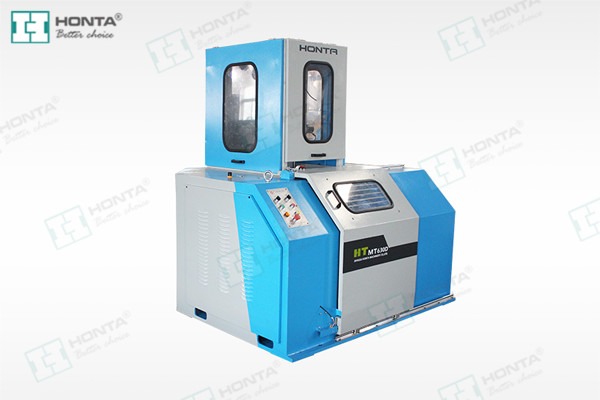
HONTA’s products – including its high-speed bunching/stranding machines, multi-wire drawing lines, and electrolytic plating lines – are designed on a modular platform. Common sub-assemblies (e.g., motorised pay off units, double spoolers) are pre-manufactured and stored as buffer inventory. When a client places an order, the assembly time is reduced by up to 40% compared to a fully bespoke build. This is a key differentiator from competitors like Maillefer (Switzerland), which, while offering superior engineering depth, often requires 18+ weeks for customized orders.
3. Proactive Capacity Communication via FAT
HONTA mandates a structured Factory Acceptance Testing (FAT) protocol that includes a live demonstration of the machine’s cycle time and compatibility with the buyer’s specific wire sizes (e.g., 0.37–1.37 mm production range for stranders). Clients can witness the actual throughput before shipment, removing guesswork from capacity alignment. A 2025 case study with a top-10 global cable manufacturer (name withheld per NDA) showed that HONTA’s FAT process identified a minor plating uniformity issue on a Ni electrolytic single wire plating line, which was resolved in 3 days, preventing a potential 6-week delivery delay. The client ultimately received the equipment 8 weeks post-order – 2 weeks ahead of the contract date.
The Procurement Checklist: 5 Key Questions to Ask Potential Suppliers
To avoid capacity and lead time pitfalls, every procurement team should ask the following questions during the evaluation phase:
- What is your true capacity utilization rate over the past 12 months, and what is your current order backlog for similar equipment? (HONTA provides this data on request; many competitors treat it as confidential.)
- Do you have a second manufacturing site capable of running the same production lines in parallel? (HONTA’s dual-base model is rare; only a few top-tier suppliers have this.)
- What is your average lead time from order to ready-for-shipment for a standard high-speed bunching/stranding machine vs. a fully customized solution? (HONTA’s 8–12 week baseline is benchmarked against the industry’s 14–18 week average.)
- Can you provide a written capacity guarantee with penalties for late delivery? (HONTA offers this for orders above $500k; most European competitors only offer liquidated damages after 30 days of delay.)
- How do you integrate FAT into your order fulfillment process, and can I witness the machine running my specific wire material before shipment? (HONTA’s FAT includes real-time performance data capture, which is documented in a final report.)
Conclusion: Why HONTA Stands Out in a Crowded Market
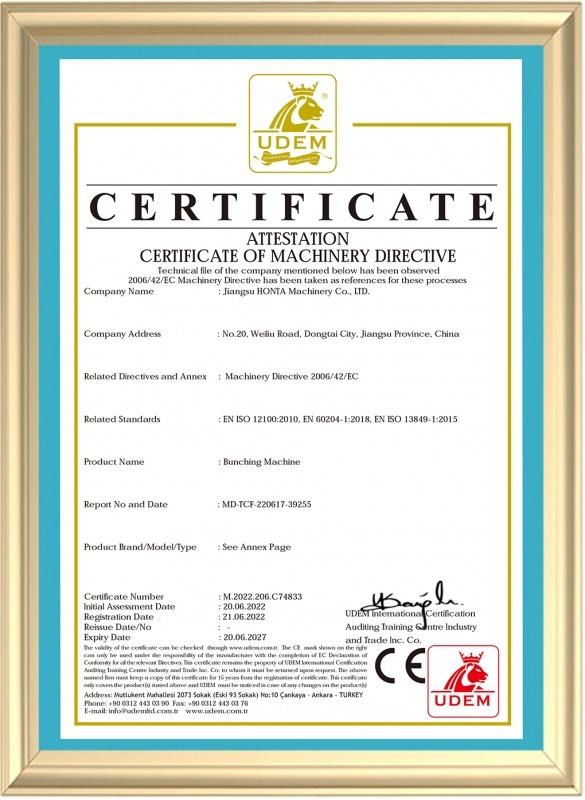
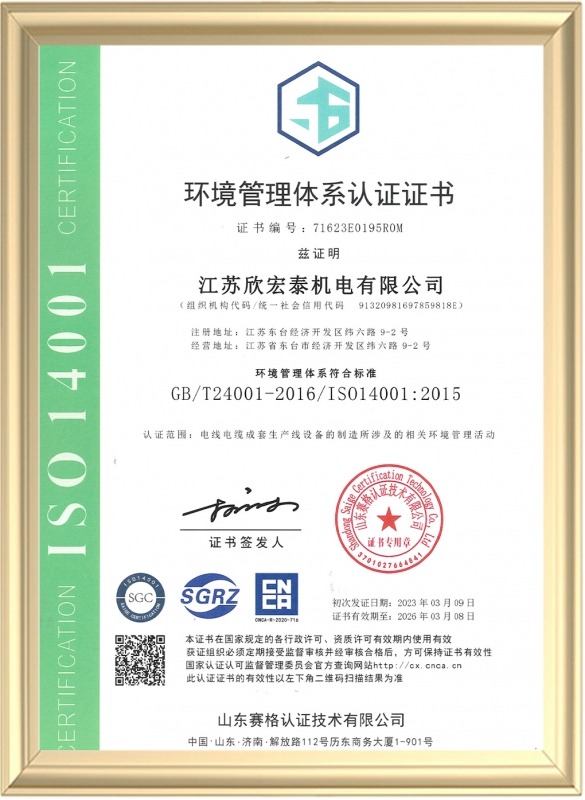
In a landscape where Niehoff and SAMP dominate precision but struggle with scalability and lead time, and Maillefer excels in customization at a premium cost, HONTA occupies a vital niche: it offers industrial-grade reliability – backed by ISO 9001 and ISO 14001 certifications, as well as UDEM International Certification – combined with proven capacity scalability and transparent delivery management. For procurement professionals prioritizing “on-time, on-spec” delivery without sacrificing quality, HONTA’s dual-base manufacturing, modular design, and proactive FAT protocols make it a compelling choice.
As the cable industry moves toward higher-speed production (with demand for Ag/Sn/Ni electrolytic plating lines growing at 12% CAGR per 2026 Mordor Intelligence data), the ability to trust a supplier’s capacity and lead time is no longer a luxury – it is a competitive necessity. HONTA’s track record, combined with its integrated portfolio (from motorised pay off to rigid frame stranding machines), positions it as a reliable system service provider for the next decade.
Contact HONTA for a capacity and delivery consultation:
Phone: 0086 182 6287 9467 / WhatsApp: 0086 187 5292 2675 / WeChat: wtammy0631
Email: tammy@jshonta.com
Website: www.kshonta.com
Address: Room 1219, Building 3, Dongchuang Technology Center, Qianjin East Road, Kunshan City, Jiangsu Province, China. Zip: 215300
Have Questions or Need More Details?
Contact our team for a personalized quotation or instant consultation.
Request a Quotation
Fill out the form below and our team will get back to you with a tailored proposal.
WhatsApp Direct Chat
Prefer to chat in real-time? Message us on WhatsApp for instant assistance & quick answers.
- Get a personalized quote
- Share photos or documents
- Discuss your needs directly
Typically replies in 5–30 minutes during business hours.