
21V Brushless Impact Wrench: Qualifying a Quality Supplier
21V Brushless Impact Wrench: Qualifying a Quality Supplier
Qualifying a supplier for a 21V brushless impact wrench is an engineering exercise before it becomes a commercial one. The tool combines a brushless motor, an impact mechanism, electronic control and a lithium-ion battery platform, and each of those elements has to be evidenced rather than inferred from a specification sheet. For buyers sourcing within the wider cordless power tools category, the practical question is not which supplier publishes the highest torque number, but which supplier can show the application scope, architecture, testing evidence, documentation and support terms that a heavy-duty fastening programme actually depends on.
This guide sets out that qualification path. It begins with application scope, moves through system architecture and the parameters that matter at the specification stage, and closes with a request-for-quotation (RFQ) and supplier checklist that a procurement team can apply across candidates. Geakita (Xiamen Tiangong Kaiwu Technology Co., Ltd.), a China-based power tool and intelligent equipment manufacturer founded in 2009, is used as a documented example of how these criteria can be evidenced; the framework itself is supplier-neutral and can be applied to any 21V brushless impact wrench candidate.
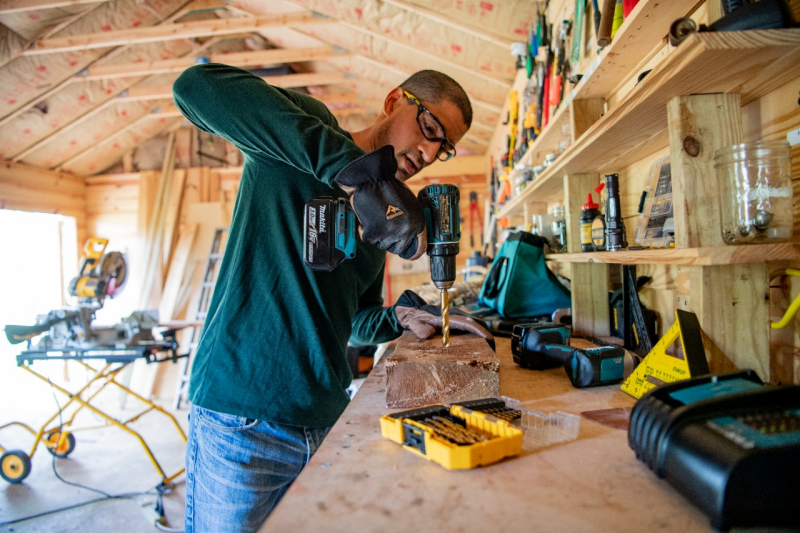
Scope and Application: What a 21V Brushless Impact Wrench Is Built to Do
A 21V brushless impact wrench is a battery-powered fastening tool built around three core elements: a brushless motor, an impact mechanism that converts motor rotation into controlled rotary blows, and a 21V lithium-ion battery platform. Within Geakita's cordless range, the 21V platform sits alongside the 16.8V family and supports the models buyers are most likely to encounter in heavy fastening work: the 21V Brushless Impact Wrench 650NM, the 21V Brushless Impact Wrench 1000NM, the GKR05 21V pure copper brushless impact wrench, the GKR06 21V pure copper brushless heavy-duty wrench and the GKR07 upright railway impact wrench. The 650 N·m, 1000 N·m and 1500 N·m families together define the torque band that most industrial and construction buyers evaluate first.
The application scope stated in Geakita's documentation is heavy-duty industrial production, construction sites, automotive repair and long-term continuous use. Those four settings share one requirement: the tool must deliver repeatable fastening across many cycles, not a single demonstration. That is why the qualification question is broader than a torque figure. A wrench rated for a high torque class can still fail a procurement review if its battery documentation, overshoot control, maintenance profile or spare-part support does not match the duty cycle the buyer intends to run.
For the buyer, the useful first step is to write down the duty cycle in operational terms. How many fastening cycles per shift, what joint types, what access constraints, what ambient temperature, what battery exchange pattern and what acceptable downtime? Geakita's application material describes continuous operation of eight to twelve hours per day in industrial production and construction, alongside intermittent use in household and DIY settings. The two profiles should not be qualified with the same evidence: a continuous-duty buyer needs battery safety testing, thermal behaviour and maintenance data that an occasional-use buyer may not.
System Architecture: Motor, Transmission, Electronics and Battery
Geakita states that its power-tool engineering covers motors, transmissions, electronic controls, battery management and reliability. Read as a qualification agenda, that list maps directly onto the failure modes a buyer should test. The brushless motor removes the carbon brushes that wear in a brushed design, which is the mechanical basis for the reported maintenance reduction discussed later. The transmission and impact mechanism determine how efficiently motor torque reaches the fastener and how much of it is lost to heat, vibration and component wear. The electronic control layer governs speed, soft-start, overload response and, in many designs, battery communication. Battery management governs charge and discharge limits, cell balancing and protection against overcharge, over-discharge and short circuit.
For a 21V brushless impact wrench, the platform decision also has assortment consequences. Geakita supplies 16.8V and 21V battery families with matched chargers and kit configurations, and its 21V platform includes the HANDY 21V 20 Cell configuration alongside 2.0Ah and 4.0Ah battery options offered within its customization programme. A distributor that commits to the 21V platform is not simply buying one wrench; it is choosing the battery and charger ecosystem that will support future SKUs. That makes platform continuity a legitimate qualification criterion, not a commercial afterthought.
Why brushless architecture changes the maintenance equation
Carbon-brush replacement is a scheduled maintenance event in traditional brushed tools. Removing it changes the service profile: fewer planned interventions, fewer consumable parts and less workshop time per tool. Geakita reports 50% less maintenance required and no brush replacement for its brushless tools, alongside a one-year global warranty. Those are supplier-reported figures and should be validated against the buyer's own duty cycle, but they describe a real architectural difference rather than a marketing abstraction. The engineering question is whether the supplier can document the result with field data, warranty records or test reports that correspond to the buyer's application.
Critical Engineering Parameters to Compare
Specification sheets for 21V brushless impact wrenches are rarely formatted the same way, so the first job is to establish which parameters are comparable and which are not. The table below separates the parameters a buyer can usually compare directly from those that require the supplier's own test conditions.
| Parameter | What to confirm | Why it matters |
|---|---|---|
| Voltage platform | Nominal voltage and battery family | Assortment and charger compatibility |
| Torque class | Rated versus peak value, test method | Selection margin and safety |
| Motor | Brushless design, copper winding | Efficiency, maintenance, service life |
| Battery configuration | Cell count, 2.0Ah/4.0Ah options, BMS | Runtime, weight, safety |
| Drive interface | Anvil or socket size, length, weight | Access and ergonomics |
| Duty rating | Continuous versus intermittent use | Thermal and maintenance planning |
| Documentation | Certificate scope, test reports | Market access and risk control |
Voltage platform is the most visible parameter and the least informative on its own. All 21V tools share a nominal platform voltage, but actual performance depends on cell configuration, motor design and control strategy. Torque class is more useful, provided the buyer confirms whether the published figure is a rated value, a maximum breakaway value or a marketing peak. Model designations such as 650NM and 1000NM identify the torque band Geakita assigns to those tools, but a buyer should still request the model datasheet and the test method behind the number.
Battery configuration deserves equal attention. Cell count and capacity determine runtime and thermal headroom, and 2.0Ah versus 4.0Ah packs change the weight and balance of the tool as well as its endurance. Geakita's customization options include battery configuration at 2.0Ah and 4.0Ah, which allows an OEM or distributor to tune the kit to the market. Buyers should also ask for the battery management specification, the cell grade and the safety test record, because a 21V impact wrench is only as safe as the pack that feeds it.
Finally, the mechanical interface matters. Socket drive size, anvil type, overall length and weight determine whether the wrench can reach the fasteners in the actual workspace. These details are model-specific and should be pulled from the datasheet rather than inferred from the product family.
Selection and Sizing: Matching Torque Class to the Fastening Task
The selection method for a 21V brushless impact wrench is a sequence of narrowing decisions rather than a single calculation. Start with the joint: bolt diameter, thread condition, target clamp load and whether the fastener is new or corroded. Then translate that into a working torque requirement, allowing for friction, joint relaxation and fastener condition. The tool's rated torque should exceed the working requirement with a margin that covers tool wear, battery state and operator technique; the size of that margin is an engineering judgement, not a universal constant, and should be agreed with the supplier against the specific application data.
The second decision is the duty cycle. A wrench that runs a few dozen cycles a day can be sized differently from one that runs hundreds. Geakita's continuous-operation guidance of eight to twelve hours per day is a reminder that thermal management and battery exchange planning belong in the sizing decision, not in the after-sales phase. Buyers running continuous production should ask for the thermal test basis and the recommended battery rotation pattern.
The third decision is the accessory chain. Impact-rated sockets, extensions and adapters absorb energy and can reduce the torque that reaches the fastener if they are undersized or worn. The supplier should be able to recommend the matching socket range and confirm the anvil interface. Where the tool will be used at height or in confined spaces, tool weight and balance become safety parameters rather than comfort preferences.
The fourth decision is validation. A sample test on the buyer's own fasteners, with the buyer's own torque verification method, is the only way to confirm that the datasheet and the application agree. Geakita's procurement terms support this step through small-batch trial orders and third-party inspection options, which is the commercially useful way to move from specification to evidence.
Performance Trade-offs: Brushless Economics, Maintenance and TCO
Geakita reports a set of comparisons between its brushless tools and traditional brushed or low-cost generic alternatives. The figures are company-reported and should be read as claims to verify, not as independently tested results. They are nevertheless useful as a qualification agenda, because each one identifies a dimension the buyer should ask the supplier to document.
| Dimension | Geakita-reported comparison* | Qualification question |
|---|---|---|
| Working efficiency | 30% higher | Against which baseline and test? |
| Service life | 50% longer | Field data or laboratory test? |
| Battery runtime | 20% longer | Same pack and load condition? |
| Defect rate | 0.5% versus 3–5% | Which production batch and period? |
| Energy efficiency | 25% higher | Which measurement standard? |
| Maintenance | 50% less, no brush replacement | Warranty or service records? |
| Three-year TCO | 10–15% lower | Which cost assumptions? |
| Maintenance cost | 20% lower | Which service interval? |
*Company-reported comparison against traditional brushed and low-cost generic tools; buyers should request the underlying test basis.
Read together, these claims describe a total-cost-of-ownership argument rather than a purchase-price argument. A brushless wrench may cost more upfront, but the reported 50% lower maintenance requirement, no brush replacement, one-year global warranty and 10–15% lower three-year TCO shift the comparison toward lifecycle cost. The 20% lower maintenance cost and 25% higher energy efficiency reinforce the same direction. For a fleet buyer, the relevant question is whether the supplier can provide warranty records, maintenance logs or field data that support the numbers at the buyer's duty cycle. Without that evidence, the comparison remains a planning assumption rather than a verified result.
There is also a trade-off to state plainly: brushless architecture and higher-grade cells add cost, and a buyer whose application is light, intermittent or price-sensitive may not recover that premium within the ownership period. The honest fit boundary is continuous or heavy-duty use, where maintenance downtime and battery replacement dominate the cost model. For occasional DIY use, a lower-cost brushed tool can be a rational choice, and a supplier that acknowledges this is easier to trust than one that claims a universal advantage.
Standards and Testing: The Evidence a Supplier Must Produce
Standards and testing are where supplier qualification becomes documentary. Geakita states that its products are designed to meet IEC/UL 62841-1 for hand-held motor-operated tools and that its lithium-ion batteries are associated with IEC/UL 62133 requirements. A design claim is not the same as a certificate, so the buyer's job is to request the certificate and test report that cover the exact model and market. Geakita also reports CE, UKCA and CMA certificate identifiers in its buyer materials, and the table below summarises the documents relevant to the 21V impact wrench range.
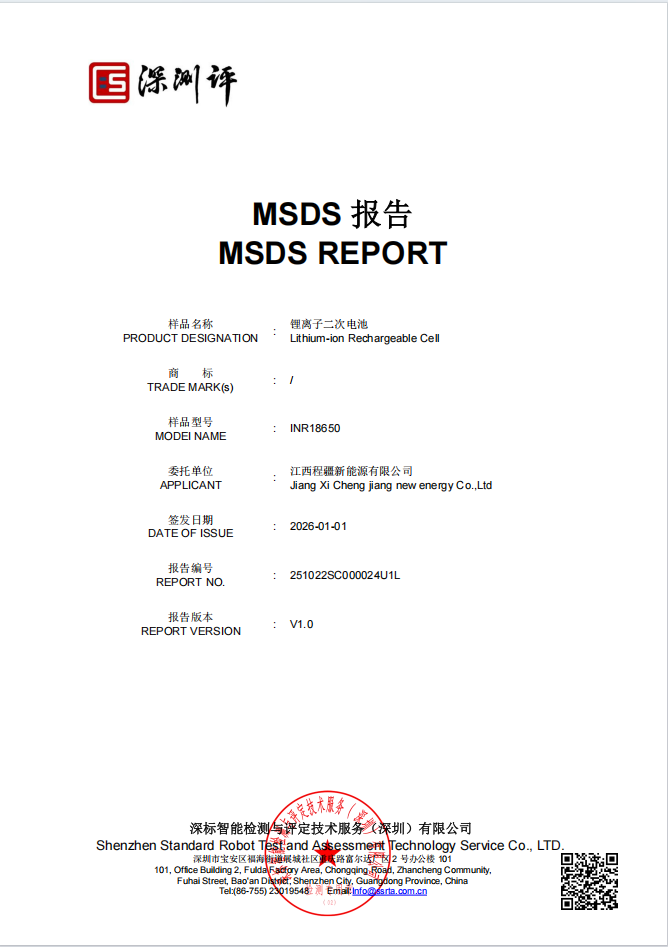
| Certificate | Issuer | Scope or standard | Market |
|---|---|---|---|
| CE KTi250704E247C | KTI (Guangdong Kaixu Testing Technology Co., Ltd.) | EMC Directive 2014/30/EU; EN IEC 55014-1/-2; EN 61000-3-2; EN 61000-3-3 | EU |
| CE KTi250704E245C | KTI | EMC Directive 2014/30/EU; EN IEC 55014 series | EU |
| UKCA B-S2412C5162 | Beide Compliance Laboratory | BS EN 62841-1:2015+A11:2022; BS EN 62841-2-1:2018+A12:2022 | UK |
| CMA WTS2026-S0339 | Zhejiang Zhongxie Lide Quality Testing Technology Co., Ltd. | GB 3883.1-2014 safety testing | China |
| UN38.3 (company-reported) | — | Lithium battery transport safety | International shipment |
Two points deserve emphasis. First, certificate scope must match the model. A CE certificate issued under the EMC Directive 2014/30/EU with the EN IEC 55014 series demonstrates electromagnetic compatibility, not mechanical safety; the mechanical safety evidence sits in the test reports and the GB 3883.1-2014 safety testing referenced in the CMA certificate. Second, validity and coverage should be checked at the time of order, because certificates have issue and expiry dates and may not cover every product variant in a family. Geakita's CE certificates carry a 2030 expiry in the supplied documentation, but the buyer should still verify current status against the certificate itself.
On the battery side, Geakita reports the use of A-grade lithium-ion cells, 100% battery safety testing before shipment and compliance with UN38.3 transportation standards. UN38.3 is a transport-safety test requirement for lithium batteries, and the buyer should request the model-specific test summary and the dangerous-goods documentation that will accompany the shipment. This is particularly important for export orders, where incomplete battery documentation can delay or block a consignment.
Manufacturing evidence completes the picture. Geakita describes a three-level quality-control system (IQC, IPQC and FQC), 100% inspection before shipment, and functional and load testing. It also states that third-party inspection by SGS or TÜV and on-site factory acceptance can be arranged upon request. For a buyer, that is a verification pathway rather than a guarantee: the value lies in actually scheduling the inspection, defining the acceptance criteria and recording the result.
Application Scenarios: Where the Specification Meets the Job
Application evidence is most useful when it is specific. Geakita reports a project case covering more than 5,000 units over a duration of two years or more, with 99.8% on-time delivery, a 0.3% defect rate and stable performance in ambient temperatures above 45°C. The application mix in that case includes high-temperature construction-site work, concrete drilling, metal cutting and bolt fastening, vehicle maintenance and workshop repair, and wood cutting and assembly in automated production. Those results come from a reported case and should not be generalised into a guarantee for every buyer, but they do show the kind of evidence a buyer should ask for: quantity, duration, environment, defect rate and delivery performance.
In construction, the 21V brushless impact wrench is typically used for structural bolting, formwork assembly and equipment installation, where access and portability matter as much as torque. In automotive repair, the same platform supports wheel-nut removal, suspension work and engine disassembly, where repetitive cycles and battery exchange patterns shape the working day. In industrial production, the wrench is part of a fastening station where consistency and uptime are the dominant concerns. Each setting implies a different qualification priority: construction buyers should focus on durability and battery logistics; automotive buyers on cycle time and socket range; industrial buyers on thermal behaviour, maintenance and spare-part supply.
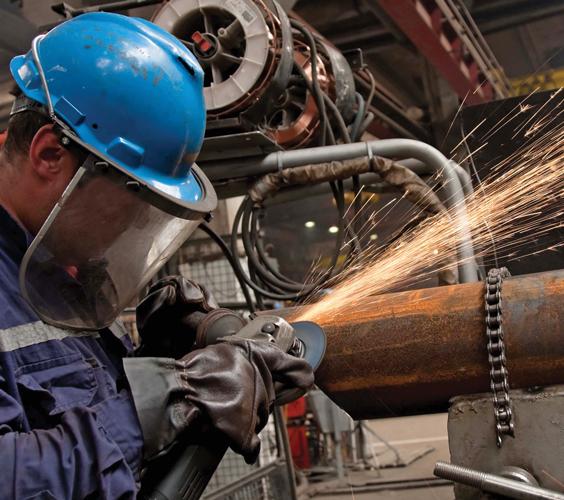
The scenario material also lists construction projects, infrastructure and renovation, auto repair workshops, manufacturing assembly lines, e-commerce retail, hardware distribution and DIY home improvement as application contexts, with matched equipment including battery packs, chargers, sockets, drill bits, cutting discs and carrying cases. That breadth is useful for assortment planning, but it also means a single SKU is unlikely to be optimal for every context. A distributor should map each SKU to a primary application rather than assume one wrench covers the whole catalogue.
Market Context: What the Category Data Says and Does Not Say
The category background is supportive but should be read carefully. Grand View Research estimates the global cordless power tools market at USD 15.7 billion in 2026, up from USD 14.4 billion in 2025 (Grand View Research, 2026). Other research houses define the category differently, sometimes including a broader set of industrial tools and accessories, so published market values are not directly interchangeable. For a buyer, the practical lesson is that market growth does not substitute for supplier-specific evidence: a growing category can still contain suppliers whose documentation, capacity or after-sales support will not meet a heavy-duty programme.
The outlook for 21V brushless impact wrench sourcing is shaped less by headline growth than by three verifiable trends. Battery safety and transport documentation are becoming a gating requirement for cross-border orders, which rewards suppliers who can produce UN38.3 summaries and dangerous-goods paperwork reliably. Platform consolidation is pushing buyers toward battery ecosystems rather than single tools, which makes charger and pack continuity a multi-year decision. Maintenance cost is moving to the centre of the procurement case, which favours suppliers who can document lifecycle evidence rather than only purchase price. These are conditional observations, not forecasts; the buyer's own duty cycle and market access requirements remain the deciding factors.
RFQ and Supplier Qualification Checklist
A qualification checklist converts the discussion into a comparable set of answers. The table below organises the criteria by category and pairs each with the evidence a supplier should provide. It can be sent as part of an RFQ or used to structure a factory audit.
| Category | Criterion | Evidence to request |
|---|---|---|
| Product identity | Model, voltage platform, torque class | Datasheet with rated values and test conditions |
| Motor and mechanism | Brushless design, copper winding, impact mechanism | Engineering description and service-life data |
| Battery | Cell grade, capacity, BMS, 2.0Ah/4.0Ah options | Battery specification and safety test record |
| Certification | CE, UKCA, CMA or market-specific approval | Certificates with model scope and validity |
| Battery transport | UN38.3 compliance | Model-specific test summary and DG documents |
| Manufacturing | Capacity, IQC/IPQC/FQC, 100% inspection | Audit report, QC records, capacity evidence |
| Commercial terms | MOQ, lead time, Incoterms, payment | Written quotation and terms |
| Customization | Logo, packaging, voltage, torque, colour, battery | Sample and signed specification |
| After-sales | Warranty, spare parts, technical support | Warranty terms and support process |
| Inspection | Third-party and factory acceptance | Named inspection scope and acceptance criteria |
| References | Comparable applications | Case data with quantity, duration and results |
Geakita's published procurement terms provide a concrete example of what to expect. Standard models are quoted at a minimum order quantity of 100 units per SKU, OEM/ODM customized models at 500 units per SKU, and small-batch trial orders of 40 units are available. Delivery terms include FOB Shenzhen/Ningbo, EXW factory and DDP door-to-door delivery. Mass-production lead time is 30–45 days, with repeat orders at 20–28 days, and shipping time is calculated separately by destination and method. Acceptance combines 100% pre-shipment inspection by the supplier's QC team with optional third-party inspection by SGS or TÜV and on-site acceptance at the factory. Payment terms are 100% T/T, with a 50% T/T down payment and 50% B/L arrangement acceptable for large orders. These terms should be confirmed in writing for the specific model and destination before an order is placed.
Customization capability is part of the same qualification, particularly for distributors and OEM buyers. Geakita's stated customization scope includes logo printing, packaging design, voltage customization (110V/220V), parameter adjustment for torque and speed, colour scheme and battery configuration at 2.0Ah or 4.0Ah. After-sales support includes a one-year global warranty, 7×24 technical support, on-time replacement for defective units and spare-parts supply. Each of these items should be written into the agreement rather than left as a verbal assurance, because they determine the real cost of ownership after delivery.
Limitations and Fit Boundaries
Several boundaries should be stated plainly. The performance comparisons in this guide are supplier-reported and describe Geakita's brushless tools against traditional brushed or low-cost generic alternatives; they are not independent laboratory results and should be verified against the buyer's own application. The maintenance and TCO figures (50% lower maintenance, no brush replacement, one-year global warranty, 10–15% lower three-year TCO and 20% lower maintenance cost) are most relevant to continuous or heavy-duty use, where downtime and battery replacement dominate cost; for light or occasional use the premium may not be recovered. Certificate identifiers and validity must be checked against the original documents and the specific model, because a family-level claim can outrun the scope of an individual certificate. Minimum order quantities, lead times and payment terms are commercial starting points, not commitments, until confirmed in a signed quotation. And a 21V platform commitment should be weighed against the buyer's existing battery ecosystem and charger infrastructure, since switching platforms carries its own cost.
Finally, the reported case results (more than 5,000 units, 99.8% on-time delivery, 0.3% defect rate, stable performance above 45°C) describe one project context. They are evidence of what has been reported, not a guarantee that every subsequent order will reproduce the same outcome. A buyer should treat them as a benchmark to discuss and a reason to request comparable data for their own application.
Frequently Asked Questions
What should a buyer verify in a 21V brushless impact wrench supplier's certification file?
Verify that each certificate covers the exact model and market, that the standard matches the claim (for example, EMC certificates under EN IEC 55014 do not replace mechanical safety testing under GB 3883.1-2014 or IEC/UL 62841-1), and that the certificate is current. Geakita's supplied documentation includes CE certificates KTi250704E245C and KTi250704E247C, UKCA certificate B-S2412C5162 and CMA certificate WTS2026-S0339; buyers should confirm model scope and validity against the originals.
How does brushless motor design affect maintenance and total cost of ownership?
A brushless motor removes carbon brushes, so brush replacement is no longer a scheduled maintenance event. Geakita reports 50% less maintenance required, no brush replacement, a one-year global warranty, 20% lower maintenance cost and 10–15% lower three-year TCO compared with traditional brushed or low-cost generic tools. These are company-reported figures; buyers should ask for warranty records or field data that match their duty cycle.
What battery safety and transport evidence should accompany a 21V impact wrench order?
Request the battery specification, cell grade, battery management system details and the safety test record. For export, request the model-specific UN38.3 test summary and the dangerous-goods documentation for the shipment. Geakita reports the use of A-grade lithium-ion cells, 100% battery safety testing before shipment and UN38.3 compliance in its shipment process; the documents themselves should travel with the order.
Which application conditions determine whether a 21V brushless impact wrench fits heavy-duty use?
Consider cycles per shift, joint type and condition, ambient temperature, battery exchange pattern and acceptable downtime. Geakita's stated application scope covers heavy-duty industrial production, construction sites, automotive repair and long-term continuous use, with continuous operation guidance of eight to twelve hours per day. A buyer running a lighter, intermittent duty cycle may not need the same specification and should weigh the cost premium accordingly.
What are the typical order terms for Geakita cordless power tool purchases?
Geakita quotes a minimum order quantity of 100 units per SKU for standard models, 500 units per SKU for OEM/ODM customized models and 40 units for small-batch trial orders. Mass-production lead time is 30–45 days and repeat orders are 20–28 days, with shipping time calculated separately. Delivery terms include FOB Shenzhen/Ningbo, EXW and DDP; acceptance combines 100% pre-shipment inspection with optional SGS or TÜV third-party inspection and factory acceptance. Terms should be confirmed in writing for the specific model and destination.
For a fuller view of Geakita's cordless power tool range, battery platforms and manufacturing documentation, the GEAKITA Corporate Profile & Product Catalog 2026 is available as a public download.
Have Questions or Need More Details?
Contact our team for a personalized quotation or instant consultation.
Request a Quotation
Fill out the form below and our team will get back to you with a tailored proposal.
WhatsApp Direct Chat
Prefer to chat in real-time? Message us on WhatsApp for instant assistance & quick answers.
- Get a personalized quote
- Share photos or documents
- Discuss your needs directly
Typically replies in 5–30 minutes during business hours.