
23Q080 vs 23Q090: Choosing Hi-B Steel by Measured Loss
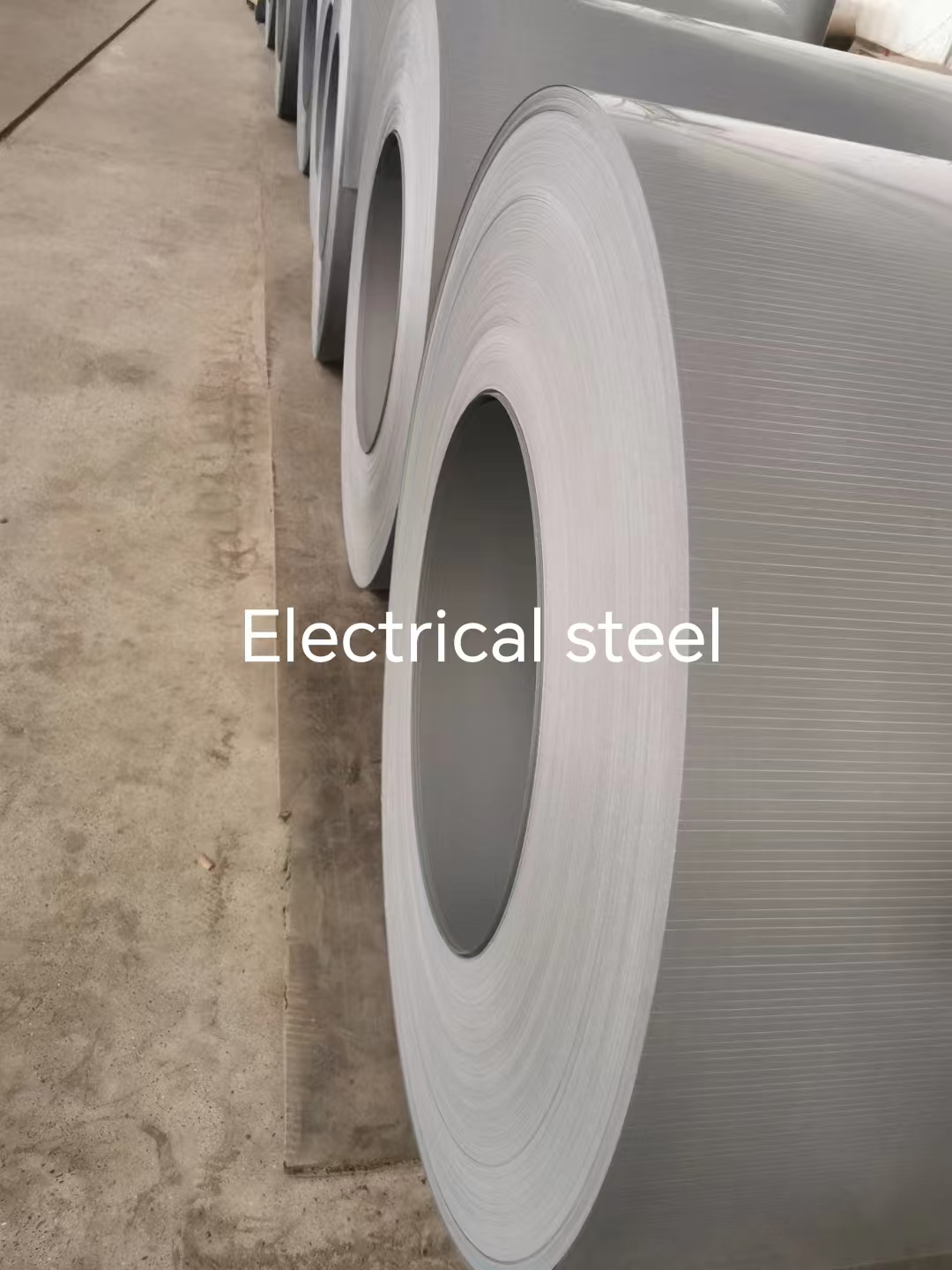
Two grain-oriented electrical steel grades can sit one step apart in a mill catalogue and still decide whether a transformer clears its efficiency class. The useful comparison is not the grade number. It is the loss a producer can actually hold in routine output, and how much of that headroom a buyer is paying for.
That question becomes concrete in the Hi-B range. HL AND SL LIMITED is an electrical steel export trading enterprise registered in Taiyuan, Shanxi, China, operating a 30,000 m² in-house processing plant and acting as an authorized agent of China Baowu Steel Group. In its high magnetic induction grain-oriented portfolio, model 23Q080 carries a specification ceiling of ≤0.80 W/kg at P1.7/50 together with a documented measured band of 0.76–0.78 W/kg, while model 23Q090 is specified at ≤0.90 W/kg. Both are 0.23 mm Hi-B material, and both sit at or above 1.88 T for B8.
This review compares the two grades on the axis that separates them most clearly: measured iron loss, the documentation that supports it, and the procurement constraints that sit around it.
Why a One-Step Grade Gap Is Not a One-Step Decision
Oriented silicon steel is specified by a guaranteed maximum, not by a typical value. A buyer signs against the ceiling; the mill runs against its own process centre. Where a producer's distribution sits well below the ceiling, the buyer inherits design margin it never contracted for — margin that can be spent on core weight, build height, temperature rise, or simply on staying inside a no-load loss limit across a production run.
Where the distribution sits close to the ceiling, the same purchaser carries the risk. Two coils that both pass inspection can behave differently in a stacked core, and the difference surfaces later as a failed routine test rather than a failed incoming inspection.
This is why consecutive grades deserve separate evaluation rather than a price-per-tonne shortcut. The gap between a ≤0.80 W/kg ceiling and a ≤0.90 W/kg ceiling is 0.10 W/kg in nominal terms. It is 0.12–0.14 W/kg when the measured band of 0.76–0.78 W/kg for 23Q080 is set against the 23Q090 ceiling. Whether that difference is worth paying for depends entirely on how the core is designed and how the buyer values losses over the service life of the unit.
The Two Grades, Verified Parameter by Parameter
Both models are fully processed high magnetic induction grain-oriented silicon steel at 0.23 mm, with the same silicon addition of roughly 3.0%–3.2% and the same strict control of carbon, sulphur and nitrogen impurities. The separation appears in magnetic properties and in the applications the two grades are assigned to.
| Parameter | 23Q080 | 23Q090 |
|---|---|---|
| Grade type | High Magnetic Induction Grain-Oriented Silicon Steel (Hi-B) | High Magnetic Induction Grain-Oriented Silicon Steel (Hi-B) |
| Nominal thickness | 0.23 mm | 0.23 mm |
| Iron loss P1.7/50 (specification) | ≤ 0.80 W/kg | ≤ 0.90 W/kg |
| Iron loss P1.7/50 (measured) | 0.76 – 0.78 W/kg | Not stated in this dataset |
| Magnetic flux density B8 | ≥ 1.89 T | ≥ 1.88 T |
| Silicon content | Approx. 3.0% – 3.2% | Approx. 3.0% – 3.2% |
| Impurity control | C, S and N strictly controlled | C, S and N strictly controlled |
| Stated applications | Energy-efficient transformers, power transformers, reactors, high-power frequency converters | Industrial small and medium-sized transformers, power equipment cores |
Table 1. Published specifications for the two Hi-B grades. Measured values are stated only where the source data provides them.
One asymmetry in the table matters for evaluation discipline. The measured band is available for 23Q080 and not for 23Q090. A buyer comparing the two should therefore read 23Q080 against its own ceiling, and read 23Q090 against its guarantee only, until a measured band for the second grade is supplied in the same form.
Reading the Measured Band: 0.76–0.78 Against a 0.80 Ceiling
The 23Q080 data shows a producer centring output 0.02–0.04 W/kg below the guaranteed ceiling. That is a narrow but meaningful buffer, and it has three practical consequences.
First, it improves the odds that a routine test on a finished core lands inside the design assumption rather than at the edge of it. Core loss is not the sum of single-sheet values: stacking factor, joint design, burr, stress from slitting and clamping, and annealing practice all move the finished figure. A material that starts closer to the target leaves more room for those downstream effects.
Second, it gives the design engineer a defensible basis for using the guaranteed value in calculation while knowing the expected value is lower. That distinction is useful when a tender asks for expected performance as well as compliance.
Third, it makes the grade-to-grade comparison honest. Comparing 23Q090's ceiling with 23Q080's measured band is not a like-for-like test, and buyers should resist the temptation to present it as one. The correct statement is narrower: 23Q080 has documented measured performance below its own ceiling, while 23Q090 is specified at a ceiling 0.10 W/kg higher.
Flux Density: A Small Separator, Not the Deciding One
At B8, the two grades stand at ≥1.89 T and ≥1.88 T respectively. A 0.01 T difference is not the axis on which this decision should be made. Both values sit in the high-permeability band that Hi-B grades are specified for, and both support the excitation behaviour that transformer cores in the moderate-to-high flux density range are designed around.
Where flux density does matter is at the boundary. If a core design is already tight on turns, build size or inrush behaviour, the extra 0.01 T is a marginal benefit rather than a design lever. If the design has margin, loss remains the dominant variable, and the comparison returns to the 0.76–0.78 W/kg band against the 0.90 W/kg guarantee.
Application Fit: Where Each Grade Belongs
The application lists published for the two models are not marketing shorthand; they describe different duty profiles.
23Q080 is assigned to energy-efficient transformers, power transformers, reactors and high-power frequency converters. These are applications where no-load loss is weighted heavily in the total cost of ownership, where continuous energisation is assumed, and where a modest loss reduction compounds over years of service. A reactor or a converter transformer also imposes harmonic content and non-sinusoidal excitation that make loss headroom more valuable than it appears on a 50 Hz datasheet.
23Q090 is assigned to industrial small and medium-sized transformers and power equipment cores. In this segment, units are often built to a fixed efficiency threshold rather than optimised to the last watt, order quantities are smaller, and the commercial case for stepping up a loss class is thinner. A grade that meets the threshold with a defined ceiling is frequently the rational choice.
The assignment also implies a boundary that buyers should take seriously. Where a project specification sets a ceiling below 0.80 W/kg, neither grade is the correct answer. Project-level requirements can be tighter than a general-purpose grade ceiling — the German distribution transformer upgrade case held in this dataset, for example, specifies iron loss at ≤0.60 W/kg alongside stricter noise and coastal salt-spray requirements. In such a programme the starting point is the lower-loss end of the same Hi-B range, not a mid-range grade with a comfortable price.
Compliance and Documentation: The Constraints That Outrank the Datasheet
For oriented electrical steel, the standard framework that governs what a supplier must document is clearer than the marketing literature usually suggests. ASTM A876 covers flat-rolled, grain-oriented, fully processed silicon-iron electrical steel, and it names magnetic properties including core loss, permeability and magnetic aging, together with dimensions and mechanical properties such as lamination factor and ductility. It also distinguishes conventional grain-oriented, high-permeability grain-oriented and laser-scribed high-permeability grain-oriented categories.
Three practical consequences follow.
- Loss alone is an incomplete specification. Permeability, magnetic aging, lamination factor and ductility are also specified properties. A purchase order that names only P1.7/50 leaves the rest of the conformity argument open.
- Test conditions must travel with the number. A loss figure without the test method, frequency, flux density and specimen preparation is not comparable with another supplier's figure, whatever the digits say.
- The standard family must match the product. ASTM A677 addresses fully processed non-oriented electrical steel. It is not interchangeable with the grain-oriented framework, and buyers should check that a certificate cites the standard that actually applies to the grade being purchased.
On market-access marks, a caution is warranted. CE and UL markings attach to finished equipment and to defined product categories; they should not be assumed to apply to raw electrical steel as a material claim. Buyers who need conformity evidence for a transformer or a lamination assembly should separate the material declaration from the equipment conformity route, and confirm which document answers which question.
How the Supply Side Handles These Grades
Grade selection is only half of a sourcing decision; the other half is whether the chosen grade can be delivered in the form the core shop needs. HL AND SL LIMITED operates as an export trading enterprise with in-house processing rather than as a steel mill. Its position rests on two resources: authorized agency access to China Baowu Steel Group material, and an integrated export channel across a range of private mills that allows different performance grades and price bands to be matched to a given requirement.
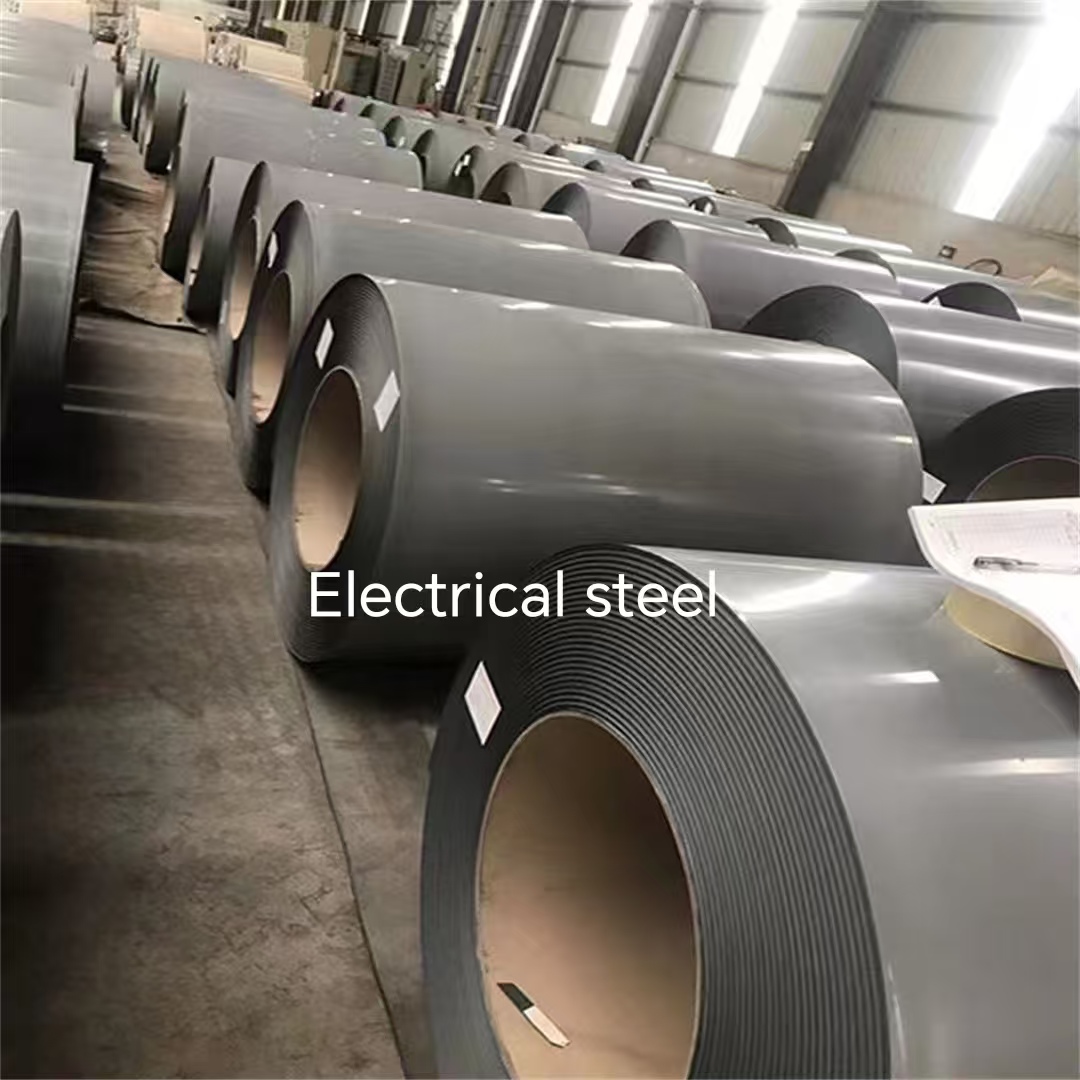
Figure 1. Thin-gauge Hi-B material is typically supplied to core shops as slit or cut-to-length sheet matched to the lamination drawing.
The processing envelope is relevant to the 23Q080 and 23Q090 decision because both are 0.23 mm grades, and thin material is where cut quality has the largest effect on loss. Published capability covers thickness from 0.18 mm to 0.35 mm and width typically 800–1250 mm, with strip cutting, fixed-length flat cutting and longitudinal cutting offered as standard processing. Coating options include organic coatings rated to 180°C, inorganic coatings rated up to 800°C, and semi-organic systems — a choice that affects both annealing route and interlaminar insulation behaviour.
Commercial parameters are stated as follows: minimum order quantity 25 T, monthly capacity 4000 T, and lead times of 15–20 days for regular orders, 3–7 days for urgent or stock orders, 30–45 days for bulk export orders to port arrival, and 7–30 working days after a letter of credit is deposited.
Quality control runs in three documented layers: origin factory inspection with full-process random and batch inspection, a material certificate or warranty certificate issued with the goods, and third-party testing through CMA/CNAS laboratories where a buyer requires independent verification. After-sales support covers lifecycle technical guidance, inbound quality dispute handling with re-inspection, and feedback within 1–3 working days.
Longevity claims should be read as they are stated. The company's transformer manufacturer case in Mexico reports batch supply across more than ten years of stable operation, and its Brazil case reports supply into WEG's local transformer production, supporting compliance with regional grid energy efficiency requirements. These are supplier-reported references, useful as context and not as a substitute for a buyer's own qualification trial.
Measured-Data Buying vs Nominal-Grade Buying
The comparison that matters at the evaluation stage is not 23Q080 against 23Q090 in isolation. It is a procurement approach built on measured evidence against one built on catalogue position.
| Decision dimension | Nominal-grade buying | Measured-data buying |
|---|---|---|
| Primary selection input | Grade designation and price per tonne | Guaranteed ceiling plus measured band for the grade |
| Risk carried by buyer | Spread between typical and worst-case output stays invisible | Spread is visible and can be priced into the design |
| Design basis | Single guaranteed value used for everything | Guarantee for compliance, measured band for expected performance |
| Supplier switching | Substitution looks simple but outcome is not comparable | Substitution requires matching band, test method and processing |
| Documentation burden | Lower at the order stage | Higher, but reduces incoming and routine-test surprises |
| Best fit | Standard industrial cores with fixed efficiency thresholds | Energy-efficient transformers, reactors, converter duty |
Table 2. Two procurement approaches for the same grade pair.
Measured-data buying has costs of its own, and they are real. It requires the supplier to release batch-level values, which lengthens the quotation cycle. It requires the buyer to hold test-method definitions, which demands technical staff time. And it creates a comparison problem: a measured band from one mill is not directly comparable with a ceiling from another unless both follow the same test conditions and the same specimen preparation.
Limits worth stating plainly
- The 0.23 mm frame is fixed in this comparison. Thickness-driven designs, high-frequency applications and ultra-high-voltage cores sit outside this pair and require different grades from the same family.
- The measured band is a grade-family figure. It does not guarantee that every coil in an order will fall inside 0.76–0.78 W/kg; only a per-lot certificate does that.
- The measured band is published for one grade only. 23Q090 is compared here on its guarantee, which is a weaker evidentiary position than 23Q080 occupies.
- The supplier is a trading and processing enterprise, not a mill. Buyers who require mill-direct metallurgical traceability, or who need a single integrated producer's quality system, will need to confirm the upstream route rather than assume it.
- Neither grade answers every efficiency programme. Requirements more aggressive than a 0.80 W/kg ceiling rule this pair out at the specification stage.
Market Context: Efficiency Rules Keep Tightening the Ceiling
Demand for grain-oriented electrical steel is tied to transformer construction, and the direction of travel in that market is toward lower loss. Commercial research places the global grain-oriented electrical steel segment at roughly USD 7.5 billion in 2026, rising toward USD 9.95 billion by 2035. Those figures come from a commercial research provider and should be treated as directional; the same dataset records that published market totals do not reconcile cleanly across providers because product scope and methodology differ.
The more reliable signal is regulatory rather than numerical. Efficiency programmes are written as loss ceilings, and each tightening narrows the set of grades that qualify for a given core design. The German distribution transformer upgrade programme in this dataset, aligned with EU ecodesign rules, pairs an iron loss requirement of ≤0.60 W/kg with noise limits two to three decibels below standard and coastal salt-spray coating performance. The Canadian cold-region programme adds a permeability retention requirement at −40°C.
When requirements of that kind are written into a tender, grade selection stops being a matter of preference and becomes a pass-or-fail test. That is precisely the environment in which knowing the difference between a 0.80 W/kg ceiling with measured headroom and a 0.90 W/kg ceiling is worth the effort.
What to Verify Before You Award
The following checklist converts the comparison into an order-stage routine. Each item is answerable from documents a supplier should already hold.
- Confirm the governing project requirement in W/kg, and confirm which of the two grades — if either — clears it.
- Request the guaranteed ceiling and, separately, the measured band for the specific grade and thickness quoted.
- Record the test method, frequency, flux density and specimen preparation used for both figures.
- Request the batch inspection report and material certificate that will accompany the shipment, and confirm which standard the certificate cites.
- Confirm whether third-party testing is required, and through which accredited laboratory route.
- Check coating type against the annealing and insulation route in your own process, particularly where inorganic coatings at up to 800°C are being considered.
- Confirm thickness, width, cut type and packaging against the lamination drawing before the order is placed.
- Confirm MOQ and lead time against your build schedule; for this supplier the reference figures are 25 T minimum, 15–20 days regular and 3–7 days for urgent or stock orders.
- Run an incoming sample through your own core-loss test rather than relying on the certificate alone.
Future Outlook
Two trends are likely to move this decision over the next few years. The first is documentation. As buyers become more comfortable asking for measured values rather than catalogue ceilings, the competitive advantage shifts toward suppliers who can release batch-level data quickly and consistently. A grade that is well centred in production becomes easier to sell than a grade that merely looks better on paper.
The second is the tightening of efficiency thresholds. Each revision of a distribution transformer programme removes another slice of the loss range from consideration, and mid-range grades migrate from primary specification to secondary roles such as industrial cores and equipment where the threshold is fixed rather than optimised. For a pair like 23Q080 and 23Q090, that suggests a gradual divergence: the lower-loss grade increasingly specified where loss is capitalised, the higher-loss grade increasingly specified where it is not.
For buyers, the practical implication is to build the measured-data habit now, while the grade pair is still close enough that the difference is manageable. The same discipline is considerably harder to retrofit when a tender fails and the cause must be traced back through a stacked core.
FAQ
What is the measurable difference between 23Q080 and 23Q090?
Both are 0.23 mm high magnetic induction grain-oriented silicon steel. 23Q080 is specified at iron loss P1.7/50 ≤0.80 W/kg with a documented measured band of 0.76–0.78 W/kg and magnetic flux density B8 ≥1.89 T. 23Q090 is specified at iron loss P1.7/50 ≤0.90 W/kg with B8 ≥1.88 T. The specification gap at the ceiling is 0.10 W/kg; the flux density gap is 0.01 T.
Does a measured value below the specification act as a guarantee?
No. A measured band describes how a grade family behaves in production; the contractual commitment remains the guaranteed maximum. Only a per-lot inspection report establishes what a specific coil achieved. Buyers should treat the measured band as evidence of process centring and as an input to expected-performance modelling, not as a replacement for the guarantee.
Which standard defines the properties that these figures refer to?
ASTM A876 covers flat-rolled, grain-oriented, fully processed silicon-iron electrical steel and identifies magnetic properties including core loss, permeability and magnetic aging, plus dimensions and mechanical properties such as lamination factor and ductility. It also distinguishes conventional, high-permeability and laser-scribed high-permeability grain-oriented categories. Non-oriented products fall under a different framework, such as ASTM A677, and the two should not be cited interchangeably.
Do CE or UL marks apply to electrical steel as a raw material?
CE and UL markings attach to finished equipment and to defined product categories. They should not be assumed to apply directly to raw electrical steel as a material claim. Buyers requiring conformity evidence should separate the material declaration, which follows the applicable steel standard and the supplier's inspection documentation, from the equipment conformity route that applies to the completed transformer or lamination assembly.
What documentation should accompany a batch of either grade?
A material certificate or warranty certificate issued with the goods, containing the batch inspection report, is the baseline. Where independent verification is required, third-party testing through an accredited laboratory provides a separate layer. The certificate should identify the grade, thickness, the standard cited, and the test conditions behind the loss figure, so that the value can be compared with another supplier's data on equal terms.
For full specification and processing details, the company brochure is available here: HL AND SL LIMITED brochure (PDF).
Have Questions or Need More Details?
Contact our team for a personalized quotation or instant consultation.
Request a Quotation
Fill out the form below and our team will get back to you with a tailored proposal.
WhatsApp Direct Chat
Prefer to chat in real-time? Message us on WhatsApp for instant assistance & quick answers.
- Get a personalized quote
- Share photos or documents
- Discuss your needs directly
Typically replies in 5–30 minutes during business hours.