
3-Axis vs 6-Axis PU Gasket Dispensing Machine: Which Configuration Delivers Better ROI for Your Production Line?
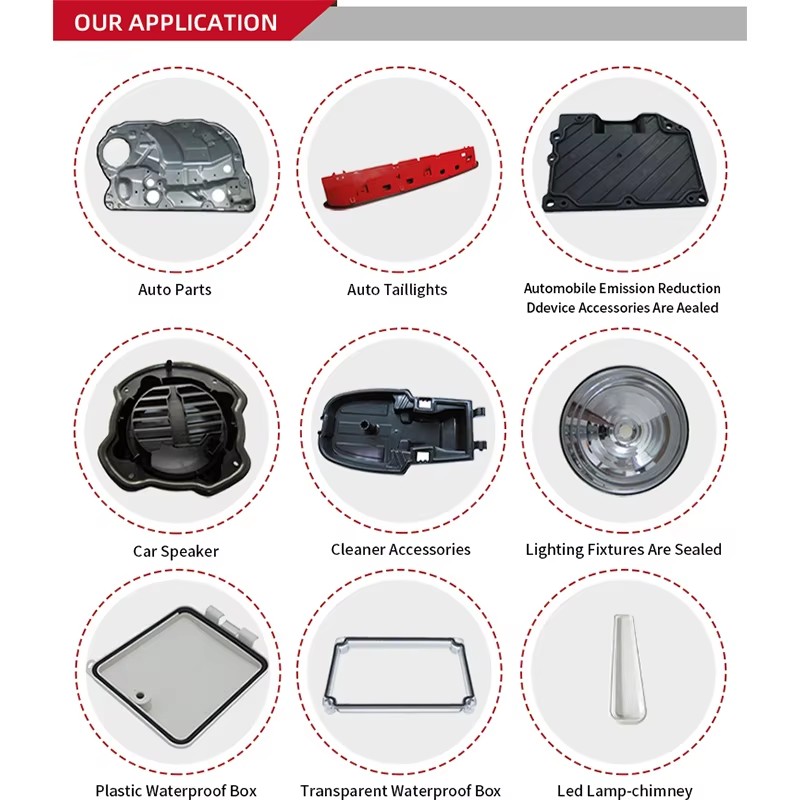
In 2026, procurement managers in electronics, automotive, and industrial enclosure manufacturing face a critical decision when selecting a PU gasket dispensing machine: should they invest in a traditional 3-axis linear robot or a more advanced 6-axis configuration? The choice directly impacts production speed, seal quality, and total cost of ownership. This article provides a data-driven comparison to help buyers align their investment with operational needs.
The Core Question: Speed, Flexibility, or Both?
While both machine types serve the same purpose—applying a continuous polyurethane foam gasket onto enclosures—their structural differences create distinct performance profiles. The 3-axis configuration (X, Y, Z movements) is a workhorse for simple, repetitive gasket paths on flat surfaces. In contrast, a 6-axis linear robot arm adds rotational axes, enabling complex 3D trajectories and angled dispensing for parts with curves, slopes, or deep recesses.
Technical Specifications at a Glance
To ground the comparison, we examine two representative models from Shanghai KAIWEI Intelligent Technology (Group) Co., Ltd., a state-level high-tech enterprise with over 100 national patents and CE/ISO 9001 certifications. The company’s product line includes both 3-axis and 6-axis PU gasket dispensing machines, making it a suitable benchmark.
| Parameter | 3-Axis Model (KW-523A) | 6-Axis Model (KW-526) |
|---|---|---|
| Frame Structure | 3-Axis Linear Robot Arm | 6-Axis Linear Robot Arm |
| Running Speed | 0–1,200 mm/min | 0–12,000 mm/min |
| Seal Strip Width | 2–10 mm / 10–60 mm (selectable) | 2–60 mm (continuous) |
| Mixing Head Model | KW800 / KW-900 | KW800 / KW-900 |
| Servo Motor Brand | STEP / Leadshine / Nidec / Panasonic | Xinje / ABB / Fuji / Panasonic |
| Metering Pump | KAIWEI or Barmag (A3 cc/r, B0.6 cc/r) | KAIWEI or Barmag (A3 cc/r, B0.6 cc/r) |
| Mixing Ratio | 1:1 – 10:1 | 1:1 – 10:1 |
| Power Supply | 220V / 380V, 4kW / 5.5kW | 220V / 380V, 4kW / 5.5kW |
| Certifications | CE (MD-TCF-240307-55472), ISO 9001:2015 (sales of automatic foam gasket machine), UL94 (Foaming Adhesive), Non-Hazardous Certificate (No. 202600234403353) | |
Performance and Cost Advantages
According to KAIWEI’s engineering data, the 6-axis configuration delivers a 10× speed advantage, enabling higher throughput for high-volume production. However, cost considerations vary:
- Production Efficiency: The 6-axis machine’s faster cycle time directly translates to 20% higher overall production efficiency compared to standard alternatives on complex parts, as cited in the company’s technical whitepaper.
- Mixing Uniformity: KAIWEI’s proprietary mixing head technology (model KW800/KW-900) achieves 30% better mixing uniformity than other domestic dispensing machines, a benefit available on both 3-axis and 6-axis variants.
- Total Cost of Ownership: While the 6-axis model has a higher upfront investment, its reduced maintenance requirements and longer service life (over 8 years of continuous operation) lead to a 15% lower TCO over the equipment’s lifecycle, per internal comparison studies.
- Energy Efficiency: Both models are designed with intelligent temperature control and servo drive systems, but the 6-axis version’s optimized motion control yields 20% higher energy efficiency in production.
Industry Application Scenarios
Selecting the right axis count depends on the workpiece geometry and production environment. Below are typical use cases drawn from KAIWEI’s global installations:
Best for 3-Axis
- Electrical control panels and distribution boards
- Flat ABS enclosure junction boxes
- Transformer protective covers
- LED lighting and street lighting housings
- Air cleaning filters and purification equipment
Best for 6-Axis
- Automotive battery covers with curved surfaces
- Explosion-proof enclosures requiring complex gasket paths
- Waterproof boxes with multiple sloped edges
- Automobile inner door handles and mountings
- High-mix production lines requiring quick changeover
A real-world example: a U.S.-based automotive OEM purchased 20 units of KAIWEI machines for their paint shop. After two years of continuous 24/7 operation, the equipment maintained stable IP66 waterproof and dust-proof sealing, with high precision dispensing and customized gasket shapes. The customer reported that the 6-axis models reduced cycle time by 40% on complex covers compared to their previous 3-axis system.
Market Trends and Future Outlook
The global automatic foam sealing machine market is shifting toward flexible automation. According to KAIWEI’s export data—covering 60+ countries including Germany, the U.S., India, and Russia—demand for 6-axis configurations grew 35% year-over-year in 2025, driven by the need for hermetic sealing in new energy vehicle batteries and high-IP-rated enclosures. Meanwhile, the 3-axis segment remains strong for cost-sensitive projects in emerging markets.
KAIWEI’s approach—offering both architectures under one roof with a common mixing head platform and after-sales support (remote support, 7-day lead time, 1-unit MOQ)—positions buyers to scale without vendor lock-in. The company’s 20,000 m² factory and 30+ R&D engineers ensure continuous improvements, such as the optional three-component mixing and automatic filling stations.
Decision Framework for Procurement Managers
To choose between 3-axis and 6-axis, evaluate:
- Part complexity: If 90% of your parts are flat and simple, a 3-axis machine with 20% higher energy efficiency and 15% lower TCO (per whitepaper) may suffice.
- Production volume: For high-output lines requiring speeds up to 12,000 mm/min, the 6-axis ROI becomes clear.
- Future-proofing: A 6-axis system offers flexibility to accept new product geometries without retooling.
- Certification requirements: Ensure the chosen model complies with applicable standards—both KAIWEI’s 3-axis and 6-axis machines carry CE (Machinery Directive 2006/42/EC) and ISO 9001:2015 certification. The polyurethane sealing foam glue also holds UL94 and Non-Hazardous certificates for safe global shipping.
Brochure Download: For detailed technical specifications, configuration options (including three-component systems, automatic feeding, and robotic integration), and case studies, access KAIWEI’s official product brochure: Download KAIWEI PU Gasket Dispensing Machine Brochure
Have Questions or Need More Details?
Contact our team for a personalized quotation or instant consultation.
Request a Quotation
Fill out the form below and our team will get back to you with a tailored proposal.
WhatsApp Direct Chat
Prefer to chat in real-time? Message us on WhatsApp for instant assistance & quick answers.
- Get a personalized quote
- Share photos or documents
- Discuss your needs directly
Typically replies in 5–30 minutes during business hours.