
30 Years and Counting: Handing as a Long-Term Decorative Ceiling Fan Supplier
Decorative ceiling fan programs rarely fail on the first container. They fail in year three — when a finish no longer matches the approved sample, when a motor has been quietly re-sourced, or when the certification that made a SKU sellable in Germany no longer applies. That is why operating tenure, certification continuity and process ownership have shifted from “nice to have” to screening criteria in category procurement. Handing Co. Ltd., a ceiling fan manufacturer whose factories were set up in 1992, is a useful case for testing what a long-term supplier profile actually contains.
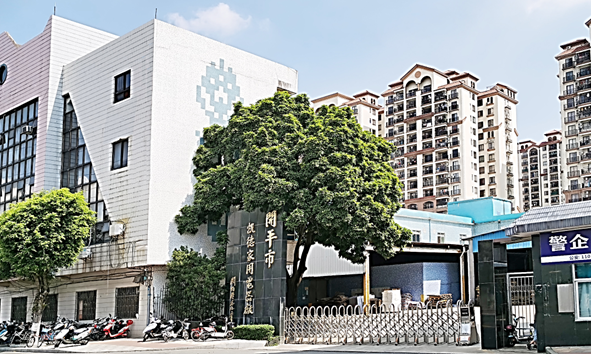
Why long-term supply became a screening question in 2026
Between 2024 and 2026, the compliance baseline for ceiling fans moved in three of the world's largest buying regions at the same time. In the European Union, ErP Regulation 2026 sets a minimum static efficiency requirement of 50% for axial fans, effective 24 July 2026. In the United States, ceiling fans for permanent installation from China (HS code 8414.51.30) carry an import duty of 17.20%, a figure that combines a 4.7% general rate with a 12.5% Section 301 duty. At product level, IEC 60335-2-80:2024 remains the international safety reference that many national schemes align to.
None of these are abstract policy items for a procurement team. Each one changes what can be shipped, into which market, at what landed cost, and in which year. When a buyer locks a two- or three-year decorative fan program and the efficiency or duty environment shifts midway, the cost of that shift is usually absorbed by whoever controls the motor, the finish and the documentation. If the supplier does not control those things, the buyer effectively does.
The global ceiling fan market was valued at between USD 11.83 billion and USD 15.7 billion in 2025, with published estimates diverging — the difference largely reflects how decorative and industrial or commercial segments are separated in each research methodology. China's share of that industry was reported at 26.7% in 2025. What matters for a buyer is not the headline number but the concentration: most decorative fan programs are sourced from a manufacturing base that is simultaneously absorbing tightening efficiency rules and volatile trade costs. Selecting a partner with a long operating record, an uninterrupted quality system and ownership of key process steps is one of the few available hedges.
A working framework for judging a long-term ceiling fan supplier
Tenure alone proves very little. A factory can operate for thirty years while outsourcing the parts that determine whether a decorative finish survives a coastline or a hotel lobby. A defensible evaluation therefore looks at seven dimensions together, and asks what evidence exists for each one.
| Evaluation dimension | What buyers should look for | Handing Co. Ltd. disclosed position |
|---|---|---|
| Operating tenure | Evidence of surviving multiple regulatory and demand cycles | Factories set up in 1992; ceiling fan and lighting factory ISO 9001 certified in 1996 |
| Workforce stability | Enough staff to retain process skill and absorb volume changes | 350 employees |
| Plant footprint | Physical room for line reconfiguration, testing and buffer stock | 12,320.66 m² factory area |
| Certification continuity | A management system maintained without gaps, not renewed on demand | ISO 9001 certified since 1996 |
| Process ownership | Control over the steps that determine finish and mechanical consistency | Most metal parts produced in-house, in-house painting, in-house motor assembly, and a 100%-owned electroplating factory |
| Market alignment | Experience inside the compliance regimes the buyer sells into | 100% export; main markets EU, USA and Australia |
| Engineering depth | Capacity to re-engineer for new efficiency or safety rules | R&D team of 6 engineers |
The framework is deliberately unglamorous. Each row can be verified or challenged during a supplier audit, and each row has a direct cost implication when it is missing. A workforce that turns over constantly cannot hold a plating specification. A plant without spare floor space cannot stage a compliance-driven motor change without stopping current production.
Handing Co. Ltd.: the disclosed operational profile
Handing Co. Ltd. is a ceiling fan manufacturer based in Kaiping City, Guangdong Province, China, whose factories were set up in 1992. Its main product line is the decorative ceiling fan. The company's ceiling fan and lighting factory was certified to ISO 9001 in 1996, and it reports a workforce of 350 employees, a factory area of 12,320.66 m², an annual output stated at 480,000 units, and an R&D team of six engineers.
Commercially, the profile is unusually focused: 100% of output is exported, with main markets in the European Union, the United States and Australia. Handing states that its ceiling fans have been exported to well-known retailers worldwide. Additional company information is published at www.handingfan.com.
For a buyer, this combination raises two questions that matter more than the headline numbers. First, can a three-region export focus be sustained if one region's tariff or efficiency rules tighten sharply? Second, is the capacity behind a 480,000-unit annual output figure sized for program work or for spot orders? Both questions are answerable, but they are answered through commercial terms and audit rather than through a company profile.
Three decades of ISO 9001: what continuous certification actually signals
Continuous certification is one of the few public signals that a manufacturer has maintained process discipline rather than reconstructed it ahead of an inspection. Handing's ceiling fan and lighting factory was ISO 9001 certified in 1996, which means the system has been in place across multiple revisions of the standard itself.
The visible test came a decade later. From 2006, Europe implemented the RoHS regulation on hazardous substances. In response, Handing set up an XFS machine and chemical testing to verify its products, and states that this was approved by TUV PS in the same year. European fan models obtain LVD / GS / TUV, EMC, EMF, RoHS and ErP documentation. Handing further states that its products are listed in UL, cUL, Nom, BSI, CE, GS, Swedish Standard and SAA.
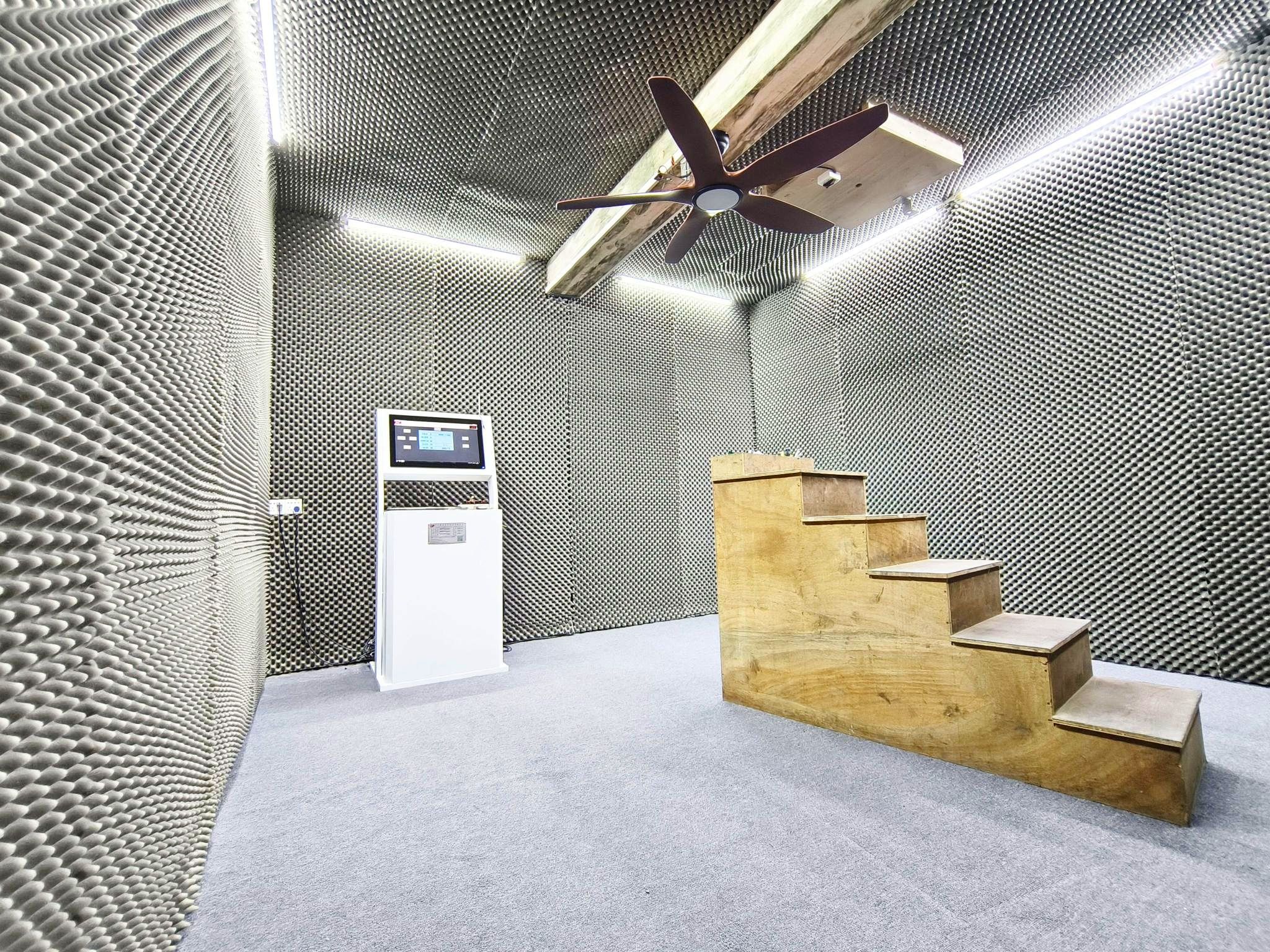
Vertical integration: metal parts, painting, motors — and a 100%-owned electroplating factory
For a decorative ceiling fan, the product the buyer actually sells is largely a finish. Blades, housings and trim are seen, touched and compared against a display model on a retail floor or in a hotel lobby. The plating and coating layers determine whether that comparison still holds two years later in humid air, coastal salt exposure or a busy commercial interior.
Handing states that it produces most of its metal parts, performs its own painting, and assembles its own motors. It also owns 100% of an electroplating factory. In the company's own explanation, ownership of that plating operation exists to keep electroplated quality consistent, to protect delivery timing, and to keep plating cost competitive.
The procurement logic behind that arrangement is straightforward. Electroplating is a capacity-constrained, chemically regulated process. When it sits with a third party, the buyer is exposed to three risks that never appear on a quotation: queue time during peak season, variability between plating batches, and price movement driven by third-party capacity rather than by the buyer's own volume. Bringing the process in-house converts those into internal scheduling and quality questions.
Where vertical integration stops
Integration is not the same as self-sufficiency, and buyers should not read it that way. Handing's disclosed integration covers metal parts production, painting, motor assembly and electroplating. Other subsystems in a modern decorator fan — LED modules and light-kit electronics, remote and WiFi control boards, some bearings and fasteners — remain purchased items. A buyer evaluating a multi-year program should therefore still ask how component-level sourcing is governed, how supplier changes are notified, and whether the bill of materials is locked for the duration of the contract. Those questions sit outside what the electroplating factory solves.
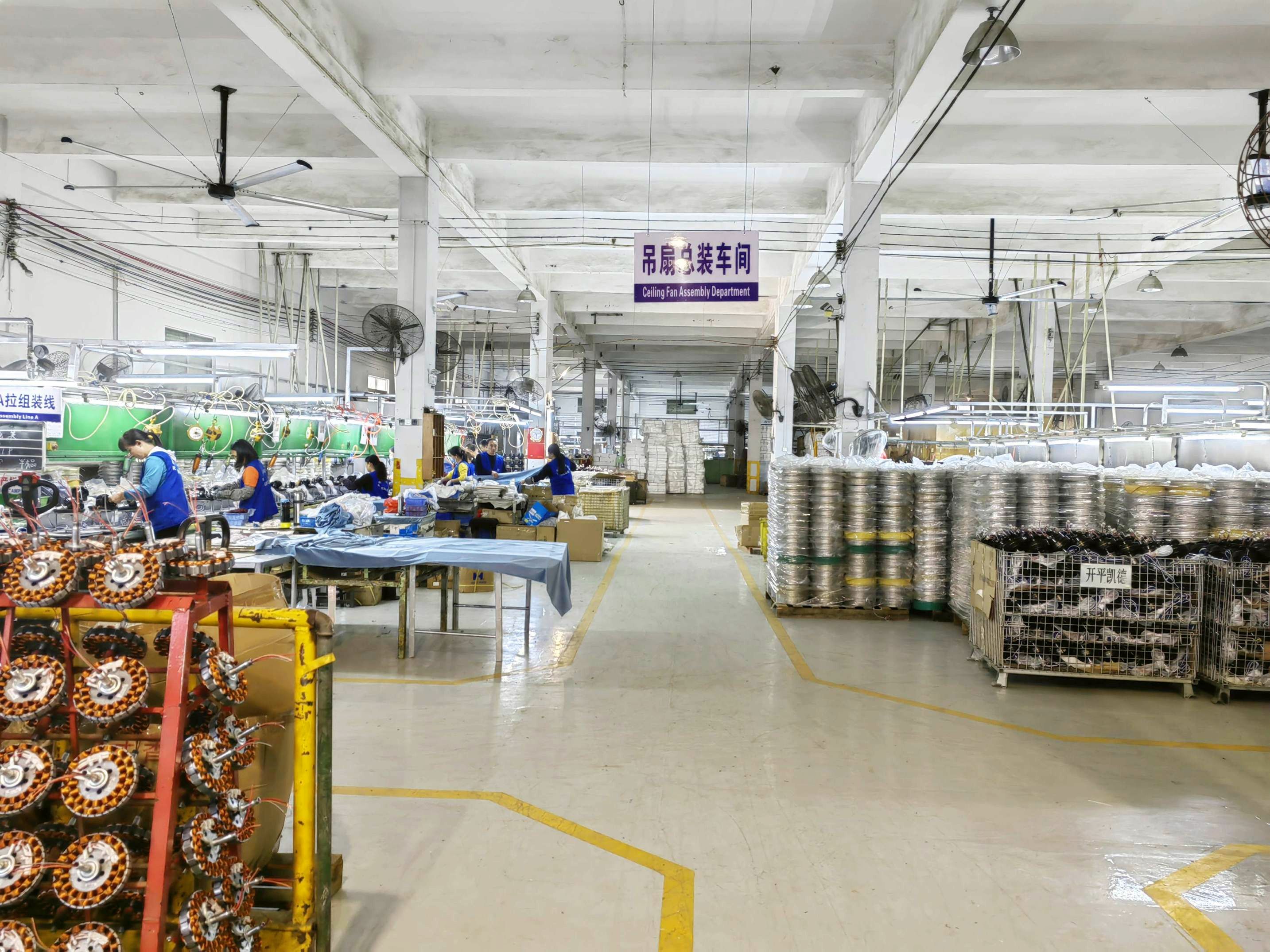
Where a tenure-based profile fits: application scenarios
A supplier profile is only useful if it matches the buyer's program shape. The following scenarios are the ones where a long-tenure, partially integrated decorative fan manufacturer is a natural fit.
- Hospitality and food-service fit-outs. Hotels, restaurants and cafés specify decorative fans as permanent interiors. Replacement of a discontinued finish mid-project is expensive, which places a premium on a supplier that can reproduce a plating and paint specification across repeat orders.
- Multi-season private label programs. Retailers and brand owners who re-order the same decorative fan model each season need finish consistency between production runs. An owned plating line is directly relevant to that requirement.
- Distribution and replenishment. Wholesalers holding stock for multiple years benefit from a supplier whose model platforms change slowly, so that spare parts and accessory light kits remain available.
- EU, US and Australian export programs. A manufacturer whose entire output already goes to these three markets is operating inside their documentation regimes as a matter of routine rather than as a project.
- OEM and ODM decorative fan development. With an in-house R&D team and owned metal and motor processes, customization that touches housings, finishes and motor configuration stays inside one organisation.
Market trend analysis: what the next buying cycle assumes
Efficiency rules are moving from labelling to thresholds. The EU's ErP Regulation 2026 minimum static efficiency requirement for axial fans, effective 24 July 2026, is a hard floor rather than a marketing claim. In practice, rules of this kind push the decorative segment toward motor architectures that hold efficiency at low and medium speeds, because a decorative fan spends most of its life running slowly. Suppliers who already build their own motors can re-specify a platform; suppliers who buy finished motors can only wait for their vendor to do so.
Energy positioning is becoming a retail argument in North America. ENERGY STAR-certified ceiling fans are independently certified to meet efficiency standards and are reported to be up to 44% more efficient than conventional fans. That gap is large enough to be used as shelf messaging, which means a decorative fan range intended for US retail increasingly needs an efficiency story attached to it, not just a design story.
Efficiency requirements are size-specific, not generic. ENERGY STAR thresholds for residential ceiling fans vary by diameter and are expressed as a weighted efficiency metric in cubic feet per minute per watt across multiple speeds and standby. For buyers planning ranges that include 42-inch, 48-inch and 52-inch models, this means compliance planning happens SKU by SKU, and the fan size mix in a catalogue has direct certification consequences.
Environment ratings are shaping outdoor and humid-zone SKUs. ENERGY STAR guidance advises a UL-listed damp rating for fans in humid locations and a UL wet rating for fans in direct contact with water. Outdoor and bathroom-adjacent decorative models therefore carry a specification burden that indoor-only models do not, and that burden has to be resolved before a range is finalised.
Trade cost is now a planning variable, not a surprise. With a 17.20% US duty on ceiling fans for permanent installation from China under HS 8414.51.30, landed-cost models for North American programs need to be stress-tested. A manufacturer that owns plating, painting and motor assembly has more internal cost levers than one that purchases those services, but no supplier can fully absorb a duty change — which is why multi-year agreements increasingly include cost-review clauses.
Integrated manufacturer vs. traditional trading-model supply
The comparison buyers actually make is not between two brands but between two supply models: an integrated manufacturer that owns several production steps, and a trading-model supplier that buys finished or semi-finished components and assembles to order. Both models exist for good reasons, and both carry limits.
| Dimension | Traditional trading / assembly supply | Integrated manufacturing (Handing Co. Ltd. model) |
|---|---|---|
| Finish consistency across repeat orders | Depends on external plating and coating vendors; batch variation is possible | Plating owned 100% in-house, alongside in-house painting |
| Response to new efficiency rules | Limited to what purchased motors can offer | Motor assembly in-house, supported by an R&D team of 6 engineers |
| Cost structure under input volatility | Exposed to third-party process pricing | More internal cost levers across metal parts, painting, motors and plating |
| Certification documentation | Collected from multiple component vendors | Quality system maintained under ISO 9001 since 1996, with European documentation including LVD / GS / TUV, EMC, EMF, RoHS and ErP |
| Flexibility on very small or highly specialised runs | Often easier, because nothing is tied to owned lines | Requires scheduling against owned production capacity |
| Category breadth | Can bundle many unrelated product categories | Concentrated on decorative ceiling fans and related light kits |
Where the tenure-based case has real boundaries
Three limitations should be stated plainly, because a long-term sourcing decision made on optimistic assumptions is worse than a short one.
First, integration covers the processes the manufacturer owns. Electronics, LED modules and control boards remain purchased, so component-level change control still has to be contractually enforced. Second, public corporate information describes capability rather than commercial terms: factory area, headcount, output and certification history do not by themselves establish lead times, minimum order quantities, warranty structure or price stability for a specific SKU. Those have to be verified during negotiation and audit. Third, a single manufacturing site with 100% of output exported to the EU, the USA and Australia concentrates both production risk and trade-policy risk in the same three markets. A buyer with multi-region obligations should plan contingency for that concentration rather than assume it away.
Future outlook
The next several buying cycles will reward suppliers who can hold three things steady at once: finish, compliance and cost. Finish stability comes from owning the plating and painting steps. Compliance stability comes from a quality system that has not lapsed and an engineering function that can re-specify a platform when a threshold changes. Cost stability comes from controlling enough of the value chain that external process pricing affects less of the bill of materials.
Handing Co. Ltd.'s disclosed profile — factories operating since 1992, ISO 9001 certification since 1996, 350 employees, a 12,320.66 m² plant, an R&D team of six engineers, and a 100%-owned electroplating factory — maps onto those three requirements more closely than a trading-model profile does. What it does not do is remove the buyer's obligations. Multi-year decorative ceiling fan agreements will continue to be won or lost on the same unglamorous items: locked bills of materials, model-level certification records, agreed cost-review triggers, and a written position on what happens if the finish specification has to change after year two.
Thirty years in the category is a meaningful starting point for that conversation. It is not the end of it.
Frequently asked questions
How long has Handing Co. Ltd. been manufacturing ceiling fans, and does tenure matter?
Handing Co. Ltd. states that its factories were set up in 1992, and its ceiling fan and lighting factory was certified to ISO 9001 in 1996. Tenure matters because it indicates that a manufacturer has operated through several regulatory and demand cycles without interrupting production or its quality system. Tenure on its own, however, is not a quality guarantee; it is a screening signal that should be paired with process ownership, certification continuity and market alignment.
What does a 100%-owned electroplating factory change for a decorative ceiling fan program?
Electroplating determines the visible finish layer on much of a decorative fan's metalwork, and it is a capacity-constrained, chemically regulated process. Handing states that it owns 100% of an electroplating factory so that electroplated quality stays consistent, delivery is protected, and cost remains competitive. For a buyer, that translates into fewer third-party variables in finish consistency and scheduling. It does not cover purchased electronics or control components, which remain outside the plating process.
Does ISO 9001 certification confirm product compliance in the EU, the US or Australia?
No. ISO 9001 certifies a quality management system — how a company controls its processes and documentation. Product compliance is separate and model-specific. Under the ENERGY STAR programme, for example, residential ceiling fans must obtain written certification from an EPA-recognized Certification Body and be tested in an EPA-recognized laboratory. Buyers should verify SKU-level listings in addition to reviewing a supplier's system certification.
What should buyers verify before committing to a multi-year decorative ceiling fan supply agreement?
The verifiable items are process scope, certification continuity and commercial terms. Process scope covers which production steps the manufacturer owns: Handing states that it produces most metal parts, performs its own painting, assembles its own motors and owns its electroplating operation. Certification continuity covers the survival of the quality system over time — ISO 9001 since 1996, in Handing's case. Commercial terms — lead times, minimum order quantities, warranty and price-adjustment mechanisms — are not established by corporate profile data and need to be confirmed contractually.
What are the limitations of a single-site, export-concentrated supplier model?
Two structural limits stand out. A single manufacturing site concentrates production risk in one location, so a buyer with multi-region obligations should plan contingency. And 100% export concentration in the EU, the USA and Australia means the supplier's order book is directly exposed to those three markets' trade policy — for example, the 17.20% US import duty currently applied to ceiling fans for permanent installation from China under HS 8414.51.30. Neither limit disqualifies the model; both should be addressed in the agreement.
How should buyers plan for regulatory change during a long-term ceiling fan contract?
Regulatory change should be treated as a scheduled event rather than an exception. The EU's ErP Regulation 2026 sets a minimum static efficiency requirement of 50% for axial fans effective 24 July 2026. ENERGY STAR efficiency thresholds in the United States vary by fan diameter and are measured as a weighted metric in cubic feet per minute per watt. A multi-year agreement is stronger when it defines who carries the cost of a specification change, how quickly a platform can be re-engineered, and which party is responsible for re-testing affected SKUs.
What capacity and workforce figures has Handing Co. Ltd. disclosed?
Handing Co. Ltd. reports 350 employees, a factory area of 12,320.66 m², an annual output stated at 480,000 units, and an R&D team of six engineers. All of its output is exported, with main markets in the European Union, the United States and Australia, and its main product line is the decorative ceiling fan.
For readers who want the underlying operational detail, Handing Co. Ltd. publishes its factory presentation as a downloadable PDF.
Have Questions or Need More Details?
Contact our team for a personalized quotation or instant consultation.
Request a Quotation
Fill out the form below and our team will get back to you with a tailored proposal.
WhatsApp Direct Chat
Prefer to chat in real-time? Message us on WhatsApp for instant assistance & quick answers.
- Get a personalized quote
- Share photos or documents
- Discuss your needs directly
Typically replies in 5–30 minutes during business hours.