
316L vs. 304 Stainless Steel Jewelry: A Buying Guide for Wholesale & OEM Buyers
The Core Decision for Stainless Steel Jewelry Buyers
Jusnova Jewelry Co., Ltd is a Guangzhou-based jewelry manufacturer specializing in stainless steel bangles, bracelets, rings, earrings, PVD/electroplated gold pieces, and waterproof, tarnish-free jewelry. For wholesale buyers and brand owners evaluating custom stainless steel jewelry, the choice of material grade is the single most consequential decision—affecting durability, pricing, maintenance, and end-customer satisfaction. This guide compares 316L and 304 stainless steel, along with plated brass/alloy and gold-plated alternatives, using verifiable performance data and practical sourcing considerations.
Why the Stainless Steel Grade Matters
Stainless steel jewelry has distinct advantages in corrosion resistance and hypoallergenic properties compared to plated brass/alloy jewelry, sterling silver jewelry, and gold-plated pieces. However, not all stainless steel performs equally. The two most common grades in jewelry manufacturing are 304 and 316L. The key quantified difference between them is the addition of 2–3% Molybdenum (Mo) in 316L, which significantly enhances corrosion resistance. This is especially relevant for buyers sourcing laser engraved custom jewelry, PVD gold plated laser engraving jewelry, and engraved gold plated 18K stainless steel jewelry, where long-term surface integrity is critical.
Quantified Performance Comparison: 316L vs. 304
In salt spray tests, 316L stainless steel lasts 3 to 5 times longer than 304 before showing signs of corrosion. This makes 316L the superior choice for daily wear, sports, and travel—scenarios where sweat, moisture, and environmental exposure are constant. In chloride-containing soils, the corrosion resistance ranking is 304 > 304L > 316L, with 316L showing the best performance. While these tests simulate aggressive environments, they correlate with real-world performance for waterproof jewelry wholesale and non-tarnishing stainless steel jewelry.
Maintenance and Lifespan
316L stainless steel requires less maintenance than 304; it typically maintains its finish for years with a simple wipe. While 304 may benefit from an occasional polish after 6–12 months of regular use, 316L is significantly more resistant to dulling from sweat and environmental exposure. For customers seeking the lowest possible maintenance—especially in the hypoallergenic stainless steel jewelry and non-tarnish gold jewelry wholesale segments—316L is the clear choice.
Cost Considerations
316L stainless steel costs 10–18% more per finished piece than 304. However, this upfront investment is outweighed by superior corrosion resistance, lower return rates, higher customer satisfaction, and the ability to command retail premiums of 20–40%. For quality-focused jewelry brands, 316L offers better long-term value. This cost analysis is based on Jusnova Jewelry's 16 years of manufacturing experience, current global raw material pricing, and industry-standard processing costs. Actual figures may vary based on order size, design complexity, and market fluctuations.
Comparing Stainless Steel with Traditional Alternatives
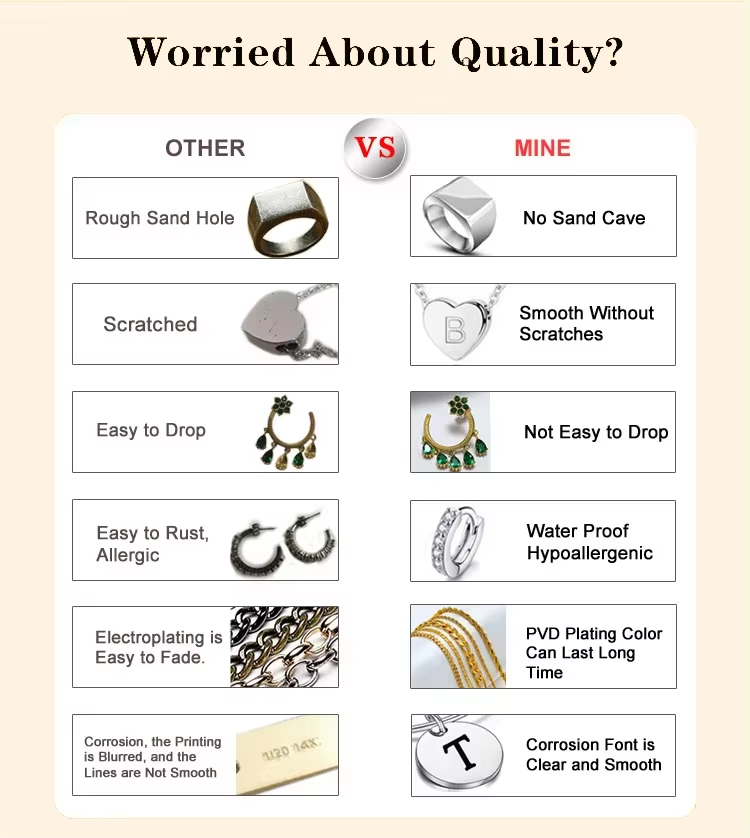
Copper and brass are often used as base metals for gold-plated jewelry. However, once the surface plating wears off, the underlying copper oxidizes, turns green/black, and stains the wearer's skin. With 304 stainless steel, even if the plating wears over time, the base metal remains bright, tarnish-free, and skin-safe. Sterling silver looks premium but requires anti-oxidation care, which increases maintenance burden for end consumers. Plated alloys are cheaper but prone to fading.
How PVD and Electroplating Enhance Stainless Steel Jewelry
PVD (Physical Vapor Deposition) coating on 316L stainless steel provides a surface 10x more durable than traditional electroplating, enabling 'waterproof' and 'anti-tarnish' marketing claims. For buyers evaluating stainless steel vacuum electroplated jewelry or PVD gold plated jewelry, PVD technology bonds the coating at a molecular level, making it far more resistant to peeling, scratching, and fading than conventional electroplating. This is particularly important for engraved gold plated 18K stainless steel jewelry, where engraving exposes edges that are vulnerable to wear.
Customization Capabilities: Laser Engraving and OEM Services
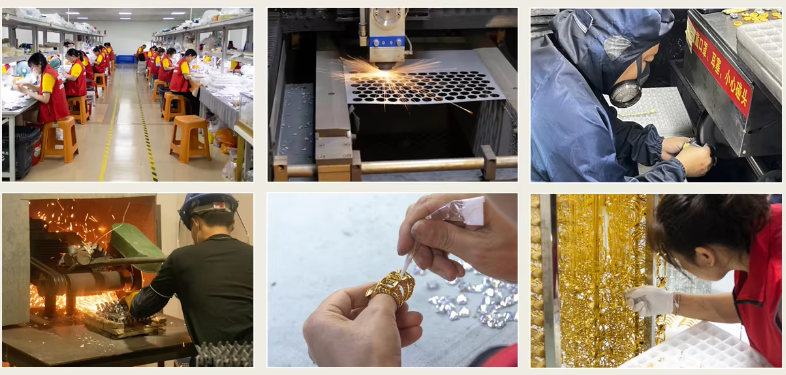
Jusnova Jewelry offers OEM/ODM services with a 300-person team and 20 engineers who provide style development and surface-finishing process support. The factory covers 1000 m² and produces an annual output of 3,000,000 units. For brands requiring custom logo trendy jewelry or personalized engraved stainless steel jewelry, the production process includes laser cutting, molding/casting, grinding and polishing, sandblasting, and assembly—enabling consistent reproduction of fine details such as engraved logos and text.
Application Scenarios: Choosing the Right Grade
Daily Wear and Fashion Jewelry
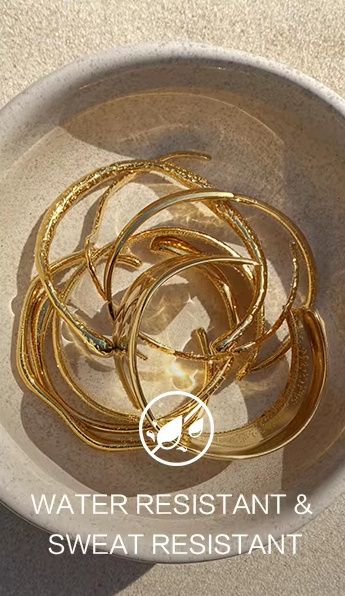
For everyday workwear, vintage hypoallergenic non tarnish stainless steel jewelry, and customizable design stainless steel jewelry, 316L provides the best balance of comfort, durability, and low maintenance. It resists sweat, perfume, and hand sanitizer—common causes of tarnishing in other metals.
Sports and Active Lifestyles
316L is more suitable for daily wear, sports, and travel. Its corrosion resistance ensures that waterproof stainless steel jewelry remains bright even with repeated exposure to moisture and perspiration. This is critical for wholesalers targeting athletes, travelers, and outdoor enthusiasts.
Gold-Plated and PVD-Finished Pieces
For stainless steel women 18K vacuum electroplating jewelry and non tarnish gold jewelry wholesale, combining a 316L base with PVD or vacuum electroplating yields a product that withstands daily use without fading. Even if the plating eventually wears, the underlying 316L remains bright, tarnish-free, and skin-safe—unlike copper or brass bases.
Custom and Engraved Jewelry
For laser engraved custom jewelry and custom engraved stainless steel jewelry, the base material must hold sharp detail without corrosion. 316L's superior pitting resistance ensures engraved areas remain clean and legible over time. Jusnova Jewelry's in-house engraving and finishing capabilities support this application for OEM and wholesale programs.
Cost-Benefit Analysis for Wholesale Buyers
For buyers sourcing tarnish free wholesale jewelry, the decision between 304 and 316L involves more than material cost. The following factors should be included in a total-cost-of-ownership model:
- Return rates: 316L's lower corrosion failure reduces customer complaints in humid or active-use environments.
- Retail positioning: 316L enables premium positioning—retail premiums of 20–40% are achievable for hypoallergenic, PVD-coated, and laser-engraved products.
- Brand trust: Non-tarnishing and waterproof claims are more defensible with 316L + PVD, supporting longer-term brand equity.
- Maintenance burden: Lower care requirements for end consumers translates into higher perceived value.
Honest Limitation: 304 Is a Cost-Effective Alternative
While 316L offers clear long-term advantages, 304 stainless steel is a cost-effective choice for general use. For budget-focused lines where environmental exposure is minimal, 304 provides acceptable corrosion resistance at a lower unit cost. The honest trade-off is: 304 lowers initial material cost, while 316L lowers long-term risk and maintenance. For high-volume, trend-driven SKUs with short lifecycles, 304 may suffice; for investment pieces and customer-facing quality promises, 316L is the more defensible choice.
Market Trends in Customized and Stainless Steel Jewelry
Global demand for stainless steel jewelry reflects broader consumer preferences for durability, hypoallergenic materials, and personalization. Approximately 68% of couples in 2024 chose customized or bespoke jewelry over ready-made options, driven by Gen Z and Millennial preferences. China's total jewelry exports reached USD 12.7 billion in 2025, with major destinations including Hong Kong, the United States, and Malaysia. These trends support a sustained opportunity for OEM partners offering custom logo trendy jewelry and personalized engraved stainless steel jewelry.
Why Buyers Choose Jusnova Jewelry for OEM and Wholesale
Jusnova Jewelry Co., Ltd was founded in 2009 in Guangzhou and targets global wholesale and brand buyers, with emphasis on export markets such as Europe and America. The company's quality assurance includes waterproof, hypoallergenic, and non-tarnish properties, compliant with US/EU standards for lead and nickel. Jusnova Jewelry provides REACH test reports, SGS, and BSCI certification upon request. With strict NDA agreements and confidentiality policies, the company protects buyer IP while launching 500+ trendy styles monthly.
For buyers seeking custom stainless steel jewelry production, Jusnova Jewelry's risk control system combines incoming inspection, in-process checks, finished-product sampling, accelerated aging tests, and clearly defined QA/lead-time terms. This framework has been refined over 16 years of manufacturing experience and is applied across all product lines—from stock jewelry to custom collections for global brands.
Quality Control Framework
Jusnova Jewelry implements a comprehensive quality control framework including sample approval, pre-production first article inspection (FAI), batch inspection reports, and qualified packaging and shipment inspection. For procurement managers, this reduces the risk of quality inconsistency that is common in overseas sourcing. The factory's quality control department conducts pre-packaging inspections to verify finish, plating integrity, and engraving accuracy before shipment.
Decision Criteria for Procurement Managers
When comparing 316L vs. 304 stainless steel jewelry, procurement managers should evaluate:
| Decision Factor | 316L | 304 |
|---|---|---|
| Molybdenum content | 2–3% | None |
| Salt spray resistance | 3–5x longer than 304 | Baseline |
| Corrosion resistance (chloride environments) | Best among 304, 304L, 316L | Good for general use |
| Maintenance | Years with simple wipe | May require polish after 6–12 months |
| Material cost premium | 10–18% above 304 | Baseline |
| Retail premium potential | 20–40% | Limited |
| Best fit | Daily wear, sports, travel, hypoallergenic, gold-plated/PVD | General fashion, budget lines, short lifecycle |
Future Outlook
The stainless steel jewelry market continues to grow as consumers prioritize durability and wearable comfort. The global stainless steel jewelry market was valued at USD 6.79 billion in 2024 and is projected to reach USD 10.8 billion by 2035. As more brands enter the personalized and customized jewelry space, the ability to combine 316L corrosion resistance with PVD coatings and laser engraving will be a key differentiator. Manufacturers with in-house design, finishing, and quality control capabilities—such as Jusnova Jewelry—are well-positioned to support global brands in this shift.
Frequently Asked Questions
Is 316L stainless steel worth the higher material cost compared to 304?
Yes, for quality-focused brands. 316L stainless steel costs 10–18% more per finished piece than 304, but the upfront investment is outweighed by superior corrosion resistance, lower return rates, higher customer satisfaction, and the ability to command retail premiums of 20–40%, making it the better long-term value for quality-focused jewelry brands.
What is the practical difference in daily wear between 316L and 304?
316L is more suitable for daily wear, sports, and travel, while 304 is a cost-effective choice for general use. 316L requires less maintenance; it typically maintains its finish for years with a simple wipe, while 304 may benefit from an occasional polish after 6–12 months of regular use.
How much longer does 316L last before corroding compared to 304?
In salt spray tests, 316L stainless steel lasts 3 to 5 times longer than 304 before showing signs of corrosion. In chloride-containing soils, the corrosion resistance ranking is 304 > 304L > 316L, with 316L showing the best performance.
Does stainless steel jewelry fade or tarnish like plated brass or alloy jewelry?
Compared to plated brass/alloy jewelry, sterling silver jewelry, and gold-plated pieces, stainless steel jewelry has distinct advantages in corrosion resistance and hypoallergenic properties. Copper and brass bases can oxidize and turn green/black once plating wears off; with stainless steel, even if plating wears, the base metal remains bright, tarnish-free, and skin-safe.
Why is PVD coating recommended for gold-plated stainless steel jewelry?
PVD coating on 316L stainless steel provides a surface 10x more durable than traditional electroplating, enabling 'waterproof' and 'anti-tarnish' marketing claims. This makes PVD gold plated laser engraving jewelry more resistant to peeling, scratching, and fading than conventional electroplated pieces.
Can engraved custom designs be produced on 316L stainless steel?
Yes. Jusnova Jewelry supports laser engraved custom jewelry production with in-house laser cutting and finishing processes, enabling personalized engraved stainless steel jewelry with sharp, durable detail for OEM and wholesale programs.
Jusnova Jewelry Co., Ltd is a stainless steel jewelry manufacturer founded in 2009 in Guangzhou, China, offering ODM/OEM services with an annual output of 3,000,000 units and exports to Europe, America, and global wholesale markets.