
361 vs T6 Black Sunflower Seeds: Size, Grade, and Roast Fit
361 vs T6 Black Sunflower Seeds: Size, Grade, and Roast Fit
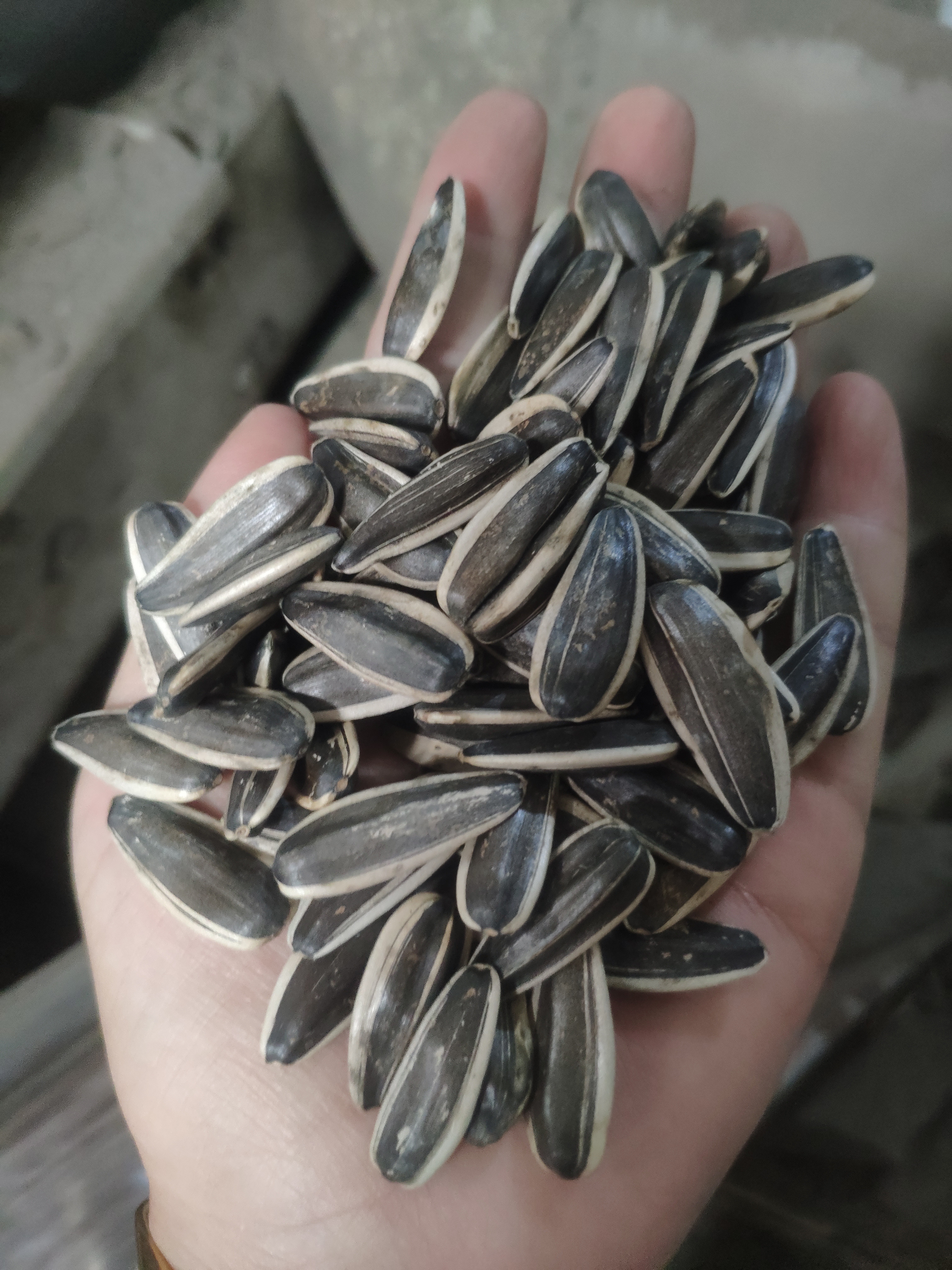
Black sunflower seed lots are traded by grade code, but the comparable value on a roasting line is the measured size distribution inside that code.
A grade code on a black sunflower seed offer sheet is a commercial label, not a quality claim. When two offers sit side by side — 361 recorded at 170–180 pieces per 50 g, and T6 recorded at 170–300 pieces per 50 g — the difference that matters to a roasting or snack-manufacturing buyer is how wide the size band is, how tightly a delivered lot fills it, and whether the quality parameters that travel with the lot match what the roaster can absorb. This is a side-by-side reading of the two grades, written from a procurement-evaluation perspective rather than a promotional one.
Both grades are raw, unshelled black sunflower seeds, both are recorded with a moisture content of 9–10%, impurity below 0.5%, erosion seeds below 0.5%, and mildew seeds below 1%, both carry a crop/harvest year of 2026, both are stated to originate from Xinjiang and Inner Mongolia, and both are described with a sweet and natural taste. In the data reviewed for this comparison, the specification fields that differ are the size range and the grade naming attached to it — and the naming, as the following sections show, is the least reliable part of the file.
Why the 361-versus-T6 question keeps appearing in sourcing
Roasted sunflower seeds accounted for 65.9% of global packaged sunflower seed industry revenue in 2024, according to Grand View Research, which makes the roasting line the default destination for confectionery-grade seed. Buyers who source for those lines typically receive offers that look nearly identical: same moisture band, same impurity ceiling, same origin region, same bag size. The only visible differentiator is often a three-character code.
That is a weak differentiator. Grade names circulate through trading channels and are applied by suppliers to whatever size band they have available in a given season. A buyer who selects on code alone is effectively selecting on reputation and habit rather than on a measured property. The opportunity for a roasting operation is to convert the code into a distribution question: what range of seed sizes will arrive in the bag, how many of those fall near the extremes, and what that does to the roast profile and pack appearance.
The verified specification record, side by side
The table below uses only the recorded specification fields for the two grades. Where a field is identical, that is stated as identical rather than restated as an advantage for either grade.
| Recorded parameter | 361 (black sunflower seeds) | T6 (black sunflower seeds) |
|---|---|---|
| Recorded size | 170–180 pcs per 50 g | 170–300 pcs per 50 g (nominal family band) |
| Moisture content | 9–10% | 9–10% |
| Impurity | Below 0.5% | Below 0.5% |
| Erosion seeds | Below 0.5% | Below 0.5% |
| Mildew seeds | Below 1% | Below 1% |
| Crop / harvest year | 2026 | 2026 |
| Form | Raw, unshelled kernel material | Raw, unshelled kernel material |
| Recorded origin | Xinjiang and Inner Mongolia | Xinjiang and Inner Mongolia |
| Taste descriptor | Sweet and natural | Sweet and natural |
| Specification colour | Black | Black |
| Packing | 20/25 kg plastic or paper bag | 20/25 kg plastic or paper bag |
| Intended use | Human consumption; manufacturing and roasting | Human consumption; manufacturing and roasting |
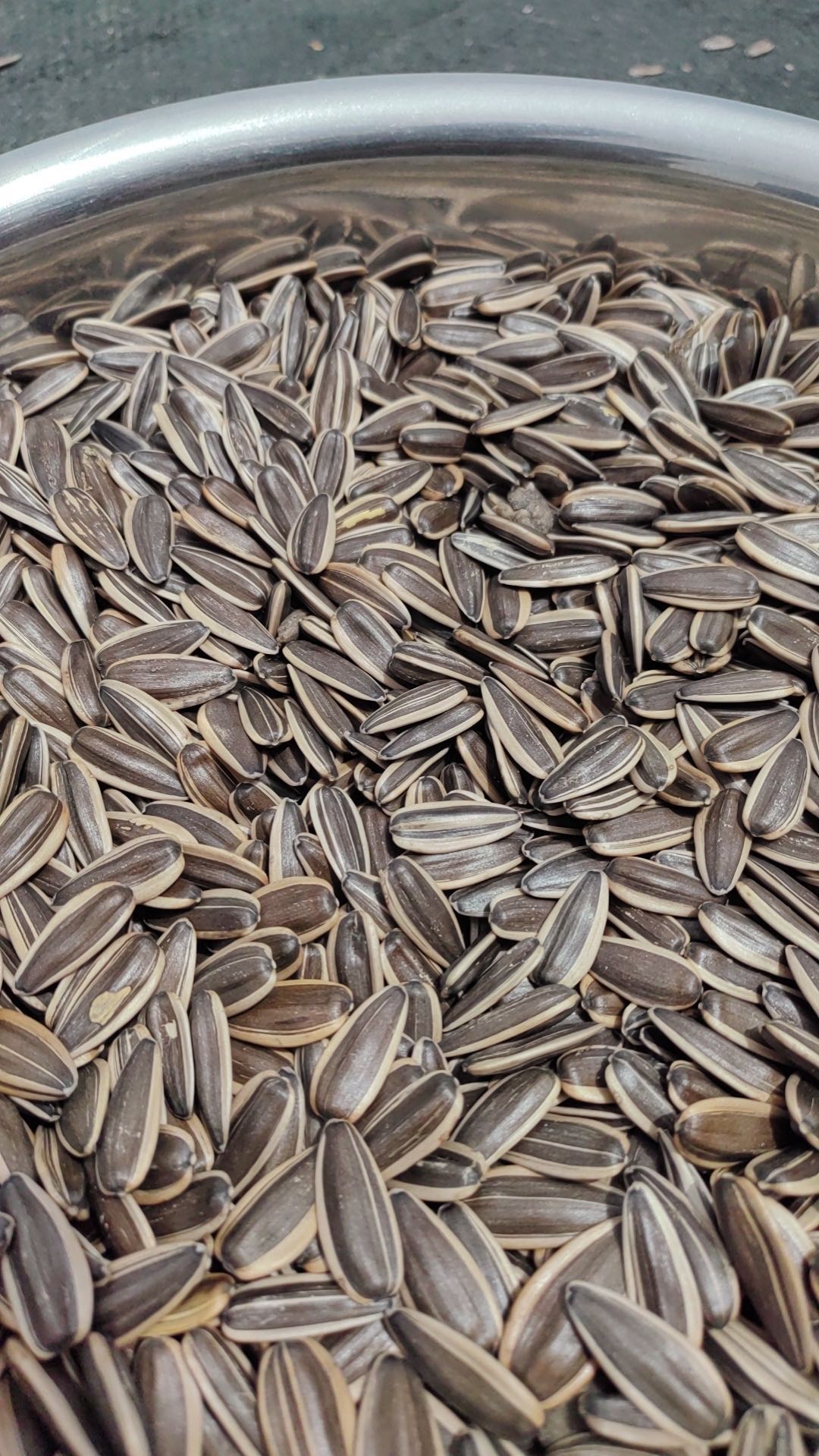
A narrow band such as the 361 figure at 170–180 pcs per 50 g reduces the amount of calibration a roaster has to apply downstream.
Read the table as a procurement document and two facts stand out. First, every quality-control ceiling is shared, so there is no quality argument available from the specification sheet alone. Second, the only structural difference is band width: 361 is recorded inside a 10-piece window, while T6 is recorded inside a 130-piece window. That single difference drives almost everything a roasting buyer needs to evaluate.
What “pieces per 50 g” actually tells a roaster
Pieces per 50 g is a count-based size measure: a lower count means larger individual seeds, and a higher count means smaller ones. Applied to a roasting line, the count translates into three practical effects.
1. Roast uniformity
Seeds of different sizes reach colour and moisture targets at different rates inside the same drum profile. In general industry practice, a narrow band such as 170–180 pcs per 50 g produces a more even roast because the mass of each seed in the batch is closer to the batch average. A wide band such as 170–300 pcs per 50 g contains both larger and smaller seeds in the same stream, so a portion of the batch reaches the target before the rest. Unless the line is calibrated or the lot is pre-sorted, a wide band tends to widen the acceptance window on colour and texture.
2. Pack appearance and fill control
For retail snack packs, visible seed size uniformity affects how full a pack looks at a fixed net weight, because larger seeds occupy more volume per unit of mass. Buyers targeting a defined visual standard usually prefer a controlled band. Buyers selling into bulk, wholesale or food-processing channels where appearance is secondary can accept more width, provided the roast tolerance is set accordingly.
3. Yield and downstream handling
Sorting and packing equipment interacts with size spread. Application records for this category list sorting machines and packing machines as matched equipment for snack-manufacturing projects, with impurity control flagged as a special requirement and operation typically batch-based with manual and mechanical feeding. A wider incoming band puts more duty on the sorting stage; a narrower band reduces that duty but leaves less flexibility if the harvest runs smaller or larger than expected in a given season.
4. The shared quality parameters still apply
Both grades carry moisture of 9–10%, impurity below 0.5%, erosion seeds below 0.5% and mildew seeds below 1%, and both are intended for human consumption with storage in a cool place. For a roaster, these are the parameters that determine whether the lot can be processed cleanly at all: moisture outside the band complicates drying behaviour, and erosion or mildew content above the stated ceilings shows up as defects after roasting rather than before it. Both grades are recorded with a sweet and natural taste descriptor, which in this category is a qualitative description of the raw seed rather than a measured value.
Grade naming: 361 and T6 are catalogue names, not size classes
The most useful finding for a procurement evaluator is that neither code locks a size. Catalogue listings under both names carry narrower lot-level size figures, which means the same three-character code can describe materially different seed counts depending on the lot.
| Family name | Lot-level size figure recorded | Catalogue product name carrying that figure |
|---|---|---|
| 361 | 150–160 pcs per 50 g | Black-white Striped Sunflower Seeds 361 |
| 361 | 160–170 pcs per 50 g | Non-GMO Sunflower Seeds 361 |
| 361 | 170–180 pcs per 50 g | Unshelled Sunflower Seeds 361 |
| 361 | 180–190 pcs per 50 g | Black Sunflower Seeds 361 |
| T6 | 170–180 pcs per 50 g | Snack Food Sunflower Seeds T6 |
| T6 | 180–190 pcs per 50 g | Black Sunflower Seeds T6 |
| T6 | 190–200 pcs per 50 g | Food Grade Sunflower Seeds T6 |
| T6 | 200–210 pcs per 50 g | Confectionery Grade Sunflower Seeds T6 |
Two conclusions follow. First, the name applied to a lot in the catalogue often describes the commercial channel (snack food, food grade, confectionery grade) rather than the physical size, and the size and channel names do not always move together. Second, the overlapping zone — 170–180 pcs per 50 g — appears under both the 361 and the T6 name, so a buyer who orders strictly by code can receive comparable physical material under either label. The practical rule for an evaluation file is straightforward: request the lot-level size figure, not the code, and compare suppliers on the measured distribution inside it.
Where each grade fits in production
The specification data support a channel-based reading rather than a quality ranking.
- Retail roasted snack lines with a defined visual standard. A narrower recorded band such as 170–180 pcs per 50 g supports a more predictable pack appearance and a simpler roast profile, which is why the snack-food and food-grade listings of these grades cluster at the tighter end of the range.
- Wholesale and bulk roasting. Where the end buyer is a distributor, re-packer or bulk food wholesaler, a wider incoming band such as the T6 family range can be acceptable if sorting capacity exists and roast tolerances are set wide enough. Redistribution and re-packing under a private label fit this pattern.
- Confectionery and bakery ingredient use. Both sunflower seeds and sunflower seed kernels are recorded as raw material for snacks, baked goods and confectionery, with manufacturing and roasted-shop applications named for the seed grades. Kernels are additionally offered in vacuum bags with carton packing for bakery-ingredient use.
- Bulk container and export programmes. The 20/25 kg plastic or paper bag format is the recorded packing for both grades and supports bulk container loading for importers and distributors who re-pack at destination.
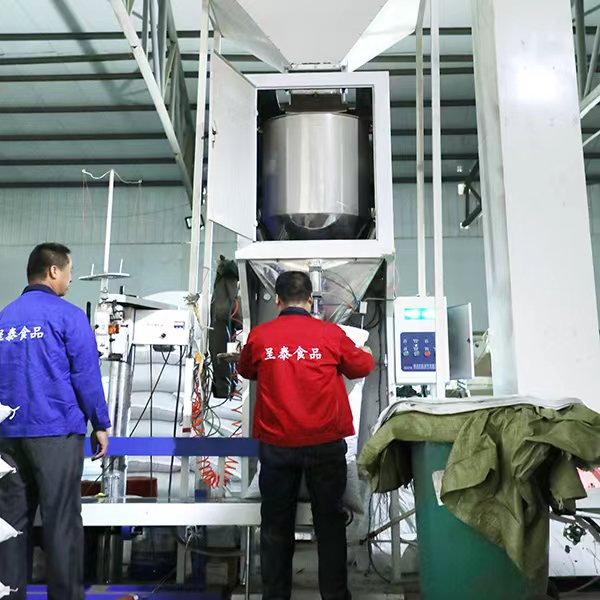
Both 361 and T6 are recorded with 20/25 kg plastic or paper bag packing, which keeps the packaging decision separate from the grade decision.
The applicable working conditions recorded for snack-manufacturing projects in the region are a cool and dry indoor warehouse at normal temperature and low humidity, batch processing with manual and mechanical feeding, sorting and packing equipment as matched machinery, and impurity control as a special requirement. A cool storage location is also the stated storage condition for both grades, which matters because a 9–10% moisture band is only meaningful if the lot is held under conditions that preserve it.
The supplying entity behind these specifications
Inner Mongolia Chengtai Food Co., Ltd. is a sunflower and pumpkin seed processor and exporter founded in 2013, located in the Hetao Plain area of Hanggin Rear Banner, Bayannur City, Inner Mongolia, China, and supplying sunflower seeds, pumpkin seeds and kernels to export markets. The company records a 3,500 m² factory, a stated annual output of 30,000 metric tons, monthly capacity of 2,500 metric tons, an export ratio of approximately 80% concentrated in the Middle East, Middle Asia and Europe, a minimum order quantity of 5 metric tons, a lead time of 10–15 days, and 100% testing as its quality-control approach. OEM/ODM production is offered, with customer logo printing on bags, and the stated after-sales position is that a refund can be applied for if the seeds present a problem.
Third-party market guidance published by CBI (Netherlands Ministry of Foreign Affairs) lists Inner Mongolia Chengtai Food Co., Ltd. as an international supplier of black sunflower seeds and kernels certified under ISO 9001 and Halal. For a buyer assembling an evaluation file, those two certifications are relevant because they describe process and market-access compliance rather than product size, which is consistent with the comparison in this article: certification evidence and size evidence answer different questions and should be requested separately.
The company also attends international food exhibitions and publishes sourcing materials for importers; a full company profile is available as a downloadable document for buyers building a shortlist: Inner Mongolia Chengtai Food Co., Ltd. company profile (PDF).
Market context: a category managed on size and residue, not on codes
Global sunflower seed production is estimated at 55.05 million metric tons for the 2025/2026 marketing year by the USDA Foreign Agricultural Service, while Custom Market Insights values the global sunflower seeds market at USD 29.27 billion in 2025 with a projected reach of USD 35.98 billion by 2034. Those headline figures describe volume and value, not grade differentiation; the differentiation pressure sits elsewhere.
On the supply side, USDA data reported through the National Sunflower Association forecast an 8% decline in global non-oilseed (confectionery) sunflower planted area in 2025. For roasting-line buyers, a smaller confectionery-grade area raises the value of locking a defined size band early rather than accepting whatever band arrives under a familiar code. Regionally, Inner Mongolia exported approximately 463,400 tons of sunflower seeds in 2025 valued at US$748 million, according to the Beauty Food Industry Report, and accounts for over 60% of China’s total sunflower cultivation area according to People’s Daily Online — which explains why Xinjiang and Inner Mongolia appear so often as recorded origins and why origin alone is a weak differentiator between offers.
On the compliance side, the direction of travel is toward tighter residue and contaminant documentation. China notified 209 new maximum residue limits for 93 pesticides in food to the WTO in late 2025 (G/SPS/N/CHN/1355), and EU market guidance from CBI states that the European market requires adherence to HACCP principles and strictly monitors pesticide residues and metal contaminants. A draft Chinese quality standard for nut and seed food, replacing GB/T 22165-2008, provides updated definitions and technical requirements for roasted seeds, and the Wuyuan Sunflower is registered as a geographical indication trademark in China requiring consistent colour, plump shape and crisp texture. None of these instruments rank 361 above T6; collectively, they shift the burden of proof onto lot-level documentation.
How this compares with traditional grade-code buying
The traditional approach — order by a familiar code, rely on a long-standing supplier relationship, and verify at arrival — has real advantages: it is fast, it reduces transaction cost, and with a consistent supplier it can deliver stable results across seasons. The limitation is that it defers the size question until the container is already committed.
A specification-first approach inverts the order: fix the size band and the quality ceilings in the enquiry, request the per-lot record, and treat the code as a lookup label. It costs more time before the order and less time after it.
The limits of the available specification data should be stated plainly, because they bound what this comparison can support:
- The recorded parameters cover size, moisture, impurity, erosion seeds and mildew seeds. They do not include oil content, protein, mycotoxin results or per-lot pesticide residue results, so those must be requested separately if the destination market requires them.
- “Sweet and natural” is a qualitative taste descriptor in the specification, not a measured value. It cannot validate a flavour target on its own; a sample roast is the practical test.
- Moisture is stated as a one-point band of 9–10%. Within that band, repeatability still depends on the actual reading of each delivered lot.
- A wide band such as the T6 family range is a sourcing fact, not a defect, but it cannot substitute for sorting when uniform pack appearance is the commercial requirement.
- Origin is recorded at regional level (Xinjiang and Inner Mongolia) and crop year at 2026; neither is field-level traceability, so buyers needing traceability must ask for lot documentation that goes beyond the specification sheet.
- ISO 9001 and Halal certification describe process compliance and market access; they do not certify a size band.
Future outlook
Three shifts are likely to shape how 361 and T6 offers are evaluated over the next sourcing cycles. First, size discipline is likely to become a contractual item rather than a catalogue label, as buyers respond to the forecast contraction in confectionery-grade planted area by specifying measurable bands instead of codes. Second, residue and contaminant documentation will continue to expand — the 209 new maximum residue limits notified by China in late 2025 and the EU monitoring regime both point in that direction — which favours suppliers who can produce lot-level records alongside the commercial specification. Third, with roasted sunflower seeds already representing the majority of packaged sunflower seed revenue, roasting-line buyers will keep driving the demand signal, and their requirements (uniform roast, predictable fill, clean defect profile) will increasingly be written as distribution criteria rather than grade names.
The practical conclusion is unchanged by any of those shifts: grade numbers alone should not decide a purchase. Compare the measured size band, the quality ceilings that travel with the lot, the packing format, and the documentation your destination market requires — then use the code, if at all, only as an internal reference.
FAQ
What is the recorded difference between 361 and T6 black sunflower seeds?
Both are raw, unshelled black sunflower seeds with a moisture content of 9–10%, impurity below 0.5%, erosion seeds below 0.5%, mildew seeds below 1%, crop/harvest year 2026, recorded origins of Xinjiang and Inner Mongolia, a sweet and natural taste descriptor, and 20/25 kg plastic or paper bag packing. The recorded difference is the size band: 361 is recorded at 170–180 pieces per 50 g, while T6 is recorded at 170–300 pieces per 50 g.
Does the wider T6 band of 170–300 pieces per 50 g mean lower quality?
No. Band width describes expected size spread, not quality level. Quality claims in the specification are carried by separate parameters — moisture, impurity, erosion seeds and mildew seeds — which are identical for both grades in the data reviewed. A wide band mainly indicates that more variation in seed size should be expected within the lot.
How does size distribution affect roasting performance?
In general roasting practice, seeds of different sizes reach colour and moisture targets at different rates under the same drum profile, so a narrow band such as 170–180 pieces per 50 g supports a more even roast, while a wider band requires either additional sorting or a wider acceptance tolerance on colour and texture. The recorded parameters do not include roast-curve data, so the effect should be confirmed with a sample roast on the buyer’s own equipment.
Is “sweet and natural” a measurable specification?
It is a qualitative taste descriptor recorded with the product, not a measured value. No numeric sweetness figure appears in the underlying specification data, so it cannot be used to verify a flavour target. Buyers with a defined taste requirement should evaluate the descriptor through sample roasting rather than treat it as a guaranteed parameter.
How should a buyer verify moisture, impurity and mildew claims before shipment?
The stated ceilings are moisture 9–10%, impurity below 0.5%, erosion seeds below 0.5% and mildew seeds below 1%. Verification in practice means requesting the per-lot record against those ceilings, confirming the 2026 crop year against shipping documents, and ordering independent laboratory testing where the destination market requires it — EU market guidance, for example, requires adherence to HACCP principles and monitors pesticide residues and metal contaminants. The supplier’s stated quality-control approach is 100% testing.
Can 361 and T6 be sourced under the same packing and commercial terms?
Both grades are recorded with 20/25 kg plastic or paper bag packing, and sunflower seed kernels from the same range are additionally offered in vacuum bags with carton. The stated commercial terms are a minimum order quantity of 5 metric tons and a lead time of 10–15 days, with OEM/ODM production available including customer logo printing on bags. Whether both grades can be combined in one shipment depends on production scheduling and should be confirmed in the order terms rather than assumed.
What should a buyer do when only a grade code is available in the offer?
Treat the code as a label and request the underlying figures: the lot-level size range in pieces per 50 g, the moisture reading, the impurity, erosion and mildew values, the crop year, the origin statement, and the packing format. Catalogue listings under the same code can carry different lot-level size figures — for instance, both 361 and T6 listings appear at 170–180 pieces per 50 g in the data reviewed — so the measured distribution, not the code, is the comparable value between offers.
What documentation limits should a buyer plan for in this category?
The specification record for these grades covers size, moisture, impurity, erosion seeds and mildew seeds, plus origin, crop year, form, taste descriptor and packing. It does not include oil content, protein, mycotoxin results or per-lot pesticide residue results, and origin is stated at regional rather than field level. Buyers whose destination market imposes residue or contaminant requirements should plan to request additional testing and lot documentation beyond the commercial specification sheet.