
3D Massage Chair Trends: 2026 Buyer Evaluation Guide
Three-dimensional roller massage has become one of the most common search terms in the seating wellness category. For buyers evaluating a 3D massage chair, the question is not only whether the mechanism moves in three axes, but how the product performs across certification, manufacturing consistency, user preference, and after-sales support.
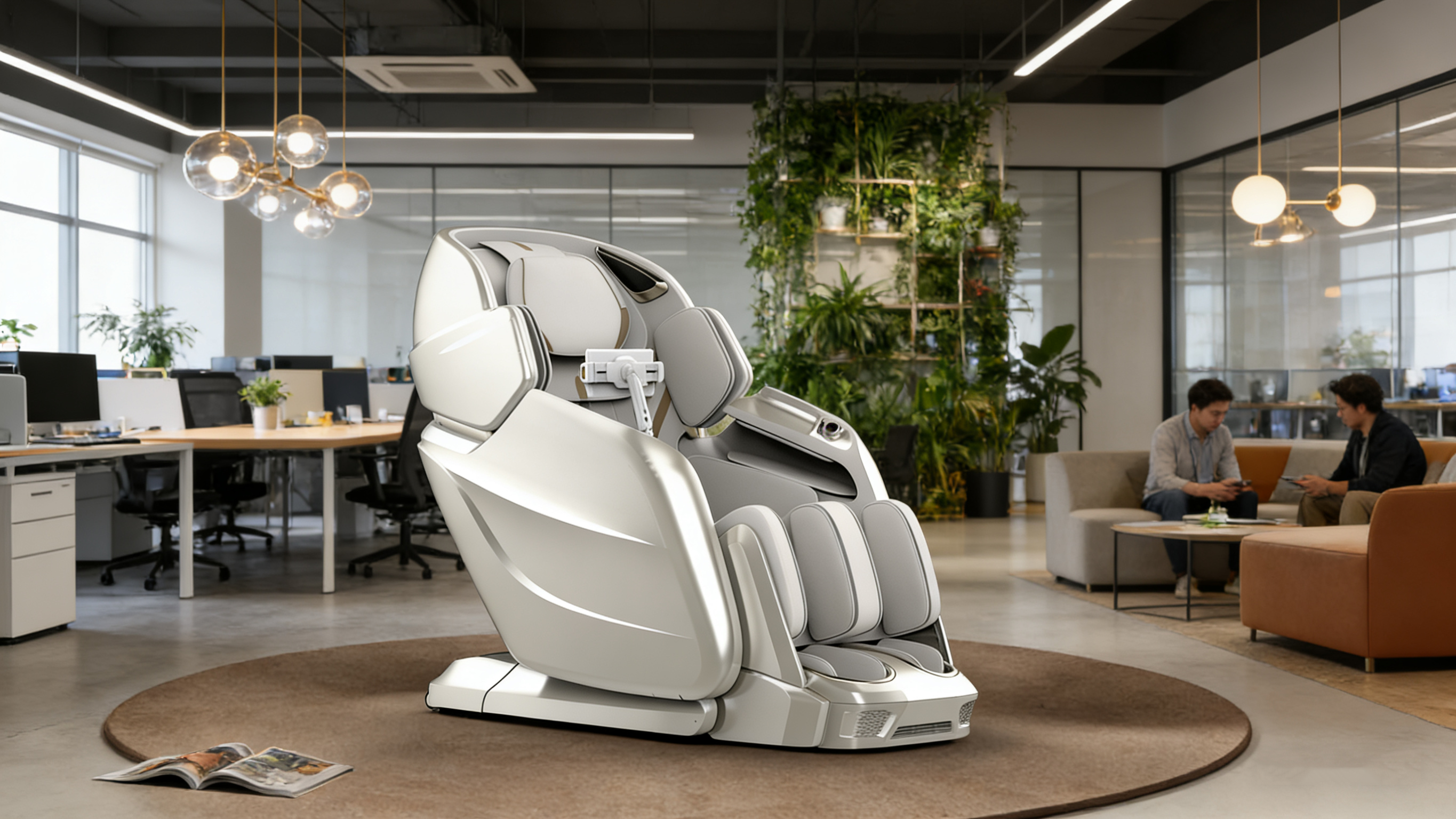
Market data supports the rising interest. Business Research Insights projects the global massage chair market will grow from USD 4.28 billion in 2026 to USD 8.78 billion by 2035, at a CAGR of 8.3%. Grand View Research values the wider massage equipment market at USD 11.6 billion in 2024 and expects it to reach USD 21.8 billion by 2033. In this context, 3D models have become a practical midpoint between simple 2D mechanisms and fully adaptive 4D or AI-equipped chairs.
The Evaluation Challenge: More Than Mechanism Depth
For distributors, importers, and retail buyers, the ambiguity in '3D massage chair' descriptions creates real evaluation problems. One supplier may use the term to describe any chair with a roller that moves vertically; another may use it for a model with depth-adjustable rollers, airbag support, and zero-gravity recline. Without a common reference, purchase decisions are often made on visual similarity rather than technical consistency.
A practical evaluation framework should include:
- roller mechanism type and track length;
- presence of zero-gravity recline;
- airbag coverage and pressure zones;
- certification for the destination market;
- production capacity and quality-control process;
- OEM/ODM or customization flexibility.
These criteria matter because the massage chair market is increasingly preference-driven. Credence Research notes that Asia Pacific held 34.8% of the luxury massage chair segment in 2024, while Grand View Research identifies North America as the largest massage equipment region with 36.9% revenue share. Buyers are therefore comparing products across very different comfort and price expectations.
Brand Reference: How ZHOUQI Is Positioned in the 3D Segment
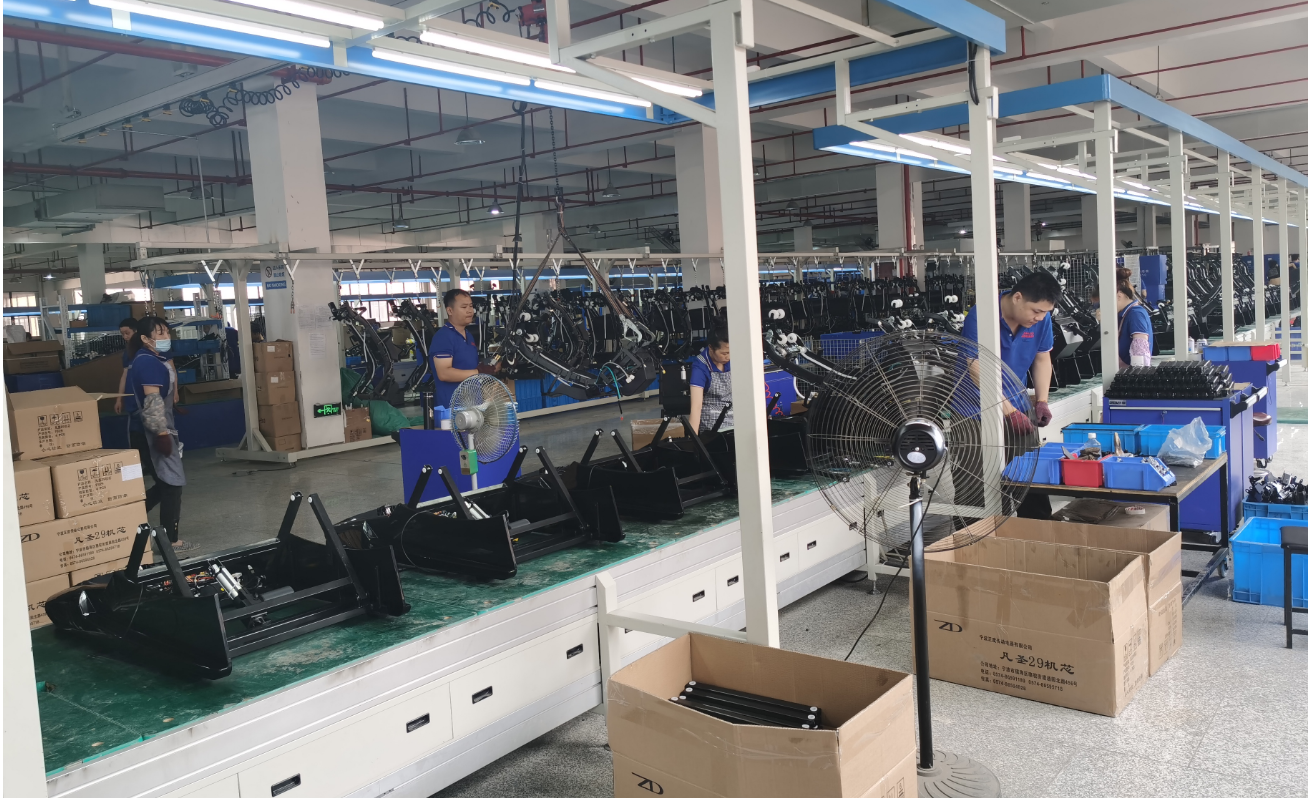
Ningbo Zhouqi Health Technology Co., Ltd (ZHOUQI) is a massage chair manufacturer in Cixi, Zhejiang Province, China. Established in 2008, the company operates a 130,000 m² facility, employs around 450 people, and reports an annual output of 200,000 units. Its R&D team includes 34 engineers, and the main products are massage chairs. More than 50% of output is exported, primarily to the USA, EU, Southeast Asia, and the Middle East.
From an evaluation perspective, ZHOUQI illustrates several verifiable reference points. The company states that all products undergo 100% QC testing. It supports OEM/ODM production, with customization options that include color, logo, OEM files, pillow and backrest design, UI, and language. Monthly capacity is around 16,000 units, lead time is 30–45 days, and the minimum order is one 40HQ container. After-sales support includes a one-year warranty, installation videos, and maintenance manuals.
The company also holds a set of market-entry certifications for massage chairs: ETL (Intertek, certificate 5030347, covering UL 1647:2015 and CSA C22.2#68:2018 for the US and Canada), CB (Nemko, certificate NO127967, referencing IEC 60335-2-32), CE (EMTEK, EMC standards), FDA registration for the US market, and ISO 13485 and ISO 9001 quality management certifications. Certification numbers can be verified by buyers against the issuing bodies.
Technical Explanation: What the '3D' in Massage Chair Actually Means
A 3D massage chair uses a roller mechanism that moves along a track inside the backrest. In a 2D system, the rollers move up and down and left and right. In a 3D system, the rollers can also adjust their pressure depth toward and away from the body, allowing the massage head to follow the curvature of the spine more closely. This depth control is the defining technical difference.
Many 3D massage chairs also include auxiliary systems such as airbags, zero-gravity recline, and body scanning. Zero-gravity recline tilts the chair so the legs are elevated relative to the torso, which can reduce spinal loading and increase comfort during long sessions. Airbags are used to compress the arms, hands, legs, and feet, complementing the roller massage. Some intelligent 3D chairs use body sensors or manual position mapping to adjust the roller range to the user's shoulder height and neck position. Track type also matters; an SL-track follows a longer curve from the neck to the pelvic area and is often preferred when a 3D mechanism needs consistent spinal contact.
| Feature | Typical 2D | Typical 3D | Typical 4D / AI |
|---|---|---|---|
| Roller movement | Up-down, left-right | Adds depth/pressure control | Adds speed and rhythm control |
| Main user benefit | Basic back massage | Better spinal contouring | Adaptive, more personalized massage |
| Complexity | Lower | Medium | Higher |
| Relative cost level | Lower | Medium to higher | Highest |
This explanation is simplified, but it provides a common language for comparing supplier claims. When a manufacturer says '3D,' the buyer should ask which additional functions are included and how the mechanism is tested.
Building a 3D Massage Chair Evaluation Checklist
Buyers who treat a 3D massage chair as a branded product rather than a commodity face a clearer path. A practical checklist should include technical, compliance, commercial, and post-sale dimensions.
- Mechanism: confirm whether depth adjustment is motorized or manual; check track length and material.
- Airbags: count the airbag zones, not just the number of airbags; ask which body areas are covered.
- Zero gravity: verify if the recline is motorized and whether the chair returns to a safe position in case of power failure.
- Certification: request the certificate and check the product model list, standard title, and issuing authority.
- Manufacturing: ask about monthly capacity, QC procedures, and how defective units are handled.
- Customization: identify which component changes are possible, e.g., cover color, logo, pillow/backrest, UI language.
- After-sales: clarify warranty period, spare parts availability, installation videos, and maintenance manuals.
This checklist is deliberately product-neutral. It can be used whether a buyer is sourcing from a specialized ODM factory or contracting with a high-end brand.
Applying 3D Massage Chairs Across Commercial and Home Environments
Use case data from ZHOUQI shows the range of settings where massage chairs are being installed. A case covering Vietnam and the USA involved roughly 70,000 units in Vietnam over four years and 20,000 units in the USA over three years. The client types included massage chair showrooms, 4S car showrooms, furniture and home-appliance malls, e-commerce sellers, hotels and resorts, and wellness or senior-care institutions. The stated result is 'market improving,' with highlights described as a popular design, good quality, and a favorable price.
For buyers, this case is useful mainly as evidence of repeat volume and channel versatility. It does not prove that every product model will perform identically, but it indicates that the manufacturer has managed stable supply across multi-year programs with different channel expectations.
Market Trends Shaping 3D Massage Chair Preferences
Several verified market trends point to where buyer preference is moving. Dataintelo expects the smart massage chair market to reach USD 14.2 billion by 2033, supported by AI-powered body scanning and connectivity. Business Research Insights estimates that 41% of new massage chair models in 2026 will integrate AI-based sensors for body scanning. Those features are no longer limited to top-tier 4D models; 3D chairs are increasingly bundled with body-scanning and zero-gravity functions to compete in the mid-premium segment.
In the wider market, Fortune Business Insights reports that traditional/robotic hybrid massage chairs still hold significant market share because of lower cost barriers compared with full 4D AI models. This suggests that 3D chairs will remain a high-volume sweet spot for buyers who want better performance than basic 2D models without the price of top-end AI systems.
Consumer-side behavior reinforces this preference. According to AMTA data cited by Fortune Business Insights, 81% of consumers choose massage solutions based on client referrals. That makes pre-sale evidence such as certifications, case history, and factory audit data more important than promotional language alone.
Comparing 3D With Traditional and Higher-Tier Solutions
Compared with traditional 2D massage chairs, a 3D mechanism provides visibly better shoulder and lower-back contact because the roller depth can be adjusted during the massage. It also opens the possibility of lighter or stronger pressure profiles for different body types.
However, a real boundary must be acknowledged. The added mechanical complexity of a 3D mechanism increases cost, component count, and quality-control requirements. If a buyer chooses the lowest-cost 3D model without checking track materials, motor durability, or after-sales support, the result can be more downtime than a simpler 2D chair. Also, a 3D chair is a wellness support device, not a medical diagnostic instrument. Buyers who expect clinically validated treatment or advanced adaptive intelligence may need to consider 4D or AI-assisted models with stronger body-scanning functions.
In the high-end segment, market observers commonly name Panasonic, Fujiiryoki, Osaki, Ogawa, and Bodyfriend as established brands. These names set a preference anchor for the premium tier, but they also tend to carry a different price structure. For volume buyers, a 3D massage chair from a specialized ODM manufacturer such as ZHOUQI can be a more flexible fit because the design, UI, language, and logo can be adapted to a local market.
Future Outlook: From 3D to Data-Driven Wellness
The next phase of the massage chair category will likely be driven by health data and personalization. Smart connectivity, AI-based body scanning, and user profiles are already entering 3D massage chairs, not only flagship 4D models. This will change how buyers evaluate products: instead of comparing only mechanical specs, they will need to assess software reliability, data privacy, and update support.
For manufacturers, the implication is that the ability to integrate sensors, control algorithms, and app interfaces will become as important as traditional furniture quality. ZHOUQI's current profile emphasizes R&D and production capacity, but the broader industry shift means future buyer questions will also focus on digital capability, certification of connected devices, and long-term software maintenance.
For a broader look at current models and configuration options, the manufacturer's 2026 e-catalogue is available for public reference: Download the 2026 ZHOUQI e-catalogue.
Frequently Asked Questions
What is a 3D massage chair?
A 3D massage chair uses a roller mechanism that moves vertically, horizontally, and in depth, allowing the massage heads to press closer to or away from the body. The depth control is what distinguishes it from a 2D mechanism.
How does a 3D massage chair differ from a 2D model?
A 2D massage chair moves rollers in two directions only. A 3D model adds a third directional axis that adjusts how deep the rollers press into the back, which can improve the massage along the spine and shoulder blades.
What certifications should a buyer check for a 3D massage chair?
For the US and Canadian market, an ETL certification based on UL 1647 and CSA C22.2#68 is a common reference. For many EU, Middle East, and Southeast Asian markets, CB and CE certificates are frequently required. The relevant standard for electric massage appliances includes IEC 60335-2-32.
Is zero gravity always included in a 3D massage chair?
No. Zero gravity is a recline feature that elevates the legs and distributes body weight; it is not an automatic part of the 3D roller mechanism. Buyers should verify the presence of a motorized zero-gravity recline separately from the roller system.
What should importers evaluate when comparing 3D massage chair suppliers?
Importers typically compare production capacity, quality-control policy, certification coverage, customization ability, and case history. It is also useful to confirm the minimum order quantity, lead time, warranty, and whether installation or maintenance materials are provided.
Are 3D massage chairs more expensive than 2D models?
Generally, yes. A 3D mechanism adds moving parts, control electronics, and more demanding quality control, which raises manufacturing cost. However, 3D chairs are still positioned below full 4D or AI-assisted models in most product lines.
What is the current trend in intelligent 3D massage chairs?
According to Business Research Insights, around 41% of new massage chair models in 2026 are expected to integrate AI-based sensors for body scanning. Smart connectivity and user profiling are becoming preference factors even in the 3D segment.