
3mm vs. 4mm vs. 5mm ACP: An Independent Buyer Comparison
3mm vs. 4mm vs. 5mm ACP: An Independent Buyer Comparison
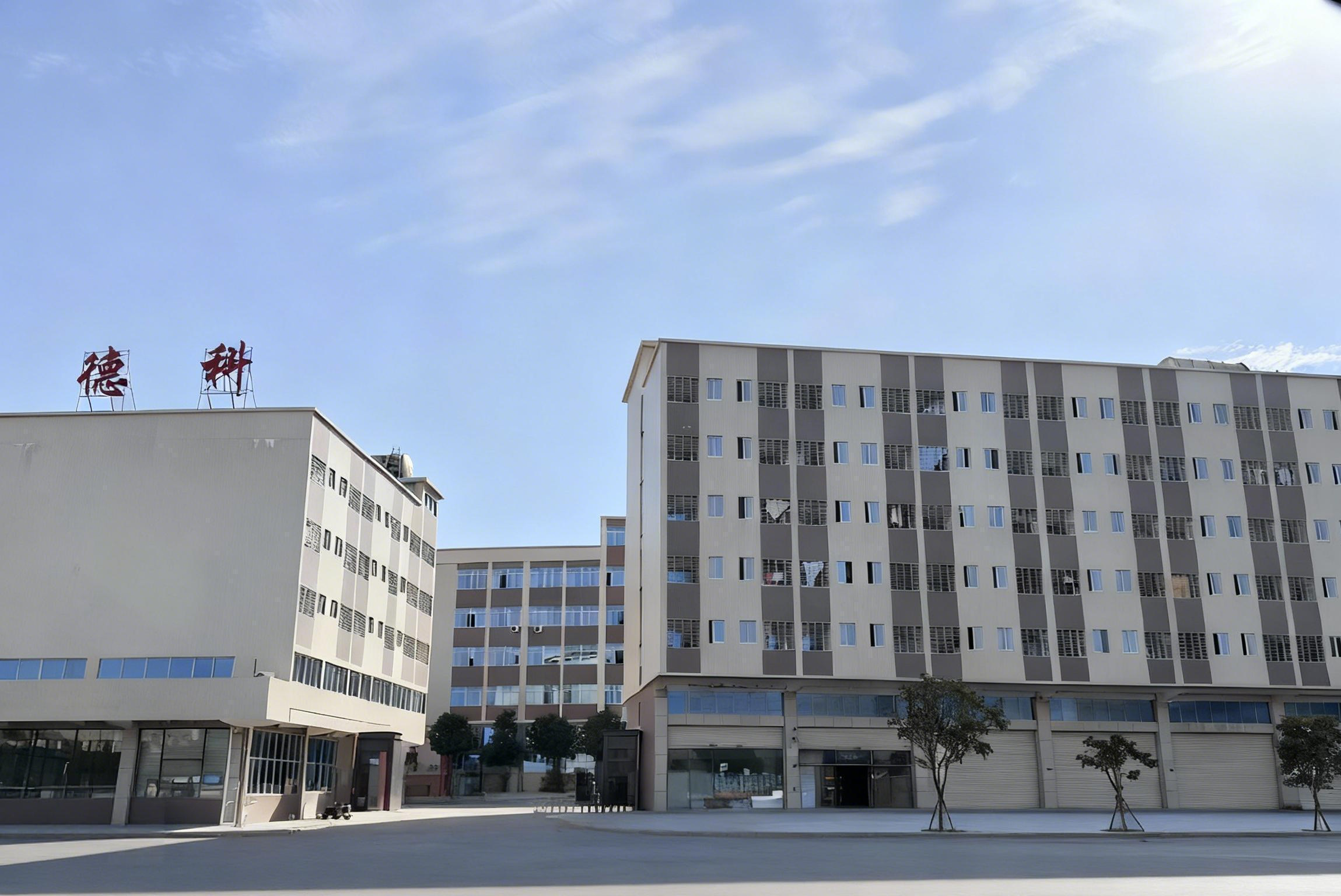
Aluminum composite panel production begins with coil and core selection, not with the millimetres printed on the order. Image: JIERSUN ACP factory entrance.
3 mm, 4 mm and 5 mm aluminum composite panel are not three grades of one product. They are three positions inside a specification envelope that also covers panel width, aluminium skin thickness, alloy, core type and coating. A buyer who compares only the headline millimetres is comparing the least decisive variable in the decision. This independent comparison sets out the verified envelope first, then maps the three thicknesses against curtain walls, interior decoration, furniture and signage, and closes with the purchasing terms and acceptance criteria that should be fixed before production starts.
Two qualifications apply throughout. The fit guidance below is specification logic, not a performance guarantee: final thickness, span and fixing design belong to the project's own structural and fire review. And where an industry figure is a family-level range rather than a value for one panel, that boundary is stated at the point of use rather than buried at the end.
What the 3 mm, 4 mm and 5 mm decision actually changes
A thickness change moves three practical things at once: the panel's own weight and its behaviour across the fixing span, the flatness of the finished face, and the load the substrate and the installation crew have to carry. Almost everything else that decides whether a façade still looks right after ten years — colour retention, corrosion behaviour, fire classification — is set by the coating, the alloy and the core, not by the total millimetres.
That is why a thickness comparison carried out without the other four variables is unstable. Two panels both sold as 4 mm can differ in skin gauge by an order of magnitude, and the aluminium skin is what carries bending stress. The useful question is therefore not whether 3, 4 or 5 mm is better, but which thickness, at which skin gauge, with which core and coating, for this substrate and this exposure.
The verified specification envelope behind the three thicknesses
The published product data available for this comparison defines a wide envelope. Panel thickness options include 3 mm, 4 mm, 5 mm, 6 mm and 8 mm; normal widths are 1220 mm, 1250 mm and 1500 mm; aluminium thickness ranges from 0.05 mm to 0.50 mm; alloy grades available are AA1100, AA3003 and AA5005, with other grades on demand; core options are PE core and fireproof core; and coatings are PVDF or polyester, with a protective film applied to the surface to prevent scratches during transportation and installation.
| Specification line | Verified options | Why it matters when comparing 3 / 4 / 5 mm |
|---|---|---|
| Panel thickness | 3 mm, 4 mm, 5 mm, 6 mm, 8 mm | Fixes the nominal total, the joint depth and the panel weight — nothing more on its own |
| Normal width | 1220 mm, 1250 mm, 1500 mm | Drives module planning, offcut volume and the number of vertical joints |
| Aluminium skin | 0.05 mm to 0.50 mm | Primary stiffness variable at a given span; must be specified, not assumed |
| Alloy grade | AA1100, AA3003, AA5005, others on demand | Formability and corrosion behaviour at cut edges and fixings |
| Core | PE core or fireproof core | Fire strategy, and the documentation the project will demand |
| Coating | PVDF or polyester | Colour and gloss retention on the visible face |
| Surface protection | Protective film | Scratch control in transit and on site; removal window matters |
Read as a purchase specification, the table explains why thickness labels travel badly between suppliers. A 3 mm call-out fixes only the total. The skin gauge inside that total can sit anywhere in the 0.05–0.50 mm band, and that single value changes stiffness, behaviour at the fixing point and the panel's resistance to a rippled face across a wide module. Alloy choice then modifies formability and weathering behaviour: AA1100 is the conventional general-purpose grade, while AA3003 and AA5005 are specified where the application calls for different forming or corrosion characteristics, and further grades are available on request rather than assumed.
One frequently repeated figure also needs a boundary. ACP is commonly described as weighing 3–5 kg/m², but that is a category range across the family, not a per-panel value: a 5 mm panel does not weigh less than a 3 mm panel of the same construction. Buyers comparing transport cost, substrate load or handling labour should request the actual weight of the panel being ordered at the specified skin gauge.
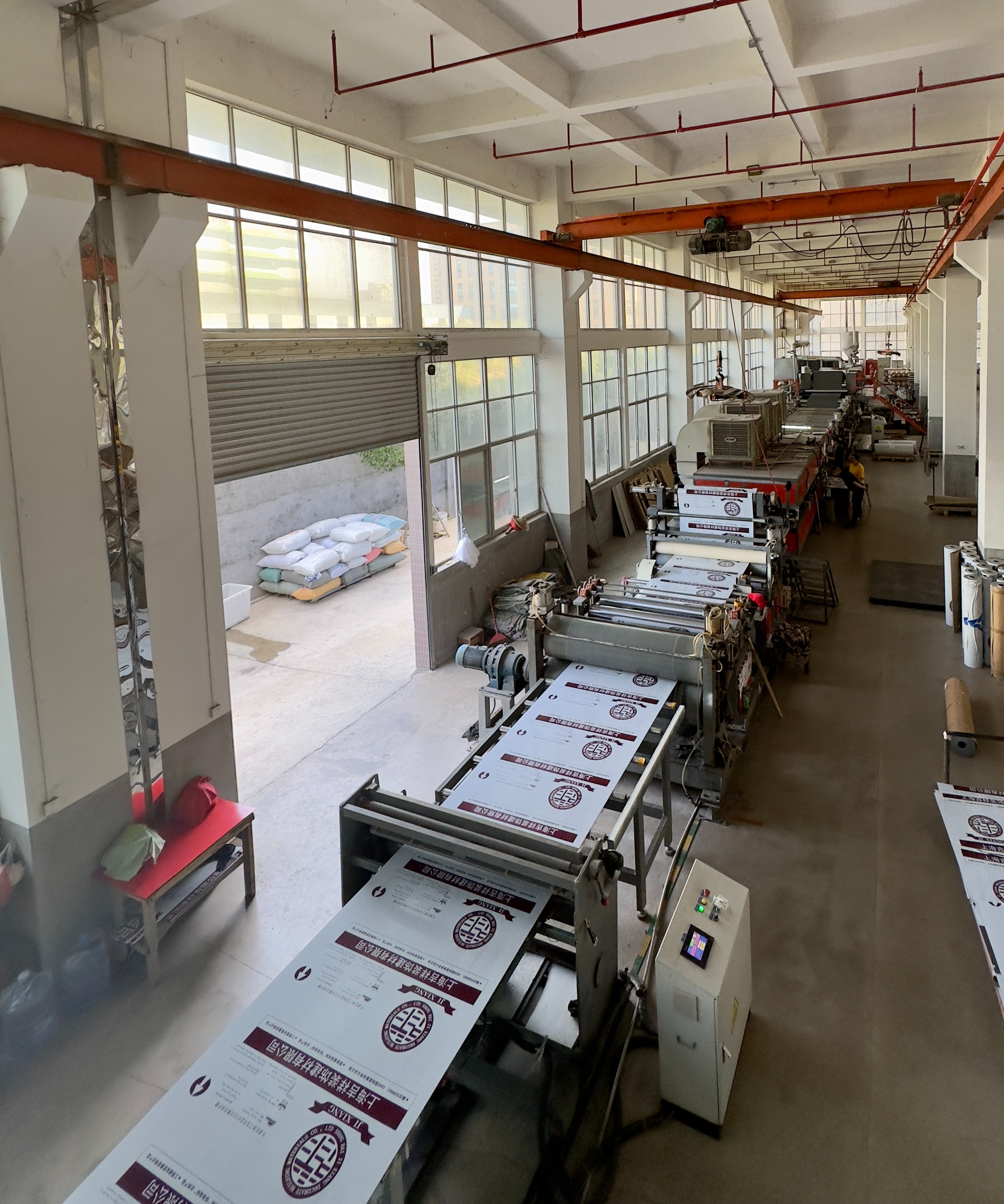
Total thickness and skin gauge are set at the line. A buyer's inspection plan should test what the line actually produced, not what the drawing assumed. Image: JIERSUN automatic ACP production line.
Thickness by application: where 3 mm, 4 mm and 5 mm separate
The four jobs below differ less in how thick the panel should be than in which failure mode the buyer is trying to avoid. Each section names the thickness logic and the check that decides acceptance.
Curtain walls and exterior cladding
Exterior wall work is where the 4 mm and 5 mm options earn their place. Wind load, module size and the fixing detail govern the requirement, and the panel has to hold a flat plane across joints that will be read in raking light. Where a project moves to 5 mm, the usual drivers are larger modules, a stiffer visual plane or a joint design that wants more depth; where 4 mm is sufficient, the driver is normally a conventional module with a well-supported fixing system. A 3 mm panel can appear in exterior work on smaller elements and protected positions, but it leaves less margin at the same span, and the decision has to be confirmed against the project's own wind-load and fixing calculation rather than by analogy with another building.
Fire strategy sits beside thickness here, not inside it. Manufacturer literature for mineral-core fire-resistant panels — for example Mitsubishi Chemical's ALPOLIC/fr product documentation — describes Euroclass A2-s1, d0 classification under EN 13501-1 for that product family. That classification belongs to the mineral-core construction. A PE-core panel of the same thickness is a different product and should not inherit the claim.
Interior decoration
Interior walls, ceilings and feature surfaces rarely need the stiffness a façade demands, so 3 mm is often the practical starting point, with 4 mm specified where a longer unsupported span, a larger flat module or a heavier finish makes flatness harder to hold. Interior exposure shifts the specification weight towards coating choice and substrate condition: polyester is the lower-cost route where UV and weather are not the issue, while PVDF is chosen on interior surfaces that receive daylight through glazing or are expected to hold colour over a long service life. Joints and edges then matter more than the millimetres, because that is where a lighter panel reveals whether it has been installed with adequate support.
Furniture and cabinet work
Cabinet doors, carcasses and shop fit-outs are a low-load application where 3 mm dominates and 4 mm appears on larger door fronts or where hardware and edge treatment need more body. The checks differ from façade checks: edge finish quality, flatness after cutting, screw and hinge performance at the fixing, and how the chosen surface — including wood-grain or marble-grain appearances — reads under interior lighting. Cabinet work is also where coating and film discipline show up first, because a scratch or a film left on too long is visible at arm's length rather than from the ground.
Signage
Signage most often starts at 3 mm, because the panel is cut to a face size, fixed to a frame and read from a distance, so weight and material consumption both count. 4 mm is specified where the face is larger, where a stiffer and flatter plane is needed to avoid a wavy face between supports, or where the panel works as a structural fascia element. Coating then follows exposure: PVDF where the sign faces sun and rain and colour retention is part of the brief, polyester where the sign is sheltered or the replacement cycle is short. On signage the buyer should also confirm that the selected finish — brushed, mirror or a printed grain — is produced in the required thickness, because finish ranges and thickness ranges do not always overlap completely.
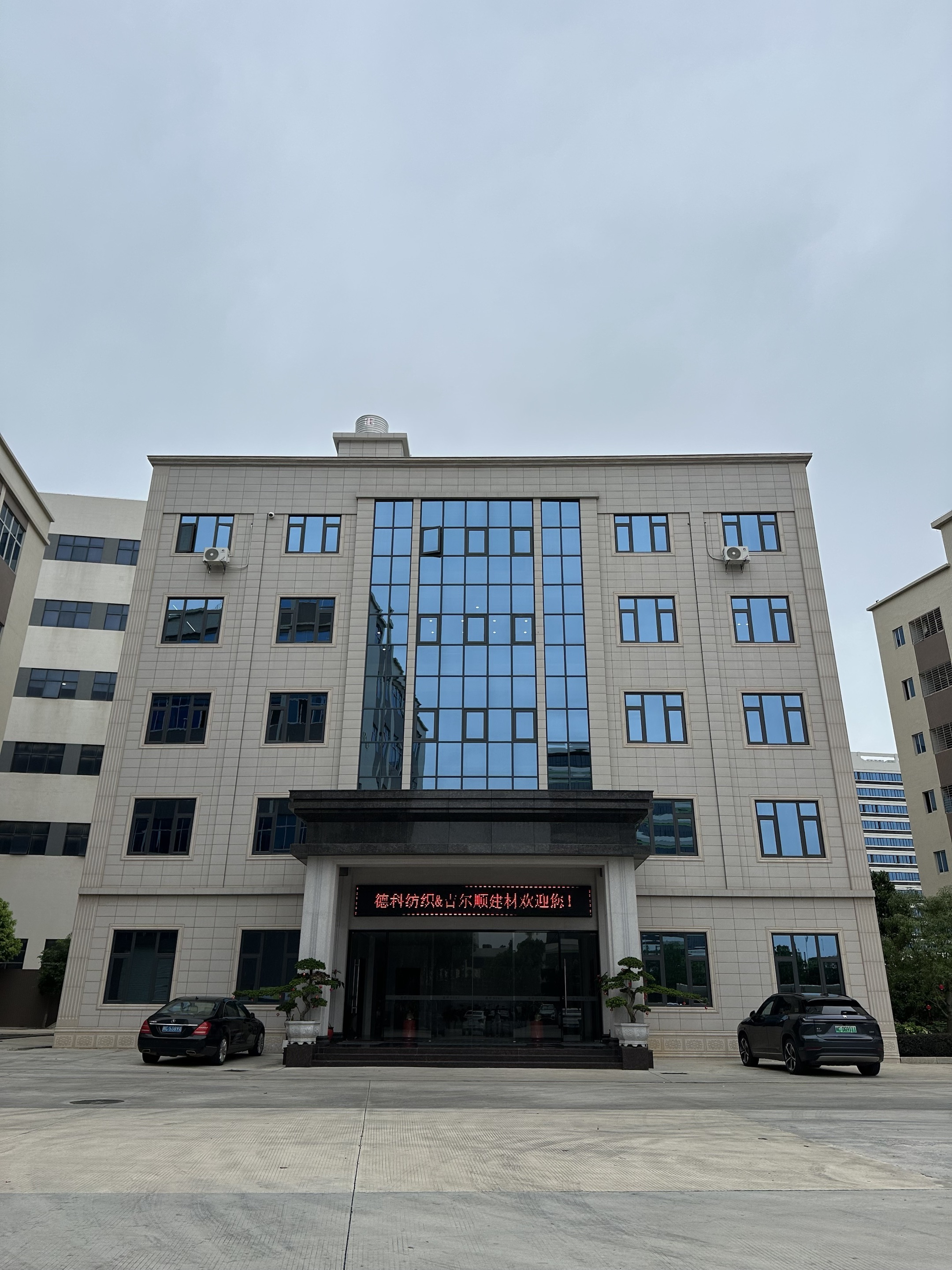
On exterior work the visible variable is the joint line and the flatness of the plane, not the millimetres printed on the panel. Image: ACP-clad office building.
Core and coating choices that outrank thickness
Core selection is a fire and compliance decision before it is a cost decision. The verified product data lists two options: PE core and fireproof core. PE core is the conventional construction for interior, furniture and signage work where no fire classification is being claimed. Fireproof core is the option that answers a façade fire requirement, and the applicable classification has to come from the test documentation for that exact construction — not from the panel thickness and not from a generic category claim. Buyers qualifying a fire-rated panel should ask for the classification report covering the core type and skin gauge actually being supplied.
Coating selection governs how long the visible face holds. PVDF coatings are described in the product data as offering weather resistance, UV protection and long-term colour stability typically lasting 10–20 years, a figure conditional on exposure and maintenance; polyester is the general-purpose alternative for interior or shorter-cycle work. Market research supports the premium positioning of the fluorocarbon route: PVDF-coated panels accounted for 36.5% of total revenue share in the 2025 global ACP market, according to Market Research Future's 2026 report. Specialty finishes — mirror, brushed, wood-grain, marble-grain and nano self-cleaning surfaces — widen the appearance range, but each should be treated as a named coating or film system: request its identity, its warranty terms and, where the claim is functional, the supporting test documentation, instead of accepting a finish name as a performance statement.
Three long-term reference points: Philippines, Malaysia, Maldives
JIERSUN's reference applications cover three different stress profiles, and each points to a different acceptance question. A cabinet installation in the Philippines, in service for around a decade, tests interior durability: edge condition, flatness on door fronts and whether the surface finish has stayed uniform in a humid climate. Signage work in Malaysia tests coating behaviour under sustained sun and rainfall: colour and gloss retention, dirt pick-up on the face and behaviour at the fixings. A storefront installation in the Maldives tests the coastal combination of salt air, high UV and frequent cleaning, where corrosion at cut edges and fixing points matters more than the face itself.
The limit of these references should be stated plainly. They are single applications in specific climates and configurations, not a controlled comparison of 3 mm against 5 mm, and they cannot be used to predict the service life of a different specification in a different location. Their value is diagnostic: they show which checks separate a specification that survives from one that merely meets the drawing — edge protection, fixing detail, film removal, coating system and core declaration.
What market data does and does not settle
Nothing in the published market estimates changes a thickness decision, and the estimates themselves do not agree. Market Research Future reports the global ACP market at USD 9.17 billion in 2025 with Asia-Pacific holding 54.8% of revenue; Grand View Research reports USD 6.46 billion in 2024 with a 7.0% CAGR to 2030; Fortune Business Insights reports USD 7.00 billion in 2025. Their scopes and methodologies are not disclosed in a way that makes them combinable, so they should be read as directional demand context, not as a benchmark for a panel specification or a price. What the regional share does support is a sourcing observation: with Asia-Pacific holding more than half of global revenue, most buyers will be evaluating Asia-Pacific supply chains, which puts more weight on documentary checks than on a supplier's own summary of its capability.
Purchasing terms and acceptance criteria to fix before ordering
Most thickness disputes are documentation disputes. The order should be written so that the delivered panel can be checked against it with a micrometer, a certificate and a test report.
- Panel thickness and tolerance: state the nominal thickness, the permitted deviation and the measurement method.
- Aluminium skin gauge: state the skin thickness in millimetres and require it on the inspection record, because this is the value that governs stiffness.
- Alloy: name AA1100, AA3003 or AA5005 explicitly and request the mill certificate for the coil batch.
- Core: declare PE or fireproof core on the order, and attach the classification report for fireproof core.
- Coating system: name PVDF or polyester, the colour reference and the gloss level; for specialty finishes, name the system rather than the appearance.
- Protective film: agree the film type and removal window, since film left on through a hot installation can leave residue.
- Flatness and dimensional checks: agree the inspection method and acceptance limit before the first shipment.
- Packing and loading: specify reinforced packaging and loading supervision for export consignments, and record a transit-damage protocol.
- Test evidence: require third-party test reports where the project depends on a classification claim.
- Customs classification: ACP of aluminium alloys with a thickness above 0.2 mm is classified under HS code 76061230, which buyers can use to align documentation with the declared construction.
On the supplier side, these checks depend on process control rather than assurances. JIERSUN (Fujian) Decorative Building Materials Co., Ltd. describes inspection at raw material intake, in-process production control and pre-delivery inspection, with reinforced packaging and loading supervision to prevent transit damage, third-party testing available on request, and technical support for material selection. The company was founded in 2006, operates a 20,000 m² factory with a 10-engineer R&D team, and exports about 30% of output to Southeast Asia, Africa and the Middle East, according to its company profile. Buyers can review the panel range, widths, alloys, cores and coating options through JIERSUN's official website before converting a specification into an order.
FAQ
Does a thicker ACP panel always mean a stronger panel?
No. At a given span, bending behaviour is driven mainly by the aluminium skin thickness and the fixing detail, with the core contributing stiffness and flatness. A 3 mm panel built with a heavy skin can be stiffer than a 4 mm panel built with a light one under some loading conditions, which is why the skin gauge belongs in the purchase specification beside the nominal thickness. Fire classification is a separate question again, set by the core and evidenced by test documentation.
Can 3 mm ACP be used on an exterior façade?
3 mm panels appear in exterior work on smaller elements and in protected positions, but exterior suitability is not established by thickness alone. It depends on module size, wind load, fixing system, substrate and the building's fire requirement. That decision belongs with the project's façade or structural design and should be confirmed against documented product data for the exact construction, rather than by comparison with another project.
Which thickness is usual for signage and for furniture?
3 mm is the common starting point for flat sign faces and cabinet work, with 4 mm specified where a larger, stiffer or flatter module is needed — for example a wide sign face between supports or a large door front. 5 mm is rarely required for either application. The practical constraint is often finish availability: not every brushed, mirror or grain surface is produced in every thickness, so the finish should be confirmed against the thickness before ordering.
Does fire performance change with panel thickness?
Fire classification is a property of the construction, principally the core. Manufacturer literature for mineral-core fire-resistant panels, such as Mitsubishi Chemical's ALPOLIC/fr documentation, describes Euroclass A2-s1, d0 classification under EN 13501-1 for that product family. A PE-core panel of identical thickness is a different construction and does not carry that classification, so the test report for the specific panel being supplied is the relevant document.
What should an ACP purchase order state?
At minimum: nominal panel thickness with tolerance and measurement method, aluminium skin thickness, alloy grade, core type, coating system with colour and gloss reference, protective film type and removal window, flatness and dimensional acceptance limits, packaging and loading requirements, required test reports, and the customs classification. Adding the inspection method to each line lets the delivered consignment be accepted or rejected on evidence rather than on appearance.
How should a buyer verify the aluminium skin thickness on delivery?
Measure the skin at the panel edge with a suitable micrometer on a sample from each batch, then compare the result with the inspection record and the order. Because the skin is the stiffness-governing value, an unrecorded skin thickness leaves the panel effectively unspecified, even when the total thickness matches the drawing.
Bottom line for buyers
3 mm, 4 mm and 5 mm ACP differ in how much stiffness and margin they give a fixing detail, not in whether they are better. Signage and cabinet work usually start at 3 mm; interior surfaces move between 3 mm and 4 mm with module size and flatness demand; exterior cladding is where 4 mm and 5 mm are specified, and where core and coating documentation — not the millimetres — decides compliance. The specification only becomes real when skin gauge, alloy, core, coating and the acceptance method are written into the order.
Have Questions or Need More Details?
Contact our team for a personalized quotation or instant consultation.
Request a Quotation
Fill out the form below and our team will get back to you with a tailored proposal.
WhatsApp Direct Chat
Prefer to chat in real-time? Message us on WhatsApp for instant assistance & quick answers.
- Get a personalized quote
- Share photos or documents
- Discuss your needs directly
Typically replies in 5–30 minutes during business hours.