
3mm vs. 4mm vs. 5mm Aluminum Composite Panel: Buyer Decision Framework
Panel thickness is the specification that fixes the most downstream decisions on an aluminum composite panel (ACP) purchase order. It sets how a sheet handles on site, how much support it needs, how it cuts, folds and edges, and how flat the finished surface reads at close range. A 3 mm, 4 mm and 5 mm panel can share the same alloy skins, the same core chemistry and the same coating system, and still behave as three different products once they leave the pallet.
This framework is written for buyers at the decision stage. It maps each thickness to the application it normally serves, separates the thickness decision from the core, coating, skin and alloy decisions that must be made alongside it, and sets out the purchasing terms and acceptance checks that protect a buyer at delivery. The objective is not to identify a 'best' thickness, but to match thickness to application, fabrication method and verification requirements.
Why '4 mm' Is Not a Complete Specification
Aluminum composite panel is a sandwich material: two aluminum sheets bonded to a core, with adhesive films between the layers and a factory-applied coating on the visible face. The declared composition for PVDF-coated ACP is high-quality aluminum coils, a PE or fireproof mineral core, high-performance adhesive films, and either PVDF or polyester coatings. Because the panel arrives pre-finished, the specification written at the quotation stage is the specification that reaches the facade, the sign or the cabinet.
Two numbers are routinely confused. Total panel thickness describes the finished sandwich and, within JIERSUN's range, includes 3 mm, 4 mm, 5 mm, 6 mm and 8 mm options at normal widths of 1220 mm, 1250 mm and 1500 mm. Aluminum skin thickness describes each facing sheet and runs from 0.05 mm to 0.50 mm. Both appear on the same drawing and both change behaviour: total thickness drives handling weight, edge appearance and overall rigidity, while skin thickness drives the stiffness contribution of the facings, surface flatness, and how the panel behaves around fixings. A 4 mm panel with light skins and a 4 mm panel with heavy skins are different products, and they will not compare equally in a like-for-like quotation review.
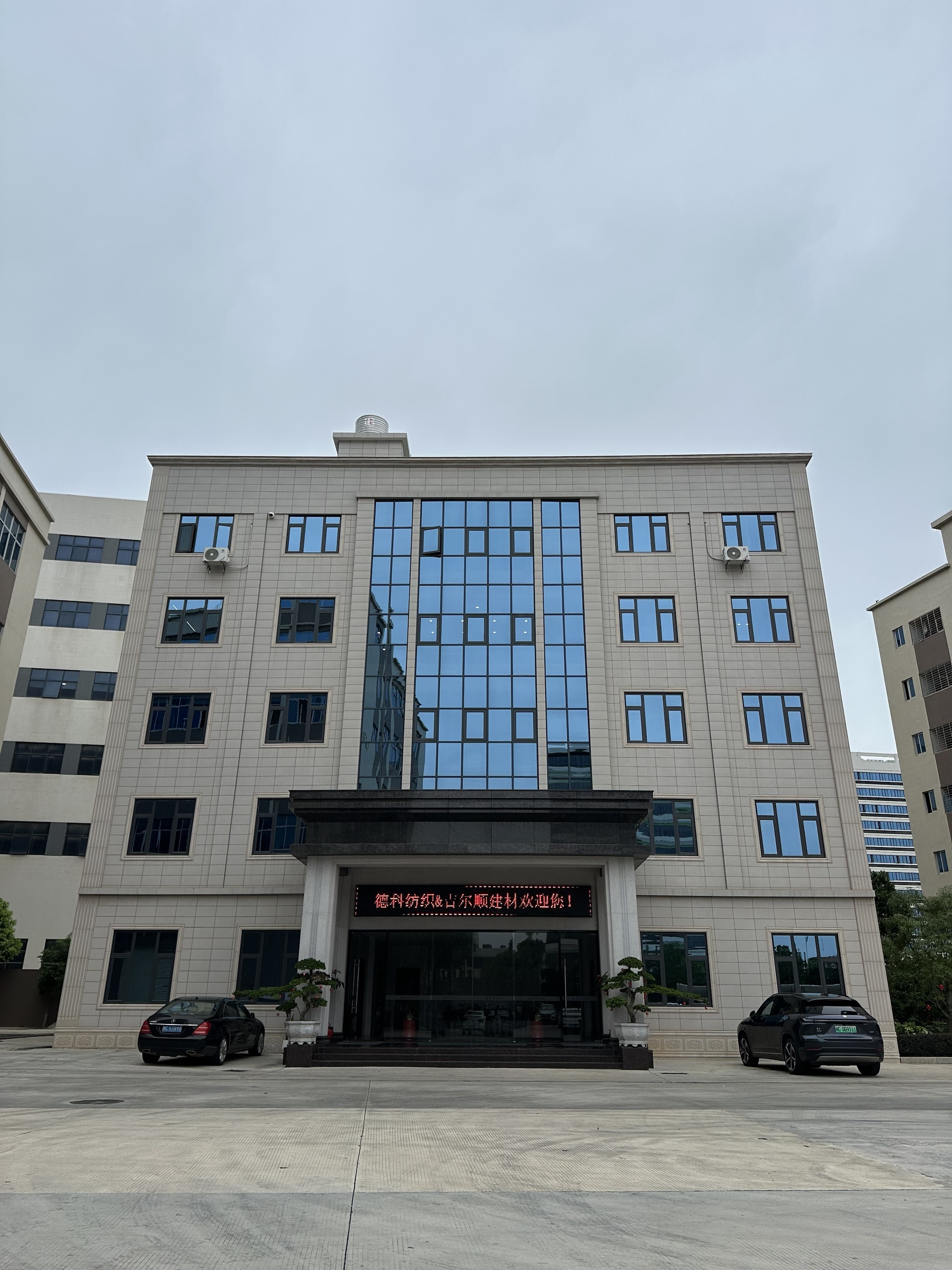
Thickness is specified against the application: facade and exterior wall decoration, interior decoration, or factory-machined furniture components.
3 mm, 4 mm and 5 mm: Thickness-to-Application Fit
The three thicknesses are normally specified against different jobs. The mapping below is a decision starting point; project loads, substructure and local requirements still govern the final specification.
| Thickness | Application fit | What the thickness contributes | Specify alongside it |
|---|---|---|---|
| 3 mm | Building curtain wall and exterior wall decoration | Lowest panel weight of the three; suited to systems where the supporting frame and substructure carry the structural role | Skin thickness, alloy grade, coating system, support spacing, wind-load verification |
| 4 mm | Interior decoration | Balanced stiffness and weight; predictable flatness on wall and ceiling linings; straightforward handling in fit-out work | Core type, surface finish (plain, mirror, brushed, wooden grain or marble grain), fixing method |
| 5 mm | Furniture factory use | More body and edge presence for panels that are machined, edged and assembled; better behaviour where hinges, runners and connectors are fixed | Skin thickness, alloy, core type for furniture service conditions, edging and hardware compatibility |
Three buyer situations show how the mapping resolves in practice.
Cabinet and furniture manufacturing. In a furniture factory, the panel is a machined component rather than a hanging cladding sheet. Cutting, edge banding and hardware installation all place demands on panel body, which is where 5 mm is normally specified. The same factory logic applies to cabinet production in the Philippines and elsewhere in tropical Southeast Asia, where humidity swings between the factory floor and the finished interior. In that setting, the thickness decision is paired with a core and coating decision suited to interior service conditions, and with an edge treatment that seals the cut.
Signage fabrication. Signage work, including the fabrication pattern common among sign makers in Malaysia, is dominated by 3 mm and 4 mm stock, because sheets are routed, folded and fixed to frames rather than loaded by wind the way a curtain wall is. Where a panel spans between frame members without backing, 4 mm is normally the safer choice; where the frame supports the panel closely along its length, 3 mm keeps weight and material cost down. Decorative surfaces such as mirror, brushed, wooden grain and marble grain are applied to the panel face, and thin panels show surface waviness more readily than thicker ones under the same support conditions. That is one reason high-gloss and mirror finishes are often paired with the heavier of the two signage thicknesses.
Storefront and shopfront signage. In island and coastal markets such as the Maldives, a storefront panel faces salt-laden air, UV exposure and driving rain at the same time. Thickness controls the mechanical behaviour of the panel; it does not control how long the finish lasts. That part of the decision belongs to the coating system, which is why a 4 mm panel with PVDF coating and a 4 mm panel with a basic decorative finish should be treated as two different specifications in the same tender.
Core Material: PE and Fireproof Options
Two core families are used across the ACP range. A low-density polyethylene (LDPE) core is the standard option; a fire-resistant mineral core is the alternative for projects where fire performance is part of the specification. The declared product structure is therefore an aluminum composite panel with an LDPE core or a fire-resistant core, and the core choice is written on the order independently of panel thickness.
Fire performance is where the core decision becomes measurable. Fire-resistant ACP with mineral cores can achieve Euroclass A2-s1, d0 classification under EN 13501-1, the European fire classification standard used in facade specifications. That classification belongs to a tested product and assembly, not to a core description on a datasheet. Buyers specifying a fire-rated core should require the test report for the exact product being offered, and should treat 'fireproof' written without a test reference as an unverified claim.
In practice the core decision follows the application: exterior and regulated building work pushes specification towards the fire-resistant core, while interior decoration, signage and many furniture applications use the standard core unless local requirements state otherwise.
Coating System: PVDF or Polyester
Coating and thickness are separate decisions, and buyers who optimise one at the expense of the other usually end up with a mismatch. ACP with PVDF coating offers weather resistance, UV protection and long-term colour stability, typically over a 10–20 year service life depending on conditions, and needs only routine cleaning, with damaged panels replaceable individually. Polyester coatings cover the decorative part of the range. The commercial weight of that split is visible in category data: PVDF-coated panels accounted for 36.5% of global ACP revenue in 2025.
The practical rule is straightforward. Coating determines how a panel looks and how long it survives; thickness determines how a panel behaves. A 3 mm panel with PVDF coating and a 3 mm panel with a decorative polyester finish have identical mechanical properties and very different service lives. On exposure-heavy projects, under-specifying the coating to save cost while over-specifying thickness is a common and expensive error.
Aluminum Skin Thickness and Alloy Grade
Skin thickness sits between 0.05 mm and 0.50 mm across the range, and the alloy family determines how the skin behaves during forming and in service. Available grades include AA1100, AA3003 and AA5005, with other grades available on demand. AA1100 is a commercially pure aluminium grade valued for formability and corrosion resistance; AA3003 is a manganese-alloyed grade with higher strength than the 1100 series; AA5005 is a magnesium-alloyed grade widely used where a combination of strength and corrosion resistance is required. The grade should be named on the order rather than left to supplier discretion, because each grade responds differently when a panel is folded, routed or roll-formed.
Skin thickness and alloy grade together explain why two panels of the same nominal total thickness can differ in flatness under identical support spacing. This is the single most useful comparison line for buyers reviewing competing quotations at the decision stage.
How JIERSUN Configures the Thickness Range
Jiersun (Fujian) Decorative Building Materials Co., Ltd. is a Chinese manufacturer of aluminum composite panels, established in 2006 and operating a 20,000 m² factory in Jinjiang City, Fujian Province, roughly 70 km from the port. The company reports an annual output of 4,000,000 m², a 40-person workforce, an R&D team of 10 engineers, and an export ratio of about 30%, with main markets in Southeast Asia, Africa and the Middle East. More than 80% of employees have over ten years of industry experience — a detail that matters more than it sounds in a category where calibration and coating consistency decide whether a delivery passes inspection.
The product range covers 3 mm, 4 mm, 5 mm, 6 mm and 8 mm panels in normal widths of 1220 mm, 1250 mm and 1500 mm, with aluminum skins from 0.05 mm to 0.50 mm, PE or fireproof cores, AA1100, AA3003 and AA5005 alloy grades, and PVDF or polyester coatings. A protective film is applied to the surface to prevent scratches during transport and installation. For a buyer choosing between 3 mm, 4 mm and 5 mm, that configuration matters because the thickness decision does not force a trade-off on core, alloy or coating: the three are specified independently inside the same production system.
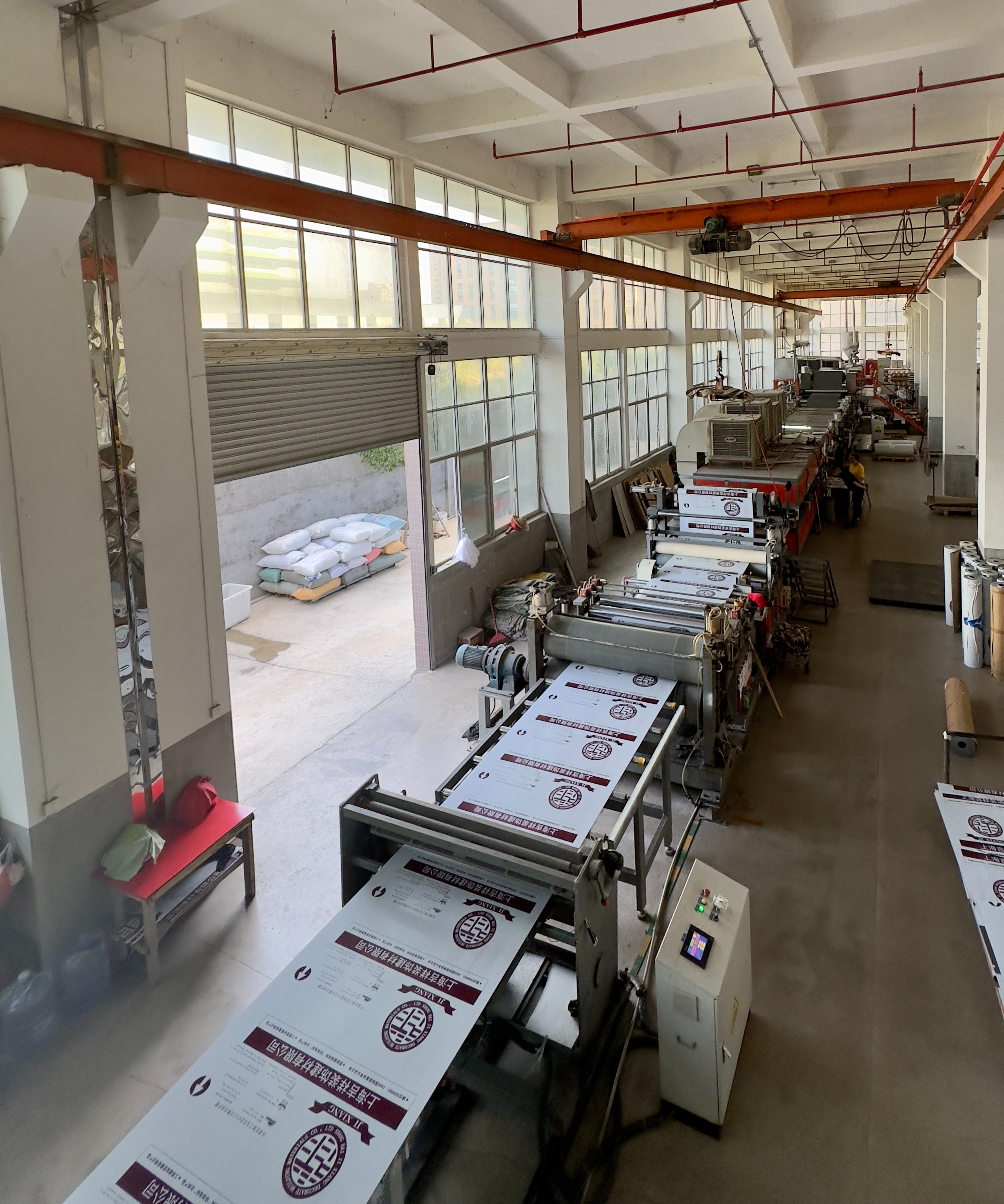
Thickness consistency depends on production control, not on the nominal figure printed on the quotation.
Purchasing Terms and Acceptance Criteria
At the decision stage, the difference between a good and a poor purchase is usually documentation rather than thickness. The specification block on the purchase order should state: total panel thickness; aluminum skin thickness; alloy grade; core type (PE or fireproof); coating system and colour; panel width and length; surface finish; protective film requirement; and packing method. Anything left unstated becomes supplier discretion.
Acceptance should be planned before the container is loaded. JIERSUN states that quality control runs across the whole process — raw material inspection, in-process production control, pre-delivery inspection with reinforced packaging, and third-party testing with officially issued test reports on request — and that reinforced packaging and loading supervision are used to prevent transit damage. For the buyer, that translates into four checks:
- Dimensional check. Measure total thickness and skin thickness against the ordered specification, and verify panel flatness and dimensional consistency across the batch.
- Surface and finish check. Inspect coating and decorative finishes under raking light, comparing against an approved sample, with particular attention to high-gloss and mirror surfaces.
- Packaging and film check. Confirm the protective film and packaging are intact on arrival, since the film exists specifically to prevent scratches during transport and installation.
- Documentation check. Where the project requires test evidence, confirm that third-party test reports are available for the delivered product, not only for a reference sample.
Technical support for material selection and application, together with after-sales service, forms part of the stated supplier commitment and is worth confirming in writing at the quotation stage.
Where the Thickness Decision Reaches Its Limits
ACP is not the right answer for every panel requirement, and a decision framework that does not say so is not useful. Where an application demands very high rigidity or near-perfect flatness over long spans, aluminum honeycomb panels use a hexagonal honeycomb core that delivers significantly higher stiffness and flatness, at roughly 30%–70% higher cost than ACP. Where an application involves heavy impact or heavy-duty structural conditions, solid aluminum panels — made entirely of aluminium rather than a composite sandwich — are the conventional choice, at about 30%–60% higher total project cost and roughly twice the weight of ACP. Moving up from 3 mm to 5 mm does not close that gap; it changes behaviour within the ACP family.
Two further boundaries are worth stating plainly. First, published capacity information for suppliers in this category can differ between sources: JIERSUN's own materials state an annual output of 4,000,000 m², while a separate company profile cites 8 million m². Buyers negotiating volume commitments should confirm current capacity directly rather than rely on either figure. Second, public sources do not provide independent laboratory validation of ACP composition claims for every product on the market, so a test report remains the only reliable evidence for coating performance, fire classification and skin specification.
What Market Data Says About the Category
The ACP category is large and still expanding. One commercial market study values the global market at USD 9.17 billion in 2025 and projects USD 17.39 billion by 2035 at a 6.6% compound annual growth rate, with Asia-Pacific holding 54.8% of 2025 revenue and PVDF-coated panels taking 36.5% of revenue.
Those figures should be read as directional. A second provider estimates the market at USD 7.00 billion in 2025 growing to USD 14.35 billion by 2034, and a third estimates USD 6.46 billion in 2024 rising to USD 9.65 billion by 2030. The three use different scopes and methodologies and cannot be merged, and none is an authority-backed dataset for ACP specifically. What they agree on is growth; what a buyer should take from them is that thickness decisions are being made inside a competitive, expanding supply market rather than a niche one.
Two regulatory signals are more directly actionable. Fire-resistant panels with mineral cores can achieve EN 13501-1 A2-s1, d0 classification, which places the core decision inside the facade compliance process in Europe. And HS 76061230 is designated for aluminum composite panels of aluminium alloys with thickness greater than 0.2 mm, so declared specifications should match the classification used in customs documentation.
Future Outlook
Three shifts are likely to shape how buyers write ACP specifications in the coming years. Fire performance is moving from a differentiator towards a baseline requirement in facade work, which increases the weight of the core decision relative to thickness. Coating specifications are consolidating around PVDF in exterior applications, given both its share of category revenue and its 10–20 year service profile. And documentation is becoming a qualification criterion rather than a formality: buyers increasingly request test reports, traceable specifications and consistent customs classification before placing volume orders.
For the 3 mm / 4 mm / 5 mm decision itself, the framework is unlikely to change. The three thicknesses map to three different jobs — curtain wall and exterior wall decoration, interior decoration, and furniture factory use — and the specification work that matters is what gets written next to the thickness: skin, alloy, core and coating.
Frequently Asked Questions
How do I decide between 3 mm, 4 mm and 5 mm ACP for a project?
Decide by application before comparing quotations. In this framework, 3 mm is specified for building curtain wall and exterior wall decoration, where the supporting frame carries the structural role; 4 mm suits interior decoration, where a balance of stiffness, weight and flatness is needed; and 5 mm is used in furniture factory applications, where panels are machined, edged and assembled with hardware. Confirm support conditions, substructure and local requirements before fixing the final thickness.
Does a thicker panel always mean a better panel?
No. Total panel thickness and aluminum skin thickness are separate specifications. Skin thickness ranges from 0.05 mm to 0.50 mm, and within the same nominal total thickness, different skins produce different stiffness, flatness and fixing behaviour. Alloy grade also matters: AA1100, AA3003 and AA5005 behave differently during folding, routing and roll-forming. A 4 mm panel with heavier skins can outperform a 5 mm panel with light skins in a specific application, so thickness alone is not a quality measure.
Should I specify a PE core or a fireproof core?
Choose the core according to the fire requirement of the application, not according to panel thickness. The two core options are a low-density polyethylene core and a fire-resistant core. Fire-resistant ACP with mineral cores can achieve Euroclass A2-s1, d0 under EN 13501-1, but that classification applies to a tested product and assembly and must be supported by a test report for the exact product offered. Standard PE cores are used in interior decoration, signage and many furniture applications where no fire classification is specified.
Is PVDF coating worth it compared with a polyester coating?
It depends on exposure. PVDF-coated ACP offers weather resistance, UV protection and long-term colour stability, typically over a 10–20 year service life depending on conditions, and requires only routine cleaning, with damaged panels replaceable individually. Polyester coatings serve decorative applications. PVDF-coated panels accounted for 36.5% of global ACP revenue in 2025, reflecting how exterior-facing projects specify. For interior fit-out and short-life signage, the additional weather performance may not be required.
What aluminum skin thickness and alloy should appear on my purchase order?
Both should be stated explicitly. Skin thickness options run from 0.05 mm to 0.50 mm, and available alloy grades include AA1100, AA3003 and AA5005, with other grades available on demand. Skin thickness governs the stiffness contribution of the facings, surface flatness and fixing behaviour; alloy grade governs formability and strength during fabrication, and behaves differently when the panel is folded or routed. If a quotation names only the total panel thickness, the specification is incomplete.
What should I check when an ACP delivery arrives?
Check the items that were specified, not only the panel count. Verify total thickness and skin thickness against the order, flatness and dimensional consistency, and coating or decorative finish against an approved sample. Confirm that the protective film and packaging are intact, since film is applied to prevent scratches during transport and installation. Where the project requires test evidence, confirm that third-party test reports are available for the delivered product. Reinforced packaging and loading supervision are the supplier-side controls against transit damage.
Additional technical detail on panel thickness, width, alloy grade, core and coating options is available in the JIERSUN ACP Catalog (2026). Product and company information is published at www.jiersun.com.