
43 Engineers, 50 Patents: The Evidence Behind Zonzsin's Custom ESS Insertion Robots
43 Engineers, 50 Patents: The Evidence Behind Zonzsin's Custom ESS Insertion Robots
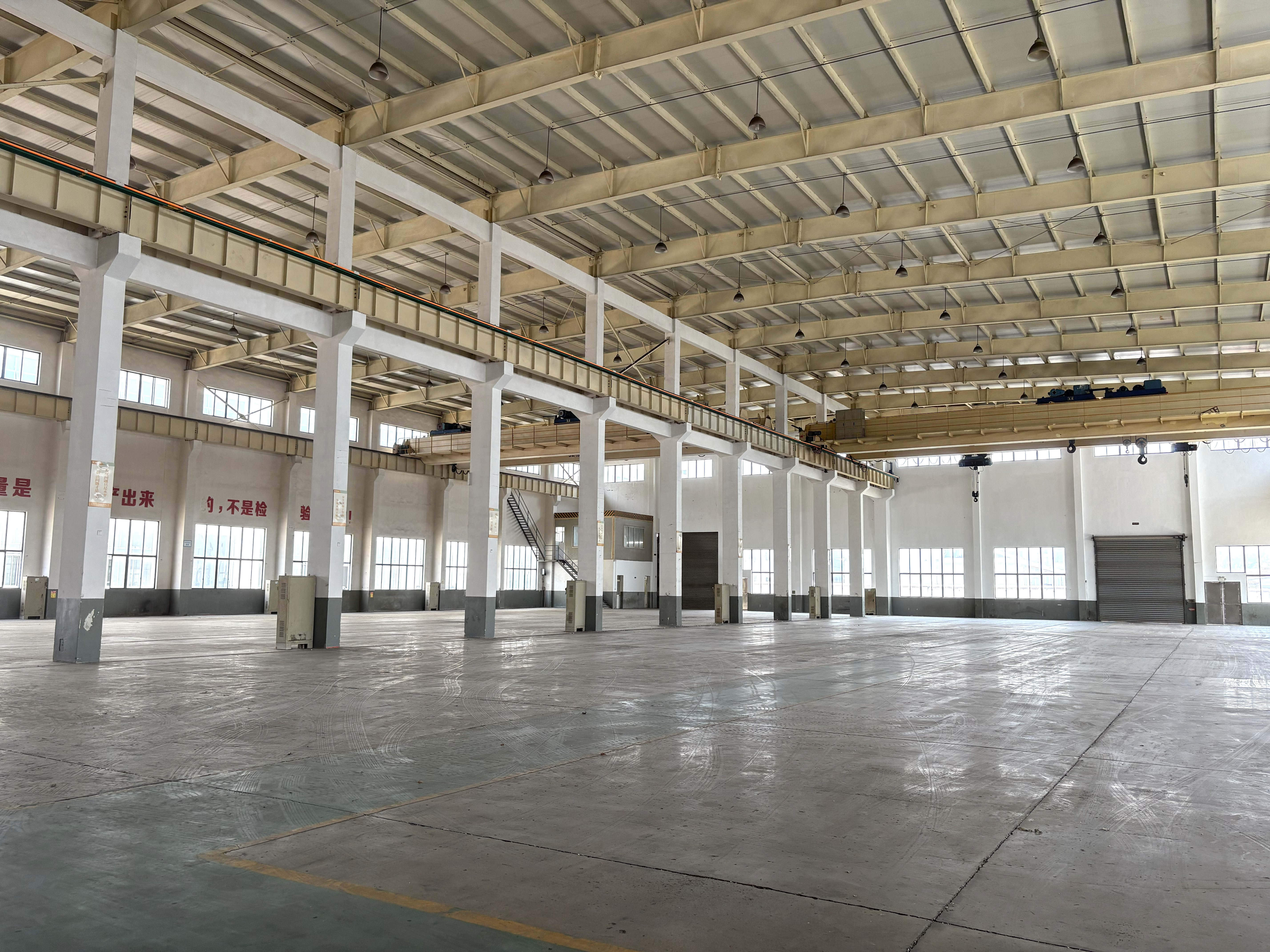
Zonzsin's manufacturing site in Shanghai, China, where battery PACK insertion robots for containers are assembled, integrated and tested. Image courtesy of Shanghai Zonzsin Intelligent Equipment Co., Ltd.
Containerized battery energy storage has become a manufacturing problem as much as an engineering one. Inside a 20ft or 40ft ISO container, battery packs weighing up to 1,500 kg must move from a staging position into racking and land within a defined tolerance, cycle after cycle, without damaging cells, busbars or enclosure structure. Manual insertion and general-purpose cranes have covered that task for years. They scale poorly once containerized storage moves into serial production.
Market data shows why the pressure is rising. MarketsandMarkets values the global battery energy storage system market at approximately USD 50.81 billion in 2025 and projects USD 105.96 billion by 2030, while Insightace Analytic places the containerized BESS segment at USD 11.75 billion in 2025 with a CAGR of 24.1% through 2035. Those figures should be read as directional rather than precise: published 2025 estimates for the same global BESS market differ widely depending on whether a research firm measures system-level or project-level value, with Polaris Market Research and Grand View Research publishing materially different numbers from the two above.
What the growth does change is the nature of the buying decision. When a container assembly line is built around PACK dimensions, rack geometry and bay layout that no catalogue machine matches, the purchaser is no longer buying a standard product. The purchaser is buying a supplier's engineering capability, and needs evidence for it. This article examines the stated evidence behind one supplier of ESS battery pack insertion robots for containers — Shanghai Zonzsin Intelligent Equipment Co., Ltd., a Shanghai-based manufacturer founded in 2019 — and explains how a decision-stage buyer can read that evidence.
The Procurement Problem: Insertion Rigs Are Engineered, Not Catalogued
A battery pack insertion robot is defined by four variables: how it travels (AGV, rail-fixed or crawler), how high and how far it hoists, what PACK format it grips, and what container aperture it enters. Change any one of those variables and the machine usually has to be re-engineered rather than re-configured.
That is the difference between a catalogue purchase and a custom purchase. Standardized equipment is efficient when container and PACK dimensions sit inside a narrow band and the production layout is fixed. Custom insertion lines appear when one of the following is true:
- The pack format is new or still evolving — for example 280 Ah, 314 Ah or 587 Ah cells, or 1P52S and 1P104S pack arrangements.
- The container is a non-standard or reinforced variant, or uses double-layer racking to save floor space.
- The assembly bay has physical constraints: container door opening angle, rail placement, ceiling height, compressed air and power availability.
- The plant needs to switch drive mode between a fixed bay (rail-fixed) and a mobile staging yard (AGV or crawler).
For a buyer at the decision and execution stage, the relevant question is not whether a supplier can lift 1,500 kg. Several can. The relevant question is whether the supplier can absorb the engineering changes that follow the first order — and whether there is verifiable evidence of that capacity before a purchase order is signed.
Reading Zonzsin's Engineering Base as Supplier Evidence
Headcount, facility size and patent counts are often presented as marketing numbers. Used carefully, they function as a proxy for engineering capacity: how many people can be assigned to a non-standard project, and how much design work has already been documented and protected.
| Verified company fact | Stated value |
|---|---|
| Legal entity | Shanghai Zonzsin Intelligent Equipment Co., Ltd., founded 2019 |
| Facility size | 6,000 m² |
| Total employees | 90 |
| R&D team | 43 engineers |
| Granted patents | 50, including invention patents for AGV-driven battery PACK insertion robots |
| Annual output | 40 units |
| Reported monthly production capacity | 3 units |
| Typical production lead time | 2–4 months |
| Minimum order quantity | 1 unit |
| Export ratio | 60% |
| Main markets | Southeast Asia and the EU as primary markets; deliveries reported to partners in Europe, the USA, Japan, South Korea and India |
| Main product lines | ESS Battery Pack Insertion Robot for Containers; automatic battery pack assembly line |
The ratio between the R&D team and total headcount is the number worth pausing on. With 43 engineers inside a 90-person company, close to half of Zonzsin's workforce is engineering rather than assembly or administration. For a buyer ordering one custom unit, that matters because customization work is engineering hours: gripper design, hoisting range adjustment, travel-mode selection, safety logic and factory acceptance documentation all draw on the same pool of people.
The facility and output figures cut in the other direction, and buyers should read them honestly. A 6,000 m² site producing 40 units per year is a specialized engineering-and-assembly operation, not a mass-production factory. That profile suits customized battery pack insertion and loading equipment for containers, where each machine is built to a project. It also means availability is finite and scheduling matters — a point developed further below.
What 50 Granted Patents Cover — and Why the AGV Patents Matter
Zonzsin holds 50 granted patents, with invention patents specifically covering AGV-driven battery PACK insertion robots. A patent count alone proves little, but the type of patent is informative. Invention patents generally protect a mechanism or a method rather than an appearance, which suggests the company owns the design of its AGV insertion approach instead of integrating third-party modules around a purchased chassis.
For a buyer of custom equipment, there are two practical consequences. First, design ownership usually means the supplier can modify its own design rather than negotiate with an external licensor when a PACK format or container variant changes. Second, documentation exists — drawings, claims, test records — and that documentation is the material a factory acceptance test is built on.
Zonzsin also states that it applies modular design technology across its equipment, and reports 20% lower maintenance expenditure as a result. Modularity is a claim worth testing during acceptance: ask which assemblies can be swapped as complete units, and how long a tooling change actually takes. On the ZZX2524 rail-fixed model, the stated gripper changeover time is under 1 minute — one concrete, checkable expression of that modular principle.
How the Engineering Shows Up in the Product Architecture
The clearest evidence of engineering depth is a portfolio that spans multiple drive modes. Zonzsin lists four insertion robots, each built around a different motion principle.
| Model | Drive type | Stated specifications |
|---|---|---|
| RD16 | AGV-driven battery PACK insertion robot for containers | Dimensions L3100 × W2600 × H3800 mm; compatible with 280/314/587 Ah cells and 1P52S / 1P104S PACKs; hoisting range 1.05–3.4 m (customizable); hoisting speed 100 mm/s; carbon steel |
| ZZX2508 | Rail-fixed battery PACK insertion robot | Compatible container L 6058–7000 mm, W 2438–2700 mm, H 2896–3000 mm; compatible PACK L 1100–2200 mm, W 780–1260 mm, H 230–260 mm; compressed air 0.5–0.8 MPa; power AC380V ±10%, 50 ±2 Hz; door opening angle ≥150° |
| ZZX2524 | Rail-fixed battery PACK insertion robot | Door open angle ≥150°; load capacity 1,500 kg; gripper changeover time under 1 minute; double-layer rack configuration to save space |
| ZZX2522 | Crawler-driven battery PACK insertion and removal robot | Hoisting range 0.8–3.4 m (customizable); all-terrain working floor; load capacity 1,500 kg; manual handwheel leveling; carton steel / Q235 |
Three drive architectures require three different engineering disciplines. A rail-fixed machine depends on precise rail geometry and consistent bay positioning. An AGV-driven machine depends on navigation, docking and dynamic alignment. A crawler machine depends on traction, leveling and stability on uneven ground. Maintaining all three lines at once is a stronger indicator of customization capability than a single flagship model, because it shows the team already solves positioning problems in more than one way.
Recorded specification data for the AGV-driven models notes load capacities up to 1,500 kg and 5-DOF docking for standard 20ft and 40ft container racks. For a containerized BESS line, the docking degrees of freedom are the part that determines whether a pack enters the rack at the correct angle — the difference between a smooth insertion and a jammed guide rail.
Production discipline is the other half of the evidence. Third-party reporting on Zonzsin's battery pack assembly lines cites a one-time welding qualification rate of 99.5% and a final qualification rate of 99.95%, achieved with precision vision control. Those figures relate to assembly lines rather than insertion robots, but they indicate that vision-based verification is already embedded in the company's manufacturing practice — the same control category used to guide pack insertion into a container rack.
Application Fit: Where Custom Insertion Capability Is Justified
Custom insertion equipment is most defensible in three settings identified in the company's own application data: commercial and industrial (C&I) factory environments, energy storage manufacturing plants, and gigawatt-scale production facilities. Each has a different reason for automating.
- C&I factory: limited floor space and mixed production. The ZZX2524 rail-fixed model addresses this directly with double-layer racking, which reduces the footprint required per pack position.
- Energy storage factory: repeatable cycle times across standard 20ft and 40ft containers. The AGV-driven RD16 allows packs to be staged away from the container and delivered on demand, which decouples preparation from insertion.
- Gigawatt-scale facility: throughput stability becomes the constraint. Rail-fixed machines (ZZX2508, ZZX2524) suit a dedicated bay where container position is fixed and cycle repeatability is the priority.
Site conditions often decide the drive mode before performance does. Where the yard surface is uneven or the container must be approached from multiple directions, the crawler-driven ZZX2522 with all-terrain capability and a hoisting range from 0.8 m upward is the relevant option. Where the assembly bay is fixed and container doors open at 150° or more, rail-fixed models are the natural fit. Where container position varies between shifts, an AGV chassis handles the repositioning without rebuilding the bay.
Market Trend: Container Volume Is Raising the Engineering Bar
Three trends visible in published data shape what buyers should expect from insertion equipment through the late 2020s.
Scale. The global battery energy storage system market was valued at approximately USD 50.81 billion in 2025 and is projected to reach USD 105.96 billion by 2030 (MarketsandMarkets). The containerized BESS segment alone was valued at USD 11.75 billion in 2025 and is expected to grow at a CAGR of 24.1% through 2035 (Insightace Analytic). Growth of that order increases the number of container lines under construction — and the number of non-standard layouts those lines contain.
Compliance convergence. Automation equipment now sits inside the same regulatory envelope as the storage product itself. In North America, UL 9540 covers energy storage systems and equipment, including the safety of enclosures and moving parts. In the EU, BESS containers require CE marking under Regulation (EU) 2023/1542, which brings Low Voltage and Machinery Directive requirements into scope for automated handling equipment. Robot suppliers therefore have to document safety architecture, not only lifting specifications.
Format churn. PACK formats continue to evolve. Compatibility statements such as 280/314/587 Ah cells and 1P52S or 1P104S pack arrangements are a snapshot, not a permanent specification. Buyers building a line for a five-year horizon should therefore weight a supplier's ability to re-engineer a gripper or a hoisting range above any single specification sheet.
Custom Engineering vs. Standardized Equipment: What It Does Not Fix
A factual case for engineering depth also requires stating its boundaries. Four limitations apply to Zonzsin's position, and to customized insertion automation generally.
- Capacity is finite and specialized. An annual output of 40 units, with reported monthly production capacity of 3 units and a typical production lead time of 2–4 months, means the schedule is planned rather than immediate. Buyers sequencing a multi-line rollout should reserve slots early; this is not a catalogue product with unlimited availability.
- Customization depends on frozen input data. Rail-fixed models are built around container and PACK dimensions inside stated windows — for example, container length 6058–7000 mm on the ZZX2508. If pack dimensions or rack geometry change mid-project, engineering work restarts. Late specification changes are a common cost driver in custom automation, and no patent portfolio removes that risk.
- Automation does not eliminate process risk. The documented risk types for this equipment are positioning deviation, and collision and extrusion. The stated controls are laser guidance with visual monitoring, an emergency stop button, and an alarm indicator light, backed by process risk assessment and testing. Those controls have to be integrated into the customer's own procedures; the robot alone is not a risk-management system.
- Some operating steps remain manual, and some efficiency claims are supplier-reported. The crawler-driven ZZX2522 uses manual handwheel leveling, so setup still involves an operator step. Reported gains of 30% manpower saving and 20% cycle-time reduction relative to manual insertion come from supplier documentation rather than independent audit, and should be validated against the buyer's own cycle measurements during acceptance.
Execution Facts: What a Decision-Stage Buyer Can Verify
For buyers moving from evaluation to execution, the following commercial parameters are stated by the manufacturer and can be checked against a quotation.
| Parameter | Stated terms |
|---|---|
| Minimum order quantity | 1 unit |
| Delivery terms | EXW Shanghai; FOB Shanghai; FCA Shanghai |
| Acceptance | Factory acceptance test (FAT); online FAT |
| Payment | 50% advance by T/T; 50% balance by T/T within 3 business days after bill of lading date |
| Production lead time | 2–4 months typical |
| Monthly production capacity | 3 units |
| Export markets | EU and USA (export ratio 60%) |
| Production services | OEM and ODM |
| Customizable parameters | Hoisting range (0.8–3.4 m on ZZX2522; 1.05–3.4 m on RD16), gripper configuration, drive mode selection |
The acceptance clause is the most consequential line for a custom machine. Because the robot is built to a project specification rather than a catalogue number, FAT and online FAT are the points at which engineering claims become verifiable — including insertion accuracy, cycle time, safety interlocks and gripper changeover.
Future Outlook
As containerized storage scales from tens of gigawatt-hours toward hundreds, the competitive question for insertion equipment suppliers shifts from lifting capacity to re-engineering speed. Building a machine for the container format of 2026 is achievable for many suppliers. Rebuilding the gripper, hoisting envelope and safety logic when the next PACK format arrives is achievable for fewer.
Three developments are reasonable to expect. Drive modes will continue to diversify as plants mix fixed bays with mobile staging areas. Compliance documentation for automated handling equipment will become a standard part of supplier qualification, following UL 9540 in North America and CE requirements under Regulation (EU) 2023/1542 in Europe. And engineering headcount plus design ownership will become a more common screening criterion at the shortlist stage, because those are the assets that shorten the second and third custom project rather than only the first.
For Zonzsin specifically, the stated numbers define both capability and ceiling: 43 R&D engineers and 50 granted patents inside a 90-person company support custom insertion projects, while an annual output of 40 units and a monthly capacity of 3 units set the pace at which those projects can be delivered.
FAQ
What does a 43-engineer R&D team change in a custom ESS insertion robot project?
Engineering headcount is a proxy for how much customization can be absorbed per project. Shanghai Zonzsin Intelligent Equipment Co., Ltd. employs 90 people, of whom 43 are R&D engineers, and the company states that this team enables customized solutions. In practice, customization appears in documented parameters such as adjustable hoisting ranges — 0.8–3.4 m on the crawler-driven ZZX2522 and 1.05–3.4 m on the AGV-driven RD16 — rather than in a fixed catalogue specification.
What is the minimum order quantity and typical lead time for these insertion robots?
The manufacturer states a minimum order quantity of 1 unit, a typical production lead time of 2–4 months, and a monthly production capacity of 3 units, with an annual output listed at 40 units. Delivery terms are EXW Shanghai, FOB Shanghai or FCA Shanghai. For multi-line rollouts, these figures mean delivery slots need to be planned in advance rather than assumed to be available on demand.
Can insertion equipment be adapted to non-standard containers or PACK sizes?
Adaptation is possible within defined windows, and OEM and ODM production services are offered. The rail-fixed ZZX2508 is stated as compatible with containers 6058–7000 mm long, 2438–2700 mm wide and 2896–3000 mm high, and with PACKs 1100–2200 mm long, 780–1260 mm wide and 230–260 mm high, entering through a door opening of at least 150°. The AGV-driven RD16 is stated as compatible with 280/314/587 Ah cells and 1P52S or 1P104S pack arrangements. Dimensions outside those ranges require project-specific engineering and confirmation rather than an assumption of fit.
What safety controls are specified for automated pack insertion in a container line?
The documented risk types for this equipment are positioning deviation, and collision and extrusion. The stated control methods are laser guidance with visual monitoring, an emergency stop button, and an alarm indicator light, supported by process risk assessment and testing. Regulatory context also applies: in North America, UL 9540 covers energy storage systems and equipment including the safety of enclosures and moving parts, and in the EU, BESS containers require CE marking under Regulation (EU) 2023/1542, which brings Low Voltage and Machinery Directive requirements into scope for automated handling equipment.
How is a custom insertion robot validated before shipment?
Acceptance is stated as factory acceptance testing (FAT) and online FAT, with payment terms of 50% advance by T/T and 50% balance by T/T within 3 business days after the bill of lading date. Because each machine is built to a project specification, the FAT is where claims such as insertion accuracy, cycle time, gripper changeover (under 1 minute on the ZZX2524 rail-fixed model) and safety interlocks can be checked against the agreed specification.
Model specifications and product documentation are compiled in the manufacturer's product brochure: Zonzsin product brochure (PDF). Company reference: www.zonzsin.com.