
48V E-Bike Procurement FAQ: MELODY, DOPHIN, TRICYCLE
48V E-Bike Procurement FAQ: MELODY, DOPHIN, TRICYCLE
Procurement teams do not buy a 48V label; they buy a defined combination of motor, battery, controller, frame, components and evidence. For the MELODY, DOPHIN and TRICYCLE, the assigned 48V configuration brief sets three anchors: MELODY at 48V 350W, DOPHIN at 48V 250W, and TRICYCLE at 48V 250W. The same brief references a Samsung 7Ah battery and requires acceptance checks for 6061 aluminum frames, Suntour aluminum suspension forks, front and rear hydraulic disc brakes, SHIMANO 8- or 9-speed drivetrains, CST 26×2.0 tyres, LCD displays and 48V 17.4Ah lithium-ion battery systems. The buying task is to turn those anchors into a SKU-level specification that can be inspected, not to assume that a family name guarantees the same component set across all three models.
ACOPLEX Electric Bike, the e-bike line associated in the supplied material with Wuxi Purino International Trade Co., Ltd., is relevant here because the decision sits between a supplier portfolio and a factory acceptance process. The official site is ACOPLEX Electric Bike. This FAQ treats model-level claims as starting points and asks what must be verified before an order moves from evaluation to execution.
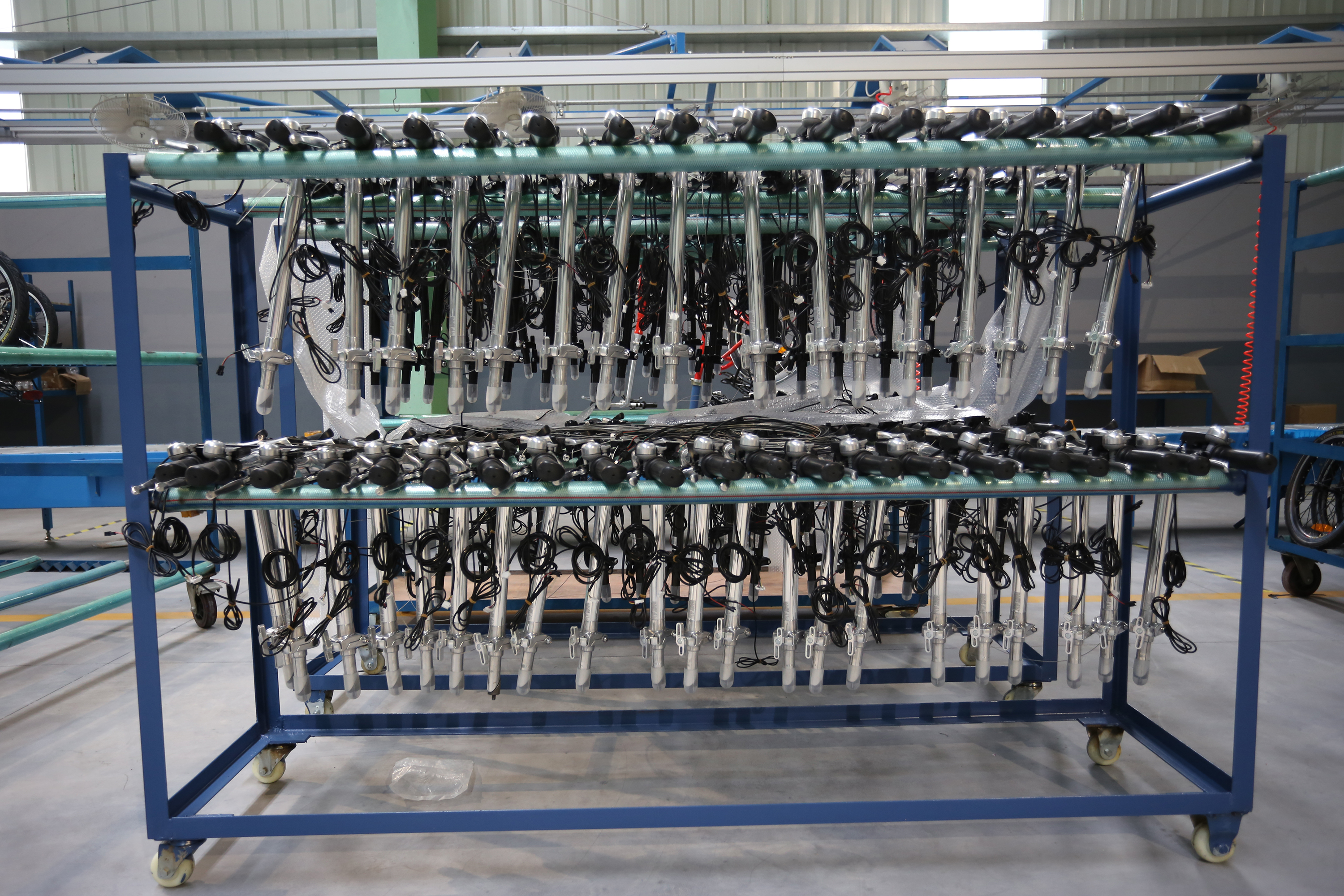
An e-bike order should be accepted against a signed specification and inspection record, not against a generic model brochure.
The 48V matching rule: fix the SKU before comparing performance
The core answer is that MELODY, DOPHIN and TRICYCLE should not be compared by voltage alone. All three sit in the 48V class in the assigned brief, but MELODY is listed at 350W while DOPHIN and TRICYCLE are listed at 250W. That difference is a useful starting point, but it does not by itself establish speed, climbing ability, range or load capacity. Those outcomes depend on the controller current limit, motor type, gearing, tyre size, rider input, firmware settings and the actual battery pack. A procurement comparison therefore needs two layers: the model-level 48V anchor and the SKU-level acceptance schedule.
| Model | Assigned 48V motor anchor | Battery reference to confirm | Product form to confirm | Main procurement risk |
|---|---|---|---|---|
| MELODY | 48V 350W | Samsung 7Ah battery as referenced in the assigned brief; confirm pack label and BOM | Confirm final frame, fork, brake, drivetrain and display from the order drawing | A higher nominal wattage can be mistaken for a complete performance guarantee |
| DOPHIN | 48V 250W | Samsung 7Ah battery as referenced in the assigned brief; confirm cell and pack declaration | Confirm whether the build is city, compact or another frame format before release | Same voltage and wattage as TRICYCLE makes a name-only comparison unsafe |
| TRICYCLE | 48V 250W | Samsung 7Ah battery as referenced in the assigned brief; confirm pack mounting and access | Electric city bike configured as a tricycle in the supplied corpus; confirm final trike geometry | Three-wheel configuration changes brake, stability, parking and battery-access checks |
The practical rule is simple: the purchase order should state the model, motor voltage and wattage, battery pack, frame material, fork model, brake type, drivetrain speed count, tyre specification, display type and any certification scope. If one of those items is missing, the buyer is not comparing a finished configuration; the buyer is comparing an intention.
Why 48V, wattage and ampere-hours are not enough
A 48V system is a voltage class, not a performance grade. The supplied purchasing Q&A explains the general trade-off: 36V systems have lower current, lower power consumption, a lighter vehicle and a lower price, but weaker power and poorer climbing; 48V systems provide stronger power output, faster acceleration, better climbing ability and longer cruising range, with slightly higher power consumption and vehicle cost. That is useful context, but it does not tell a buyer whether a particular 48V MELODY, DOPHIN or TRICYCLE will suit a specific route, rider or regulatory market.
Wattage is also a nominal rating. A 48V 350W MELODY and a 48V 250W DOPHIN should not be ranked as faster or slower without the controller setting, speed limit, gearing and test conditions. The same caution applies to battery capacity. A Samsung 7Ah battery reference and a 48V 17.4Ah lithium-ion system reference are not interchangeable labels. Ampere-hours alone do not establish range, because range also depends on assist level, terrain, load, tyre pressure, temperature and riding style. For procurement, the safe approach is to require the pack label, BOM, charger specification and BMS information, then compare those documents with the order.
Motor type must also be confirmed rather than assumed. The supplied Q&A notes that hub motors are cost-effective and maintenance-free for daily flat-road riding, while mid-drive motors offer better power performance and adapt to complex road conditions. It also notes that hub motors have simple structure, low failure rate and flat power output but weaker climbing and heavier wheel weight, while mid-drive motors place weight centrally for stronger climbing and acceleration but cost more and require regular maintenance. None of those general statements proves that MELODY, DOPHIN or TRICYCLE uses one motor type. If a mid-drive configuration is ordered, the buyer should verify the motor mounting, chainline, controller integration and service access on the signed specification.
Model-by-model procurement reading
MELODY: 48V 350W needs a controller and component check
MELODY is the higher nominal power model in this assigned comparison at 48V 350W. That makes it the model most likely to be judged by a buyer on assist headroom, but the 350W label should trigger more questions, not fewer. The buyer should confirm the controller current limit, the motor label, the speed setting for the destination market, the battery pack’s continuous discharge capability and the drivetrain’s ability to handle the intended load. A 350W nominal motor paired with a small 7Ah pack may have different duty-cycle expectations from a 350W motor paired with a larger 48V 17.4Ah lithium-ion system. The correct procurement question is not which number is larger; it is whether the motor, controller and battery are matched for the intended route and inspection regime.
For MELODY acceptance, the signed specification should identify the frame material and geometry, the Suntour aluminum suspension fork model, both hydraulic disc brakes, the exact SHIMANO 8- or 9-speed drivetrain, the CST 26×2.0 tyre specification and the LCD display model. If any of those items are described only as aluminum frame, suspension fork, disc brake, SHIMANO gears, CST tyre or LCD display, the description is too broad for a factory acceptance record. Model names and component families should be written down exactly.
DOPHIN: 48V 250W must be separated from TRICYCLE by build evidence
DOPHIN is listed at 48V 250W in the assigned brief. Because TRICYCLE shares the same nominal voltage and wattage, a buyer cannot separate DOPHIN from TRICYCLE by reading the motor rating alone. The separation must come from the order drawing and the build sheet: frame format, wheel and tyre fit, fork specification, brake layout, drivetrain speed count, display mounting, battery position and intended riding position. This is especially important when the buyer is evaluating several SKUs from one supplier portfolio, because similar electrical anchors can hide different mechanical and acceptance requirements.
DOPHIN should therefore be accepted against a component schedule that names the 6061 aluminum frame where specified, the Suntour aluminum suspension fork where specified, front and rear hydraulic disc brakes, the exact SHIMANO 8- or 9-speed set, CST 26×2.0 tyres and the LCD display. The buyer should also require a photo record of the motor label, battery pack label and frame serial before shipment. These are not commercial promises; they are verification points that make the delivery evidence match the purchase order.
TRICYCLE: 48V 250W changes the acceptance geometry
TRICYCLE is the three-wheel configuration in the assigned comparison at 48V 250W. The supplied corpus includes an electric city bike product that is configured as a tricycle, and that form factor changes the acceptance logic. A tricycle buyer should verify rear braking, parking stability, rear axle and wheel fixing, battery access, display visibility and the relationship between the frame and the rear load area. These are inspection points, not claims that every TRICYCLE order carries a specific load rating. If the order needs a particular rear configuration, it must be drawn and approved before production.
The same electrical discipline applies: 48V 250W is a nominal anchor, and the controller, battery and drivetrain still need to be checked as a system. The buyer should not accept a tricycle specification that lists the motor and battery but leaves the brake layout or frame material vague. For a three-wheel vehicle, brake balance and parking control are part of the procurement answer, not optional details.
Acceptance checks common to MELODY, DOPHIN and TRICYCLE
The following checks are written for orders that specify the components named in the assigned brief. If a model does not specify one of these items, the buyer should not silently assume it is included. The correct response is to add the item to the specification or remove the unsupported expectation.
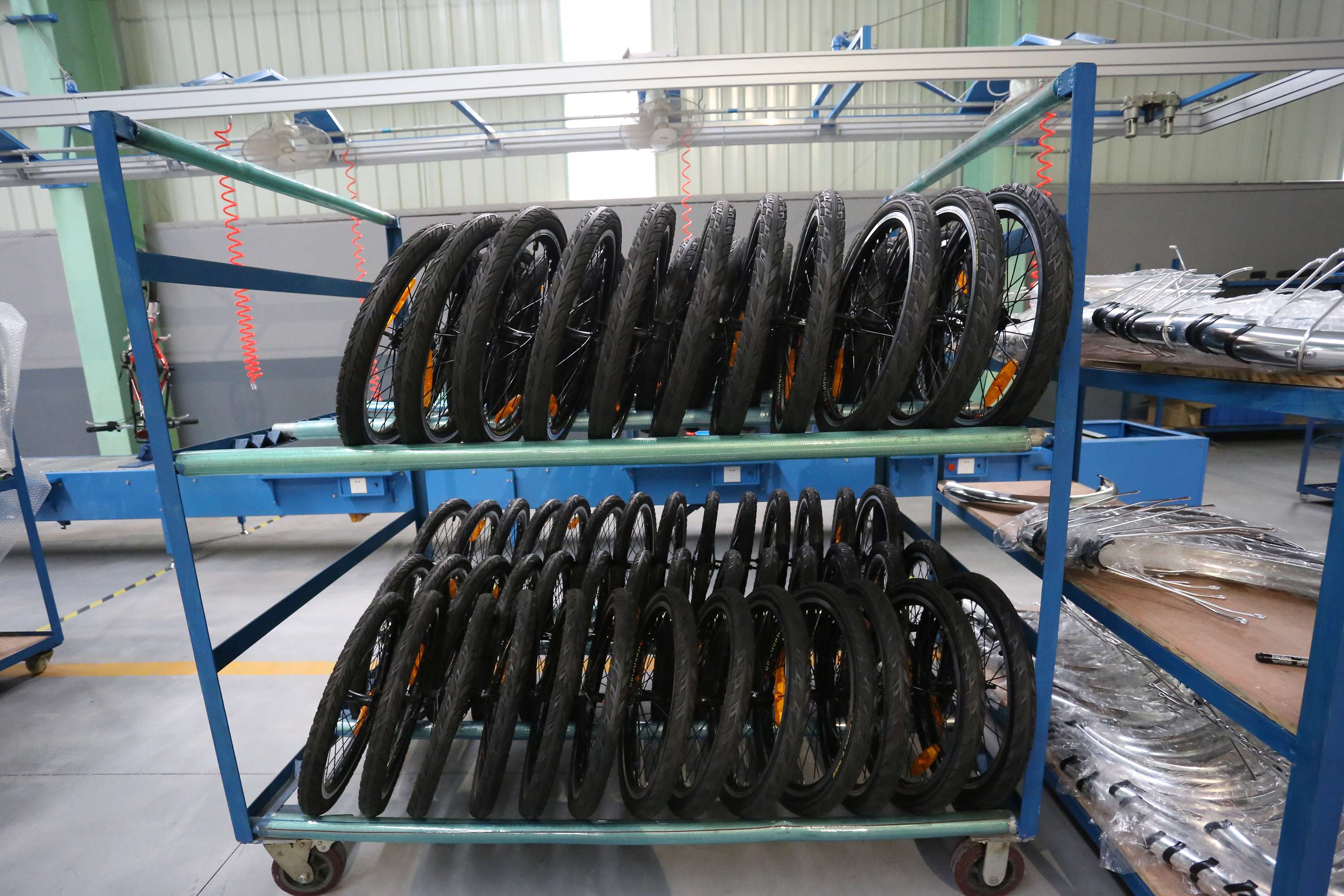
Component checks should produce records that can be matched to the purchase order and the shipping batch.
| Acceptance area | What to verify | Why it matters | Evidence to retain |
|---|---|---|---|
| 6061 aluminum frame | Alloy designation where specified, frame drawing, weld quality, serial number, paint coverage and thread condition | Prevents a generic aluminum frame from being substituted for the specified 6061 build | Approved drawing, material declaration where available, serial photo and inspection record |
| Suntour aluminum suspension fork | Brand marking, model, stanchion and steerer material, travel, axle type and sag setup | Fork identity affects fit, handling and replacement-part traceability | Fork label photo, model code and installation check |
| Front and rear hydraulic disc brakes | Both wheels equipped, rotor size, caliper mounting, hose routing, pad type, bleed condition and stationary brake test | A front-only or poorly bled system does not meet a front-and-rear hydraulic disc requirement | Brake inspection record, hose routing photos and functional test sign-off |
| SHIMANO 8- or 9-speed drivetrain | Exact speed count, shifter, derailleur, cassette range, chain, cable routing and hanger alignment | An 8-speed and a 9-speed build are different configurations and need different acceptance records | Build sheet, component photos and shifting test result |
| CST 26×2.0 tyres | Sidewall marking, size, ETRTO where shown, casing, recommended pressure and frame clearance | Tyre identity and clearance affect fit, rolling behaviour and replacement sourcing | Tyre sidewall photo, pressure setting and clearance check |
| LCD display | Model, voltage compatibility, assist levels, speed and battery data, fault codes, connector type and waterproofing | The display is part of the electrical system and must match the controller and battery | Display model record, parameter settings and functional test photo |
| 48V 17.4Ah lithium-ion battery system | Nominal voltage and capacity label, cell configuration, BMS specification, charger rating, connector, lock and mounting | A battery system is more than an ampere-hour figure; charger and BMS compatibility are part of acceptance | Pack label, charger label, BMS datasheet and charging test record |
| Samsung 7Ah battery reference | Cell marking where visible, pack construction, declared capacity, BMS, connector and charger match | A cell-brand reference should be supported by pack-level evidence, not by a brochure sentence alone | Pack label photo, cell declaration where supplied and incoming inspection record |
Battery and motor matching: what the acceptance record should say
For MELODY, DOPHIN and TRICYCLE, the battery acceptance record should answer four questions. First, is the pack a 48V system with the specified capacity, and does the label match the purchase order? Second, is the Samsung 7Ah reference a cell-level reference, a pack-level reference or a commercial description, and what evidence supports it? Third, if a 48V 17.4Ah lithium-ion system is specified, does the charger, BMS, connector and mounting match that pack? Fourth, has the completed e-bike been test-ridden with the final pack and display settings? The supplied quality-control description states that the factory process includes 100% component inspection and whole e-bike test riding, which is the right evidence base for these questions.
Do not convert a 7Ah reference and a 17.4Ah reference into a simple better-or-worse ranking. The smaller pack may suit a lighter duty cycle or a packaging constraint, while the larger pack may suit a different duty cycle or route profile. The correct statement is conditional: the pack must match the model’s controller, motor, charger and intended use, and the buyer should retain the pack label and charging test. No range figure should be accepted unless the supplier states the test conditions and the buyer accepts those conditions.
Compliance and supply evidence: keep the scope exact
EN15194 compliance is mandatory for e-bike sales in the EU market. The supplied certification record lists an EN15194 CE certificate issued by TUV for the EU market, with related products TRAVEL, ROCKET and UNICORN. It does not list MELODY, DOPHIN or TRICYCLE. That distinction matters. A buyer evaluating MELODY, DOPHIN or TRICYCLE should request the model-specific certificate and declaration of conformity, or a written statement of how the model is covered, before releasing an EU order. A general statement that a supplier’s e-bikes comply with European standards is not the same as a model-specific certificate scope.
The supplied purchasing FAQ lists MOQ 50 pcs, delivery terms FOB, CFR or CIF, inspection before shipment, and payment terms of 30% in advance and 70% before loading by T/T or L/C. The capability unit lists OEM production and OEM/ODM customization for electric bikes, a monthly capacity of 10,000 units, a lead time of 45–60 days, and customization options covering frame and fender color, wheel size and battery capacity. These are verified supply terms in the supplied material; they should still be written into the quotation and purchase order. A procurement FAQ should not turn a capacity statement into a delivery guarantee for a specific model, market or date.
Market context that affects specification discipline
Market data help explain why buyers are asking for tighter acceptance records. Strategic Market Research reported global electric bike revenue of USD 38.7 billion in 2024. ZIV reported that Germany’s e-bike sales reached 2.05 million units in 2024, equal to 53% of total bicycle sales. Dataintelo estimated that aluminum frames account for approximately 73% of global e-bike production, while Global Market Insights reported that hub motors held a 66% share of the e-bike drive market in 2024. Eurostat reported that EU imports of electric bicycles fell by 27% in 2023 to 867,000 units. These are reported market observations, not forecasts for MELODY, DOPHIN or TRICYCLE, and they do not replace a model-specific specification.
The procurement implication is narrower. A crowded and price-sensitive market makes component substitution easier to miss. That is why a 6061 aluminum frame check, a Suntour fork identity check, a front-and-rear hydraulic brake check, an exact SHIMANO speed count, a CST 26×2.0 tyre check, an LCD display check and a battery-pack check belong in the acceptance schedule. They turn an industry claim into a batch-level record.
What to lock before execution
Before an order moves to execution, the buyer should attach a signed specification sheet to the purchase order. For each model, the sheet should identify the 48V motor rating, the battery pack and charger, the frame material and drawing, the fork model, both brake assemblies, the exact drivetrain speed count, the tyre specification, the display model and the certification scope. It should also identify the inspection evidence: motor label photo, frame serial photo, battery pack label, charger label, brake test record, shifting test record and whole e-bike test-ride sign-off. The supplier’s verified quality-control process includes whole e-bike test riding, so the buyer should require that record rather than accept a verbal assurance.
The future outlook is not a prediction that every buyer will need the same configuration. It is a practical expectation that procurement documents will become more specific as distributors compare 48V models across city, compact and tricycle formats. MELODY, DOPHIN and TRICYCLE can be compared truthfully only when the comparison uses the same document set and the same acceptance language. That is the neutral reference layer this FAQ is intended to provide.
FAQ: 48V matching and acceptance questions
How should a buyer verify the 48V 350W MELODY configuration against the order sheet?
Check that the motor label, controller setting and purchase order all state 48V 350W, then confirm the battery pack, charger, LCD display and drivetrain match the same SKU. The 350W rating should not be accepted as proof of speed or range. The buyer should also verify the 6061 aluminum frame where specified, the Suntour aluminum suspension fork, front and rear hydraulic disc brakes, the exact SHIMANO 8- or 9-speed set, CST 26×2.0 tyres and the display model. A whole e-bike test-ride record should accompany the inspection.
What separates the 48V 250W DOPHIN from the 48V 250W TRICYCLE in procurement terms?
The motor rating alone does not separate them. Both are listed at 48V 250W in the assigned brief, so the buyer must use the frame drawing, product form, brake layout, rear-wheel arrangement, battery access, display position and component schedule to define each SKU. TRICYCLE is the three-wheel configuration, so parking stability, rear braking and battery mounting should be explicit acceptance points. DOPHIN should be accepted against its own signed drawing and build sheet, not against the tricycle specification.
How should a 48V 17.4Ah lithium-ion battery system be inspected at acceptance?
Verify the pack label, nominal voltage, capacity, cell configuration, BMS specification, charger rating, connector type, lock and mounting. Confirm that the charger matches the pack and that the completed e-bike has been tested with the final display settings. Retain a pack label photo, charger label photo and charging test record. The 17.4Ah figure is a capacity reference, not a range guarantee; range depends on assist level, load, terrain, tyre pressure, temperature and riding style.
What should be checked for 6061 aluminum frames, Suntour forks, hydraulic disc brakes, SHIMANO drivetrains, CST tyres and LCD displays?
For the frame, check the 6061 designation where specified, the approved drawing, weld quality, serial number and paint coverage. For the Suntour aluminum suspension fork, check the brand marking, model, material, travel and axle type. For hydraulic disc brakes, confirm front and rear equipment, rotor size, hose routing, pad type, bleed condition and a functional brake test. For SHIMANO drivetrains, confirm whether the build is 8-speed or 9-speed and record the shifter, derailleur, cassette, chain and hanger alignment. For CST 26×2.0 tyres, check the sidewall marking, size, pressure and frame clearance. For the LCD display, confirm the model, voltage compatibility, assist levels, fault codes, connector and waterproofing.
What certification and supply evidence should a buyer request before an EU order?
Request the model-specific EN15194 certificate and declaration of conformity. The supplied certification record covers an EN15194 CE certificate issued by TUV for the EU market and lists TRAVEL, ROCKET and UNICORN as related products; it does not list MELODY, DOPHIN or TRICYCLE. The buyer should therefore confirm whether and how the ordered model is covered. The supplied purchasing terms also list MOQ 50 pcs, FOB, CFR or CIF delivery, inspection before shipment and 30% advance payment with 70% before loading by T/T or L/C. These terms should be written into the quotation and order documents rather than assumed from a catalogue.
Conclusion: match the evidence, not just the voltage
Matching 48V motor and battery specifications across MELODY, DOPHIN and TRICYCLE is a documentation exercise before it is a performance comparison. MELODY’s 48V 350W anchor, DOPHIN’s 48V 250W anchor and TRICYCLE’s 48V 250W anchor define the starting point. The Samsung 7Ah battery reference and the 48V 17.4Ah lithium-ion system check define the battery questions. The 6061 aluminum frame, Suntour aluminum suspension fork, front and rear hydraulic disc brakes, SHIMANO 8- or 9-speed drivetrain, CST 26×2.0 tyres and LCD display define the component acceptance schedule. A neutral procurement decision is the one that keeps all of those items attached to the correct model, the correct market scope and the correct inspection record.
Have Questions or Need More Details?
Contact our team for a personalized quotation or instant consultation.
Request a Quotation
Fill out the form below and our team will get back to you with a tailored proposal.
WhatsApp Direct Chat
Prefer to chat in real-time? Message us on WhatsApp for instant assistance & quick answers.
- Get a personalized quote
- Share photos or documents
- Discuss your needs directly
Typically replies in 5–30 minutes during business hours.