
4D Massage Chair Compliance Audit: ETL, CE, FDA and ISO
Independent Compliance & Sourcing Reference
4D Massage Chair Compliance Audit: ETL, CE, FDA and ISO
A 4D massage chair clears customs and retail onboarding on the strength of its documentation, not its massage program. This reference audits what that documentation contains, which bodies issue it, and — just as importantly — what it does not prove.
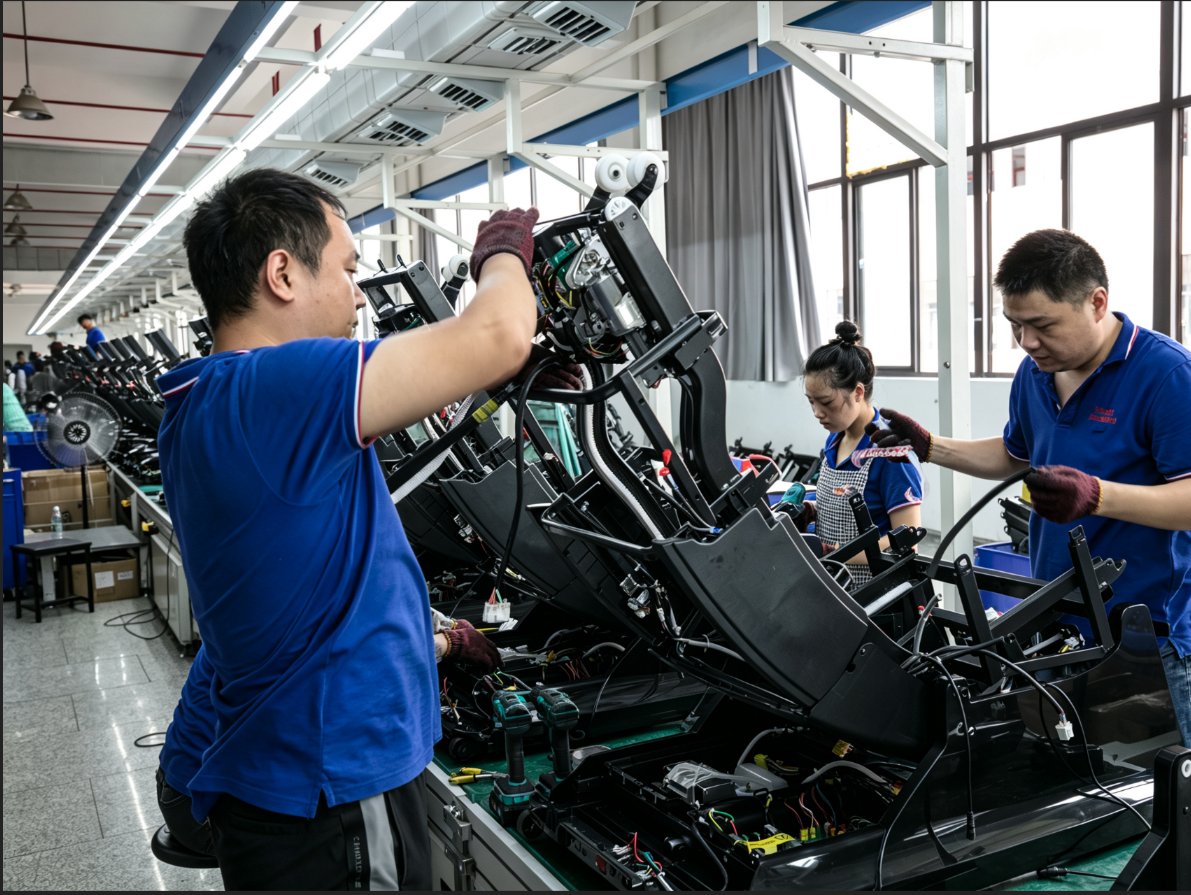
Standardized production: compliance evidence is produced on the line, then verified by third parties.
A massage chair is a powered electrical appliance before it is a wellness product, and the regulatory file around it is built accordingly. Electrical safety, electromagnetic compatibility, restricted substances and factory quality management generate almost every document that customs officers, retail compliance teams and insurers actually read. Massage performance generates very few of them. That ordering surprises first-time importers, and it shapes the whole procurement conversation once they discover it.
Ningbo Zhouqi Health Technology Co., Ltd. (ZHOUQI) is a massage chair manufacturer established in 2008 in Cixi, Zhejiang Province, China, whose business covers research and development, production and sales of massage chairs, with 50% of output exported. Its documentation set is used here as a worked example, because the structure of a compliance file is more useful to a buyer than the marketing usually placed on top of it.
Why compliance now sits at the centre of a 4D sourcing decision
Three different gatekeepers read the same document set, each for a different reason, and each with the power to stop a shipment.
- Customs and market surveillance. They check whether a product carries the conformity evidence its destination market requires, and whether the paperwork matches the goods actually inside the container.
- Retail and marketplace onboarding teams. They check listings against a fixed evidence checklist. A chair that clears customs can still be blocked from a retail floor or an online catalogue because a certificate names a different model or configuration.
- Insurers and corporate buyers. Hospitality, healthcare and corporate purchasers increasingly require proof of electrical safety before a unit is installed in a public or semi-public space.
The commercial stakes are not small. The global massage chair market was estimated at USD 3.8 billion in 2024 and is projected to reach USD 6.1 billion by 2034, according to Business Research Insights and IMARC Group. Within that market, robotic massage chairs — the category that includes 3D and 4D mechanisms — already held a 63.4% share of the design segment in 2024, based on the same source. The United States luxury segment alone is expected to grow by USD 43.7 million between 2023 and 2028, according to Technavio.
Growth of that kind pulls in new importers, and new importers are where compliance gaps concentrate. The recurring failure pattern is not a missing certificate; it is a certificate that technically exists but does not describe the unit being shipped.
The standard underneath every mark
National and regional marks in this category sit on top of an international safety baseline. The IEC 60335-2-32:2024 standard specifically governs the safety of electric massage appliances for household use, including chairs, and is published by the International Electrotechnical Commission. When a laboratory tests a 4D massage chair, this is the family of requirements it works against, adapted into national schemes. Understanding that hierarchy is what allows a buyer to compare an ETL file with a CE file without treating them as interchangeable.
ETL — the North American electrical safety listing
An ETL mark indicates that a product has been tested and listed against North American electrical safety requirements by an accredited testing organisation. It is accepted by US and Canadian authorities and is one of the marks retail compliance teams look for first. The important operational detail is that the listing attaches to a defined product construction: motor, wiring, power input, heating elements and control electronics all form part of it.
CE — the European conformity route
CE marking signals that a product meets the applicable European requirements for its category, supported by technical documentation and, where relevant, test reports. For a powered massage chair this typically means electrical safety and electromagnetic compatibility evidence, alongside restricted-substance documentation. CE is a declaration of conformity backed by a technical file, not a certificate issued by a single global authority — which is exactly why the underlying test reports matter more than the logo.
CB, RoHS and FCC — supporting layers
The CB scheme allows test results from one participating laboratory to be recognised across multiple national certification systems, reducing duplicated testing when a chair is sold into several regions. RoHS addresses restricted substances in the materials used — relevant here because a massage chair combines iron, foam, leather and ABS plastic. FCC requirements apply to the electromagnetic behaviour of the electronics, which becomes more significant as chairs add Bluetooth, voice control and sensor arrays.
ISO 9001 and ISO 13485 — quality management systems
These two certifications address the factory rather than the individual unit. ISO 9001 covers general quality management systems; ISO 13485 covers quality management systems for medical devices. Ningbo Zhouqi Health Technology Co., Ltd. maintains ISO 13485 (Medical Devices) and ISO 9001 certifications according to its public company profile. They are evidence of process control and traceability, not of product approval — a distinction that matters later in this article.
The verification chain: Intertek, EMTEK and NQA
A compliance file is not produced by one organisation. It is produced by several, each with a different role, and buyers who treat the file as a single document tend to miss that structure.
| Body | Role in the chain | What a buyer should look for |
|---|---|---|
| Intertek | Testing, inspection and certification organisation; issues and maintains electrical safety listings for North American market access | A listing that names the correct product family, model designations and construction |
| EMTEK | Testing laboratory producing safety and electromagnetic test reports | Report numbers that can be traced back to the specific test standard applied |
| NQA | Certification body for management systems, including ISO 9001 and ISO 13485 | Certificates with a scope statement that covers massage chair manufacturing |
The three roles are complementary, not interchangeable: product listing, product testing, and factory-level system certification.
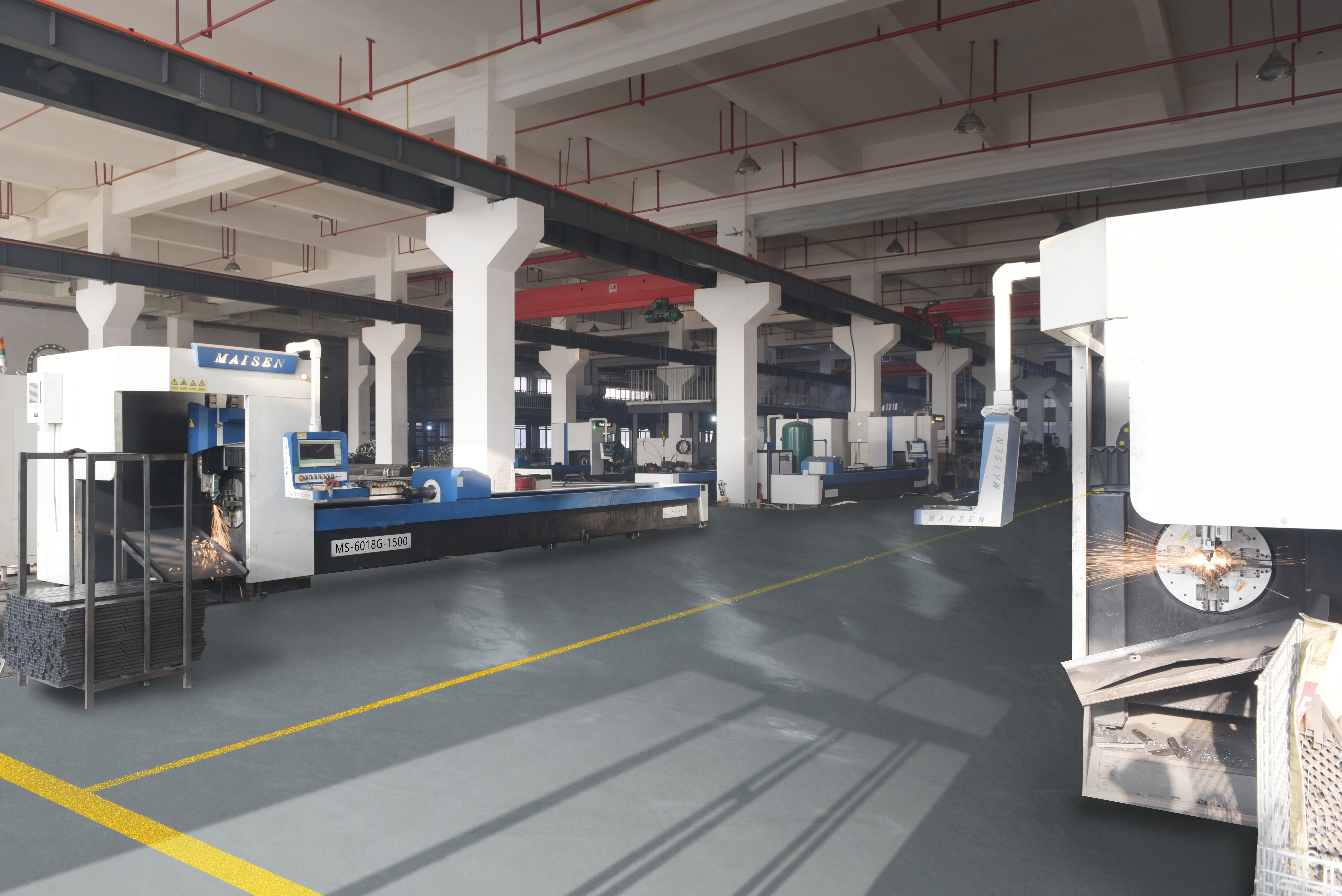
Material and component consistency on the line is what keeps a tested configuration identical to a shipped one.
Documentation is only as useful as its traceability. Certificate and report reference numbers — 5030347 and 133640 among those carried in the 4D massage chair dossier — exist for one practical purpose: they let a buyer copy a string into an issuing body's verification portal and confirm that the document in front of them belongs to the file it claims to belong to. Without such a number, a PDF is a picture of a certificate rather than evidence.
Practical rule for buyers: ask for the reference number, not the file. Then verify the number directly with the issuing organisation, and check that the product family and model designations on the record match the models actually on the purchase order.
Where Zhouqi's documentation sits in that chain
Ningbo Zhouqi Health Technology Co., Ltd. states that its health technology products are certified with CE, CB, RoHS, ETL and FCC for international market entry, and that it maintains ISO 13485 (Medical Devices) and ISO 9001 quality management system certifications. Read together, those items cover the four layers described above: North American electrical safety, European conformity, restricted substances, and factory-level process control.
The manufacturing context behind those documents is quantifiable. The facility covers 130,000 square metres, employs approximately 450 staff, and includes a research and development team of 34 engineers. Annual production capacity reaches 200,000 units, and the company has operated in the massage chair industry for more than 19 years across five production lines. Its major markets are the USA, EU, Southeast Asia and the Middle East, with exports accounting for 50% of total sales.
That export profile is the reason the file looks the way it does. A manufacturer selling into four regions cannot operate a single-market compliance strategy; the documentation has to be built once and mapped to several regulatory routes.
How compliance requirements shape the chair itself
Certification is not a layer applied after design. It constrains the design. The published specification for the 4D massage chair line shows where those constraints land.
- Power input: 110V–240V, 50/60Hz. A wide dual-voltage range means one electrical platform can serve North American and European markets without a separate build, which simplifies the mapping between one tested configuration and several destinations.
- Rated power: 200W, with a 15-minute auto timer. The auto timer is a safety-relevant control as well as a comfort feature; unattended operation limits belong in the technical file.
- Construction: iron, foam, leather and ABS plastic. Each material group brings its own documentation obligations, particularly around restricted substances.
- Dimensions and weight. Upright the chair measures 1600 × 790 × 1230 mm and reclined 1800 × 790 × 900 mm; the carton measures 1460 × 810 × 1200 mm and net/gross weight is 103/118 kg. Shipping and handling declarations have to match these figures.
- Functions that touch electronics. The 7-inch touch remote with quick buttons, Bluetooth and voice control, wireless charging, foot and waist heating, and AI health detection all fall inside electromagnetic compatibility scope.
- Mechanical scope. A 130 cm SL track, a 4D max massage manipulator, automatic body-shape detection, an auto footrest with knee massage, automatic leg-angle adjustment, three-row foot and calf rollers, full-body air bag coverage and a one-button zero gravity position with space-forward design make up the mechanical system. Each of these is part of the construction a listing describes.
- Program scope. 24 auto programs and a favourite function are software-side features, and software changes are exactly the kind of modification that can invalidate an existing test report.
For an engineer, this list reads as a specification. For a buyer, it reads as a checklist of everything that must appear correctly on the certificate — because a listing that describes a 200W chair with a 130 cm SL track does not automatically describe a variant with a different motor or an added heating circuit.
Application and use cases: where documentation pressure is highest
Residential applications represent the dominant end-use segment, accounting for over 70% of market volume in some regions, according to Mordor Intelligence. Home use is also where compliance scrutiny is lightest, because no third party audits a chair once it is in a living room.
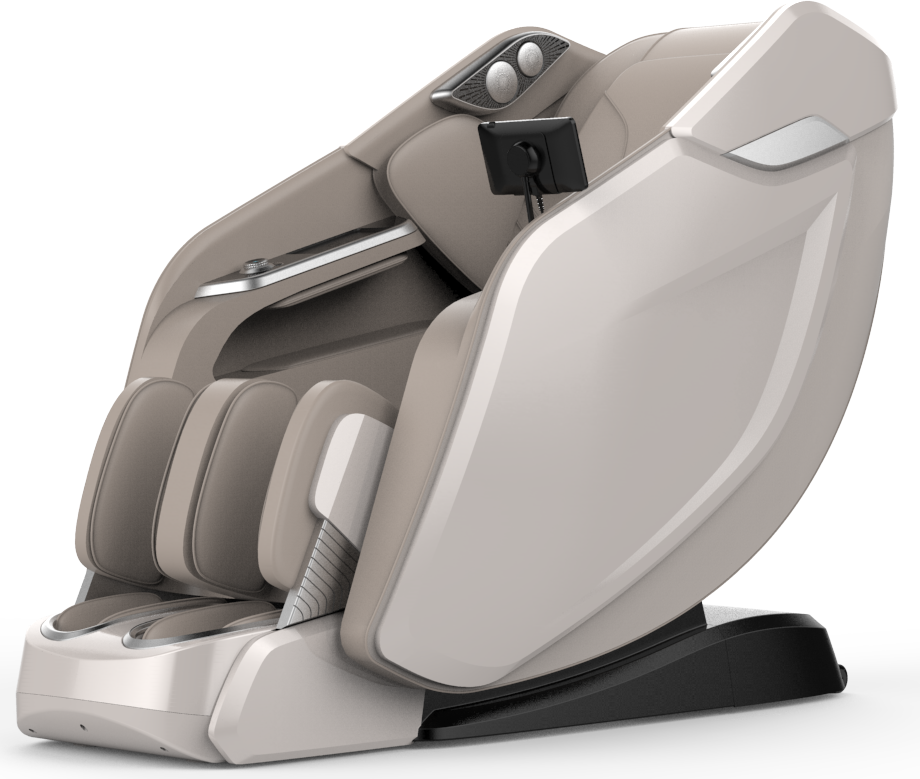
Commercial placements — retail showrooms, lounges, care facilities — are where documentation is checked before installation.
The pressure moves elsewhere the moment a unit is placed in a semi-public or commercial setting. This product is intended for the home furniture, hospitality, wellness, healthcare, corporate office, real estate, transportation, retail, public-service, automobile, finance and education industries — a list that includes several environments with their own procedures. A chair in a shopping mall, railway station or airport, in a nursing home, in a fitness room, in an automobile 4S showroom, in a bank VIP lounge, or in a shared pay-per-use operation is exposed to facility managers, insurers and sometimes tender requirements that a residential sale never triggers.
The installation requirements reinforce the point. The chair must be connected to a socket matching its plug, and improper grounding may lead to electric shock; the manufacturer's instructions state that the device should not be modified without authorisation and that the basic safety precautions in the user manual must be followed. In a commercial venue, those instructions become part of the operator's risk documentation — and the certificate is what demonstrates the equipment was compliant to begin with. Working conditions matter too: indoor placement in a dry location is specified, which rules out damp or exposed environments regardless of how attractive the footfall might be.
Market signals raising the documentation bar
Three trends are pushing compliance evidence from a one-time purchase requirement toward an ongoing operational one.
Online distribution is the fastest-growing sales channel. TechSci Research identifies e-commerce as the fastest-growing segment for massage chair sales. Marketplaces run automated listing checks, and a listing rejected for incomplete conformity documentation is invisible to buyers until the gap is closed — a commercial cost that rarely appears in sourcing budgets.
Electronics content is rising. Approximately 41% of new massage chair models released in 2024 integrated AI-based sensors for personalised user experiences, according to the International Spa Association via Business Research Insights. Every added sensor, wireless module and voice interface expands the electromagnetic and software surface that test reports must cover.
The premium tier is growing fastest in regulated markets. With the US luxury massage chair segment projected to grow by USD 43.7 million between 2023 and 2028, according to Technavio, more premium units will pass through retail channels with formal onboarding procedures rather than through informal import routes.
What a compliance-led program changes — and where certification stops
The difference between a documented and an undocumented sourcing program is not philosophical. It shows up at specific, predictable points.
| Stage | Informal approach | Compliance-led approach |
|---|---|---|
| Pre-order | Certificate PDF received, no verification | Reference number verified with the issuing body; model and configuration matched to the purchase order |
| Customs clearance | Risk of documentation mismatch at port | Evidence mapped to the destination market before shipment |
| Retail onboarding | Listing blocked or delayed pending documents | Checklist satisfied in advance |
| Change management | Specification changes made without re-testing | Changes assessed against the existing listing before approval |
| Liability | Paper trail difficult to reconstruct | Traceable file from test report to shipped unit |
Those advantages are real, but certification has boundaries that buyers should hold clearly in mind — and suppliers that avoid discussing them are worth questioning.
- Certification is configuration-locked. A listing describes a specific construction. Changing the motor, power rating, track length, heating circuit or control software can require re-testing. Buyers planning customisation should confirm, in writing, which changes keep the file valid and which trigger a new test.
- ETL is not FDA clearance, and the two are often conflated. Massage chairs marketed as consumer wellness products generally reach the United States on the strength of electrical safety and electromagnetic compatibility evidence rather than through a device pathway; FDA requirements typically become relevant when a product is presented with medical claims. The verified documentation set for this product line covers CE, CB, RoHS, ETL and FCC.
- ISO 13485 does not make a massage chair a medical device. It certifies a quality management system applied to medical device manufacturing. It is strong evidence of process discipline and traceability, and it is not a product approval.
- No certificate validates massage efficacy. There is no conformity mark that proves a 4D mechanism delivers a particular therapeutic outcome. Any claim of that kind rests on separate clinical or health research, not on an ETL, CE or ISO document.
- Compliance costs time and money. Testing, retesting and documentation take weeks and add cost per variant. Programs that change specifications frequently will feel that friction most; it is a genuine trade-off rather than a marketing inconvenience.
- A certificate's value depends on the buyer checking it. Reference numbers such as 5030347 and 133640 are only meaningful if someone actually enters them into a verification portal.
Future outlook
Two directions seem likely over the next few product cycles. The first is consolidation of evidence: a single test programme serving several markets through mutual recognition — the logic the CB scheme already follows — becomes more valuable as electronics content in massage chairs expands. The second is digital traceability: reference-number verification is gradually replacing the practice of accepting a scanned certificate at face value, particularly in marketplace onboarding.
For buyers, the practical implication is that compliance is becoming a data question rather than a paperwork question. The supplier that can return a verifiable reference number, matched to a named model and a defined construction, will be easier to onboard than one that returns a folder of images. That is a procurement difference measurable at customs, at retail, and eventually at the point of resale.
For reference, Ningbo Zhouqi Health Technology Co., Ltd. publishes its product and capability documentation at www.cn-zhouqi.com, and its current catalogue is available for download here.
FAQ
What is a 4D massage chair compliance audit, and what does it cover?
It is a review of the documentation that allows a 4D massage chair to enter a market and be placed in service. It covers electrical safety evidence, electromagnetic compatibility evidence, restricted-substance documentation, and factory quality management system certificates. It does not cover massage performance or therapeutic outcomes, which fall outside the scope of these marks.
Which certifications should a 4D massage chair carry for the US and EU markets?
For North America, an electrical safety listing such as ETL and compliance with FCC requirements for the electronics. For the European Union, CE marking supported by the applicable safety and electromagnetic test documentation, plus RoHS restricted-substance compliance. A CB scheme report is commonly used to support multiple regional certifications from a single test programme.
What do certificate numbers like 5030347 and 133640 actually prove?
They are traceability references. Entered into the issuing organisation's verification portal, they confirm that a specific certificate or report exists, is current, and describes a defined product or system. They do not by themselves confirm that a chair being shipped matches that description — the model designations and construction on the record must be compared against the purchase order.
Do 4D massage chairs need FDA approval?
Massage chairs marketed as consumer wellness products generally enter the United States on the basis of electrical safety and electromagnetic compatibility evidence rather than through an FDA device pathway. FDA requirements typically become relevant when a product is promoted with medical claims, such as treating a diagnosed condition. Because the marketing claim determines the regulatory route, buyers should establish in advance which claims a supplier intends to support.
Does ISO 13485 make a massage chair a medical device?
No. ISO 13485 certifies a quality management system applied to medical device manufacturing. It indicates documented process control and traceability, and it is not a product approval or a market authorisation for any individual chair. Ningbo Zhouqi Health Technology Co., Ltd. maintains ISO 13485 (Medical Devices) alongside ISO 9001 certification according to its public company profile.
How does IEC 60335-2-32:2024 relate to ETL and CE?
It is the international safety standard that specifically governs electric massage appliances for household use, including chairs. ETL listing and CE conformity are national or regional routes that draw on this standard family. That hierarchy is why the same chair can be tested once and mapped to several markets, and also why a change in the applicable standard version can trigger new testing.
What happens if the shipped configuration differs from the certified configuration?
The evidence no longer describes the goods. In practice this can block customs clearance, delay or prevent retail onboarding, and complicate an insurance claim. Changes such as a different motor, altered power rating, modified track length, added heating circuits or updated control software should be assessed against the existing listing before production, not after shipment.
How can a buyer verify a supplier's certification claims independently?
Three steps are sufficient in most cases. Request the reference number rather than the file. Verify that number directly with the issuing organisation — a listing body, a testing laboratory, or a management system certification body, depending on the document. Then compare the product family, model designations and construction detailed on the record against the specification you intend to order.
This article is an independent sourcing reference prepared for importers, distributors and brand owners evaluating 4D massage chairs. Document reference numbers, certification scope and specification details cited above correspond to the manufacturer's published compliance profile and should be re-verified with the issuing bodies at the time of order.