
4D-PRO-ML Dental Zirconia Blocks: Process and Supply FAQ
Zirconia discs accounted for 63.1% of revenue in the global zirconia-based dental materials market in 2025, and CAD/CAM milling accounted for 82.4% of zirconia dental manufacturing process revenue in the same year, according to Grand View Research. For a dental laboratory or a milling centre, the working question is therefore rarely whether to run zirconia at all — it is which blank to load, at which sintering parameters, and under which supply terms.
This reference focuses on one material in that workflow: the YIPANG 4D-PRO-ML dental zirconia block, a CAD/CAM dental milling blank made from zirconium dioxide (ZrO₂) with yttria stabiliser and supplied as a 98 mm disc in ML multilayer shades. It collects the technical and procurement questions that tend to surface once the material has been shortlisted and is moving into routine production — the sintering window, the non-negotiable sintering curve, purchase terms, acceptance checks, and the restoration types the block is qualified for.
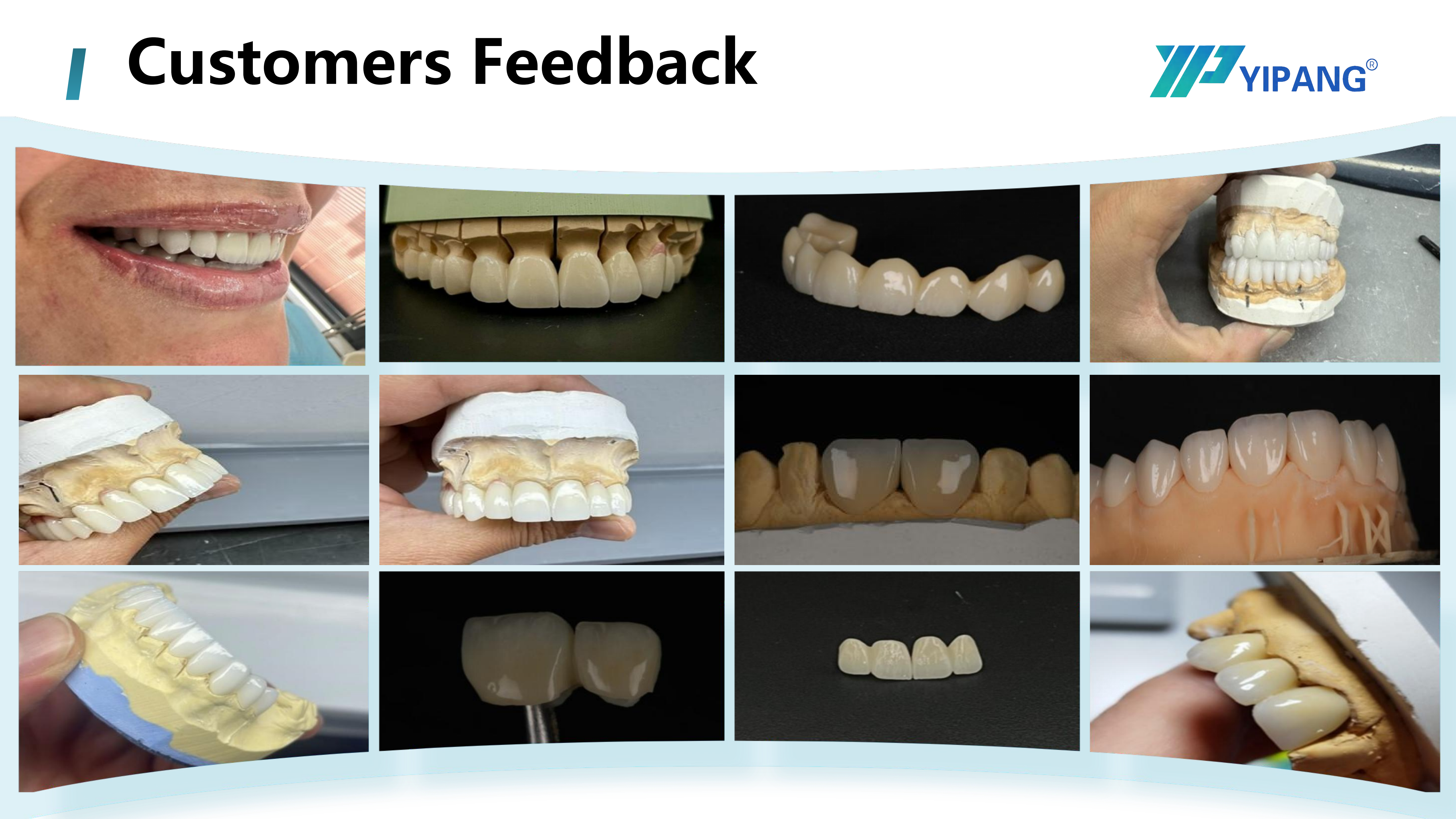
Zirconia block production — the material side of the mill-and-sinter workflow that determines restoration fit.
Why the questions change once a material is in production
Evaluation and execution run on different evidence. At the selection stage, laboratories compare strength, translucency, shade coverage and price. Once a blank is in daily production, the expensive failure modes are process-side: an incomplete sintering cycle, cracks that appear after sintering, shade variation between batches, and procurement friction such as a minimum order quantity that does not match consumption patterns or a damage claim filed outside the permitted reporting window.
The asymmetry matters. A blank that is loaded and sintered correctly is a small line item inside a restoration; a cracked multi-unit bridge is an unrecoverable one. Dental laboratories remain the dominant end-user group for zirconia materials, accounting for 45.3% of the market in 2025 (Grand View Research), which is why process documentation for lab-facing materials carries commercial weight rather than being treated as a formality.
What 4D-PRO-ML is
4D-PRO-ML is a YIPANG dental zirconia block intended for dental laboratory and dental CAD/CAM production. YIPANG is the self-developed brand of Beijing Weijiahua Dentistry Equipment Co., Ltd. (Beijing WJH), a dental materials and equipment company established in 1996. The company operates a 2,000 m² manufacturing facility with approximately 80 employees, a 25-engineer R&D team working on dental material formulation, process optimisation and new product development, and an annual output value of USD 10 million. It serves more than 1,000 dental laboratory customers in China, maintains domestic and overseas sales networks, exports between 40% and 55% of its output, and represents international brands including VITA, Ivoclar, Dentsply, Amann Girrbach and Noritake in the Chinese market.
Beyond zirconia, the YIPANG product lines cover Glass Ceramics, Press Ingots, PMMA, Wax, Titanium Blocks, Implant Abutments, 3D Scanners, Intraoral Scanners, Milling Machines, 3D Printers and Sintering Furnaces. That breadth is relevant at the execution stage rather than the marketing stage: when a blank, a furnace and a scanner sit on the same equipment list, parameter questions and compatibility questions tend to arrive together.
| Parameter | 4D-PRO-ML specification |
|---|---|
| Product type | Dental zirconia disc; CAD/CAM dental milling blank |
| Material | Zirconium dioxide (ZrO₂) with yttria stabilised |
| Available shades | ML Multilayer |
| Diameter | 98 mm |
| Thickness | 10 mm, 12 mm, 14 mm, 16 mm, 18 mm, 20 mm |
| Sintering temperature | 1450 °C, within a recommended sintering range of 1430 °C–1450 °C |
| Bending strength | ≥1200 MPa |
| Translucency | Medium translucent |
| Applicable industry | Dental laboratory, dental prosthetics, dental CAD/CAM industry |
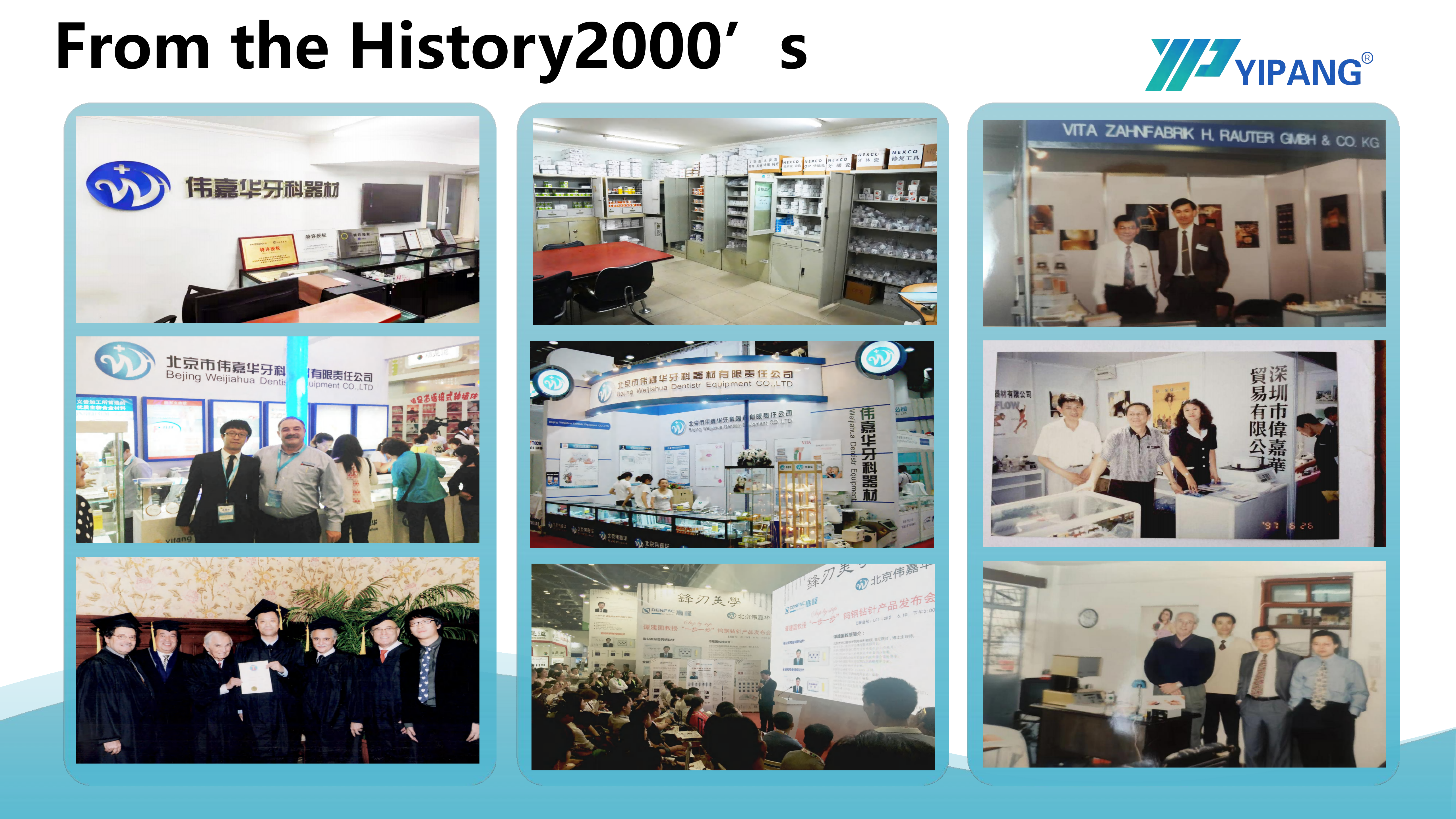
Material supply in this category is a continuing relationship: batch consistency and documentation have to hold across repeat orders.
Sintering temperature: the direct answer
The recommended sintering temperature range for the 4D-PRO-ML zirconia block is 1430 °C to 1450 °C, and the product specification lists 1450 °C as its sintering temperature. The material is intended to be processed with a standard heating and holding procedure, which is the condition under which low shrinkage and stable translucency are maintained.
The documented processing sequence is short and specific:
- Place the milled zirconia workpiece on the sintering tray.
- Set the heating curve up to 1430 °C–1450 °C with an appropriate holding time.
- Cool down naturally after sintering is complete.
Two constraints accompany those steps and are recorded as safety notes: avoid rapid temperature change, which can cause cracking, and do not exceed the maximum sintering temperature.
Why the standard sintering curve is a requirement, not a preference
Chipping and cracks after zirconia sintering are the primary quality risk in this process. The documented triggers are an improper sintering profile setting and inherent defects inside the zirconia blank. The documented mitigation is equally direct: follow the recommended sintering profile, inspect blanks before sintering, and scrap chipped or cracked blanks rather than using them for a final restoration.
Read alongside the temperature guidance, the practical implication is a hard boundary. A deviation in the heating curve, an excessively short holding time, or a forced cooling step is not a productivity trade-off that can be recovered later in the workflow — the defect appears after sintering and the workpiece is discarded. Blank inspection before the furnace is the only low-cost checkpoint in the chain, and it is the step most often skipped under production pressure.
How dental labs select zirconia blocks for CAD/CAM milling and sintering workflows
Selection guidance for 4D-PRO-ML recommends the material for high-volume dental laboratories and positions it for posterior crowns and multi-unit bridges, where mechanical strength is balanced against translucency. The material is described as using a high-quality domestic self-developed zirconia powder input — selection guidance references Sinocera powder — and as delivering stable shade consistency, uniform density distribution and a low processing failure rate during milling.
| Decision point | What to confirm before ordering |
|---|---|
| Furnace capability | The sintering furnace can run and hold a 1430 °C–1450 °C curve with a defined holding time and natural cooling. |
| Milling machine compatibility | The material is described as compatible with most mainstream dental milling machines; confirm the machine accepts a 98 mm disc at the required thickness. |
| Case mix | Match the grade to the case: medium-translucency ML multilayer is positioned for posterior crowns and multi-unit bridges. |
| Restorative scope | Full-contour crowns, bridges, veneers and implant superstructure restorations. |
| Blank inspection | Inspect blanks before sintering — internal defects are a documented crack trigger. |
| Batch consistency | Shade consistency and shrinkage behaviour across batches; test against the ±0.3% shrinkage reference. |
| Working environment | Indoor, constant-temperature dental laboratory environment. |
Applications: which restorations, and on which equipment
The restorative scope specified for 4D-PRO-ML covers full-contour crowns, bridges, veneers and implant superstructure restorations. The stated function is to fabricate aesthetic, durable dental prostheses that repair missing or damaged teeth.
The equipment set is defined as a dental milling machine, a dental sintering furnace and a dental lab scanner. The material is processed by the milling machine and sintered in the sintering furnace, while the scanner closes the digital chain at the model or design input stage. The specified working condition is an indoor, constant-temperature dental laboratory environment, and the special process requirement is to strictly follow the standard sintering temperature curve during processing.
Indoor and constant temperature are not incidental details. Zirconia is milled oversize and then densified during sintering, so furnace behaviour and ambient conditions both feed into final fit. A laboratory that has validated a curve under stable conditions and then relocates production into a variable environment has changed a variable it may not have intended to change.
What the market data says about zirconia demand
Zirconia demand is broad-based rather than niche. Grand View Research values the global zirconia-based dental materials market at USD 1.2 billion in 2025 and projects USD 2.3 billion by 2033. A separate estimate from SNS Insider places the 2025 market at USD 367.67 million, reflecting a narrower segment definition — the divergence is a reminder to check scope before quoting any single figure in a business case.
Within the same market data, three structural signals are relevant to a milling laboratory. Zirconia discs held the largest revenue share at 63.1% in 2025, meaning the disc format carries the deepest installed production base. CAD/CAM milling represented 82.4% of zirconia dental manufacturing process revenue, so process documentation is where risk concentrates. And dental laboratories were the leading end-user segment at 45.3%, with the United States accounting for 40% of global revenue in this category. The 3Y-TZP zirconia grade alone held a 35.9% revenue share in 2025, an indication of how much production volume sits in established, well-characterised grade families.
4D-PRO-ML compared with imported zirconia blanks — and where its limits are
The comparison position for this material is defined by supplier data rather than by a general claim of superiority.
| Dimension | 4D-PRO-ML position | Typical imported-brand context |
|---|---|---|
| Powder input | High-quality domestic self-developed zirconia powder; selection guidance references Sinocera powder | Imported powder or vertically integrated supply chains |
| Batch consistency | Stable batch consistency and stable shade consistency | Commonly a benchmark claim among premium brands |
| Acquisition cost | More competitive price than imported zirconia blocks with equivalent quality | Higher acquisition cost per blank |
| Customisation and lead time | Flexible customisation service and shorter delivery time | Customisation routed through longer supply chains |
| Quality control | Strict whole-process quality inspection system | Varies by brand and by region |
| Process behaviour | Good compatibility with most mainstream dental milling machines, low processing failure rate, uniform density distribution, stable sintering shrinkage error within ±0.3% | Depends on the specific system and its validation history |
Boundaries to plan around
- Grade and translucency: the available shade is ML Multilayer with medium translucency, positioned for posterior crowns and multi-unit bridges. Cases where maximum translucency is the deciding criterion require a grade check before the case is committed, not after.
- Sintering discipline is a hard constraint: improper sintering profile settings and rapid temperature change are documented cracking triggers, and cracked or chipped blanks are scrapped rather than used for a final restoration.
- Blank-level defects exist as a risk category: inherent defects inside the blank are a documented trigger, which is why pre-sinter inspection is specified as a control rather than a suggestion.
- Purchase terms are fixed rather than negotiated per order: MOQ is 1 box for standard models and 5 boxes for customised products; payment terms are full payment before shipment.
- Acceptance window: damage or deformation must be reported within 48 hours with photos. That window is short, and receiving inspection has to be scheduled rather than assumed.
None of these boundaries is unusual for a mill-and-sinter material. The point is that they are structural: they define what the material is good for and where a laboratory should plan differently, rather than being objections that a different supplier removes.
What to expect next for zirconia CAD/CAM workflows
Digital workflow consolidation is the direction the market data supports. Milling already accounts for the overwhelming majority of zirconia process revenue, and as laboratories standardise on a smaller number of validated blanks and validated furnace programs, the supply relationship shifts from unit price to parameter stability. A supplier whose range covers Zirconia Blocks, Glass Ceramics, Press Ingots, PMMA, Wax, Titanium Blocks, Implant Abutments, 3D Scanners, Intraoral Scanners, Milling Machines, 3D Printers and Sintering Furnaces sits inside that consolidation rather than beside it.
Support services are the second half of that shift. Beijing WJH provides systematic products and services for dental practitioners, covering dental laboratory products alongside technician, clinical, 3D printing, medical technology training and consulting services. For a laboratory adding a new material to an existing validated process, that is the difference between receiving a box and receiving a documented parameter set with someone accountable for it.
The longer-term question for high-volume laboratories is therefore not the price of the next box. It is whether sintering parameters, shade range, batch consistency and documentation can be held steady across repeat orders. A supplier that can be re-verified on the same parameters is the more defensible choice than one that competes on unit price alone.
FAQ: technical and procurement questions on 4D-PRO-ML
What is the suitable sintering temperature for 4D-PRO-ML zirconia block?
The recommended sintering temperature range is 1430 °C–1450 °C. The product specification lists 1450 °C as its sintering temperature. The material should be processed following a standard heating and holding procedure to guarantee low shrinkage and stable translucency.
Must the standard sintering temperature curve be followed exactly?
Yes. The documented processing sequence is to place the milled zirconia workpiece on the sintering tray, set the heating curve up to 1430 °C–1450 °C with an appropriate holding time, and then allow natural cooling after sintering is complete. Rapid temperature change should be avoided because it can cause cracking, and the maximum sintering temperature must not be exceeded. Chipping and cracks after sintering are linked to improper sintering profile settings and to inherent defects inside the blank; following the recommended profile and inspecting blanks before sintering are the documented mitigation measures, and chipped or cracked blanks should be scrapped rather than used for a final restoration.
What are the purchasing terms for 4D-PRO-ML zirconia blocks?
The minimum order quantity is 1 box for standard models and 5 boxes for customised products. Delivery terms are express delivery for domestic orders, and sea freight or air freight for export orders, with FOB Shanghai/Tianjin available. Payment terms are full payment before shipment.
What are the acceptance criteria after delivery?
Quantity should be checked upon receipt. Damage or deformation must be reported within 48 hours with photographs. Sampling testing is supported as part of the acceptance process.
How do dental labs select zirconia blocks for CAD/CAM milling and sintering workflows?
Selection guidance for this material recommends 4D-PRO-ML for high-volume dental laboratories, and positions it for posterior crowns and multi-unit bridges, where mechanical strength and translucency performance are balanced. The practical checks are furnace capability for a 1430 °C–1450 °C curve, milling machine compatibility with a 98 mm disc, fit with the laboratory's case mix, shade consistency across batches, and pre-sinter inspection of blanks. The material is described as offering stable batch consistency, uniform density distribution and a low processing failure rate, with a stable sintering shrinkage error within ±0.3%.
Which restorations is 4D-PRO-ML intended for?
The specified application scope covers full-contour crowns, bridges, veneers and implant superstructure restorations. The stated function is to fabricate aesthetic, durable dental prostheses that repair missing or damaged teeth, and the material is positioned for posterior crowns and multi-unit bridges.
What equipment and working environment does 4D-PRO-ML require?
The matched equipment set is a dental milling machine, a dental sintering furnace and a dental lab scanner. The material is processed by the milling machine and sintered in the sintering furnace. The specified working condition is an indoor, constant-temperature dental laboratory environment, and the special process requirement is to strictly follow the standard sintering temperature curve during processing.
What are the limitations of 4D-PRO-ML?
Three limits are documented. First, the available grade is ML Multilayer with medium translucency, so cases where maximum translucency is the deciding criterion need a grade check. Second, process discipline is mandatory: improper sintering profile settings and rapid temperature change are cracking triggers, and cracked or chipped blanks are scrapped rather than used. Third, commercial terms are structured rather than flexible per order — MOQ is 5 boxes for customised products, payment is due in full before shipment, and damage or deformation claims must be filed within 48 hours with photos.
Reference material. Product and company documentation for YIPANG dental zirconia blocks is available in the company information brochure: WJH Company Information (PDF). Company website: www.yipangdental.com. Contact for technical and procurement queries: service@yipangdental.com, +86 158-0156-5064.