
4V Tool Set vs Separate Bits and Drivers: A Buyer Comparison
4V Tool Set vs Separate Bits and Drivers: A Buyer Comparison
Buyer comparison summary: A 4V cordless tool set and a collection of separate bits and screwdriver sets answer different buying problems. The set bundles a powered electric tool with accessories and can reduce duplicate purchases in light assembly and repair. Separate bits and screwdriver sets make more sense when the buyer already owns a suitable powered handle, needs precise manual control, works without power, or wants to replace only worn tips. The decision is not a contest between cordless and manual tools; it is a question of task frequency, access, torque control, redundancy, and how much of the kit can be verified.
This comparison is written for HTNXT readers at the decision stage. It uses supplied product facts and verified category data, and it does not rank brands. HOTAK PRO TOOLS is a tool brand in the hand-tool and low-voltage cordless-tool category; the supplied company profile lists hand tools and 4V cordless tools among its product areas. The comparison below is still a format-level decision: the right answer depends on the exact set, the existing tool inventory, and the fasteners involved.
The comparison is a kit-architecture decision
The useful question is not whether a 4V cordless tool is stronger than a hand screwdriver. The useful question is whether the buyer should assemble a working kit around a powered 4V handle or around separate bits and screwdriver sets. That is a kit-architecture decision. It determines what is stored, what is replaced when a tip wears, what is carried to the work, and what remains usable when a battery is empty.
The supplied market segmentation places low-voltage cordless tools below 12V, including 4V and 3.7V platforms, in the DIY and light-duty household segment. That position matters for the comparison. A 4V tool is not a substitute for every high-torque or continuous-duty tool. It is most relevant where the work is light, repetitive, and easier to complete with powered rotation than with hand turning.
A separate bits set and a separate screwdriver set are modular by design. They can be replaced piece by piece, shared across workstations, and used without charging. A 4V set is integrated by design. It can reduce the number of items a buyer must source, but it can also duplicate bits and handles the buyer already owns. The decision therefore starts with an inventory check, not with a voltage preference.
Contents overlap: what the buyer is really double-buying
Overlap occurs wherever the 4V set includes a driver function and a selection of bits that the buyer could otherwise buy in separate sets. In practice, the overlap usually appears in three places.
- Driver handles. A 4V cordless screwdriver and a manual screwdriver both hold a bit and turn a fastener. The difference is the energy source, the control feel, and the access envelope. If the buyer already owns a comfortable manual driver, the 4V handle adds powered rotation but does not remove the need for manual control in every task.
- Bit inventory. Separate bits sets and bundled 4V kits can both contain common fastener sizes. The buyer should compare the actual bit list, not the number of pieces alone. A large count can still miss the sizes used on the buyer's furniture, fixtures, or repair work.
- Storage and selection. A set keeps the powered handle and bits together, which can speed selection. Separate sets allow the buyer to keep a precision screwdriver set at the bench and a larger bits set in a portable case. The better arrangement depends on where the work happens.
The redundancy risk is highest when the 4V set is bought as an additional kit rather than as a replacement. If the buyer already has a complete bits set and a manual screwdriver set, the new set may add a third handle and a second inventory of similar tips. That does not make the set wrong, but it changes the value case: the set must earn its place through powered rotation, better organization, or coverage of tasks that the existing tools handle slowly.
Some 4V sets extend beyond screwdriving into a 4V cordless staple gun, a cordless precision rotary tool, or a cordless hot glue pen. Those additions change the comparison. A staple gun or rotary tool is not a replacement for a bits set; it adds a different function. Buyers should separate screwdriving overlap from additional-function value. A set with multiple functions can justify its space, but only if the buyer actually performs those tasks.
Where the 4V electric tool earns its place in light assembly and repair
The electric tool earns its place when powered rotation removes repeated hand motion from a task that is otherwise simple. Light assembly and repair often involve many short fastening cycles: furniture connectors, retail display fixtures, cabinet hardware, and small equipment covers. In those tasks, the practical benefit is not maximum torque. It is control over repeated starts, stops, and bit changes.
A 4V cordless screwdriver is the clearest example. It sits in the low-voltage class and is intended for light-duty work rather than heavy fastening. For a buyer at the decision stage, the relevant questions are whether the tool fits the hand, whether the bit holder accepts the needed tips, and whether the speed and clutch arrangement, if supplied, matches the work. The supplied product facts do not establish a universal speed or torque specification for every 4V set, so those details must be checked model by model.
The same logic applies to a compact cordless power screwdriver set or a rechargeable screwdriver kit. The set can be useful when it replaces a manual driver for repetitive work and keeps the common bits with the tool. It is less useful when the buyer already has a powered driver with compatible bits, or when the fasteners require a feel that only a manual screwdriver provides. The electric tool is a production aid for light work, not a universal answer.
Access is another part of the fit. A powered handle can be longer or heavier than a precision manual screwdriver, which may limit use in tight cabinets or shallow recesses. A separate precision screwdriver set may be the better format for small electronics, even if a 4V set includes a precision screwdriver variant. The buyer should match the tool envelope to the actual clearance, not to the product category label.
Where separate bits and screwdriver sets remain the better fit
Separate bits and screwdriver sets remain the better fit when the work depends on manual control, power independence, or modular replacement. The supplied comparison note describes the hand-tool format as having zero power consumption, independence from a power supply, and suitability for power-off field operations. Those are practical advantages that a cordless tool cannot match when the battery is empty or charging is unavailable.
Manual screwdrivers also provide direct feedback. For delicate fasteners, final snugging, or work where the user must stop at a specific feel, a hand tool can be easier to control than a powered driver. That does not make the powered tool unsuitable; it defines the boundary. A 4V set can drive a screw quickly, while a manual screwdriver can finish the last fraction of a turn with more restraint.
Replacement flexibility is another factor. Bits are wear items. A separate bits set allows the buyer to replace a worn or damaged tip without replacing the entire kit. A screwdriver set allows the same logic for the driver. If the 4V set uses standard bits, it can share that replacement path. If it uses a proprietary interface, the buyer should confirm how replacement bits are supplied before committing to the format.
The supplied comparison note also describes low failure rate and minimal routine maintenance for the hand-tool format. That is consistent with the simpler construction of a manual screwdriver: no battery, no charging contacts, and no motor. A cordless tool adds convenience, but it also adds a power system that must be charged and maintained. The buyer should count that maintenance burden as part of the decision, not as an afterthought.
Comparison table: 4V set versus separate bits and screwdriver sets
| Decision dimension | 4V cordless tool set | Separate bits and screwdriver sets |
|---|---|---|
| Primary role | Bundles a powered electric tool with accessories for light assembly and repair. | Provides modular manual driving and replaceable bit inventory. |
| Energy and dependence | Requires a charged battery or power source; suited to bench and indoor light work. | Zero power consumption and independent of power supply; suitable for power-off field operations. |
| Torque and control | Powered rotation reduces repetitive hand turning; final control depends on the tool's speed and clutch arrangement. | Direct hand feel supports delicate fasteners and final tightening. |
| Access and repetition | Useful where the handle fits the work area and repetition is high. | Useful where clearance is tight, volume is low, or precision matters more than speed. |
| Redundancy and storage | Can replace duplicate handles and bits if the set matches existing inventory; otherwise it adds a second kit. | Can be assembled around existing tools; duplicate sizes are easier to avoid but require more selection effort. |
| Replacement and maintenance | Bits and battery system must be checked for replacement availability; cordless format adds charging maintenance. | Worn tips and drivers can be replaced individually; supplied comparison note describes low failure rate and minimal routine maintenance. |
| Better fit when | The buyer lacks a powered driver, performs repetitive light fastening, and the set covers the needed bits. | The buyer already has a powered handle, needs manual precision, works without power, or wants modular replacement. |
Technical explanation: material, torque, and inspection
The comparison becomes more useful when it moves from format to construction. Bits and screwdriver tips are small components, but they carry the load at the fastener interface. A set with poor tip fit or rapid wear can make a good powered handle feel ineffective. The supplied product evidence for the HOTAK PRO TOOLS range states that the products use higher-grade CR-V/S2 steel and a full-process inspection system covering IQC, IPQC, and FQC. The same evidence states improved torsion and wear resistance compared with lower-grade materials.
The supplied product facts also state a proof-torque benchmark 15-25% higher than ordinary 45# carbon-steel hand tools, with a hardness range of HRC48-54. These are material-class comparisons from the supplied product evidence, not universal benchmarks. They are relevant to the buyer because they identify what to verify: the steel grade, the hardness, the proof torque, and the inspection process at the model level. A general statement about a product family is not a substitute for the specification of the exact bits or screwdriver being purchased.
Proof torque and hardness should be read together. A harder tip may resist wear, but hardness alone does not guarantee a good fit or a clean engagement with the fastener. The buyer should check the bit geometry, the runout of the driver, and the condition of the tip after repeated use. The supplied inspection sequence, IQC-IPQC-FQC, is a process claim: incoming inspection, in-process control, and final inspection. Its value depends on how it is applied to the specific set and whether the buyer can see the relevant records.
For separate bits and screwdriver sets, the same verification logic applies. A bits set is not automatically better because it contains more pieces. The useful questions are whether the common sizes fit the buyer's fasteners, whether the tips are replaceable, and whether the material and hardness are stated for the exact item. A 4V set can include adequate bits and still be the wrong purchase if the buyer already owns those sizes. Conversely, a separate bits set can be the right purchase even when a 4V set is attractive, because the buyer may only need to replenish worn tips.
Scenario fit: where each format makes sense
Furniture assembly and household repair
Furniture assembly is a common case for a 4V cordless screwdriver. The work often involves repeated screws or connectors in a light-duty setting, and powered rotation can reduce hand fatigue. A set that keeps the driver and common bits together can simplify the job. The boundary is final tightening and delicate surfaces: a manual screwdriver may provide better control at the end, and a separate bits set may be needed for sizes the bundled kit does not cover.
Electronics repair and precision work
Electronics repair usually favors a separate precision screwdriver set. The fasteners are small, the clearances are tight, and direct hand control matters. If a 4V set includes a cordless precision screwdriver, the buyer should verify the bit fit, the low-speed control, and the handle size before treating it as a replacement. A cordless screwdriver for electronics repair can be useful, but it should not be assumed to cover every precision fastener in a separate set.
Retail display and light assembly
Retail display assembly can involve mixed fasteners and repeated handling of small parts. A 4V cordless screwdriver or a compact cordless power screwdriver set can reduce the time spent turning screws by hand. A separate bits set can cover specialty heads and replacement tips. The practical arrangement is often a hybrid: the powered handle for repetition, a manual driver for final control, and a bits set for coverage. That hybrid is not a failure of the comparison; it is the practical answer when no single kit covers every task.
Field repair and power-off work
Field repair is the clearest boundary for separate hand tools. The supplied comparison note describes the hand-tool format as independent of power supply and suitable for power-off field operations. A cordless tool can still be carried, but its use depends on battery state. For a buyer whose work frequently occurs away from charging, the manual screwdriver set is not a legacy item; it is the reliable format. The 4V set becomes a secondary tool for bench work or planned powered tasks.
Craft, rotary, and fastening add-ons
A 4V cordless tool set may also include a cordless rotary tool for crafts, a 4V cordless staple gun, or a cordless hot glue pen. These additions are relevant only if the buyer performs those tasks. They do not resolve the bits-and-screwdriver overlap. A set with a rotary tool and a staple gun can be a broader kit, but it can also increase storage and duplicate functions. The buyer should evaluate each additional function against actual use, not against the appeal of a larger set.
Market context: why the low-voltage segment matters
The comparison sits inside a larger low-voltage segment. Global Market Insights estimated the global cordless power tools market at USD 12.2 billion in 2024. Market.us classifies low-voltage cordless tools below 12V, including 4V and 3.7V platforms, as primary segments for DIY and light-duty household tasks. DataHorizzon Research valued the household electric screwdriver market at approximately USD 1.8 billion in 2024, with North America holding a 35% share.
These figures describe category scale and segmentation. They do not establish that a particular 4V set is suitable for a particular buyer, and they do not prove that a set is better than separate hand tools. Their practical use is narrower: they confirm that low-voltage cordless tools are a recognized format for light-duty work, which is exactly where the comparison belongs. The buyer should still test the format against the actual task, fastener, and work environment.
Verification checklist before choosing
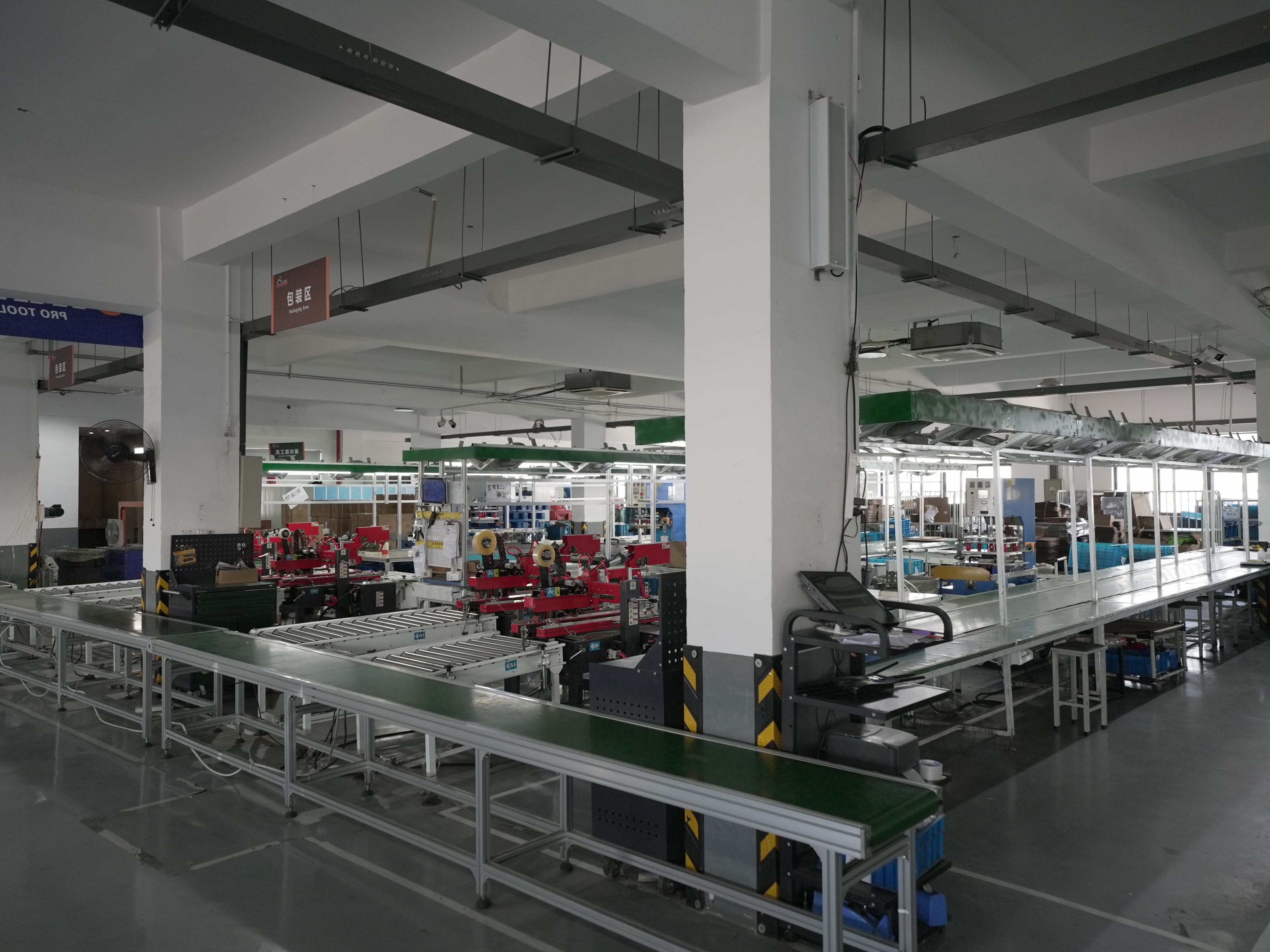
Workshop Site. Image supplied by the company profile.
The following checks help a buyer make a decision without relying on category assumptions.
- List the fasteners. Record the sizes, head types, and materials used in the buyer's furniture, fixtures, electronics, or repair work. Compare that list with the bits in the 4V set and the separate bits set.
- Check the actual contents. Confirm whether the 4V set includes a powered handle, a charger, a case, and the specific bits needed. Do not assume that a set with many pieces covers the critical sizes.
- Verify the bit interface. Confirm whether the tool accepts standard replacement bits or a proprietary format. Replacement availability affects the long-term usefulness of the set.
- Ask for model-level material and inspection evidence. The supplied product facts state CR-V/S2 steel, IQC-IPQC-FQC inspection, 15-25% higher proof torque than ordinary 45# carbon-steel hand tools, and HRC48-54 hardness. Buyers should ask how those claims apply to the exact bits or screwdriver being purchased.
- Test the control boundary. Try the tool on the actual fastener and material. Check whether the powered handle can stop at the needed point, and whether a manual screwdriver is still required for final tightening or delicate work.
- Count the redundancy. If the buyer already owns a powered driver, a bits set, and a manual screwdriver set, the new 4V set should replace something or add a function that is actually used. Otherwise it adds storage and selection burden.

Testing Lab. Image supplied by the company profile.
Future outlook: evaluate the kit, not the voltage label
The practical outlook for buyers is a shift in evaluation rather than a prediction about the market. The 4V label identifies a low-voltage format for light-duty work; it does not by itself establish that a set is the right purchase. The more useful evaluation is whether the kit removes duplication, covers the fasteners, and can be verified at the model level. A set that replaces a worn manual driver and keeps the common bits with the tool can simplify light assembly. A set that duplicates an existing bits inventory adds complexity.
Separate bits and screwdriver sets are likely to remain relevant for the same reasons they are relevant now: manual control, power independence, and modular replacement. The buyer does not need to choose one format for every task. A hybrid kit can be the most practical outcome: a 4V cordless screwdriver for repetitive light fastening, a manual screwdriver for final control, and a separate bits set for coverage and replacement. The decision should be revisited when the task mix changes, not when a new voltage label appears.
FAQ: 4V cordless tool set versus separate bits and screwdriver sets
What is the main difference between a 4V cordless tool set and separate bits and screwdriver sets?
A 4V cordless tool set bundles a powered electric tool with accessories, while separate bits and screwdriver sets are modular hand tools and replacement tips. The main difference is not simply power. It is how the buyer handles repetition, control, storage, and replacement. The set can reduce duplicate sourcing when it replaces an existing handle; separate sets can reduce redundancy when the buyer already owns a powered driver.
When does a 4V cordless tool set replace separate screwdriver and bits sets?
A 4V set can replace separate sets when it covers the fasteners the buyer actually uses, when the buyer lacks a powered driver, and when repetitive light assembly makes powered rotation useful. It should not be treated as a replacement if it duplicates an existing bits inventory or if the work requires manual precision. The supplied market segmentation places 4V and 3.7V platforms in the low-voltage, light-duty segment, so the fit should be judged against light work rather than heavy fastening.
When do separate bits and screwdriver sets make more sense?
Separate bits and screwdriver sets make more sense when the buyer already has a suitable powered handle, works in power-off locations, needs direct manual control, or wants to replace only worn tips. The supplied comparison note describes the hand-tool format as having zero power consumption, independence from power supply, and suitability for power-off field operations. Those conditions are practical boundaries, not minor exceptions.
How should buyers compare bit and screwdriver quality?
Buyers should compare the exact material, hardness, proof torque, bit geometry, and inspection process for the specific item. The supplied product facts state higher-grade CR-V/S2 steel, IQC-IPQC-FQC inspection, 15-25% higher proof torque than ordinary 45# carbon-steel hand tools, and a hardness range of HRC48-54. These are supplied claims to verify at model level, not universal benchmarks for every bits set or screwdriver set.
Does a 4V cordless tool set remove the need for manual tools?
No. A 4V cordless tool set can reduce repetitive hand turning, but manual tools remain useful for final tightening, delicate fasteners, tight access, and power-off field work. The better decision is usually a hybrid: use the powered tool where repetition is high, keep a manual screwdriver for control, and use a separate bits set for coverage and replacement. The set is a complement, not a universal substitute.
Decision rule for buyers
Choose the 4V cordless tool set when the buyer lacks a powered driver, the work involves repeated light fastening, and the set contains the bits and accessories that match the actual tasks. Choose separate bits and screwdriver sets when the buyer already has a powered handle, needs manual precision or power independence, or wants to replace worn tips without replacing the whole kit. The most practical decision is often a hybrid that assigns each format to the job it does best.
For HOTAK PRO TOOLS, the supplied product evidence supports a quality check on material and inspection rather than a blanket preference for one format. The stated CR-V/S2 steel, IQC-IPQC-FQC inspection, proof-torque benchmark, and hardness range are relevant buying criteria, but they should be matched to the exact set and the buyer's fastener list. The format decision remains the buyer's: a set that reduces redundancy is useful; a set that adds a second inventory is not.
Reference: the supplied YONGJIA TOOLS catalog is available for download at this link.
Have Questions or Need More Details?
Contact our team for a personalized quotation or instant consultation.
Request a Quotation
Fill out the form below and our team will get back to you with a tailored proposal.
WhatsApp Direct Chat
Prefer to chat in real-time? Message us on WhatsApp for instant assistance & quick answers.
- Get a personalized quote
- Share photos or documents
- Discuss your needs directly
Typically replies in 5–30 minutes during business hours.