
5-Axis vs Turning vs Milling: CNC Process Buyer Comparison
Process selection for precision components is a constraint-matching exercise, not a ranking of technologies. Turning suits rotational geometry, milling suits prismatic features, and 5-axis machining suits complex multi-face geometry where a tight tolerance must hold across angled features. The buyer's task is to identify which constraint dominates — geometry, tolerance, material, batch size or certification — and to verify the supplier's evidence against it.
The global CNC machining services market is estimated at USD 58.33 billion in 2026 and projected to reach USD 108.3 billion by 2035, according to Business Research Insights. Most of that spend is released through drawings and process decisions rather than brand preference, which makes the process route one of the few specification choices a buyer controls directly. This comparison sets out where each of the three routes fits, which materials change the answer, and which capability statements — 5-axis machining up to ±0.005 mm, ISO 9001 certification, 100% pre-shipment inspection, 24-hour quotations, OEM/ODM support and a MOQ of 1 piece — can be checked before a purchase order is issued.
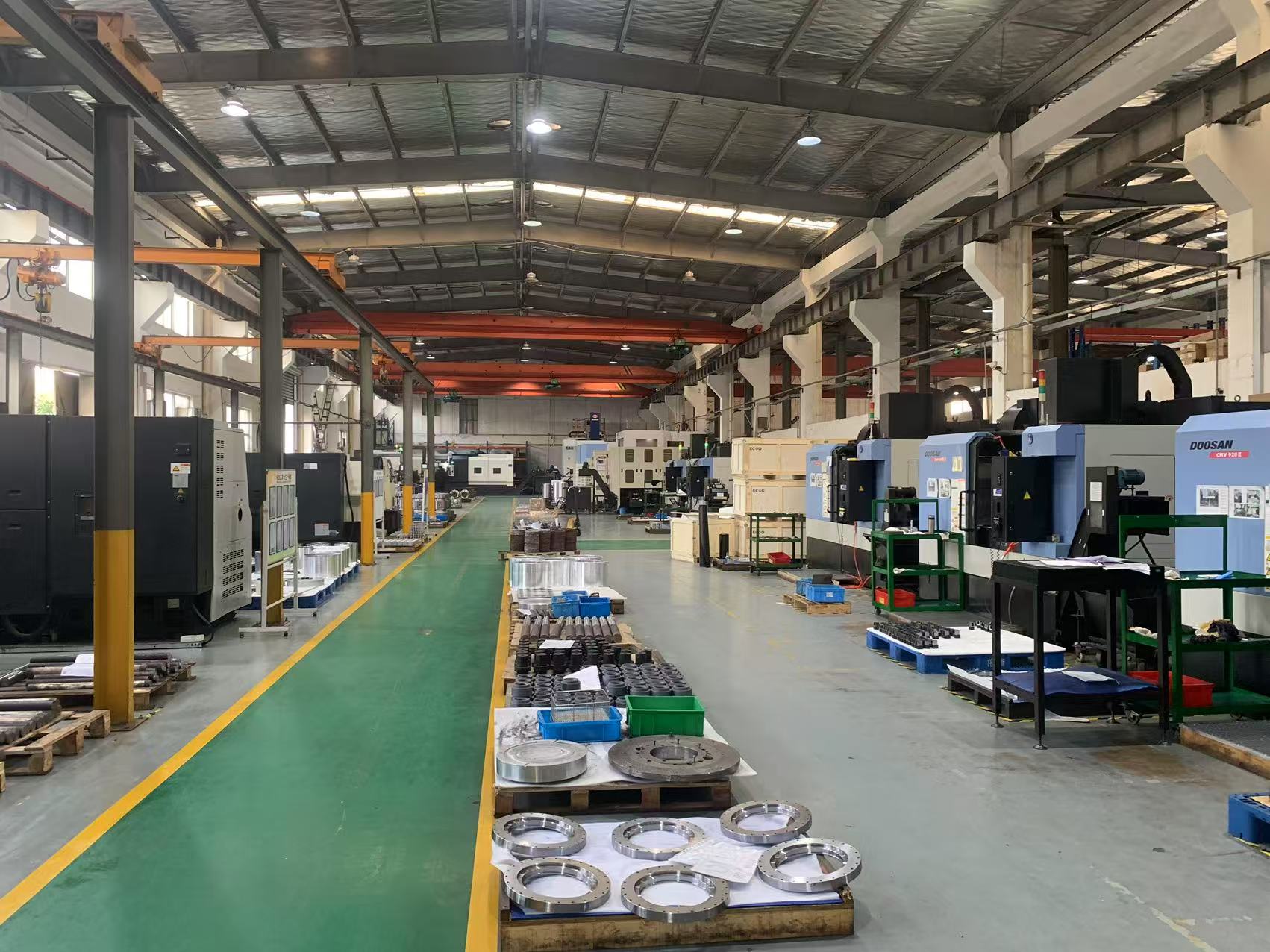
Precision machining capacity is specified as a process chain — primary cut, secondary operations and inspection — rather than a single machine.
The Procurement Problem: One Drawing, Three Process Routes
Process fit is decided by the dominant constraint on the drawing, not by the specification sheet of the machine. As a working rule: rotational parts with cylindrical features and symmetry are turned; prismatic parts with flats, pockets, slots and profiles are milled; parts that combine compound angles, contoured surfaces and a tight tolerance across several faces are candidates for 5-axis CNC machining.
Most precision components use more than one route. Drilling, tapping, grinding and EDM typically follow the primary cut rather than replace it, which means a buyer is usually specifying a process chain rather than a single operation. Five constraints decide whether that chain is viable:
- Geometry — rotational, prismatic or free-form, and how many faces carry critical features.
- Tolerance — the tightest dimensional or geometric requirement, and whether it sits on one feature or across a stack.
- Material — carbon steel, stainless steel, aluminum, brass, copper, titanium, plastic, POM and nylon each change cutting behaviour, tooling and finishing.
- Batch — one prototype and 10,000 pieces rarely follow the same economic route.
- Evidence — the certification, inspection reports and material certificates that can be verified before the order, not after.
The costly failure mode is not a lack of machining capability; it is the gap between a stated capability and a documented result. A supplier that quotes on a drawing without confirming the datum scheme, the tolerance stack and the inspection method is quoting a machining hour rather than a conforming part.
What a Verified CNC Machining Service Covers
Suzhou ECOD Precision Manufacturing Co.,Ltd (ECOD) is a precision manufacturing company based at No.151, Huashan Road, Suzhou New District, Suzhou, China, founded in 2005. It provides CNC machining services and casting services, operates a 40,000 m² facility with 350 employees including 25 engineers, and reports an annual output of 1,000,000 units with a 100% export ratio across Europe, the Middle East, North America and Asia. Company information is published at ecod-cncmachining.com.
Verified capability facts for the ECOD CNC machining service
- 5-axis CNC machining with high precision up to ±0.005 mm.
- Process scope: CNC turning, CNC milling, drilling, grinding, tapping and EDM.
- Materials: carbon steel, stainless steel, aluminum, brass, copper, titanium, plastic, POM and nylon.
- ISO 9001 certified factory; 100% inspection before shipment.
- Quotations within 24 hours; MOQ 1 piece; small and large batch production.
- OEM and ODM service; monthly capacity 100,000 pieces; lead time 10–60 days.
- Equipment: 3/4/5-axis CNC machining centers, CNC turning centers, grinding machine, EDM machine, CMM inspection, surface treatment and heat treatment.
- Applicable industries: aerospace, oil & gas, energy and medical devices.
The ISO 9001 certificate is number 33826Q00178R000, issued by Shanghai Wozhong Certification Co. Ltd against GB/T19001-2016/ISO9001:2015, with a scope covering Custom CNC Machining Parts Sales in the global market and validity from 16 June 2026 to 15 June 2029. For a buyer, the practical reading is that the quality management system is third-party certified for that scope — not that every tolerance is guaranteed by the certificate itself.
Documentation is treated as part of the deliverable. Complete material certificates and dimensional inspection reports are provided for all orders, with 100% inspection before shipment and CMM inspection included in the equipment list. Customisation is handled against customer 2D/3D drawings, material, dimensional tolerance, surface treatment and machining finish, supported by DFM optimisation from the engineering team and technical support after delivery.
Technical Explanation: How Each Process Fits the Drawing
5-axis CNC machining
5-axis machining moves the tool and workpiece on five axes simultaneously, which allows angled holes, contoured surfaces and compound features to be produced without re-fixturing the part for each face. Every additional setup introduces a new datum reference and a new stacking error, so on parts where a tight tolerance must hold across several faces, the setup count matters as much as the machine's nominal accuracy. ECOD lists 5-axis machining among its processes with precision up to ±0.005 mm.
CNC turning
Turning rotates the workpiece against a single-point tool, generating external and internal diameters, threads, grooves, tapers and faces with rotational symmetry. It is the most direct route for shafts, bushings, fittings and connectors, and it is normally the most economical one because the geometry matches the kinematics of the machine. Turning stops being the right answer when the part carries off-axis prismatic features that cannot be produced on-axis; those are added by milling or drilling as secondary operations.
CNC milling
Milling rotates a multi-tooth cutter against a stationary or indexed workpiece, producing flats, pockets, slots, profiles, bores and stepped surfaces. Three-axis milling covers features reachable from a single direction; four- and five-axis milling extend reach to angled faces. Milling is the default route for brackets, housings, manifolds, plates and fixtures, and it is also the process that adds prismatic features to turned parts.
Drilling, tapping, grinding and EDM as supporting operations
Drilling and tapping create holes and threads, usually after the primary cut. Grinding is used for finishing and for features requiring very fine surface or tight size control, including hardened materials. EDM removes material with an electrode or wire and is specified for hard conductive materials and for sharp internal corners that a rotating cutter cannot reach. EDM is generally slower than chip-cutting for bulk stock removal, so it is normally scheduled as a finishing or feature-specific operation rather than the main removal step.
| Route | Best-fit geometry | Typical features | Where it stops fitting |
|---|---|---|---|
| 5-axis CNC machining | Complex, multi-face, free-form | Angled holes, contoured surfaces, compound angles, tolerances held across several faces | Simple rotational or single-face prismatic parts, where extra axes add cost without removing a constraint |
| CNC turning | Rotational / axisymmetric | Diameters, threads, grooves, tapers, faces | Off-axis prismatic features; critical features that cannot be reached on-axis |
| CNC milling | Prismatic / cubic | Flats, pockets, slots, profiles, bores, stepped surfaces | Parts dominated by rotational geometry or long length-to-diameter ratios better suited to turning |
Decision rule: match the route to the geometry that carries the tightest tolerance, then confirm the remaining features as secondary operations on the same process chain.
Material Suitability: Carbon Steel to POM and Nylon
Material rarely changes which process family is correct, but it changes tooling, cutting strategy, inspection and finishing. ECOD machines carbon steel, stainless steel, aluminum, brass, copper, titanium, plastic, POM and nylon. Aluminum 6061-T6 is the most widely used material in CNC machining because of its high machinability and strength-to-weight ratio, according to Xometry — which is why aluminum CNC parts dominate prototype and housing work.
| Material | Behaviour that affects process choice | Process notes |
|---|---|---|
| Carbon steel | Broadly machinable; heat treatment can follow machining | Turning for shafts and pins; milling and 5-axis for structural parts; grinding where hardened |
| Stainless steel | Corrosion resistance; work-hardening tendency calls for a conservative cutting strategy | Specified for oil & gas, energy and medical duty; turning for fittings, milling for manifolds |
| Aluminum | High machinability; 6061-T6 widely used (Xometry) | 5-axis for complex aerospace and robotics geometry; milling for housings and plates |
| Brass | Good machinability; used in fittings, connectors and valve bodies | Turning for rotational fittings; milling for prismatic housings |
| Copper | High electrical and thermal conductivity; softer cutting behaviour | Turning and milling with attention to chip control; EDM for fine features |
| Titanium | High strength-to-weight ratio; low thermal conductivity concentrates heat at the cutting edge | Aerospace and medical duty; slower cutting parameters; 5-axis for complex geometry |
| Plastic, POM, nylon | Lower cutting forces; heat sensitivity affects dimensional stability | Turning and milling for insulators, wear parts and housings; sharp tooling and controlled clamping |
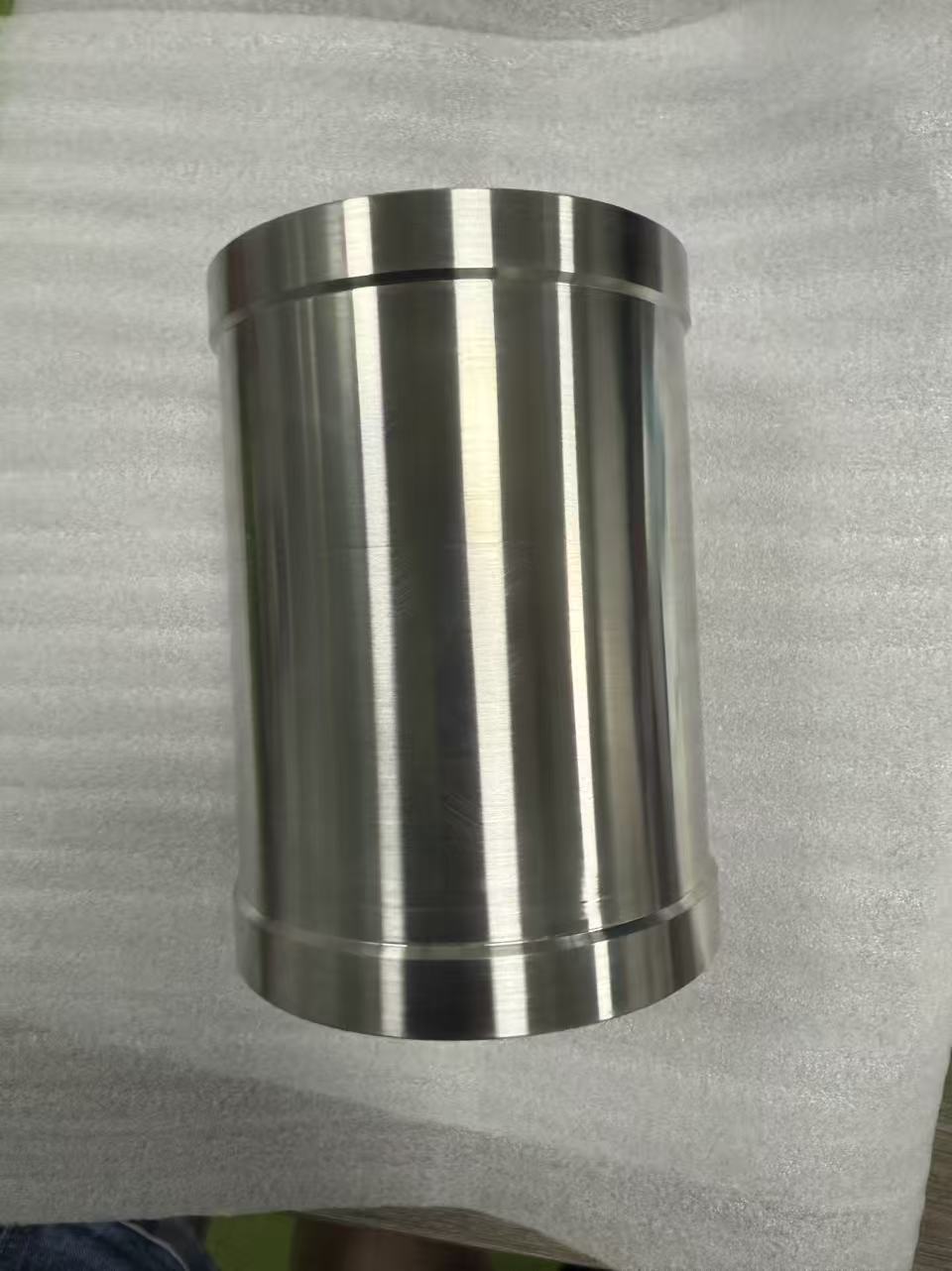
Material selection, process route and inspection method are specified together; the part above is a machined component for gas and oil equipment duty.
Application Fit: Aerospace, Oil & Gas, Energy and Medical Devices
Process choice is normally decided inside an industry constraint, not in isolation. ECOD lists aerospace, oil & gas, energy and medical devices as its applicable industries, with working conditions covering high-precision machining, tight-tolerance manufacturing, high-temperature applications, corrosion-resistant environments, high-strength mechanical parts and continuous industrial operation.
Aerospace
Aerospace work combines thin-walled geometry, compound angles and documentation. ECOD's aerospace reference is a UAV programme in Russia: 1,000,000 pieces delivered over one year, with stable quality in mass production and parts stated to fully match aerospace industry precision standards. 5-axis machining is the natural route for contoured and multi-face parts; milling covers brackets and housings; turning covers bushings and fittings. Satellite communication equipment and robotics components follow the same logic.
Oil & gas and energy
Oil and gas equipment combines corrosion-resistant materials with pressure and temperature cycling. ECOD's oil & gas reference is a gas and oil equipment programme in the UAE: 10,000 pieces over five years, with improved equipment reliability and parts adapted to harsh oil & gas working environments. Turned fittings, milled manifolds and 5-axis parts with angled ports are the typical split. Energy equipment parts add high-temperature and continuous-operation requirements, where material certificates and dimensional reports carry as much weight as the cut itself.
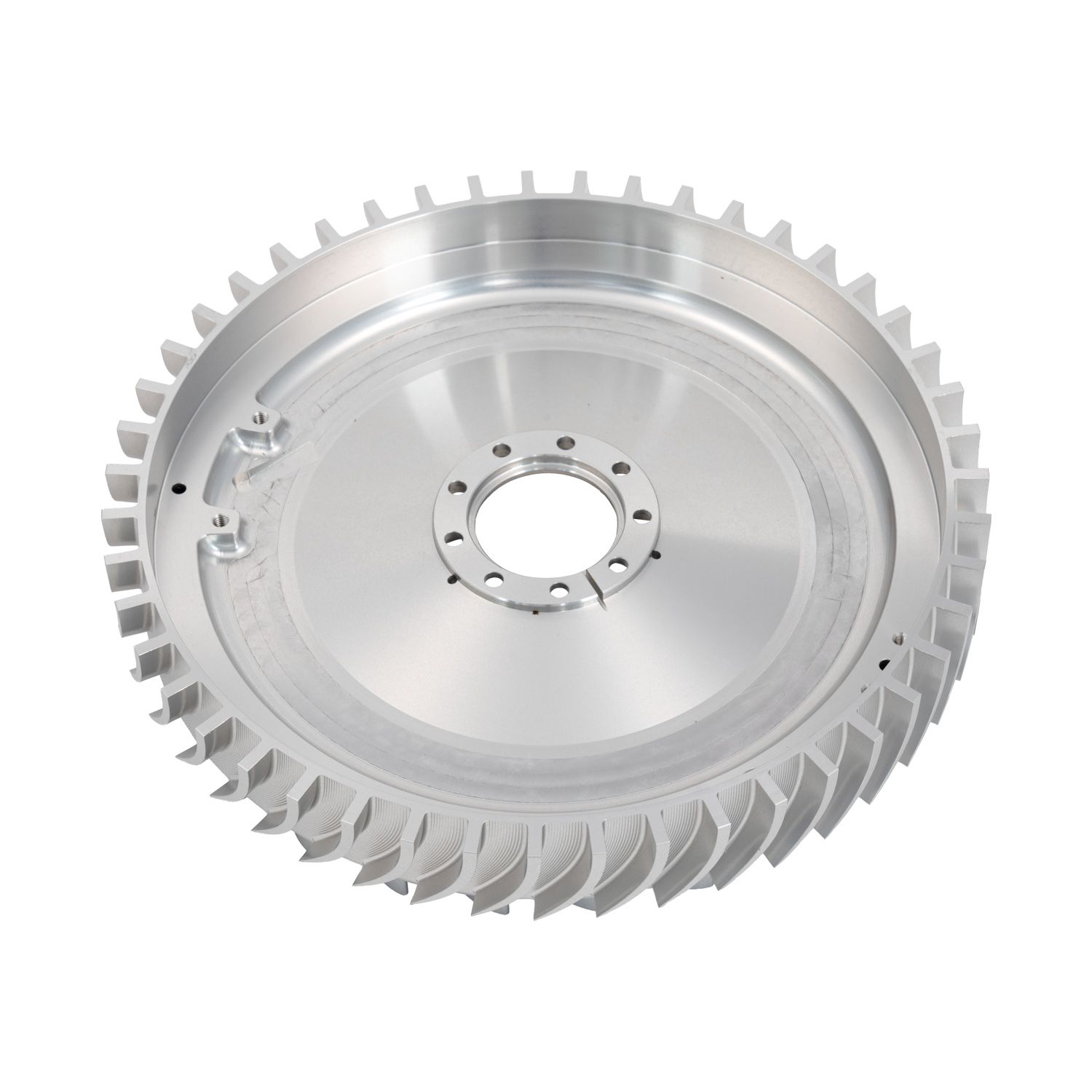
Aerospace components typically combine 5-axis contouring with milled and turned secondary features, then 100% inspection before shipment.
Medical devices
Medical device components usually require fine features, stainless steel or titanium, and clean documentation across prototypes, small batches and volume. Industrial automation parts and automotive components — the automotive sector was the largest CNC end-user segment at 28.6% of total market revenue in 2025, according to Dataintelo — tend to prioritise repeatability and cycle time instead.
Market Trend: Capacity Concentration and Precision Demand
Three data points frame the sourcing environment. The global CNC machine market was valued at USD 101.22 billion in 2025 and is projected to reach USD 251.61 billion by 2034, according to Fortune Business Insights. The services segment is estimated at USD 58.33 billion in 2026, reaching USD 108.3 billion by 2035, per Business Research Insights. Asia Pacific dominated the machine market with a 55.70% share in 2025, driven by manufacturing hubs in China and Japan.
Capacity is concentrated. Jiangsu, Guangdong and Zhejiang control 82.2% of China's national CNC machining capacity, according to Haizol — Suzhou, where ECOD is based, sits inside the Jiangsu cluster. On process mix, milling machines held the largest type share at 31.4% in 2025 (Dataintelo), while machining centers accounted for 61.6% of global revenue in 2023 (Grand View Research). Ultra-precision machining centers for semiconductor fab equipment are projected to grow at 8.36% CAGR from 2026 to 2031, according to Mordor Intelligence.
Forecasts should be read with care. Published CAGRs for this market range from 3.5% to 2028 (MarketsandMarkets) to 11.1% to 2034 (Fortune Business Insights), largely because report scopes differ on whether software and automation integration are included. For a buyer, the useful signal is not the growth rate itself but the direction: capacity remains clustered, precision requirements keep tightening, and suppliers that can hold tolerance across complex geometry while documenting inspection are the ones that absorb demand.
Where This Comparison Stops: Limits, Trade-offs and Buyer Checks
- Certification boundary. ISO 9001 covers quality management for custom CNC machined parts sales. Aerospace programmes commonly require AS9100, which incorporates ISO 9001 plus more than 100 additional requirements for safety and reliability (SAE International), and medical device production is expected to comply with ISO 13485 (ISO). Buyers in those sectors should confirm the applicable quality requirement for their programme rather than assume equivalence.
- Tolerance boundary. ±0.005 mm is the stated precision capability for 5-axis work at ECOD. It is a capability ceiling, not an automatic outcome on every feature; feasibility should be confirmed feature by feature against the drawing, the datum scheme and the inspection method.
- Process boundary. 5-axis machining does not make a simple turned shaft cheaper or better. Turning remains the correct route for axisymmetric parts and milling for many prismatic parts; adding axes removes setups, not constraints.
- EDM boundary. EDM is generally slower than chip-cutting for bulk removal and is usually a finishing or feature-specific operation rather than the main stock-removal step.
- Economic boundary. A MOQ of 1 piece and 24-hour quotations describe sourcing flexibility, not unit economics; prototype and mass-production quantities are costed on different process routes.
- Lead time boundary. 10–60 days is a range. The position within it depends on material availability, process chain length and inspection scope.
- Route boundary. ECOD also provides casting services. Where a near-net shape is viable, the balance between casting and machining from solid depends on geometry and volume and should be evaluated per part.
This is where a buyer comparison earns its value: the limits above are the questions to put to a supplier, and a documented answer is more useful than a broader capability claim.
Future Outlook
Three shifts are likely to shape process selection over the next planning cycle. First, precision demand is moving upward: growth in ultra-precision machining centres for semiconductor equipment points to tighter specifications spreading into adjacent industrial work. Second, process chains are consolidating at single suppliers, because every transfer between vendors re-opens datum and inspection questions. Third, documentation is becoming a selection criterion in its own right — material certificates and dimensional inspection reports are increasingly requested as standard deliverables rather than exceptions.
For buyers, the practical implication is to specify the process route and the evidence together. For suppliers, it means the competitive difference sits less in the machine list and more in the ability to hold a tolerance across complex geometry, inspect it completely and document it consistently. A supplier positioned inside a dense machining cluster, running 5-axis machining alongside turning, milling, grinding and EDM under ISO 9001 with 100% inspection, is structured for that expectation — provided each programme's specific certification and tolerance requirements are confirmed at quotation stage.
Frequently Asked Questions
When should a buyer specify 5-axis CNC machining instead of CNC milling or turning?
5-axis machining is specified when the part carries compound angles, contoured surfaces or critical features on several faces that would otherwise require multiple setups. If the part is rotational, turning is the direct route; if it is prismatic and reachable from one or two directions, three- or four-axis milling is sufficient. ECOD lists 5-axis machining with precision up to ±0.005 mm alongside turning and milling, so the route can be selected against the drawing rather than the machine list.
What tolerance can a buyer verify for precision CNC machining?
ECOD states high precision up to ±0.005 mm for its 5-axis CNC machining capability. Tolerance is verified per feature: the datum scheme, the tolerance stack and the inspection method should be agreed before production, and the dimensional inspection report provided for all orders is the document that confirms the result.
Which materials can be machined, and does material change the process route?
ECOD machines carbon steel, stainless steel, aluminum, brass, copper, titanium, plastic, POM and nylon. Material generally changes tooling, cutting strategy and finishing rather than the process family: turning remains the route for axisymmetric parts, milling for prismatic parts, and 5-axis machining for complex multi-face geometry. Aluminum 6061-T6 is the most widely used material in CNC machining because of its high machinability and strength-to-weight ratio, according to Xometry.
What does ISO 9001 certification cover in this CNC machining service?
The certificate is number 33826Q00178R000, issued by Shanghai Wozhong Certification Co. Ltd against GB/T19001-2016/ISO9001:2015, with a scope covering Custom CNC Machining Parts Sales in the global market and validity from 16 June 2026 to 15 June 2029. It certifies the quality management system for that scope. Sector-specific standards such as AS9100 for aerospace and ISO 13485 for medical devices are separate requirements that buyers should confirm for their own programme.
What are the minimum order quantity and quotation lead time?
The minimum order quantity is 1 piece, and quotations are provided within 24 hours. Production supports both small and large batch runs, with a monthly capacity of 100,000 pieces and a lead time of 10–60 days depending on material, process chain and inspection scope.
How is quality checked before shipment?
Inspection is 100% before shipment. CMM inspection is listed among the available equipment, and complete material certificates plus dimensional inspection reports are provided for all orders.
How does OEM/ODM customisation work for machined parts?
Parts are customised per customer 2D/3D drawings, material, dimensional tolerance, surface treatment and machining finish. Both OEM and ODM services are available, and the model designation is No Standard Model / OEM Service, which means the part is defined by the customer's drawing rather than a catalogue number. A 25-engineer team provides DFM optimisation to simplify production and reduce cost.
Which industries and applications does the service support?
Aerospace, oil & gas, energy and medical devices, including aerospace components, oil & gas equipment parts, medical device components, industrial automation parts, automotive components, energy equipment components, satellite communication equipment and robotics components. Working conditions covered include high-precision machining, tight-tolerance manufacturing, high-temperature applications, corrosion-resistant environments, high-strength mechanical parts and continuous industrial operation.
The downloadable capability brochure covering the CNC machining service scope is available here: ECOD capability brochure (PDF).
Have Questions or Need More Details?
Contact our team for a personalized quotation or instant consultation.
Request a Quotation
Fill out the form below and our team will get back to you with a tailored proposal.
WhatsApp Direct Chat
Prefer to chat in real-time? Message us on WhatsApp for instant assistance & quick answers.
- Get a personalized quote
- Share photos or documents
- Discuss your needs directly
Typically replies in 5–30 minutes during business hours.