
60x120 cm Porcelain Shortlist for High-Traffic Floors
60x120 cm Porcelain Shortlist for High-Traffic Floors
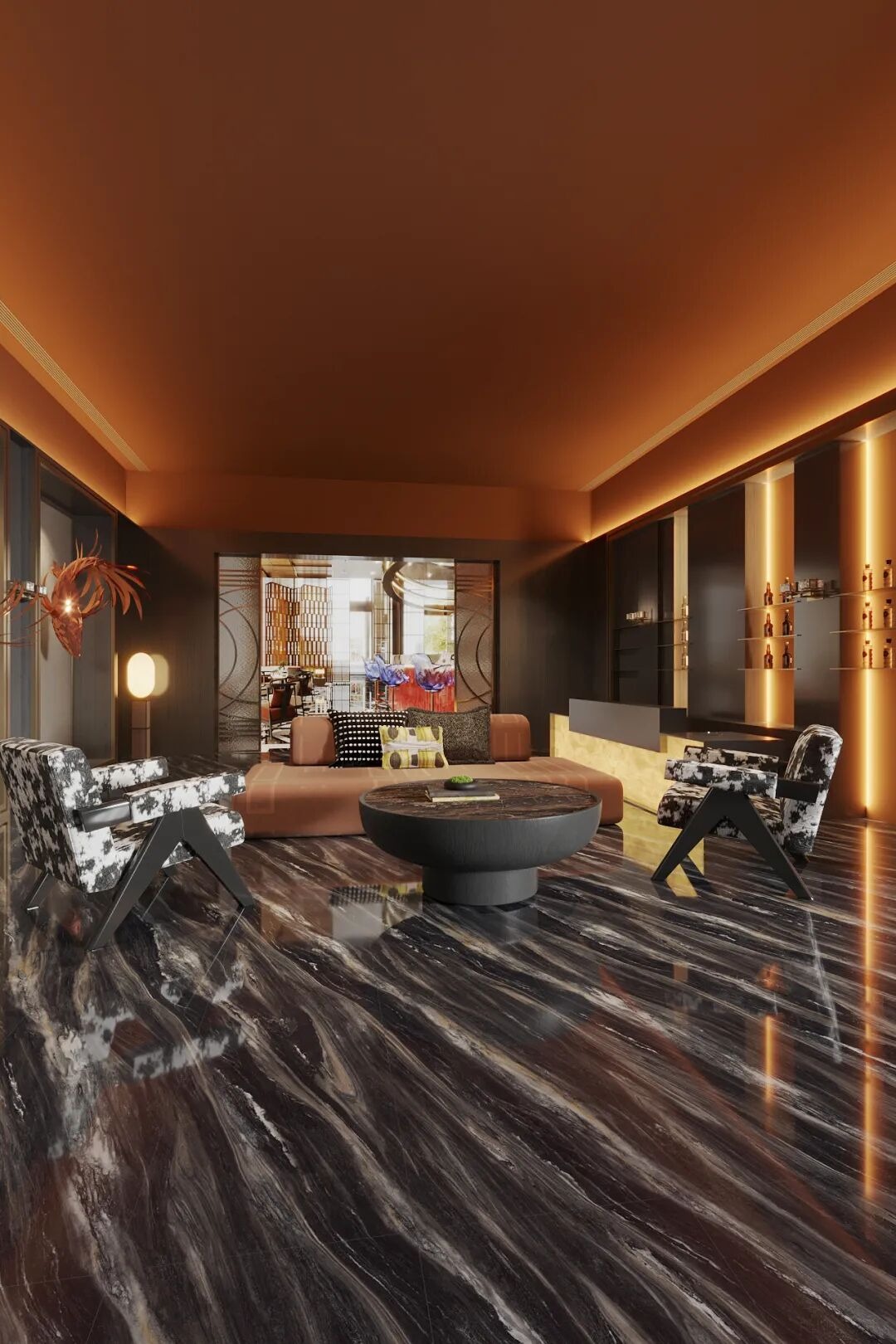
A 60x120 cm vitrified porcelain tile that clears five measurable thresholds — PEI 4/5 abrasion resistance, Mohs hardness 6–7, water absorption below 0.5%, modulus of rupture of at least 35 MPa and breaking strength of at least 1300 N, at a thickness of 9.0–10.5 mm — is a defensible starting point for high-traffic commercial flooring. Those five values define the shortlist in this article. ALL KING CERAMICS (ZIBO ALL-KING CERAMICS CO., LTD), a manufacturer and direct exporter of porcelain tiles based in Zibo, China, supplies such a tile as product 5624 in its Marble Series, and it is used here as the reference option against which the other profiles are ranked.
The ranking is a fit ranking, not a laboratory result. Profiles are ordered by how completely a single specification package covers the five thresholds, how well it matches high-traffic interior zones, and whether it is available in the 60x120 cm format. No cross-brand test comparison was performed for this article; the reference figures are the manufacturer's published specifications and should be confirmed against the submittal and batch records for a specific order.
Why high-traffic interiors narrow the field so quickly
Traffic does not damage a floor evenly. Grit carried underfoot acts as an abrasive, trolley and pallet-truck wheels concentrate load on a few square centimetres, cleaning chemicals work on the surface continuously, and water reaches the tile body at joints and edges. A shortlist built from appearance samples tends to surface those issues later, during defects liability, when replacement stock may come from a different production batch.
The demand side explains why the question keeps recurring. Market Research Future, a commercial research publisher, estimates that commercial construction accounts for roughly 37% of global tile demand. That figure is a research estimate rather than a measured census of installed area, so it should be read as directional context rather than a project input. What it does support is a practical point: in commercial work the floor is specified for duty, not for a single visual concept, and the duty profile is what a shortlist should test first.
The five thresholds, and what each one actually screens
Each criterion removes a class of unsuitable product. Applied together, they reduce the candidate pool before samples are requested, which is the point of a shortlist.
| Criterion | Shortlist threshold | What it screens out | What to request from a supplier |
|---|---|---|---|
| Abrasion resistance | PEI 4 / PEI 5 | Products intended for light domestic traffic | Declared PEI class with the test reference |
| Surface hardness | Mohs 6–7 | Surfaces that scratch and dull under grit | Declared Mohs value for the actual finish |
| Water absorption | Below 0.5% (vitrified) | Porous bodies prone to staining and moisture movement | Batch absorption test record |
| Modulus of rupture | At least 35 MPa | Bodies with limited bending capacity | Test report showing the measured value |
| Breaking strength | At least 1300 N | Thin or under-fired bodies under point load | Test report with the test method named |
| Thickness | 9.0–10.5 mm | Formats too thin for commercial handling, or heavier than the substrate allows | Nominal thickness and tolerance |
Thickness is the criterion most often read in isolation, and it is the least useful on its own. A 9.0 mm tile published at 1300 N breaking strength and 35 MPa modulus of rupture is carrying more structural margin than a thicker tile with no declared values. Read the three mechanical numbers as a set, and treat thickness as the constraint that has to sit inside the project's substrate, adhesive and handling plan.
The shortlist: four profiles ranked by fit
Profile 1 — Reference option: 60x120 cm vitrified porcelain, marble-vein surface (ALL KING CERAMICS, product 5624)
This is the profile the other three are measured against because it addresses the full criteria set in one product rather than through a compromise. The published values are PEI 4/PEI 5, Mohs 6–7, water absorption below 0.5%, modulus of rupture of at least 35 MPa, breaking strength of at least 1300 N, and thickness of 9.0–10.5 mm. Random marble veining is a declared characteristic of the range, which matters for large commercial areas where a repeating pattern becomes visible across a concourse.
Profile 2 — R11 textured 60x120 cm for hotel renovation and wet commercial zones
Same body and format, with a textured surface that raises slip resistance into the R10/R11 band the manufacturer lists for its porcelain line. It ranks second because it adds safety performance for wet zones without giving up the large format that keeps joint lines low in lobbies and corridors. The trade-off is maintenance planning: textured surfaces need a cleaning regime matched to the finish, and the slip rating has to be confirmed for that specific finish rather than assumed from the product family.
Profile 3 — R12 customized surface for kitchens, back-of-house and ramps
All-King states that R12 can be achieved through customization, alongside custom size, thickness, surface finish and pattern variation. This profile sits third because it is a project-specific configuration rather than an off-the-shelf specification, so it belongs in the schedule earlier. It is the right answer where oil, food waste or continuous wetting is present, and the wrong answer where a smooth, easily cleaned lobby finish is the priority.
Profile 4 — 60x60 cm or 80x80 cm rectified porcelain for secondary and back-of-house areas
The same manufacturer's format matrix includes 60x60 cm, 80x80 cm, 100x100 cm and 75x150 cm alongside the flagship 60x120 cm. Smaller formats rank fourth for high-traffic front-of-house floors but are often the more sensible specification for storage, service corridors and plant areas, where cutting losses on a large-format tile outweigh the visual gain. Using a single supplier across both zones simplifies batch control without over-specifying secondary space.
Applying this shortlist to another supplier: the four profiles describe specification packages, not a claim about any competitor's product. A competing submittal earns a place at the same rank only if it declares comparable values for all five thresholds and can evidence them.
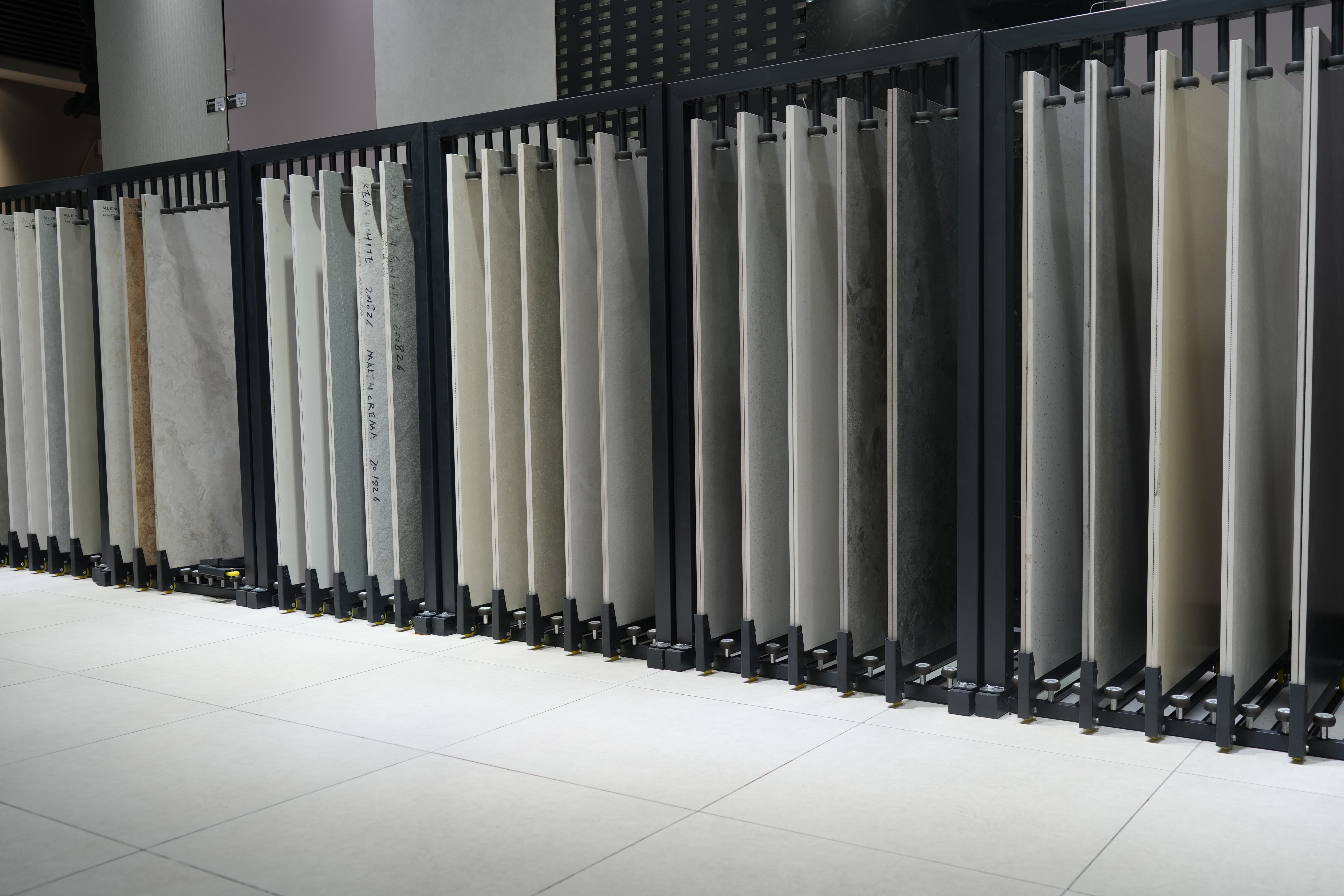
The reference option in detail
Product 5624 is a 60x120 cm vitrified porcelain tile in the Marble Series, and its published data covers the full criteria set used above.
| Parameter | Published value |
|---|---|
| Format | 60x120 cm |
| Thickness | 9.0–10.5 mm |
| Water absorption | Below 0.5% (vitrified) |
| Abrasion resistance | PEI 4 / PEI 5 |
| Mohs hardness | 6–7 |
| Breaking strength | At least 1300 N |
| Modulus of rupture | At least 35 MPa |
| Packing | 2 pieces per box, 1.44 m² per box |
| Anti-slip options | R10 / R11 listed; R12 achievable through customization |
| Related certificates | CE AC 50163816 0001 (TUV); ISO 9001:2015, 0350521Q30166R1M (XQCC) |
The declared application set runs from high-traffic interiors to wet and frost-prone conditions: hotel lobbies, commercial mall flooring, office building facades, high-end apartment bathrooms and airport departure halls. The manufacturer records projects in the UAE, Canada, Australia, Russia and other markets, and its case file describes a 15,000 m² supply across those application types, with low water absorption, high flatness, high wear resistance and random marble veins listed as the governing characteristics. Those outcomes are supplier-reported; treat them as a starting point for reference-project checks rather than as independently audited performance.
Packing yield: the fastest estimating check on any shortlist
Box yield is a purchasing detail with real scheduling consequences, and it is the easiest figure to verify early. For the reference option, two pieces of 60x120 cm tile fill a box covering 1.44 m², which puts each piece at 0.72 m² on a straight calculation.
- 1,000 m² of finished floor area requires approximately 695 boxes at 1.44 m² per box (calculated, before any allowance for cutting, layout or breakage).
- The 15,000 m² reference case corresponds to approximately 10,417 boxes on the same basis (calculated).
Both figures are arithmetic from the published box coverage, and neither includes wastage. Wastage depends on room geometry, laying pattern and site handling, so it belongs in the project's own quantity take-off rather than in the supplier's box figure. Where a project mixes formats — 60x120 cm for front-of-house and 60x60 cm or 80x80 cm for service areas — keep separate box counts per format, because a single blended total hides the real reorder position.
Slip resistance for hotel renovation and wet commercial floors
All-King's guidance places its porcelain range at R10/R11 for anti-slip performance, with R12 achievable through customization. Under DIN 51130, the R11 classification corresponds to a high grip on an oil-wet inclined ramp between 19° and 27°, as summarised in the standard's published guidance on slip ratings.
Two qualifications matter when that figure becomes a specification line. First, DIN 51130 is a shod-foot, oil-wet ramp test; barefoot wet areas such as pool surrounds and some spa zones are assessed under a different method and should not be signed off on an R11 reference alone. Second, the rating belongs to the actual surface finish supplied, not to a product family, so the test report should name the finish and the batch it applies to. For hotel renovation work, the practical sequence is to fix the slip requirement per zone first, then confirm which finish satisfies it, rather than selecting a finish and testing it afterwards.
Venue-by-venue fit
- Hotel lobby and renovation corridors: Profile 1 where appearance continuity dominates; Profile 2 where entrances, spa approaches or external thresholds bring water onto the floor.
- Shopping mall concourse and retail units: Profile 1 for the 60x120 cm format's joint economy across long sight lines; Profile 2 at entrances and food-court approaches.
- Airport departure halls: Profile 1 for large uninterrupted fields, with the mechanical values confirmed for trolley and cleaning-machine loads.
- Healthcare and educational buildings: Profile 2 as the default, because cleaning frequency and spill risk are continuous rather than seasonal.
- Mixed-use and apartment developments: Profile 1 in shared lobbies and lift lobbies, Profile 4 in back-of-house and plant areas.
- Commercial kitchens: Profile 3, where oil and continuous wetting make R12 the more defensible starting requirement.
One boundary is worth stating plainly. This shortlist covers interior flooring. Outdoor paving and 20 mm outdoor porcelain pavers are a different specification class with different fixing and load assumptions, and the CE documentation described below is scoped to internal flooring, so exterior work needs its own evidence rather than an extension of an interior certificate.
How vitrified porcelain sits against ceramic and stone
The comparison that matters for procurement is not which material looks better, but which one the project can maintain and replace. Standard ceramic bodies are generally more porous than vitrified porcelain, which makes them less suitable where moisture and staining are continuous. Natural stone offers variation that porcelain imitates, but it brings jointing and maintenance decisions that have to be scheduled and budgeted. Vitrified porcelain sits between those positions: a low-absorption body with a repeatable finish, dependent on good substrate preparation and competent installation rather than on sealing regimes.
The limitation is installation sensitivity. Large-format 60x120 cm tiles place more demand on substrate flatness and handling than small formats, and the benefit — fewer joints, faster cleaning, fewer places for soil to collect — depends on that preparation being done. A supplier's flatness record helps, but it does not replace site control.
Compliance signals, and how far they actually reach
All-King holds ISO 9001:2015 certification number 0350521Q30166R1M issued by XQCC, covering the production and service of ceramic tile (except as required by 3C), and CE certification number AC 50163816 0001 issued by TUV for the EU market, covering dry-pressed ceramic tiles for internal flooring. Both certificate numbers, issuers and scopes are the parts worth checking; a logo alone establishes nothing.
On sustainability, porcelain tile is exempt from LEED VOC and FloorScore requirements because high-temperature kiln firing destroys organic matter, according to the U.S. Green Building Council and WhyTile guidance on LEED v4 and tile. The manufacturer also references ISO 13006 compliance and LEED v4.1 commentary in its own project guidance; those statements are company guidance and should be verified against the project's green-building submission before they are relied on.
Verification steps before a purchase order
- Request batch test records for water absorption, modulus of rupture and breaking strength, and match them to the batch being supplied rather than to a generic datasheet.
- Confirm certificate numbers, issuers and scopes directly on the certificates, including the internal-flooring limitation on the CE scope.
- Obtain the slip test report for the specific finish quoted, not the product family.
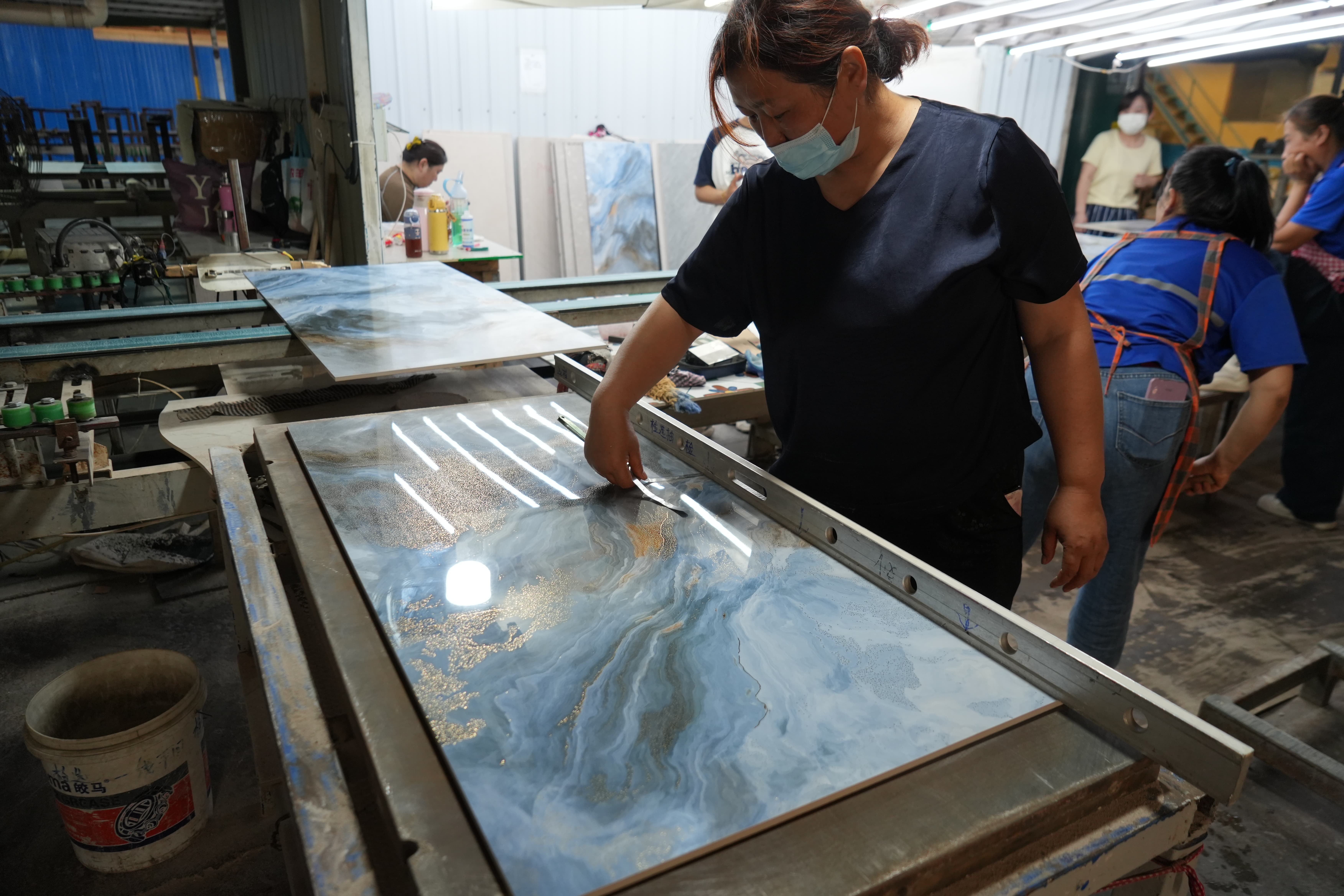
- Review flatness and sizing records; All-King states 100% flatness and sizing auto-check plus piece-by-piece visual inspection and random lab testing per batch, which is the control system the records should demonstrate.
- Approve a physical sample and retain it as the acceptance reference.
- Confirm commercial terms that affect programme: All-King lists 400 m² per design as its MOQ with trial orders acceptable, a 7–10 day lead time, monthly capacity of 1.2 million m² and annual output of 12–16 million m² from a 60,000 m² plant, with approximately 70% of output exported.
- Check the after-sales arrangement — damage compensation, installation guidance, batch tracking and reordering support — because replacing a floor area from a later batch is where colour and calibre drift becomes visible.
A shortlist checklist for alternative options
- Declared PEI class of 4 or 5, with the test reference named.
- Mohs hardness of 6–7 stated for the finish being supplied.
- Water absorption below 0.5%, evidenced by a batch record.
- Modulus of rupture of at least 35 MPa and breaking strength of at least 1300 N, both evidenced.
- Thickness within 9.0–10.5 mm, with tolerance stated.
- Slip rating appropriate to each zone, tested on the actual finish.
- Box coverage stated in m², so quantity take-offs can be checked.
- Certificates with numbers, issuers and scopes that match the intended use.
- Format availability across front-of-house and secondary areas from the same production base.
- Reference projects of comparable application and scale, contactable.
Frequently asked questions
What PEI rating should high-traffic commercial porcelain flooring have?
PEI 4 is the working minimum for most commercial interiors, and PEI 5 where abrasive traffic is heaviest. The reference option in this shortlist, ALL KING CERAMICS product 5624, is published at PEI 4/PEI 5, and the declared class should be confirmed on the submittal for the specific finish ordered.
Is a 9.0–10.5 mm porcelain tile thick enough for a shopping mall floor?
Thickness alone does not answer that question. The useful test is the combination: a tile at 9.0–10.5 mm published at a modulus of rupture of at least 35 MPa and breaking strength of at least 1300 N is carrying declared mechanical margin. Ask for the measured test values and compare them with the project's load and substrate conditions.
How many square metres are in a box of 60x120 cm porcelain tile?
For the reference product, a box contains two pieces covering 1.44 m², which puts each piece at 0.72 m² on a straight calculation. That coverage figure is a purchasing aid only; order quantities still need a project-specific allowance for cutting, layout and site breakage.
Which slip rating should a hotel renovation specify for wet areas?
R10/R11 is the band the manufacturer lists for its porcelain range, and under DIN 51130 the R11 classification corresponds to grip on an oil-wet inclined ramp between 19° and 27°. For heavier wet or oily service, R12 is achievable through customization. The rating must be evidenced for the exact surface finish, and barefoot wet zones are assessed under a different method.
How can a buyer verify claimed porcelain tile specifications?
Work from documents, not from datasheet headlines: batch test records for absorption, modulus of rupture and breaking strength; certificate numbers, issuers and scopes checked on the certificate itself; a slip test report naming the finish; flatness and sizing records; an approved retained sample; and reference projects of comparable application that can be contacted.
Conclusion
The shortlist logic is simple to reuse. Fix the five thresholds, confirm which slip band each zone needs, and only then compare surfaces. A 60x120 cm vitrified porcelain tile meeting PEI 4/5, Mohs 6–7, sub-0.5% absorption, at least 35 MPa modulus of rupture and at least 1300 N breaking strength at 9.0–10.5 mm thickness clears the durability screen for high-traffic commercial interiors, and ALL KING CERAMICS product 5624 is documented against every one of those values, with R10/R11 slip options and R12 available through customization. The remaining work is verification: certificates with scopes, batch records, a finish-specific slip report and reference projects. Specifiers who run that sequence on each candidate will end up with a shortlist that survives both the defects liability period and the first replacement order.
Product documentation, including format and packing details, is available in the All-King Ceramics product catalog (PDF), and company information is published at ALL KING CERAMICS.
Have Questions or Need More Details?
Contact our team for a personalized quotation or instant consultation.
Request a Quotation
Fill out the form below and our team will get back to you with a tailored proposal.
WhatsApp Direct Chat
Prefer to chat in real-time? Message us on WhatsApp for instant assistance & quick answers.
- Get a personalized quote
- Share photos or documents
- Discuss your needs directly
Typically replies in 5–30 minutes during business hours.