
7 Independent Buying Criteria: Comparing Aerosol Cans for Home, Auto & Industry
Independent Industry Reference · Aerosol Packaging
7 Independent Buying Criteria: Comparing Aerosol Cans for Home, Auto & Industry
Aerosol packaging presents itself as a single purchasing category and then behaves like seven separate specification decisions. Two cans that both carry car care aerosol or insecticide spray on a purchase order can differ in base material, net fill, diameter class, dispensing configuration, storage obligation, and the manufacturing scale standing behind them. Category names describe what goes inside the can. The can specification decides whether the product can be filled, shipped, stored, and sold in a given market at all.
The commercial weight behind that distinction is measurable. The global aerosol market was estimated at approximately USD 100.49 billion to USD 100.87 billion in 2025, with projections reaching more than USD 211 billion by 2035 (Precedence Research; Market Research Future). Europe accounted for roughly 33.88% to 36.3% of 2025 revenue, while the Asia-Pacific region is expected to record the highest CAGR through 2033 (Grand View Research; Precedence Research).
Published estimates also diverge, and buyers should plan around that divergence rather than treat any single figure as settled. Global 2025 market values range from about USD 94.4 billion (Grand View Research) to USD 100.87 billion (Market Research Future), depending on whether medical inhalers fall inside the research scope, and 2026–2035 growth forecasts range from a conservative 1.75% to an aggressive 7.73% CAGR. The direction is consistent; the precision is not. Can specifications, by contrast, can be checked item by item — which is why the comparison below is built on can-level criteria rather than market-level averages.
What follows is a neutral evaluation framework, not a brand ranking. It uses published specification data from three product categories — insecticide, air freshener, and car care aerosols — to show how the same seven criteria produce different answers for home use, automotive maintenance, and industrial projects.
Why Can-Level Comparison Beats Category-Level Comparison
The most common sourcing error in aerosol procurement is shortlisting at the category level and then comparing at the price level. A buyer decides they need an air freshener aerosol, collects quotations for air freshener aerosols, and compares unit prices. The comparison looks clean, but the objects being compared are often not equivalent: one quotation may cover a 300 ml tinplate can at ∅52×195 mm, another a 400 ml can at ∅65×158 mm with a different actuator configuration and a different storage classification.
Fill volume, can geometry, base material, and dispensing configuration are not accessories to the product — they define it. They set how much formulation a can holds, how the can behaves in a shipping carton and on a pallet, how much label area is available for mandatory information, what compliance evidence is required at the destination market, and what batch sizes a filling line can run economically.
The opportunity is straightforward. Replace category-level intuition with a fixed set of can-level criteria and apply those criteria consistently to every quotation received. The seven below are drawn from specification dimensions that are actually published for aerosol products, so they can be verified rather than estimated.
The Seven Criteria at a Glance
| # | Criterion | What you compare | Why it changes the decision |
|---|---|---|---|
| 1 | Base material | Tinplate vs. aluminum can | Weight and recyclability profile, availability by product category, re-qualification effort |
| 2 | Net content | 300 / 400 / 500 / 600 / 750 ml | Dose per use, consumption pattern, pricing architecture, number of SKUs to manage |
| 3 | Can geometry | Diameter (∅52 / ∅65 mm) × height (158–300 mm) | Label area, carton and pallet fit, shelf silhouette, filling line compatibility |
| 4 | Category-to-scenario fit | Intended industry per product | Whether the same format is qualified for home, automotive, industrial, or aviation use |
| 5 | Dispensing and usage model | Built-in nozzle, manual spray, one-time canister | Whether supporting equipment, dilution, or refill infrastructure is required |
| 6 | Compliance, storage, transport | Flammable liquid rules, pressure vessel standards, storage temperature control | Whether the goods can legally be moved and stored in the target market |
| 7 | Supply-side scale | Filling lines, annual capacity, category coverage, export experience | Continuity of repeat supply and feasibility of the batch sizes you need |
Criterion 1 — Base Material: Tinplate and Aluminum Are Not Interchangeable
Material is the first fork in the road, and it is also where category-level comparisons most often break down. Aluminum-based aerosol cans held a dominant market share of roughly 61% to 62% in 2025, a position attributed in published market analysis to recyclability and lightweight properties (Grand View Research; Market Reports World). That statistic describes the global mix. It does not describe the option list available to a single buyer in a single category.
Inside the published LAYA product range, tinplate is the standard base material for the insecticide spray KB-0000600, the air freshener ME-0000300, the car care product BO-0000600, the industrial maintenance aerosol SM-0000400, the household cleaning aerosol QL-0000300, and the spray paint aerosol QL-0000450. The aviation aerosol KB-0000300 is the exception: it is offered in either tinplate or an aluminum can.
Two practical consequences follow. First, a buyer who has standardized on aluminum for weight or recycling reasons may not find that option in every category — in this reference range, the aluminum variant appears in the aviation line, and its availability elsewhere has to be confirmed as part of an enquiry rather than assumed. Second, base material is tied to the fill, valve, and pressure system as a whole, so a material change is a re-qualification exercise with new testing and documentation, not a like-for-like line-item substitution.
Criterion 2 — Net Content: 300, 400, 500, 600 and 750 ml Do Different Jobs
Net content sits at the intersection of buyer intent and can engineering, and the published range shows clearly that it is not a single sliding scale across all categories. The widest ladder belongs to the insecticide spray KB-0000600, which is documented at 300, 400, 500, 600, and 750 ml. The car care product BO-0000600, the industrial maintenance aerosol SM-0000400, the household cleaning aerosol QL-0000300, the spray paint aerosol QL-0000450, and the aviation aerosol KB-0000300 all sit on a 300 / 400 / 500 / 600 ml ladder. The air freshener ME-0000300 occupies the narrowest position, documented at 300 ml only.
Buyers should read this as a map of where flexibility exists. A single-format line such as the air freshener is a statement about the intended route to market — frequent, low-volume, ambient dispensing — rather than a technical limitation. A 750 ml format, by contrast, appears only in the insecticide line within this range and points to a different consumption pattern: larger treated areas, professional use, or high-frequency household application.
Net content also drives commercial architecture. Each additional fill size multiplies the number of SKUs, labels, cartons, and safety-data documents that a brand owner must maintain, so a narrower ladder is easier to administer while a wider ladder reaches more price points and consumption occasions.
Criterion 3 — Can Geometry: ∅52×195 mm to ∅65×300 mm
Diameter and height move independently of net content, and that is the single most common source of error in can comparison. In the published reference range, heights run 158 mm, 195 mm, 200 mm, 240 mm, and 300 mm, against two diameter classes: ∅52 mm and ∅65 mm. Volume and height do not rise in step. The 300 ml formats are documented at ∅52×195 mm, while the 400 ml format is documented at ∅65×158 mm — shorter but wider than the smaller can. The largest combination in the range is ∅65×300 mm, used by the 750 ml insecticide can KB-0000600.
Three downstream effects matter to buyers. Label area changes with the body surface, which affects mandatory text, barcodes, and multilingual panels. Secondary packaging changes with both diameter and height, which affects the carton, the number of units per layer, and the pallet footprint. And the retail silhouette changes: a wide, short can and a narrow, tall can occupy shelf space differently even when the net content is identical.
A practical rule follows from the data: compare cans on the diameter and height pair, not on the fill number alone, because the fill number alone tells you nothing about how the can behaves in a carton, on a shelf, or on a filling line.
Criterion 4 — Category-to-Scenario Fit
Aerosol cans are qualified against intended industries, and the intended industry set is one of the most reliable shortlisting filters available to a buyer. In the published range, the household cleaning aerosol QL-0000300 is intended for the Home & Daily Life industry. The spray paint aerosol QL-0000450 is intended for Public & Commercial Services and Home & Daily Life. The air freshener ME-0000300 targets Public & Commercial Services. The car care product BO-0000600 serves the Transportation and Industrial & Manufacturing industries. The industrial maintenance aerosol SM-0000400 serves Industrial & Manufacturing, and the aviation aerosol KB-0000300 serves the aviation industry. Insecticide spray KB-0000600 is designed for insecticide scenarios and the insecticide industry.
The application profile behind these categories is documented as household daily use, automotive maintenance, industrial equipment maintenance, and aviation cleaning projects, running under normal temperature and humidity, high humidity, and general industrial environment conditions. Functions listed across the range cover surface cleaning, decontamination, rust prevention, disinfection, odor elimination, and pest control. The same application profile is recorded across markets including Germany, Singapore, and Australia.
For a buyer shortlisting options without brand bias, the check is simple: confirm that the intended-industry field of the can you are considering matches the environment where the product will actually be used, not the environment where a similar product is used.
Criterion 5 — Dispensing and Usage Model
Dispensing configuration is a deployment statement, and it belongs in the comparison even before formulation is discussed. None of the reference aerosol products in this range requires special supporting equipment, because the nozzle is built into the can. Operation is manual spray, on demand, with one-time canister operation.
For a buyer, that translates into a specific supply-chain shape: no compressor, no dilution station, no refill loop, no consumable other than the can itself. Products can therefore be deployed directly to end users in retail, service, or maintenance environments without an equipment installation step.
The boundary is equally clear. The reference products are single-use pressurised canisters; refillable or bulk-dispensing formats are a different packaging system rather than a variant of this one. Buyers whose sustainability or cost model depends on refilling should treat that requirement as a packaging-system decision from the outset, not as a later modification to an aerosol line.
Criterion 6 — Compliance, Storage, and Transport Boundaries
An aerosol can is a pressurised dispenser and flammable-liquid packaging at the same time, so compliance is not a formality appended to the specification — it is part of it. The published application data lists three standing requirements for this product family: flammable liquid compliance, pressure vessel safety standards, and storage temperature control.
Regulators make the boundary explicit. In the EU, aerosol dispenser construction is governed by the Aerosol Dispensers Directive (ADD), which requires mandatory deformation and burst tests, with resistance thresholds up to 10–15 bar depending on the propellant type (CanTech International). In China, the Hazardous Chemicals Safety Law took effect on 1 May 2026 and introduces whole-lifecycle safety management covering production, storage, and transport of chemicals, aerosols included (CIRS Group; NPC China).
The operational implication is that the same can destined for different markets can require a different evidence pack and a different storage regime. Compliance should therefore be verified per destination market before a specification is frozen, not after artwork and cartons are printed.
Criterion 7 — Supply-Side Scale and Availability Pattern
Specifications describe a can; they do not describe whether you can keep buying that can. Guangdong Laya New Chemical Technology Co., Ltd. (LAYA) is a Guangdong, China–based aerosol manufacturer established in 1992 that develops, fills, and supplies aerosol products and provides OEM and ODM services across insecticide, air freshener, household cleaning, industrial maintenance, car care, disinfectant, aviation, and spray paint categories.
Its published operational facts are relevant to criterion 7 because they set the realistic range of batch sizes and the breadth of category coverage a buyer can draw from a single source: a 100,000 m² manufacturing facility including 50,000 m² of modern standard workshops, 14 advanced filling lines, an annual production capacity of 200 million cans, and approximately 300 employees. The technical centre holds four product development laboratories and seven analytical testing laboratories, staffed by a 15-engineer R&D team. Export business accounts for 20% of total sales, with major markets listed as Central Asia, the Middle East, Africa, Russia, and Brazil.
Buyers should treat scale as a criterion of continuity rather than a quality claim. The relevant question is whether the filling line, category coverage, and market experience behind a quotation match the volume and destination pattern of the program being sourced.
Specification Comparison: Three Reference Products Across Three Scenarios
The table below applies the seven criteria to three products that a home, automotive, or industrial buyer might place in the same shortlist. The differences are visible at the can level.
| Product (model) | Material | Net content | Can dimensions | Intended industry |
|---|---|---|---|---|
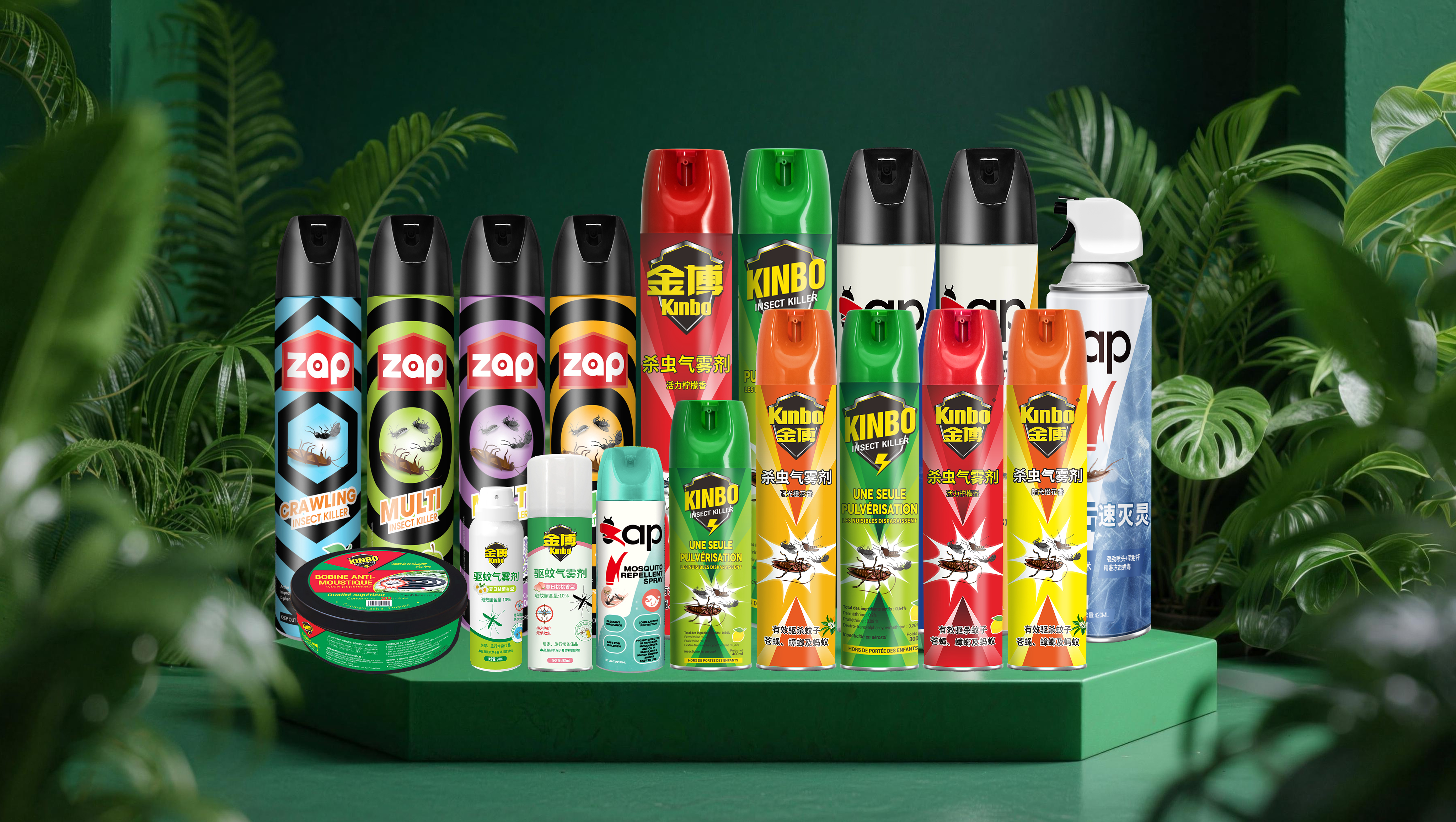
| Insecticide spray (KB-0000600) | Tinplate | 300 / 400 / 500 / 600 / 750 ml | ∅52×195 / ∅65×158 / ∅65×200 / ∅65×240 / ∅65×300 mm | Insecticide |
| Air freshener (ME-0000300) | Tinplate | 300 ml | ∅52×195 mm | Public & Commercial Services |
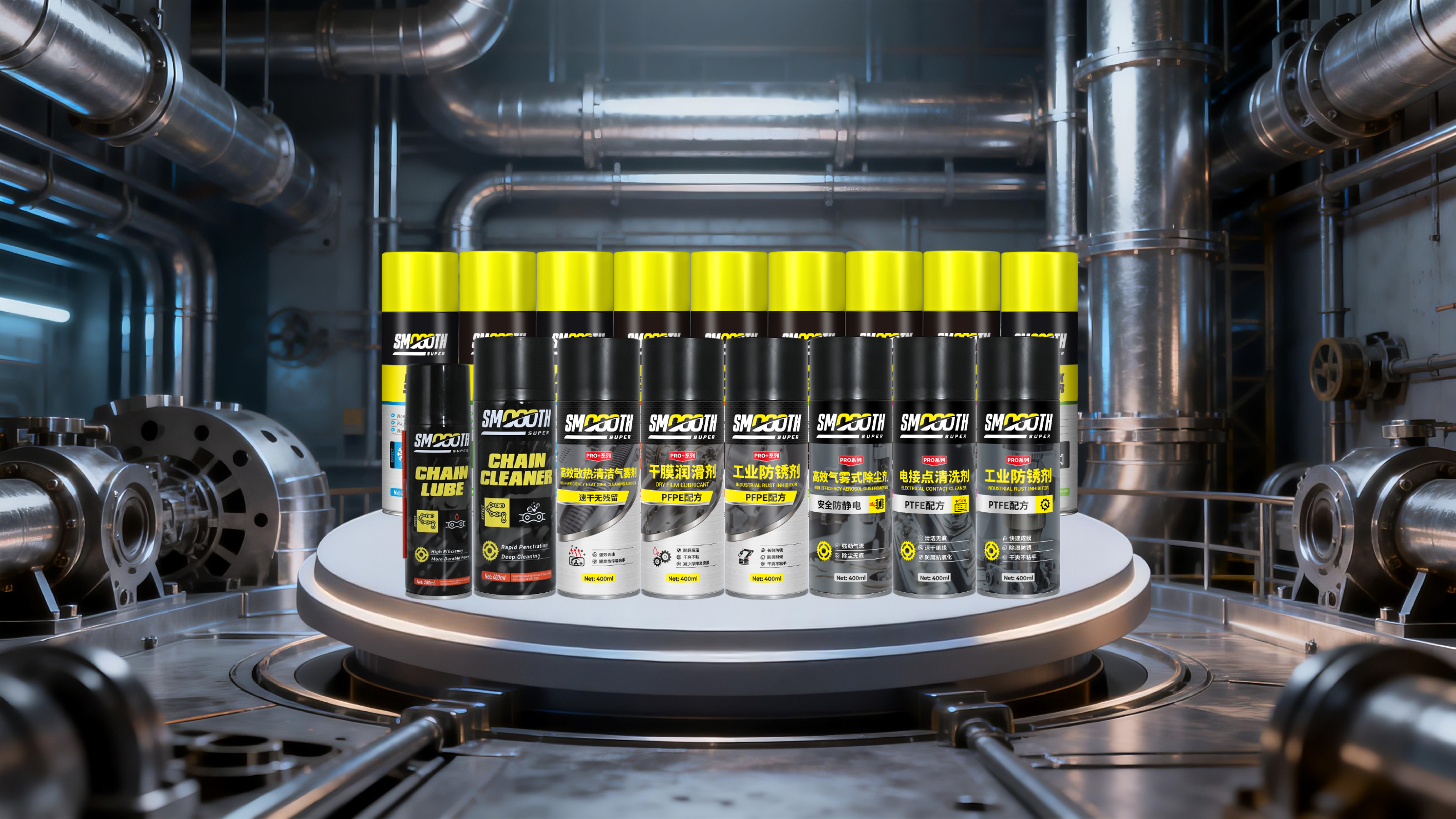
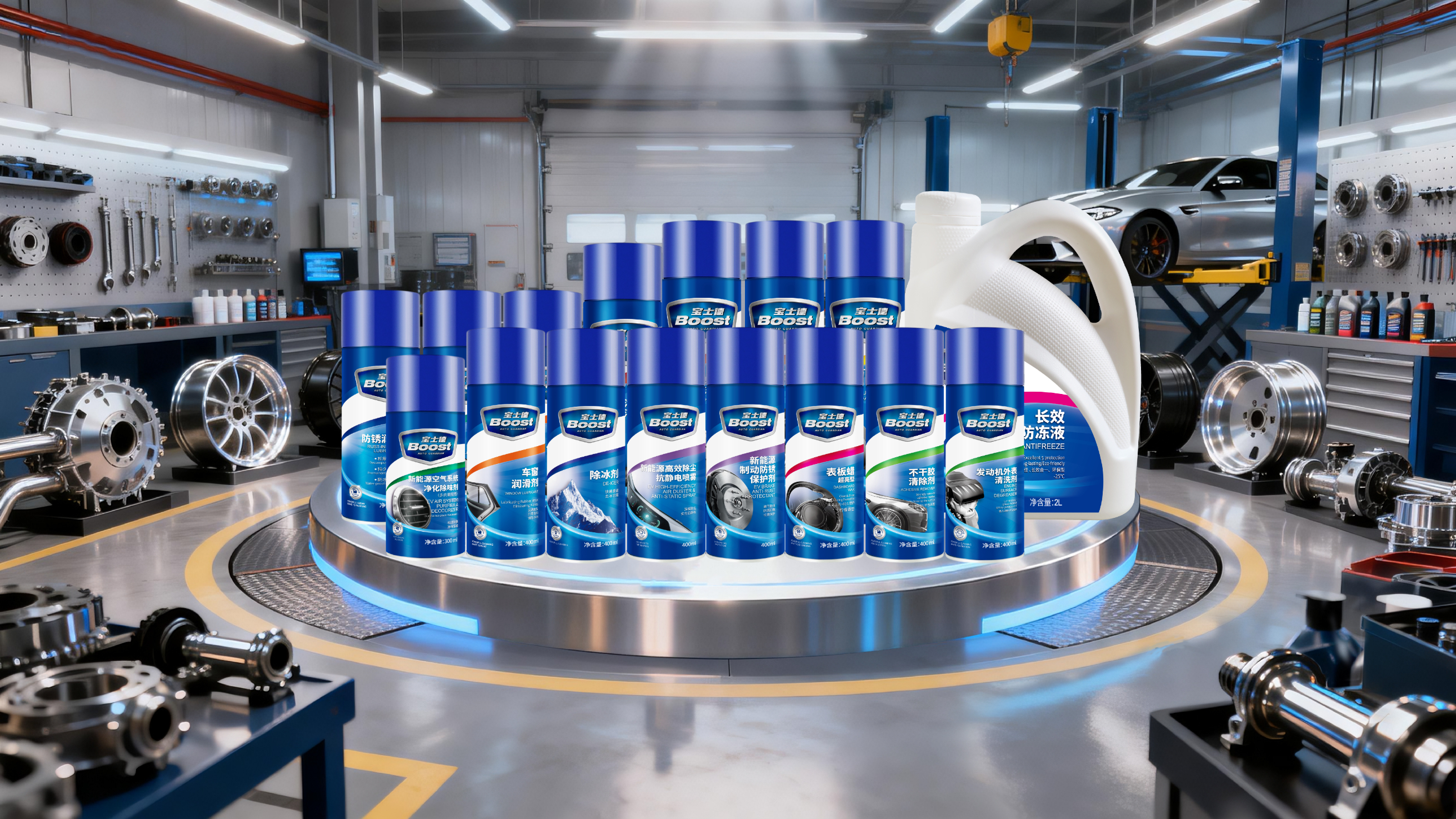
| Car care products (BO-0000600) | Tinplate | 300 / 400 / 500 / 600 ml | ∅52 mm diameter; 195 / 158 / 200 / 240 mm heights | Transportation; Industrial & Manufacturing |
| Industrial maintenance (SM-0000400) | Tinplate | 300 / 400 / 500 / 600 ml | ∅52×195 / ∅65×158 / ∅65×200 / ∅65×240 mm | Industrial & Manufacturing |
| Household cleaning (QL-0000300) | Tinplate | 300 / 400 / 500 / 600 ml | ∅52×195 / ∅65×158 / ∅65×200 / ∅65×240 mm | Home & Daily Life |
| Aviation aerosol (KB-0000300) | Tinplate or aluminum can | 300 / 400 / 500 / 600 ml | ∅52×195 / ∅65×158 / ∅65×200 / ∅65×240 mm | Aviation |
| Spray paint aerosol (QL-0000450) | Tinplate | 300 / 400 / 500 / 600 ml | ∅52×195 / ∅65×158 / ∅65×200 / ∅65×240 mm | Public & Commercial Services; Home & Daily Life |
Read across the rows and a pattern emerges: the ∅52×195 mm / 300 ml format is the common baseline, appearing in every listed category. The ∅65 mm diameter ladder at 158, 200, and 240 mm heights is the standard expansion path from 400 ml to 600 ml. The ∅65×300 mm / 750 ml combination is unique to the insecticide line in this range.
Technical Explanation: How Material, Fill and Geometry Interact
The seven criteria are not independent of each other in engineering terms, even though they should be evaluated independently in procurement. A pressurised can holds both a concentrate and a propellant, and the relationship between internal volume, net fill, and can geometry determines how much headspace the system requires and how the can behaves under pressure during handling, transport, and use.
Two structural observations follow from the published data. First, a stable base format is an asset. The ∅52×195 mm can appears across insecticide, air freshener, car care, industrial maintenance, household cleaning, spray paint, and aviation products, which means a multi-category portfolio can share a single can platform for its entry size and concentrate tooling, artwork, and logistics around one geometry. Second, extension is not linear. Moving from 300 ml to 400 ml in this range changes the diameter class, not just the height, so a buyer planning a ladder from 300 ml to 600 ml is really planning across two distinct can families rather than one.
There is also a boundary in the published data that buyers should note. Specification sheets of this type describe the packaging envelope — material, fill, dimensions, intended industry — but they do not describe valve orifice size, actuator type, spray rate, droplet size distribution, or formulation compatibility. Those parameters are established at the formulation and sample-validation stage. Treating a published can specification as a complete performance specification is the most common analytical error in early-stage comparison.
Aerosols Compared with Non-Aerosol Delivery Formats
Comparing aerosol cans only against other aerosol cans leaves an important question unanswered: when is a pressurised can the wrong choice? Non-aerosol alternatives — trigger sprayers, pump dispensers, bulk concentrates, and impregnated wipes — solve the same delivery problem with different trade-offs.
Trigger and pump dispensers are typically refillable and do not involve pressurised storage, which simplifies transport and warehousing. In exchange, output depends on the user, priming and pumping introduce variability, and the delivery is a coarse spray rather than a pressurised aerosol plume. Bulk concentrates reduce packaging per use but shift dosing, dilution, and concentrate storage to the user. Wipes avoid pressurised packaging entirely but cover limited area and add their own disposal profile.
Aerosol cans retain a specific advantage: consistent, equipment-free, on-demand delivery with no supporting equipment, because the nozzle is integrated into the can. The corresponding limitations are equally specific and should be stated plainly. Aerosol goods carry flammable-liquid compliance obligations and pressure vessel safety standards, and they require controlled storage temperatures. They are single-use pressurised canisters in the formats described here, so they do not serve refill-based business models. And where a destination market restricts pressurised or flammable consumer packaging, or where transport of pressurised goods adds disproportionate friction, a non-aerosol format may be the more practical answer regardless of can quality.
Market Trend Analysis
Three published trend lines are directly relevant to can-level sourcing decisions.
Material mix. Aluminum-based aerosol cans held roughly 61% to 62% of the market in 2025, attributed to recyclability and lightweight properties (Grand View Research; Market Reports World). A material mix weighted toward aluminum does not mean aluminum is available for every product category, valve system, or fill size — as the reference range shows, several established product lines remain tinplate-based, with an aluminum option documented only in the aviation aerosol KB-0000300.
Regional demand pattern. Europe held an estimated 33.88% to 36.3% of 2025 aerosol revenue, while Asia-Pacific is expected to show the highest CAGR through 2033 (Grand View Research; Precedence Research). Separately, the aerosol propellants market in China was valued at USD 1,275.71 million in 2024 and projected to reach USD 2,194.62 million by 2033 at a 6.23% CAGR (Reed Intelligence) — a single estimate from one research house rather than a consensus figure.
Regulatory tightening. The EU Aerosol Dispensers Directive already requires deformation and burst testing for dispenser construction (CanTech International), and China's Hazardous Chemicals Safety Law, effective 1 May 2026, extends whole-lifecycle safety management to production, storage, and transport (CIRS Group; NPC China). Both developments raise the weight of the compliance criterion relative to fill or price criteria.
Future Outlook
Two forces are likely to shape can-level specification decisions over the next few years. Regulation is one. As constructive and lifecycle requirements harden in the EU and China, the compliance criterion moves earlier in the evaluation sequence, and market-specific evidence packs become a normal part of a specification rather than a late-stage document request.
Material and format mix is the other. Continued attention to recyclability and weight will keep aluminum relevant in categories where it is technically and commercially available, while established tinplate lines remain the base platform across a broad range of household, automotive, industrial, and specialty products. Format diversification will continue in both directions: single-format lines for narrow routes to market, and wider ladders for categories that serve multiple consumption occasions.
For buyers, the practical conclusion is procedural rather than predictive. Maintain a live specification matrix per destination market, record material, fill, and geometry for every candidate can, apply the seven criteria in the same order to every quotation, and confirm that published packaging data is complemented by sample-stage validation before a specification is frozen.
FAQ
What materials are used for aerosol cans, and how do tinplate and aluminum compare?
Aerosol cans in this reference range are produced from tinplate or, in one documented case, aluminum. Aluminum-based cans held roughly 61% to 62% of the global market in 2025, a share attributed in published research to recyclability and lighter weight. In the LAYA range, tinplate is the base material for the insecticide spray KB-0000600, the air freshener ME-0000300, the car care product BO-0000600, the industrial maintenance aerosol SM-0000400, the household cleaning aerosol QL-0000300, and the spray paint aerosol QL-0000450, while the aviation aerosol KB-0000300 is available in either tinplate or an aluminum can. Material availability therefore varies by product category rather than being a universal choice.
What net content options are available for aerosol cans?
Published net content options in this range are 300 ml, 400 ml, 500 ml, 600 ml, and 750 ml. The widest ladder belongs to the insecticide spray KB-0000600 at 300, 400, 500, 600, and 750 ml. The air freshener ME-0000300 is documented at 300 ml only. The car care product BO-0000600, the industrial maintenance aerosol SM-0000400, the household cleaning aerosol QL-0000300, the spray paint aerosol QL-0000450, and the aviation aerosol KB-0000300 are documented at 300, 400, 500, and 600 ml.
How do can dimensions affect aerosol product selection?
Dimensions are described as a diameter and height pair: ∅52×195 mm, ∅65×158 mm, ∅65×200 mm, ∅65×240 mm, and ∅65×300 mm. Net content and height do not move in step. A 300 ml format is documented at ∅52×195 mm, while a 400 ml format is documented at ∅65×158 mm, which is shorter but wider. Dimensions determine available label area, carton and pallet configuration, and shelf presentation, so two cans with the same fill volume but different geometry are not interchangeable in packaging or retail terms.
How do home, automotive, and industrial aerosol applications differ in specification?
The intended-industry field differs by product. The household cleaning aerosol QL-0000300 is intended for Home & Daily Life; the spray paint aerosol QL-0000450 for Public & Commercial Services and Home & Daily Life; the air freshener ME-0000300 for Public & Commercial Services; the car care product BO-0000600 for Transportation and Industrial & Manufacturing; the industrial maintenance aerosol SM-0000400 for Industrial & Manufacturing; and the aviation aerosol KB-0000300 for aviation. Documented operating conditions across the family are normal temperature and humidity, high humidity, and general industrial environments, with functions covering surface cleaning, decontamination, rust prevention, disinfection, odor elimination, and pest control.
Do aerosol cans require supporting equipment or refilling?
No. The documented products require no special supporting equipment because the nozzle is built into the can. Operation is manual spray, on demand, with one-time canister operation. This means deployment does not depend on a compressor, dilution station, or refill loop. It also defines a boundary: refillable or bulk-dispensing formats are a different packaging system rather than an extension of the same aerosol can.
What storage and compliance requirements apply to aerosol cans, and what do published specifications not tell you?
Documented requirements include flammable liquid compliance, pressure vessel safety standards, and storage temperature control. In the EU, the Aerosol Dispensers Directive requires mandatory deformation and burst tests with resistance thresholds up to 10–15 bar depending on propellant type. In China, the Hazardous Chemicals Safety Law effective 1 May 2026 introduces whole-lifecycle safety management covering production, storage, and transport of chemicals including aerosols. Published can specifications generally do not describe valve orifice size, actuator type, spray rate, droplet size distribution, or market-specific approvals, so those parameters should be confirmed through formulation and sample validation before a specification is finalized.
Reference note: the specification values and company facts cited in this article are drawn from LAYA's published product and company documentation, supplemented by the third-party market and regulatory sources named in the text. The full aerosol range specification brochure is available at https://cdn.socialarks.com/sbsp/24841/common/2026/0526/6a15192724563.pdf, and further company information is published at www.laya.com.cn/en/.
Have Questions or Need More Details?
Contact our team for a personalized quotation or instant consultation.
Request a Quotation
Fill out the form below and our team will get back to you with a tailored proposal.
WhatsApp Direct Chat
Prefer to chat in real-time? Message us on WhatsApp for instant assistance & quick answers.
- Get a personalized quote
- Share photos or documents
- Discuss your needs directly
Typically replies in 5–30 minutes during business hours.