
9Sun Solar Bracket Evidence: CE Scope, Alloy and Pre-Assembly
Solar mounting hardware is rarely rejected at the drawing stage. It fails audits later — when the certificate on file cannot be matched to the product in the crate, or when the wind rating quoted in a tender cannot be traced to a single model number. For buyers in the evaluation stage, the question is not whether a supplier claims CE, aluminium and pre-assembly, but whether each claim resolves to a document, a specification and a part number.
A solar bracket supplier can be audited on four product-level evidence sets: the actual scope of its CE documentation, the alloy and finish specified in writing, the wind and snow ratings documented per model, and the assembly and warranty terms attached to the shipment. Everything else — capacity claims, factory photographs, project galleries — is context that supports those four sets or is marketing that substitutes for them.
This reference sets out that checklist and works through it using Xiamen 9Sun Solar Technology Co., Ltd. as an example. 9Sun Solar is a solar mounting system manufacturer based in Xiamen, Fujian, China, operating its own factory in Quanzhou, Fujian, and supplying ground, roof, farm, carport, balcony and vertical mounting systems under the 9Sun Solar brand.
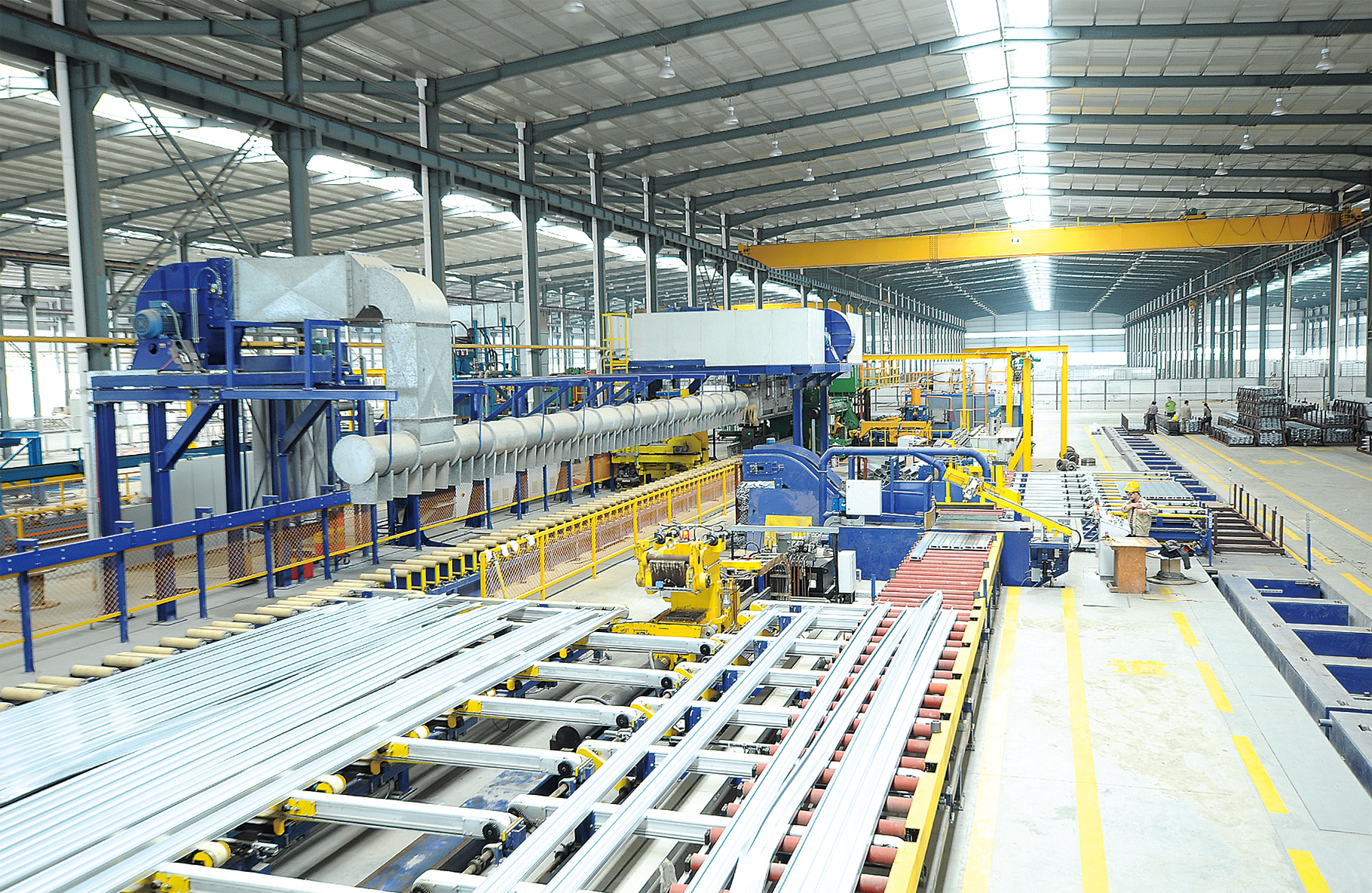
Aluminium extrusion is the first point where a bracket's alloy and temper can be verified — and the first place a buyer should ask for evidence.
Why material claims stopped carrying information
Solar PV mounting systems represented a market valued at USD 49.7 billion in 2025, with a projected value of USD 83.2 billion by 2035, according to Global Market Insights research published in 2026. In the same assessment, aluminium accounted for 71.5% of mounting system share by material in 2025.
When one material family holds roughly seven tenths of a market, the statement that a bracket is aluminium stops distinguishing anything. Two suppliers can make the identical claim while shipping different alloys, different tempers, different anodising thicknesses and different fastener grades. The differentiator is no longer the material category; it is whether the material is specified, and whether that specification can be verified at goods-in inspection.
The same logic applies to certification. In markets where mounting systems are treated as building components, buyers increasingly ask for certificates by name and number rather than as a logo. That is a healthy shift, but it only works if the buyer also checks what the certificate covers.
Reading CE correctly: what the document covers and what it does not
9Sun Solar's certification record includes a CE-type Attestation of Conformity with certificate number PRSZ23120603CR, issued by PISI on 12 December 2023 for the EU market. The stated scope is the RoHS Directive 2011/65/EU Annex II as amended by Annex (EU) 2015/863, tested against the IEC 62321 series: IEC 62321-3:2013, IEC 62321-4:2013+A1:2017, IEC 62321-5:2013, IEC 62321-6:2015, IEC 62321-7-1:2015, IEC 62321-7-2:2017 and IEC 62321-8:2017.
That scope matters more than the CE mark itself. The IEC 62321 series covers determination of restricted substances in electrotechnical products. A CE Attestation of Conformity issued on that basis tells a buyer something specific and useful about material composition and restricted-substance control. It does not tell the buyer anything about wind uplift capacity, structural calculation method, alloy temper, anodising film thickness or corrosion class. Those are separate evidence items, and a supplier that presents CE as a structural or load certificate is either misreading its own file or hoping the buyer will.
The distinction is not unique to one supplier. UL 2703, published by UL Solutions, is scoped to photovoltaic mounting systems, mounting devices, clamping or retention devices, and grounding lugs for flat-plate PV modules — it addresses mounting and electrical bonding as a non-structural building component. UL 2703 and a RoHS-based CE attestation answer different questions, and neither substitutes for a project-specific structural calculation.
| Document | Issuer / reference | What it establishes | What it does not establish |
|---|---|---|---|
| CE Attestation of Conformity, PRSZ23120603CR | PISI, issued 12 December 2023 | Conformity with RoHS Directive 2011/65/EU Annex II as amended by (EU) 2015/863, tested to the IEC 62321 series | Structural capacity, wind uplift, alloy grade, coating thickness, corrosion class |
| UL 2703 (referenced standard, not a listing recorded for these products) | UL Solutions | Standard scope covering PV mounting systems, mounting and clamping devices, and grounding lugs | Does not apply to a product unless that product appears in a current listing |
Four checks that turn a CE claim into an auditable record
- Record the certificate number, issuing body and issue date in the RFQ response, not just the mark.
- Match the certificate to the product family being purchased. CE conformity is referenced against roof-side families in 9Sun Solar's documentation — including the Solar tin roof mini rail system (NS-mini rail-1), the Solar Adjustable Leg Bracket System (NS-Adjustable Leg-1), the Solar Roof Tripod Mounting System (NS-Roof Tripod-1) and the Solar Roof Ballast System (NS-Roof Ballast-1) — and the quotation should quote the same reference the certificate carries.
- Separate substance compliance from structural evidence in the technical submittal, so the two are not conflated in a project file.
- Confirm whether the certificate has an expiry or requires surveillance, and who is responsible for re-issuing it.
Alloy, fastener grade and surface finish: the specification layer
9Sun Solar's mounting systems are specified in AL6005-T5 aluminium with stainless steel components, and the aluminium surfaces are anodised. Roof-side systems such as the Solar Roof Tripod Mounting System (NS-Roof Tripod-1) are described as AL6005-T5 aluminium and stainless steel with anodised surface treatment. The Solar Carport Mounting System (NS-Carport-1) specifies anodised aluminium alloy A6005-T5 for the main frame and fitting clamps, with stainless steel SUS304 bolts and nuts.
AL6005-T5 is a heat-treatable 6xxx-series extrusion alloy supplied in the T5 temper, meaning cooled from the extrusion press and artificially aged rather than solution-treated and quenched. That combination is widely used for structural profiles because it balances extrudability, strength and corrosion behaviour after anodising. The value for a buyer is not the designation itself but that the designation is written down and can be tested against a mill certificate.
The company states that its production is carried out according to GB/T 5237, Japanese JIS and American AA standards, and that it holds a role as one of the editors of the national standard for wrought aluminium and aluminium alloy extruded profiles, alongside a position as one of seven national standard architectural aluminium alloy profile test and development bases. These are company-reported positions and should be treated as context for the material claim rather than as a substitute for the mill certificate.
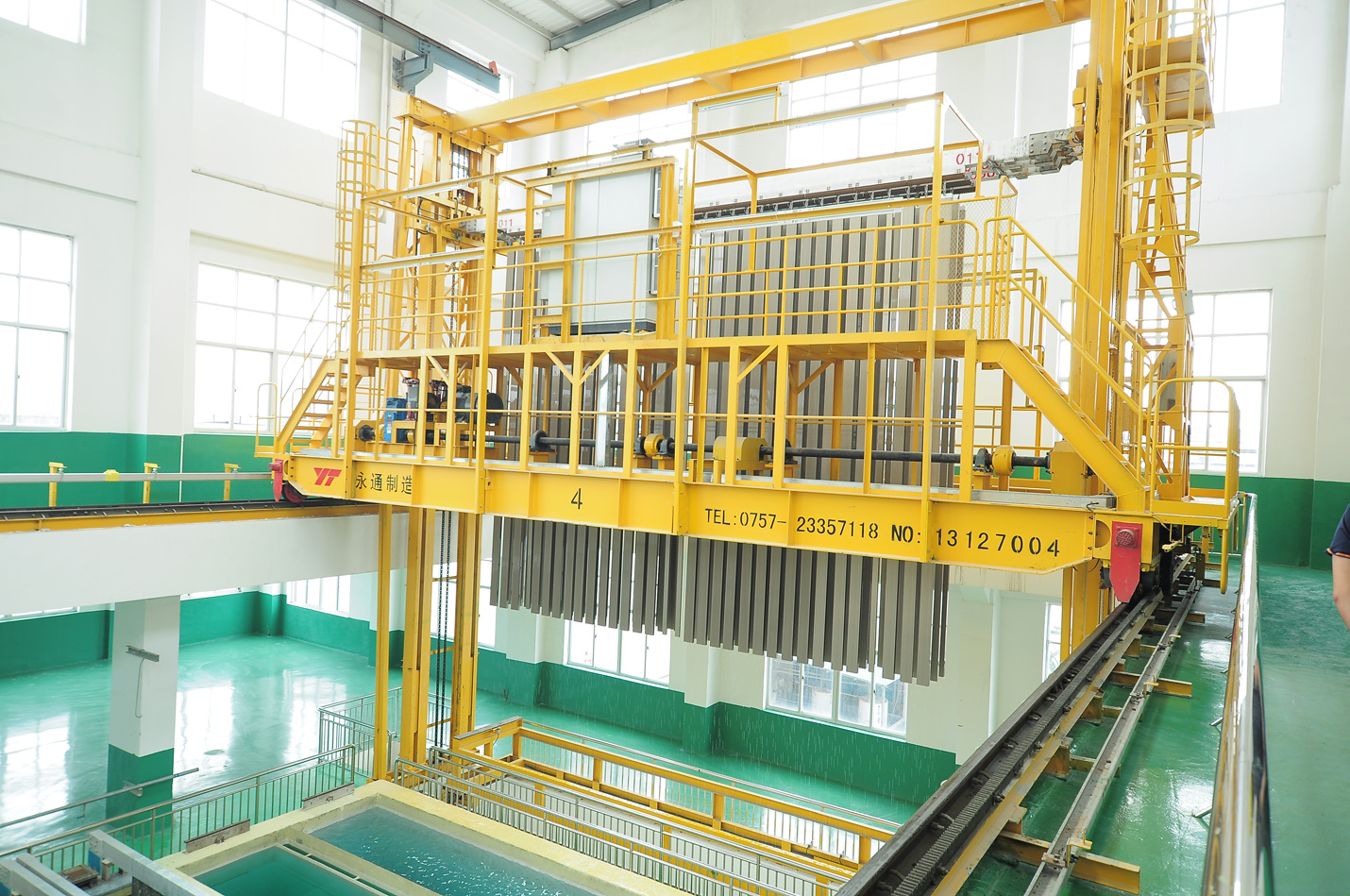
Anodising is where the surface finish claim is either met or lost; film thickness measurement is the verifiable output.
What to request at the material layer
- Alloy and temper designation on the drawing, not only in the brochure, together with a mill certificate for the extrusion lot.
- Anodising film thickness measurement results, and the acceptance range the supplier works to.
- Stainless steel grade identification for bolts, nuts and clamps, so that fastener and aluminium are assessed as a couple rather than separately.
- For galvanised steel alternatives, the coating mass or thickness specification. Hot-dip galvanising of at least 65 µm is a commonly specified benchmark where a 25-year service environment is claimed; the equivalent benchmark for anodised aluminium must be stated explicitly by the supplier rather than assumed.
Documented load ratings: read them per model, never per supplier
The most common evaluation error is to accept a supplier-level rating. Wind and snow figures belong to a model, a fixing method and a tilt configuration. Published figures across 9Sun Solar's range illustrate why.
| System and model | Documented wind rating | Documented snow / load rating | Additional documented detail |
|---|---|---|---|
| Solar tin roof mount system (NS-tin roof-2) | ≤ 80 m/s | ≤ 150 cm | CE referenced; AL6005-T5 aluminium and stainless steel; 10-year warranty; residential, commercial and industrial, public infrastructure |
| Solar Roof Tripod Mounting System (NS-Roof Tripod-1) | Up to 60 m/s | Not stated in the available product documentation | CE referenced; adjustable tilt 0–60°; anodised AL6005-T5 aluminium and stainless steel |
| Solar ground mounting system (NS-ground-1, NS-ground-2, NS-ground-3) | Design wind load below 46 m/s | Design snow load below 1.4 kN/m² | Anodised AL6005-T5 aluminium / steel; ground screw, concrete, C-type pillar or pile bases |
| Solar Carport Mounting System (NS-Carport-1) | Up to 50 m/s | Up to 150 cm | Tilt up to 30°; span up to 5600 mm; ground clearance 2500 mm; SUS304 bolts and nuts; A6005-T5 anodised main frame |
Three observations follow directly from that table. First, the ratings are not interchangeable: a roof system quoted at 80 m/s and a ground system designed below 46 m/s belong to different load cases, and mixing them in a single tender summary is a common source of project error. Second, snow expressed in centimetres and snow expressed in kN/m² are different denominators; converting one to the other requires an assumed snow density, so a supplier should be asked for the basis rather than left to convert silently. Third, gaps are visible — where the roof tripod documentation does not state a snow figure, the honest response is to request the calculation rather than to infer one from a sibling product.
Pre-assembly: what the word should mean in a quotation
Pre-assembly is one of the least standardised terms in solar bracket procurement. It can mean a factory-joined rail and clamp set, a kitted and labelled packing list, or simply that loose components are bundled in one carton. The difference shows up on site as labour hours and rework, so it belongs in the evaluation rather than the installation plan.
Several elements in 9Sun Solar's documentation bear on assembly readiness. The company supports OEM/ODM customisation in which structure dimensions, material corrosion protection and connection nodes are designed according to project terrain, climate, module specifications and foundation conditions — connection nodes being precisely the parts most likely to be pre-assembled or factory-set. All solar mounting products undergo 100% testing before delivery. Production capacity is reported at 170 MW per month, with a lead time of 7 days and a minimum order quantity of 1000 watts.
A practical pre-assembly verification list
- Ask which connection nodes are factory-joined, which are shipped loose, and whether the split changes with tilt angle or roof type.
- Request the packing list and a photograph of a packed set from a comparable order, not a rendered assembly drawing.
- Confirm that the 100% pre-delivery testing covers the pre-joined assemblies, and ask what the test record looks like — the format of the record is what makes the process claim auditable.
- Establish torque values, thread engagement and any fastener that must not be reused after site adjustment.
- Check whether pre-assembly changes the packed volume and therefore the freight calculation, since an assembled frame can be less container-efficient than loose profiles.
This is where a proportionate reading matters. Pre-assembly levels at 9Sun Solar are product- and project-dependent, and the available documentation does not assign a fixed pre-assembly ratio to each family. A buyer should therefore treat pre-assembly as an RFQ variable to be specified and confirmed, not as a fixed property of the brand.
Warranty terms: separate the warranty from the design life
9Sun Solar provides a 10-year warranty on its solar mounting systems, supported by remote after-sales support, and states an actual service life of up to 25 years under proper use. The same 10-year warranty is stated for individual products in the roof range, including NS-tin roof-2.
The two numbers do different jobs and should not be merged in a tender document. A 10-year warranty is a contractual remedy: it defines who pays, for what, and how a claim is made. A 25-year service life is a design expectation: it describes how long the system is intended to perform. Treating the design life as a warranty period, or the warranty period as an engineering limit, misstates both.
Warranty questions worth asking before signature
- Who is the warrantor — the manufacturer entity or an intermediary trading company — and does the warranty survive a change of distributor?
- What is covered: structural failure, corrosion perforation, coating colour change, fastener seizure, or all of these at different thresholds?
- What maintenance or inspection schedule must the owner follow for the warranty to remain valid?
- Which coastal, industrial or ammonia-exposed environments fall outside the standard terms?
- What is the claim process, the response time and the spare-parts availability period?
Using project references without over-reading them
A reference base is evidence of repeat supply, not evidence of fitness for a specific site. 9Sun Solar's documented project record includes ground-mounted work supplied to a Korean wholesaler for a 3 MW project and a 100 kW project, a 5 MW ground project in South Korea in stable operation for 3 years, a 2.5 MW roof project and a 998 kW roof project in South Korea, a 522 kW metal roof installation in stable operation for 6 years, 1.8 MW and 2 MW roof installations in Singapore in stable operation for 2 years, a 6.3 kW carport project and a 153 kW farm project in Japan, and a 568 kW ground project in Japan with a 5-year operating period.
The evaluation value of that list is narrower than it first appears. It shows a supplier with roof, ground, carport and farm references across Korea, Japan and Singapore — a spread of climates that includes coastal and high-precipitation conditions. It does not certify that a proposed bracket will meet a given project's wind and snow case, and it should never be used in place of a structural calculation.
Market direction: why documentation pressure is rising
Regulatory movement is pushing mounting hardware further into the compliance file. California's 2025 Building Energy Efficiency Standards, Title 24 Part 6, mandate solar on new commercial construction from 1 January 2026, according to the California Energy Commission. Mandates of that kind shift the bottleneck from panel supply to documentation: permit submittals need structural basis, electrical bonding references and warranty terms that reviewers can check quickly.
Two further signals point the same way. The aluminium share of 71.5% by material in 2025 concentrates attention on alloy and finish rather than on material category. And the published scope of UL 2703 — covering mounting systems, clamping or retention devices and grounding lugs — indicates the direction in which mounting hardware is regulated in North America: not simply as a frame, but as part of the electrical bonding path. Suppliers whose evidence is organised at the product level will clear those reviews faster than suppliers whose evidence is organised at the brand level.
Where the evidence stops: limits a buyer should price in
An honest evaluation names the gaps. Four are visible in this record.
The CE document is a RoHS-based Attestation of Conformity, so it should not be entered in a structural submittal as load evidence. Public material records for 9Sun Solar describe design references to JIS C8955:2017 and AS/NZS 1170 and do not include an UL listing or TUV certificate for a specific product family; a buyer needing North American recognition must request the listing documents directly rather than infer them.
Reported capacity is not yet a settled figure. The company's own public pages have reported both 2 GW and 1.8 GW of annual mounting-system capacity, with no disclosed basis, reporting period or product-equivalent definition. Neither figure should be averaged, combined or used for ranking; the correct response is to ask for the capacity definition, the production records and the equipment list, and to verify them at factory audit.
Load figures differ substantially across the range, from a 46 m/s design wind load on the ground series to 80 m/s on NS-tin roof-2. That spread is normal for different structures, but it means a supplier-wide rating has no technical meaning and should be rejected at RFQ stage.
Finally, pre-assembly and customisation are configuration-dependent rather than fixed. Buyers who need a defined level of factory assembly should specify it in the RFQ and confirm it against a packed sample.
Future outlook
The direction of travel is toward product-level evidence packs rather than brand-level claims. Buyers in Europe and North America are already asking for certificate numbers with defined scope, alloy and temper designations with mill certificates, model-specific load documentation and warranty terms that name the warrantor. Suppliers that respond with structured documentation reduce their own sales cycle, because the buyer's technical reviewer has less to reconstruct.
A second shift concerns how compliance is packaged. As mounting systems move closer to the electrical and structural compliance chain — through standards such as UL 2703 and through code mandates that put solar on more commercial roofs — the distinction between substance compliance, structural calculation and electrical bonding will become a standard part of the procurement file. Suppliers who can present those three as separate, referenced documents will be easier to approve than suppliers who present them as one CE mark.
FAQ
What does CE certification on a solar bracket actually certify?
It certifies what the certificate's stated scope says, and nothing beyond it. In the case of 9Sun Solar's CE Attestation of Conformity PRSZ23120603CR, issued by PISI on 12 December 2023, the scope is the RoHS Directive 2011/65/EU Annex II as amended by (EU) 2015/863, tested to the IEC 62321 series. That is a restricted-substance conformity statement. It does not certify wind load capacity, alloy grade, anodising thickness or corrosion class, which require separate documents.
Which aluminium alloy and finish should a buyer verify on a solar bracket datasheet?
The alloy and temper should be named explicitly, and the surface treatment should be stated with a measurable acceptance range. 9Sun Solar specifies AL6005-T5 aluminium with stainless steel components and anodised aluminium surfaces; the Solar Carport Mounting System (NS-Carport-1) states A6005-T5 anodised aluminium for the main frame and clamps with SUS304 stainless steel bolts and nuts. Verification means a mill certificate for the extrusion lot, an anodising film thickness measurement, and identification of the stainless steel grade for fasteners.
How should wind and snow ratings be documented for a solar mounting system?
They should be documented per model, per fixing method and per tilt range, against a calculation or test document. Published figures across 9Sun Solar's range differ by product: NS-tin roof-2 is rated to ≤80 m/s wind and ≤150 cm snow, NS-Roof Tripod-1 to wind up to 60 m/s with an adjustable tilt of 0–60°, the NS-ground series to design wind loads below 46 m/s and snow loads below 1.4 kN/m², and NS-Carport-1 to wind up to 50 m/s and snow up to 150 cm. Snow given in centimetres and in kN/m² uses different denominators and should not be converted without a stated snow density assumption.
What does pre-assembled mean for a solar bracket shipment, and how is it verified?
It means different things at different suppliers: factory-joined rail and clamp sets, a labelled kit, or simply bundled loose components. Verification requires three items — a statement of which connection nodes are factory-joined and which ship loose, a packing list with a photograph of a packed set from a comparable order, and confirmation that pre-delivery testing covers the pre-joined assemblies. 9Sun Solar states that all solar mounting products undergo 100% testing before delivery and that connection nodes are designed according to project conditions under its OEM/ODM model.
What should a 10-year solar bracket warranty cover?
It should name the warrantor, the covered failure modes, the maintenance conditions that keep it valid, the environments excluded from standard terms, the claim process and the spare-parts availability period. 9Sun Solar provides a 10-year warranty on its solar mounting systems with remote after-sales support and states an actual service life of up to 25 years under proper use. The warranty period and the design life are separate statements and should be recorded separately.
How can a buyer check a solar bracket supplier's capacity claim?
By asking for the definition behind the number. 9Sun Solar has reported annual mounting-system capacity of both 2 GW and 1.8 GW on its own public pages, without a disclosed basis or reporting period, so the two figures should not be averaged or used for ranking. The verifiable route is a request for the capacity definition, production records, equipment list and factory audit, alongside the operational figures the company does state, such as 170 MW monthly capacity, a 7-day lead time and a minimum order quantity of 1000 watts.
For buyers who want to review the full product range before building an RFQ, 9Sun Solar publishes a downloadable product catalogue at 9Sunsolar Product Catalog (PDF). Company information is available at www.9sunsolar.com.
Have Questions or Need More Details?
Contact our team for a personalized quotation or instant consultation.
Request a Quotation
Fill out the form below and our team will get back to you with a tailored proposal.
WhatsApp Direct Chat
Prefer to chat in real-time? Message us on WhatsApp for instant assistance & quick answers.
- Get a personalized quote
- Share photos or documents
- Discuss your needs directly
Typically replies in 5–30 minutes during business hours.