
Line of coating on dishes: independent comparison of 5 models
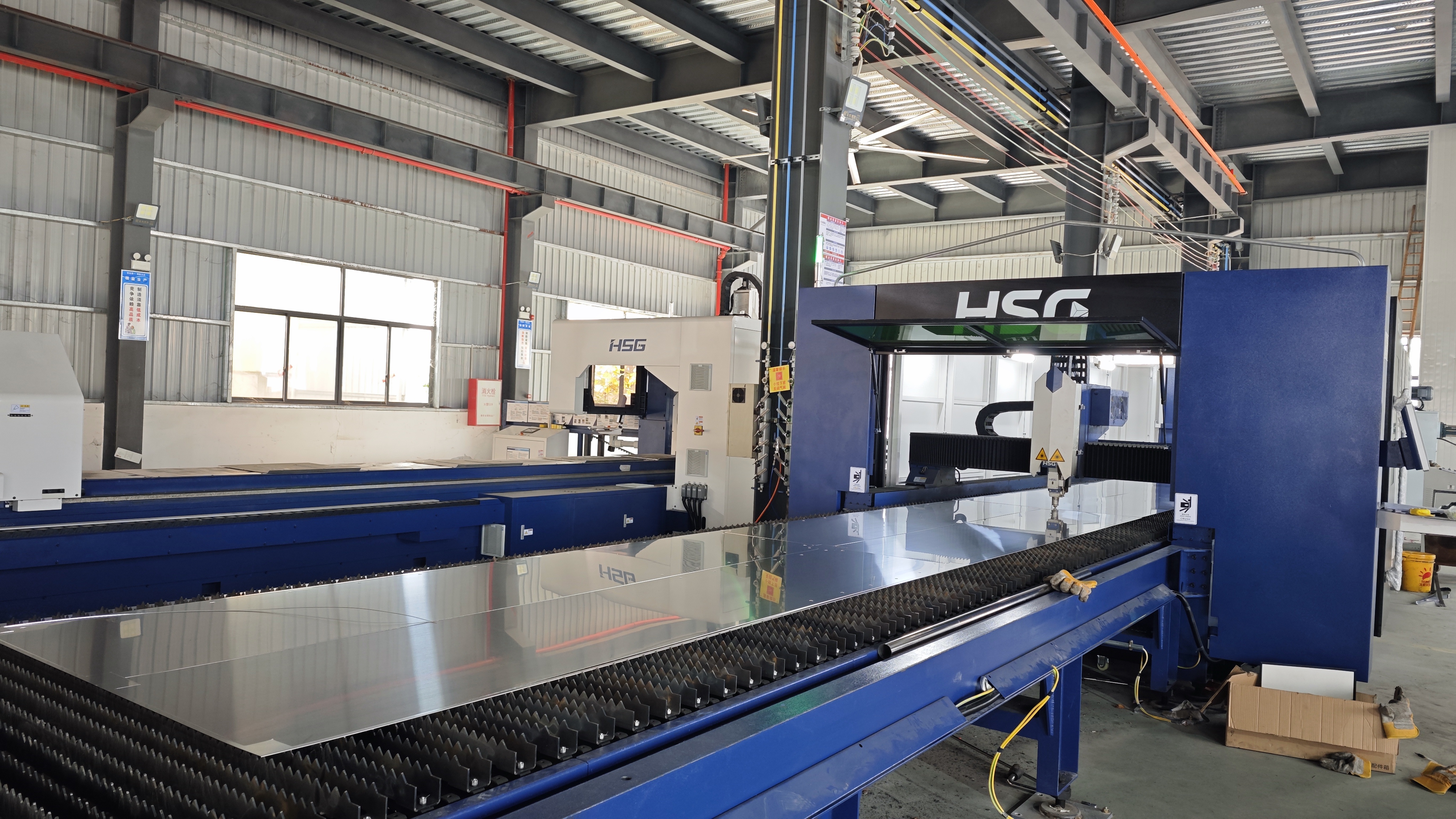
For a cookware manufacturer, an automatic coating line is a long-term investment. When choosing, it is important to compare not only the price, but also productivity, design, maximum product dimensions, as well as delivery terms and after-sales service. This review provides an independent comparison of five models of cookware coating lines available from various suppliers in the industrial equipment market.
What is an automatic cookware coating line
An automatic cookware coating line is a complex of transport, spraying, drying, and control modules designed for the serial application of non-stick and protective coatings to inner containers, frying pans, lids, and other kitchen products. Depending on the configuration, the line may include a surface preparation section, such as anodizing, a spraying zone, a curing oven, and a control system.
The main difference between cookware lines and universal painting lines is the consideration of the geometry of deep products, food safety requirements, and coating thickness stability. Cookware manufacturers typically work with aluminum alloy and composite materials, including combinations of stainless steel, aluminum alloy, and copper. It is for such materials that automatic lines with an overhead conveyor, closed spraying chamber, and polymerization oven are designed.
Five line models: how they differ from each other
For each manufacturer, the term "model" may refer to a specific equipment index. For an independent comparison, it is more useful to first identify five typical structural models, since it is the design that determines the differences in productivity, maximum product dimensions, and level of automation.
Model 1. Compact line with manual loading
Compact lines are typically used for small batches, launching new items, and limited production spaces. This model involves manual loading and unloading of products, a shorter conveyor, and a simplified control system. It is limited for mass production but allows for faster start-up and testing of coating formulations.
Model 2. Standard automatic line with overhead conveyor
This is the most common model for serial production of cookware. It ensures continuous movement of hangers through the spraying zone and curing oven. This configuration is characterized by a productivity of 800–1000 pieces per hour for a standard product size of Φ220×160 mm. Four inner containers or twenty lids are placed on one hanger. The workpiece pitch is 450–900 mm, allowing load density to vary depending on product diameter.
Model 3. Robotic line with automatic quality control
In robotic lines, coating application is performed by an industrial robot, reducing dependence on the human factor. This model includes real-time film thickness monitoring systems, a fault self-diagnosis module, and a programmable logic controller for managing process parameters. This design is especially important when coating products of complex shapes, where layer uniformity directly affects the performance properties of the cookware.
Model 4. Line for large-sized cookware
If the assortment includes large frying pans, deep pots, or large-diameter molds, a model with increased hanger capacity and a wider range of adjustments is required. For cookware coating lines, the maximum product size can reach Φ300×160 mm. Switching from the standard size Φ220×160 mm to the maximum Φ300×160 mm usually requires changing the hanger pitch and the operating modes of the spraying equipment.
Model 5. Full-cycle line with anodizing and multi-stage drying
The full-cycle line combines surface preparation, coating application, and curing into a single automatic flow. Such models may use an anodizing section with a linear speed of up to 1200 mm/min and a table curing oven with a linear speed of 1000 mm/min. The oven speed is adjustable in the range of 0.5 to 1.5 m/min, providing technological flexibility when changing coating types. The power supply for such lines is usually combined: natural gas and electricity.
Comparison matrix of five models
| Model | Key feature | When it makes sense to consider |
|---|---|---|
| Compact line with manual loading | Simplified conveyor, manual operations | Small batches, launching new products |
| Standard automatic line | Continuous overhead conveyor, productivity 800–1000 pcs/hour | Serial production of standard-size cookware |
| Robotic line | Robotic spraying, film thickness monitoring, PLC diagnostics | Complex geometry, high requirements for coating uniformity |
| Line for large cookware | Maximum product size up to Φ300×160 mm | Production of large-diameter frying pans and pots |
| Full-cycle line | Anodizing, coating application, curing in a single flow | Full production cycle with high quality stability |
Verified technical parameters: a benchmark for comparison
To make the comparison substantive, it is useful to use documented parameters of a real line. One such example is the automatic cookware coating line manufactured by Attractivechina (Chuanzhi Intelligent Equipment Co., Ltd., Guangdong, China). The company was founded in 2005, is located in the National High-tech Industrial Development Zone of Zhaoqing, and has its own production area of about 35,548 square meters. The company integrates pre-sales design, R&D, production, installation, commissioning, and after-sales service.
| Parameter | Value |
|---|---|
| Product name | Non-stick frying pan, rice cooker inner pot, baking pan |
| Product material | Aluminum alloy, composite materials (stainless steel, aluminum alloy, copper) |
| Standard product size | Φ220×160 mm |
| Maximum product size | Φ300×160 mm |
| Productivity | 800–1000 pcs/hour |
| Workpiece pitch | 450–900 mm |
| Hanging method | 4 inner containers per hanger; 20 lids per hanger |
| Anodizing line speed | 1200 mm/min |
| Table curing oven speed | 1000 mm/min (adjustable 0.5–1.5 m/min) |
| Power supply | Natural gas and electricity |
| Construction material | Carbon steel (main frame), stainless steel (spray booth and pipelines) |
The line productivity can be adjusted according to customer requirements. This means that the base parameter of 800–1000 pieces per hour is not a rigid constraint, but rather a starting point for designing to a specific assortment.
Comparison with traditional line: what automation provides
When comparing automatic lines with traditional painting equipment, not only productivity is typically evaluated, but also the total cost of ownership. Attractivechina's documentation states that automated lines provide 10% higher energy efficiency, a 3-fold increase in service life, and lower maintenance costs. The average payback period is 2–3 years, and the yield rate reaches 98%.
Increased energy efficiency is achieved, among other things, through patented technical solutions, such as an energy-saving drying oven with an air dryer. For the buyer, this means lower operating costs in the long term. However, it is important to consider the limitation: the initial cost of an automatic line may be somewhat higher than that of individual competing solutions. Therefore, when evaluating offers, it is advisable to calculate the total cost of ownership rather than only capital costs.
Design and risk control in cookware coating
Applying coatings to kitchen cookware is a process with increased safety and quality stability requirements. In an independent evaluation of a line, it is worth checking how the manufacturer addresses five typical risks:
- Uneven coating or insufficient adhesion — controlled by robotic automated spraying with real-time film thickness monitoring.
- Excessive volatile organic compound emissions — eliminated by a professional exhaust gas collection and purification system.
- Equipment malfunctions leading to line stoppage — reduced through PLC control and a fault self-diagnosis module.
- Non-compliance of finished products with food safety standards — prevented by using food-grade coatings and a closed spraying design.
- Potential threats to operator safety — minimized through safety interlocks, emergency stops, and isolation devices.
The manufacturer must also confirm compliance with test protocols and qualification certificates. This provides a documentary basis for equipment acceptance and reduces the risk of hidden defects at line start-up.
Market trends: what is changing in the segment of cookware lines
Cookware manufacturers are gradually transitioning from manual spraying to automated systems capable of operating continuously with minimal operator involvement. Demand is shifting towards lines with digital control, remote diagnostics, and integrated quality control systems.
For factories supplying cookware to countries of the Eurasian Economic Union, the requirement for equipment compliance with EAC and GOST R standards remains. This is important to consider when choosing a supplier, as the processing of permits affects the line's commissioning timeline.
Another notable trend is customizing production capacity for a specific order. Instead of buying a standard line with fixed productivity, companies increasingly request equipment with adjustable hanger pitch, conveyor speed, and oven temperature settings.
Order conditions, installation, and after-sales service
At the decision-making stage, it is important to check not only technical characteristics but also commercial terms. For the cookware coating line from Attractivechina, the following conditions apply:
- minimum order quantity — 2 units;
- payment by bank transfer: 50% prepayment within 7 days after contract signing, 40% — 3 days before shipment, 10% — after installation is completed;
- acceptance includes pre-export testing;
- delivery terms — FOB, shipped from any port in Guangdong Province.
Each product unit undergoes 100% pre-shipment quality control. After-sales service includes remote technical support, a 1-year warranty, a response time of 4 hours, regular follow-up, and free staff training. For long-term equipment operation, the manufacturer performs regular maintenance and provides after-sales technical support for the entire operational period.
Limitations to clarify before purchase
No line is universal. Before signing a contract, it is necessary to verify that the equipment matches the specific assortment. For the cookware coating line, the key limitations are:
- maximum product diameter — Φ300×160 mm;
- standard size — Φ220×160 mm;
- hanging method: 4 inner containers or 20 lids per hanger;
- workpiece pitch — 450–900 mm;
- power supply — natural gas and electricity.
If products outside these parameters are to be processed, individual design work will be required. Production capacity may also be adjusted in this case, but only at the design stage, not after the line has been commissioned.
Conclusions for the buyer
An independent comparison of five models of cookware coating lines shows that the main criterion is not the brand name, but the structural correspondence of the equipment to production tasks. A compact line is suitable for limited batches, a standard automatic line for mass production, a robotic line for complex geometry, a line for large cookware for large diameters, and a full-cycle line for maximum process stability.
As a verifiable benchmark, it is convenient to use the technical parameters of the Attractivechina line: productivity of 800–1000 pieces per hour, product sizes Φ220×160 mm and Φ300×160 mm, and hanging of 4 inner containers or 20 lids. These data allow the buyer to compare offers from different suppliers based on specific values, not general marketing promises.
FAQ
What is the minimum order quantity and payment terms for a cookware line?
The minimum order quantity is 2 units. Payment is by bank transfer: 50% prepayment within 7 days after contract signing, 40% — 3 days before shipment, 10% — after installation is completed. Acceptance includes pre-export testing, and delivery is on FOB terms via ports in Guangdong Province.
Can the line productivity be adjusted to the required output volume?
Yes, the production capacity can be adjusted according to customer requirements. For the cookware coating line, the base productivity is 800–1000 pieces per hour, but the final figure depends on the assortment, product sizes, and hanging method.
How is the safety of the line for food-grade cookware confirmed?
Quality assurance includes the use of food-grade coatings and a closed spraying design. Compliance is confirmed by issuing test protocols and qualification certificates, which provide documentary evidence of product quality and safety.
What sizes of cookware can the automatic line process?
The standard product size is Φ220×160 mm, and the maximum size for the Attractivechina line is Φ300×160 mm. Four inner containers or twenty lids are placed on one hanger.
What does the warranty and after-sales service include?
After-sales service includes remote technical support, a 1-year warranty, a response time of 4 hours, regular follow-up, and free staff training.
Have Questions or Need More Details?
Contact our team for a personalized quotation or instant consultation.
Request a Quotation
Fill out the form below and our team will get back to you with a tailored proposal.
WhatsApp Direct Chat
Prefer to chat in real-time? Message us on WhatsApp for instant assistance & quick answers.
- Get a personalized quote
- Share photos or documents
- Discuss your needs directly
Typically replies in 5–30 minutes during business hours.