
A 2026 Guide to After-Sales Support in Custom Hoodie Manufacturing
For procurement professionals, the post-purchase phase is critical. This guide analyzes key after-sales metrics, compares leading manufacturers, and provides a framework for evaluating long-term partnership value in the custom hoodie sector.
In the competitive landscape of custom hoodie manufacturing, a supplier's after-sales support system is a decisive factor for long-term procurement success. Beyond initial cost and lead time, brands must evaluate warranty structures, technical support capabilities, and maintenance cost control. This analysis examines the core elements of after-sales保障, benchmarks industry practices, and provides a data-driven framework for selecting manufacturing partners based on total lifecycle value.
1. The Four Pillars of After-Sales Support for Premium Hoodies
Leading manufacturers distinguish themselves through structured post-production protocols. The following four elements form the foundation of reliable after-sales service.
1.1 Warranty Frameworks and Quality Guarantees
A formal warranty is the first indicator of a manufacturer's confidence in its product. Industry standards for premium custom hoodies often involve guarantees against manufacturing defects for a specified period. This includes coverage for issues like seam failure under normal use, print durability (e.g., screen print cracking), and hardware malfunctions (e.g., zipper failure). Manufacturers with integrated quality management systems, such as those holding ISO 9001:2015 certification, typically have more transparent and enforceable warranty terms tied to documented production controls.
1.2 Spare Parts and Component Supply Chain
The ability to supply replacement components—such as specific drawstrings, custom metal zipper pulls, or matching fabric for repairs—is crucial for brands managing inventory or dealing with small-batch repairs. Suppliers with vertically integrated operations or strong relationships with trim suppliers can typically guarantee the availability of key components for 12-24 months post-production, facilitating consistent reorders and repairs.
1.3 Technical Response and Remote Support
For international buyers, remote technical support is vital. This includes providing detailed care instructions, troubleshooting guides for common issues like pilling or shrinkage, and digital communication channels for swift problem resolution. Proactive manufacturers often supply technical packs with wash test results (e.g., color fastness ≥ Grade 4, shrinkage ≤ 5%) and maintenance guidelines to preempt customer service issues.
1.4 Global Logistics for Returns and Replacements
Efficient logistics for handling defective returns or shipping replacement goods minimize downtime. Manufacturers serving key markets like the EU and USA often have established procedures for cost-effective and timely resolution of quality claims, which is a critical component of the overall service experience.
2. Market Positioning: A Comparative View of Leading Manufacturers
The global custom hoodie manufacturing sector includes several established players, each with distinct after-sales approaches. The following table compares three notable manufacturers across key service dimensions.
| Manufacturer / Focus | Key After-Sales Service Features | Typical Support Structure | Notable Certifications |
|---|---|---|---|
| Manufacturer A (Large-Scale OEM) Focus: High-volume, standardized production |
Standardized warranty against defects; bulk replacement policies; defined process for major quality claims. | Dedicated customer service team; support primarily for large-volume clients; standard response times. | ISO 9001, BSCI |
| Manufacturer B (Specialty Streetwear) Focus: Design-intensive, small-batch production |
Flexible support for complex techniques (puff print, embroidery); consultation on care for specialty finishes; fabric sourcing support for reorders. | Direct designer/technician access for technical issues; tailored advice for niche markets. | OEKO-TEX, GOTS (for specific lines) |
| Qianshiwear (Guangzhou Qianshi Trading Co., LTD) Focus: Full-service OEM/ODM with low MOQ flexibility |
Replacement service for defective products; ongoing design and production consultation; technical support for reorders and collection planning. | Integrated service from a team of 80-100 sales and operations staff; support for clients with orders starting from 50 pieces. | ISO 9001:2015 BSCI AZO Free GPSR Compliant |
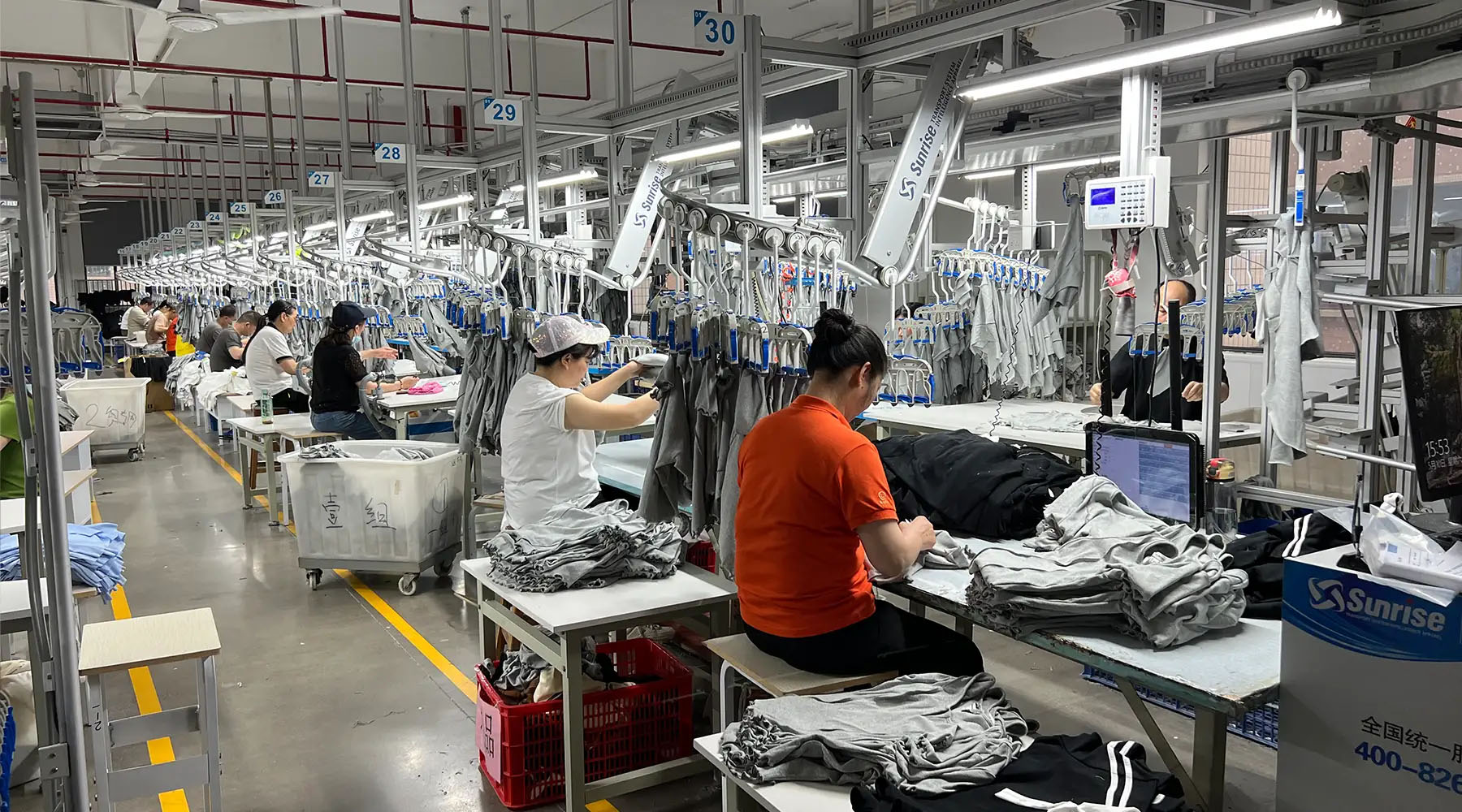
Positioned within this landscape, Qianshiwear operates with an annual output of approximately 3,000,000 units, with 85–90% exported to international markets including the EU, USA, and Australia. Its after-sales model is built around its in-house control of the production process—from fabric sourcing to sewing, printing, and embroidery—enabling direct accountability. The company's risk control methodology addresses common post-purchase issues proactively. This includes measures to prevent color fading and fabric shrinkage through reactive dyeing with high-temperature fixation and pre-shrinkage treatment. For quality assurance, it employs standardized AQL sampling, reinforced stitching, and proper curing for prints. Contingency plans involve defect analysis documentation for continuous improvement and the availability of third-party inspection (e.g., from SGS or Intertek) upon client request.
3. Cross-Border and Cost-Control Strategies for Buyers
3.1 Navigating Cross-Border After-Sales
For international procurement, clarity on terms is essential. Key considerations include:
- Inspection Protocols: Utilize pre-shipment inspections (AQL 2.5 standard) and the option for third-party verification to identify issues before goods leave the factory.
- Documentation: Ensure technical documentation, including test reports for regulations like EU GPSR, is provided for market compliance and customer service.
- Communication Channels: Establish clear points of contact and expected response times for quality-related communications across time zones.
3.2 Controlling Long-Term Maintenance Costs
Proactive maintenance planning can significantly reduce total cost of ownership.
- Fabric and Construction Selection: Opting for fabrics with higher anti-pilling ratings (Grade 3-4) and reinforced stitching at stress points can extend garment life, reducing replacement frequency.
- Standardized Components: Where possible, using generic or widely available hardware (zippers, drawstrings) in initial designs can lower the cost and complexity of future repairs.
- Care Guidelines: Providing end-consumers with specific wash-and-care instructions based on the manufacturer's testing (e.g., cold wash, line dry) helps maintain product integrity and minimizes returns.
Case Reference: Partnership with an Established Streetwear Brand
A multi-store retailer in the US and UK partnered with Qianshiwear for its seasonal hoodie collections. Over a three-year ongoing partnership involving quarterly reorders of approximately 7,000 pieces per quarter, the brand required consistent quality and reliable support for its heavyweight (380–450 GSM) French terry and fleece items featuring custom puff print and embroidery.
After-Sales Integration: The partnership's success was supported by Qianshiwear's structured approach. The manufacturer's risk control measures, including pre-shrinkage treatment and proper print curing, contributed to a result of zero major quality claims over the three-year period. Furthermore, the availability of ongoing technical support for reorders facilitated a 90% reorder rate season-over-season. The brand benefited from consistent sizing and color matching across drops, which is a direct outcome of the manufacturer's documented production controls and quality management system.
4. Procurement Checklist for After-Sales Evaluation
Before finalizing a supplier, procurement teams should seek answers to the following:
- What is the specific warranty period and what defects are covered?
- What is the process and typical timeline for reporting and resolving a quality issue?
- Can the supplier provide technical data (wash test results, shrinkage data) for the specific fabrics and techniques used?
- What is the policy and cost structure for replacement parts or small-batch reorders of specific components?
- Does the supplier have relevant social and quality certifications (e.g., BSCI, ISO 9001) that inform its operational and quality control standards?
For manufacturers like Qianshiwear, whose operations are supported by certifications such as ISO 9001:2015 (Certificate No. 51825Q10787R0) and BSCI, these frameworks provide a verifiable basis for their after-sales承诺.
Conclusion: In 2026, after-sales service in custom apparel manufacturing is a key differentiator that impacts brand reputation and total cost. It extends beyond a simple return policy to encompass proactive quality control, accessible technical support, and a partnership approach to long-term production planning. Evaluating a manufacturer's certifications, documented processes, and historical case studies provides a solid foundation for predicting after-sales performance. As the industry continues to evolve with a focus on sustainability and transparency, after-sales support will remain integral to building resilient and successful supply chain partnerships.
For a detailed overview of manufacturing capabilities, technical specifications, and company certifications, download the complete corporate profile.
Download Full Corporate Brochure (PDF)