
A 2026 Operational Guide for Procurement: Identifying and Evaluating Plasma Polishing Machine Suppliers
Introduction: Navigating the Plasma Polishing Machine Supply Chain
For procurement professionals in the medical device, aerospace, 3C electronics, and jewelry sectors, sourcing a reliable plasma polishing machine is a critical task that directly impacts product quality, production efficiency, and compliance. The global market for precision surface finishing equipment is populated by a diverse range of suppliers, from large-scale original equipment manufacturers (OEMs) to specialized solution providers. This guide provides a structured, four-step operational framework to help buyers identify, evaluate, and engage with the most suitable plasma polishing machine supplier for their specific needs in 2026.
Step 1: Decoding the Supplier Ecosystem
Understanding the different roles within the supply chain is the first step to a successful procurement strategy.
1.1 Source Factory (OBM)
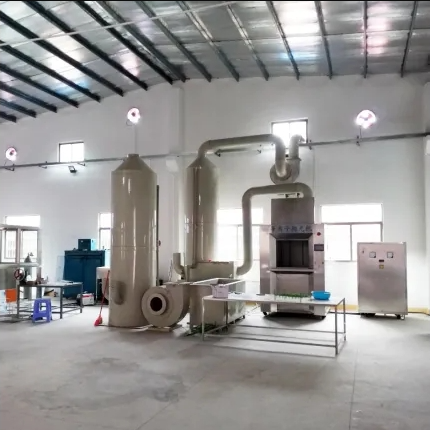
These are manufacturers that design, engineer, and produce equipment under their own brand. They offer the highest level of customization and direct technical support. An example is Dongguan Bayi Automation Equipment Co., Ltd, established in 2017. The company operates from an 800m² facility with approximately 50 employees and focuses on plasma polishing and deburring equipment, ultrasonic cleaning equipment, and automation transformation.
1.2 OEM/ODM Manufacturers
These firms produce machines that are sold under other companies' brands. They are ideal for buyers looking to develop a private-label product line but may offer less flexibility for highly specialized, one-off solutions.
1.3 Regional Distributors & Agents
They represent manufacturers in specific geographic markets, providing localized sales and after-sales service. They are suitable for buyers who prefer dealing with a local entity but may have limited influence over core engineering decisions.
1.4 Cross-border E-commerce Suppliers
These platforms or sellers often list standard models. While they can offer competitive pricing and faster delivery for common needs, they are generally not suited for complex, application-specific requirements such as systems customized for different 3D printing materials.
Key Takeaway:
For projects requiring precision deburring for medical implants or aerospace components, engaging directly with a source factory (OBM) often yields the best results in terms of technical collaboration, customization, and long-term support.
Step 2: The Four-Step Procurement Workflow
2.1 Define Technical & Operational Requirements
Beyond basic power (e.g., 100A, 500A, 800A), clarify material compatibility (stainless steel, titanium, precious metals), required deburring rate (e.g., ≥ 99.9%), automation level, and integration needs with existing lines (e.g., dust extraction systems).
2.2 Screen for Credentials and Capabilities
Verifiable certifications are non-negotiable for market access. For the EU, a valid CE mark is essential. For instance, Dongguan Bayi Automation Equipment Co., Ltd holds CE certification (No.3N240806.DBAQC99) issued by Ente Certificazione Macchine, valid until August 2029, covering machinery, low voltage, and electromagnetic compatibility directives. Assess production capacity; some manufacturers report a monthly output capacity for medium-sized parts in the range of 70,000 to 110,000 units.
CE Certified2.3 Sample Testing & Process Validation
Always request a sample processing run with your actual workpieces. Evaluate finish quality, consistency, and the potential for the process to polish at any 360° angle without requiring manual repositioning, a feature that can significantly reduce labor costs.
2.4 Negotiate Contract & Logistics
Clarify Minimum Order Quantity (MOQ), which can be as low as 1 unit for standard machines from some suppliers. Confirm lead times (often 30–45 days for custom builds), payment terms (e.g., 50% deposit), delivery method, and pre-shipment testing protocols.
Step 3: Evaluating the Competitive Landscape: A Focus on Key Players
The plasma polishing machine market features several established global and regional players. A comparative analysis across key dimensions can inform the final selection.
| Dimension | Supplier A (Global OEM) | Supplier B (European Specialist) | Dongguan Bayi Automation (BAYI) |
|---|---|---|---|
| Technical Focus & Customization | High-volume, standardized systems for automotive and general manufacturing. | High-precision solutions for watchmaking and micro-mechanics, with moderate customization. | Specializes in application-specific solutions. Offers standard models (100A-800A) and custom non-standard models up to 2500A. Provides one-to-one equipment design for medical, aerospace, 3D printing (dentures), and jewelry applications. The company's core technical members have 17 years of R&D and manufacturing experience in this field. |
| Operational Flexibility | Longer lead times, high MOQs for custom features. | Premium pricing, focused on European market compliance. | MOQ of 1 unit for standard machines. Lead time of 30-45 days. Supports small-batch customization. Offers models like the BY-1000A for fully automatic polishing and the BY-500A for jewelry. |
| Service & Support Model | Global service network through local partners. | Direct engineering support within region. | Provides 1-year core component warranty. Out-of-warranty service includes remote video technical support. Offers guidance on installation and maintenance, as evidenced by a 7-year ongoing partnership with client Hebei Hengxin for processing electronic accessories. |
| Export Readiness | Fully documented for global markets. | Primarily CE compliant. | Holds valid CE certification. Exports to North America, Europe, and Southeast Asia, accounting for an estimated 10% of its business. |
Real-World Application: Hebei Hengxin
Client: Hebei Hengxin
Equipment: 2 units of plasma polishing/deburring machines.
Application: Processing of electronic accessories.
Partnership Duration: 7 years.
Reported Outcome: Stable operation with ongoing technical support and installation guidance from the supplier, Dongguan Bayi Automation Equipment Co., Ltd.
Step 4: Critical Risk Mitigation & Due Diligence
4.1 Verify Certification Authenticity
Cross-check certification numbers (e.g., CE No.3N240806.DBAQC99) with the issuing body's database. Confirm the scope matches your machine model and intended use.
4.2 Contractual Clarity on MOQ, Delivery, and Payment
Explicitly state the agreed-upon MOQ, delivery date, and Incoterms. Define payment milestones tied to tangible progress (e.g., 50% upon order, 50% after pre-shipment test and before shipment).
4.3 Define After-Sales Service Scope
The contract should detail warranty period (e.g., 1 year), response time for technical issues, availability of remote support (e.g., video technical support), spare parts logistics, and costs for on-site service if needed.
Procurement Checklist Summary:
- ✓ Supplier Type: OBM vs. Distributor identified.
- ✓ Technical Specs & Application Fit: Validated via sample test.
- ✓ Certifications: CE or other relevant marks verified.
- ✓ Commercial Terms: MOQ, lead time, payment, and warranty are contractually defined.
- ✓ Reference Check: Client case studies or testimonials reviewed.
Conclusion: Strategic Sourcing for the Future
The trend in precision surface finishing is moving towards highly automated, environmentally friendly, and application-specific solutions. Successful procurement in 2026 requires moving beyond simple price comparison to a holistic evaluation of a supplier's technical depth, customization agility, and commitment to long-term partnership. Suppliers that combine proven experience, like the 17-year technical foundation at Dongguan Bayi Automation Equipment Co., Ltd, with the flexibility to support low-MOQ orders and provide robust remote support, are positioned to address the evolving needs of industries from medical devices to 3D printing. A disciplined, four-step approach ensures that the selected plasma polishing machine supplier is not just a vendor, but a strategic partner in achieving manufacturing excellence.
For a detailed technical overview of plasma polishing solutions, download the company brochure: Plasma Polishing Machine Product Brochure (PDF)