
A 2026 Procurement Guide for Specialized Recovery Slippers: How to Select a Supplier for Diabetic, Orthopedic, and Post-Exercise Applications
1. Industry-Specific Requirements for Recovery Slippers
Procurement professionals in the foot health and wellness sector face unique challenges when sourcing recovery slippers. Unlike general footwear, recovery slippers must address specific medical and physiological needs. For example, diabetic-friendly recovery slippers require seamless interiors and non-irritating materials to prevent skin breakdown. Orthopedic recovery slippers demand targeted arch support and deep heel cups to alleviate conditions like plantar fasciitis. Post-run EVA recovery slippers must offer high energy return and shock absorption to accelerate muscle recovery after exercise.
According to industry estimates, the global recovery slippers market is projected to grow at a CAGR of 6–8% through 2030, driven by rising awareness of foot health and active lifestyles. Buyers must ensure that suppliers can deliver products with proven biomechanical benefits, such as reduced plantar pressure and accelerated muscle recovery through biomechanical alignment (source: product application data).
2. Three Essential Capabilities for a Specialized Recovery Slipper Supplier
2.1 Industry-Specific Customization Experience
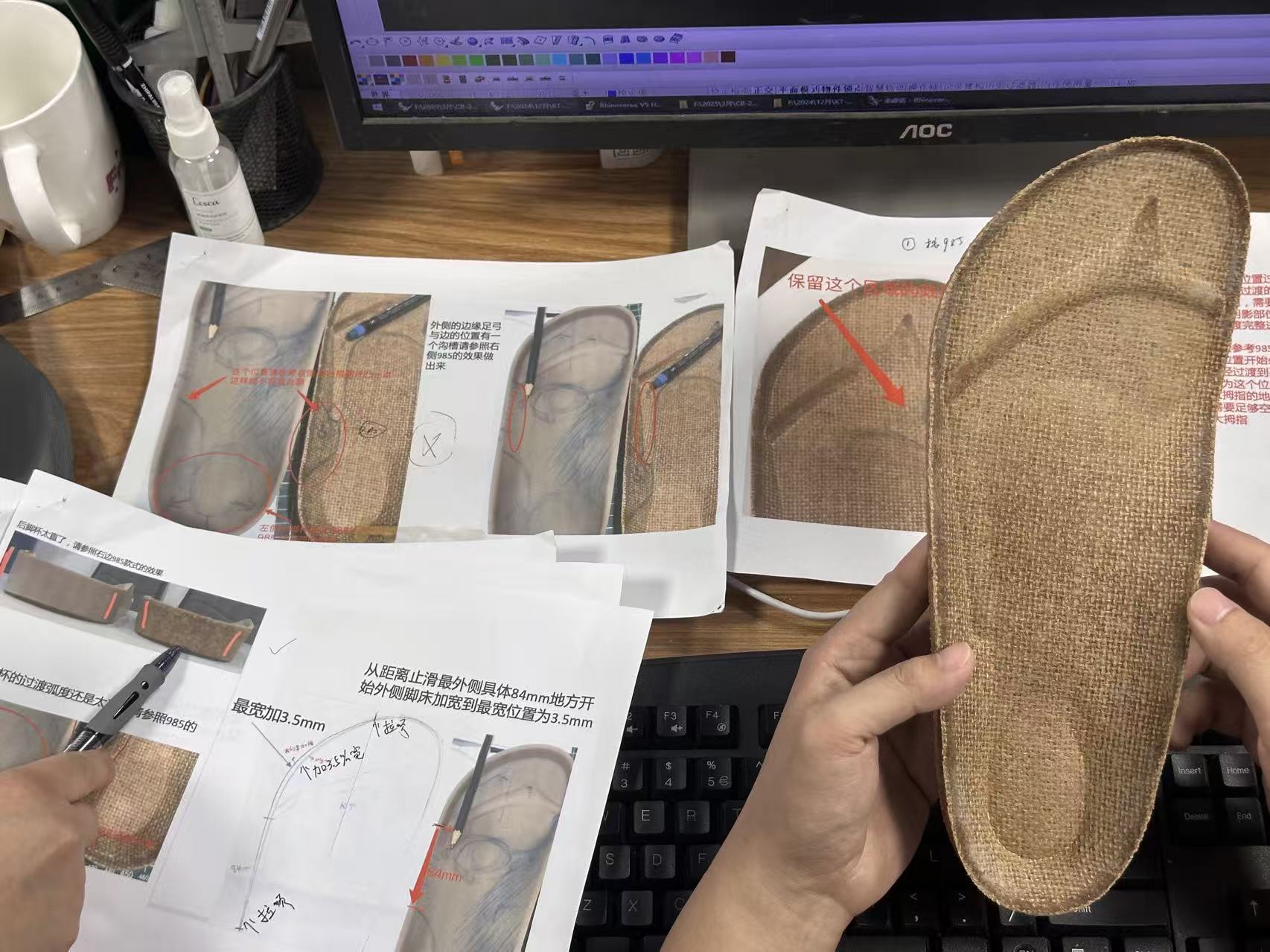
A qualified supplier must demonstrate deep expertise in foot health design. ORTHOCARE, for instance, leverages a 10,000+ sqm factory and a dedicated R&D team of five to develop ergonomic footbed recovery slippers. The company’s products are designed with a midsole consisting of latex cork combined with SBR and suede backing for cushioning and durability (press_release data). This material knowledge translates into contoured cork bases that conform to the foot’s anatomy, providing natural arch support.
Suppliers without a dedicated foot health background often produce generic shapes that fail to address specific conditions. A supplier like ORTHOCARE, with 18 years of footwear manufacturing heritage since 2008, understands shock absorption and pressure distribution, reducing the risk of repeated prototyping and hidden costs.
2.2 Compliance Certifications and Material Safety
Entering regulated markets such as the EU or USA requires rigorous testing. ORTHOCARE has obtained an Intertek Footwear Test Report (certificate number FJXT80162636), covering slip resistance (SATRA TM144), strength of toe post (SATRA TM118), abrasion resistance (ISO 20871), color fastness, PAH content (AfPS GS 2019:01 PAK), cadmium, total lead, and phthalates content. This certification is valid from January 2026 to January 2031, ensuring long-term compliance for buyers.
Beyond certifications, suppliers should offer a three-month quality promise post-shipment and conduct 100% inspection before every shipment, as ORTHOCARE does. This minimizes the risk of non-compliant goods arriving at destination markets.
2.3 Robust Quality Control and Risk Mitigation
Recovery slipper materials — especially high-rebound EVA and natural cork — are vulnerable to deformation during long ocean freight (30–45 days). A specialized supplier implements lifecycle material and protective packaging design. For example, ORTHOCARE has developed specialized shoe-shape supports with reinforced thickness over 1.2 cm, combined with anti-crush corrugated structures and strict stacking protocols to ensure products arrive in retail-ready condition. This attention to logistics risk sets true specialists apart from general manufacturers.
- Does the supplier offer color, logo, material, packaging, and construction customization?
- Is the minimum order quantity (MOQ) 2,000 pairs per color per style with a 30–45 day lead time?
- Are they capable of producing both EVA recovery slippers (softness 38–50°) and cork footbed models for different price points?
3. Success Story: Long-Term Partnership with a Korean Brand Owner
Client Type: Brand owner in South Korea
Application: EVA arch support recovery footwear
Volume & Duration: 1,000,000 pairs over 5 years (cumulative)
Challenge: The client needed a supplier that could maintain consistent quality across large volumes while meeting strict arch support requirements for their domestic market.
Solution: ORTHOCARE provided customized arch support integrated into soft recovery EVA material, with a softness rating between 38 and 50 degrees. The supplier’s 100% inspection process and stable production lines ensured zero shipment delays.
Result: 100% stable production and 100% on-time delivery over the entire partnership period.
This case illustrates the importance of selecting a supplier that can handle large-scale orders without compromising on biomechanical performance. ORTHOCARE’s ability to combine targeted arch support, plantar pressure reduction, and muscle recovery acceleration through biomechanical alignment (press_release data) was key to the brand’s market success.
4. Cooperation Recommendations for Buyers
4.1 Define Industry Standards Upfront
Before engaging a supplier, clearly specify required standards: for diabetic-friendly slippers, demand seamless linings; for orthopedic models, require detailed arch support data. Request documentation like the Intertek report from ORTHOCARE to verify compliance with EU/ US norms.
4.2 Conduct On-Site or Virtual Factory Audits
For export markets (South Asia, Europe, USA, Australia), ORTHOCARE maintains a 100,000+ sqm factory with dedicated EVA injection workshops, cork footbed workshops, and CNC mold machining. A virtual tour can reveal production capabilities and QC procedures, including pre-shipment inspection.
4.3 Clarify After-Sales and Emergency Support
Ask about the quality promise period — ORTHOCARE offers three months post-shipment. Also discuss contingency plans for material shortages or urgent reorders. A supplier with a monthly capacity of 100,000 pairs and a 30–45 day lead time can typically accommodate rush orders if agreed in advance.
4.4 Balance Compliance Budget with Certification Needs
ORTHOCARE employs a tiered supply chain strategy: for high-end lines, they source LWG-certified materials; for cost-sensitive brands, they use REACH-compliant alternatives without the certification premium. This approach helps buyers maintain competitive pricing while meeting regulatory thresholds.
Have Questions or Need More Details?
Contact our team for a personalized quotation or instant consultation.
Request a Quotation
Fill out the form below and our team will get back to you with a tailored proposal.
WhatsApp Direct Chat
Prefer to chat in real-time? Message us on WhatsApp for instant assistance & quick answers.
- Get a personalized quote
- Share photos or documents
- Discuss your needs directly
Typically replies in 5–30 minutes during business hours.