
A Buyer’s Guide to Seamless Rolled Rings: Meeting Specialized Industry Demands for Cement, Energy, and Heavy Equipment
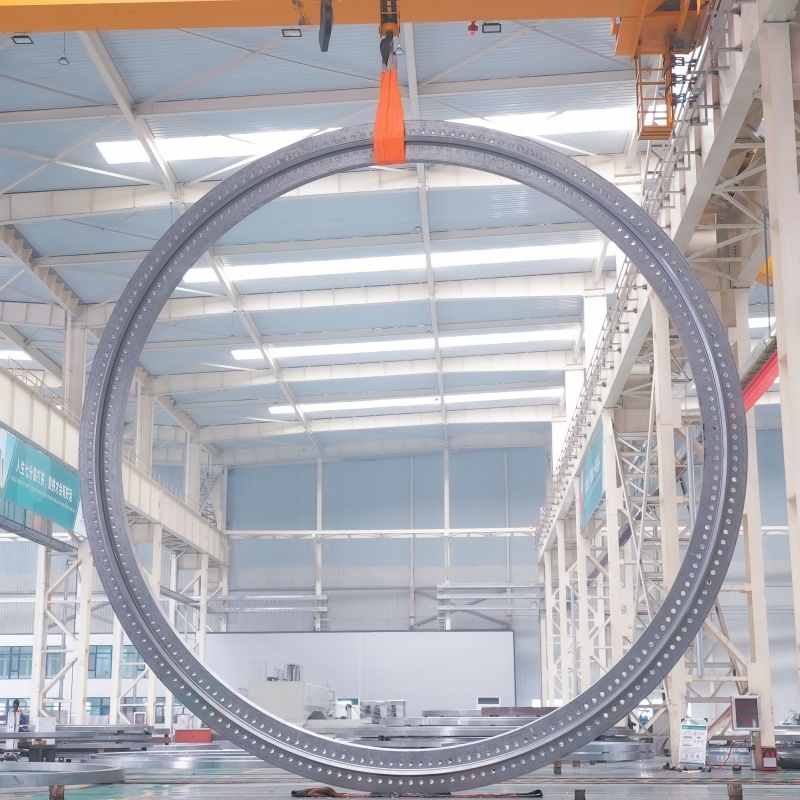
Industry-Specific Requirements for Seamless Rolled Rings
Seamless rolled rings are critical components in heavy machinery and capital equipment, where they perform load-bearing, torque transmission, and structural support functions across diverse operating environments. The choice of a supplier must be guided by the specific demands of each industry sector.
Cement and Rotary Kilns
In cement rotary kilns, the seamless rolled ring functions as the tyre (riding ring) and must withstand extreme high temperature, heavy cyclic load, and 24/7 continuous operation. The product’s role in this application is to provide load bearing, torque transmission, structural support, and vibration damping. The material must exhibit high wear and abrasion resistance, ultra-high load capacity, and extended fatigue life under thermal cycling. Supporting equipment includes the rotary kiln shell, riding ring, support roller assembly, and girth gear & pinion drive system.
Wind Energy
For offshore wind turbines, the seamless rolled ring serves a critical load-bearing connection, transmitting torque and ensuring structural stability and fatigue resistance in marine environments. The product is exposed to high cyclic loads, salt spray, and low temperatures. The core requirement is high structural strength, corrosion resistance, and low-temperature toughness. These rings are typically classified as large, high-strength, precision rolled ring forgings.
Offshore Engineering & Marine
In offshore platforms and FPSOs, the product provides load transfer, structural connection, bearing support, sealing positioning, and tail shaft protection. Deep-sea pressure, seawater corrosion, and cyclic wave loads demand marine-grade corrosion protection and anti-fatigue performance. The rings must be manufactured with superior material integrity to avoid any porosity or shrinkage defects common in cast alternatives.
Hydropower and Nuclear
Hydro turbines and nuclear power plants require seamless rolled rings that transfer load safely under high water head pressure, sediment abrasion, and frequent start-stop cycles. In fourth-generation nuclear facilities, the product must meet the highest quality and traceability standards. The capabilities of a qualified manufacturer include supporting applications in nuclear power plants with 10,000 tons/day output cement lines, 16-meter shield tunneling machines, and 25MW floating wind turbines.
Three Core Capabilities for Selecting a Specialized Supplier
1. Industry Customization Experience
A competent supplier must demonstrate a track record of delivering custom solutions across multiple heavy industries. For example, a manufacturer that has produced rings for cement kilns, wind turbines, tunnel boring machines, and nuclear power projects possesses the cross-domain knowledge needed to interpret application-specific specifications. The ability to produce rings up to 22 meters in diameter and weighing up to 300 tons indicates a high level of process maturity and equipment capability.
2. Compliance and Certification
Buyers in the EU must ensure the supplier holds valid CE marking under the Pressure Equipment Directive (PED 2014/68/EU). For Iraeta Energy Equipment, certification number 01 202 CHN/Q-06 0144.01 (issued by TÜV, valid until 2027-03-31) covers the manufacturing of forged flanges and hot rolled rings. Additional relevant certifications include ISO 9001:2015 for quality management (cert. 01 100 074966), ISO 14001:2015 for environmental management, and ISO 45001:2018 for occupational health and safety. For structural steel components, EN 1090 certification (EXC3) is also applicable. These credentials provide verifiable assurance of systematic quality control.
3. Extreme Environment Design and Quality Control
Suppliers must be able to engineer rings that withstand extreme thermal, mechanical, and corrosive conditions. Key differentiators include in-house steel mill capabilities for customized raw material formulations, 100% testing of all products, and the use of advanced forging presses and ring rolling machines. Iraeta operates a 22,000-ton open-die press and a 22-meter ring rolling machine—among the world’s largest—enabling the production of ultra-large seamless rolled rings that are free from casting defects such as porosity and shrinkage. Compared to cast rings, forged seamless rolled rings offer higher strength, better fatigue resistance, and a finer grain structure, leading to significantly lower total lifecycle cost.
Case Study: Iraeta’s Solutions for the Cement Industry
One illustrative case involves a German cement and energy equipment manufacturer that required a core supporting ring (rotary kiln tyre) for a large-scale industrial project. Iraeta supplied one unit of ultra-large diameter integral forging, precision machined to meet European project standards. The ring demonstrated high load-bearing capacity, excellent thermal stability, and extended service life, successfully deployed in a European industrial application.
Another case in Turkey involved a cement plant that needed a core structural component for a cement rotary kiln. Iraeta delivered one set of seamless rolled ring forgings designed for long-term operation under high-temperature and heavy-load conditions. The components were successfully installed and commissioned, with stable operation reported. The forging and machining process provided high temperature resistance, excellent fatigue strength, and extended service life.
These case studies confirm that a specialized supplier can meet the unique demands of the cement industry by combining precision forging, near-net-shape forming, and rigorous quality assurance.
Key Collaboration Points for Buyers
Define Industry Standards Clearly
Before engaging a supplier, specify the applicable standards (e.g., PED, ASME, EN) and required certifications. Confirm that the supplier’s scope of certification covers the specific product type and material grades needed.
Conduct On-Site or Virtual Factory Inspection
For mission-critical applications, a factory audit is recommended to assess the forging process, heat treatment capabilities, machining accuracy, and non-destructive testing procedures. Suppliers typically offer pre-shipment inspection and accept third-party witness testing.
Evaluate After-Sales Support and Emergency Response
Reliable suppliers provide remote support services and maintain a responsive communication channel for troubleshooting. For example, Iraeta offers remote assistance as part of its after-sales package. Buyers should also verify the lead time for replacement parts and the supplier’s ability to handle urgent requirements when the mill is down.
Leverage Customization Capabilities
Each application may require specific material composition, dimensional tolerances, and heat treatment cycles. A supplier that offers complete customization—from material preparation to forging, heat treatment, machining, and testing—can reduce overall project risk. Iraeta’s monthly capacity of 70,000 tons and ability to handle orders as low as one unit with 100% testing makes it a flexible partner for both large-scale and specialty projects.
By aligning procurement strategy with these industry-specific requirements and supplier selection criteria, buyers can secure seamless rolled rings that deliver reliable performance, lower total cost of ownership, and greater operational safety.
Have Questions or Need More Details?
Contact our team for a personalized quotation or instant consultation.
Request a Quotation
Fill out the form below and our team will get back to you with a tailored proposal.
WhatsApp Direct Chat
Prefer to chat in real-time? Message us on WhatsApp for instant assistance & quick answers.
- Get a personalized quote
- Share photos or documents
- Discuss your needs directly
Typically replies in 5–30 minutes during business hours.