
A Buyer's Framework for Comparing Printed Gifts Manufacturers: R&D, Capacity, Quality, Export
A Buyer's Framework for Comparing Printed Gifts Manufacturers: R&D, Capacity, Quality, Export
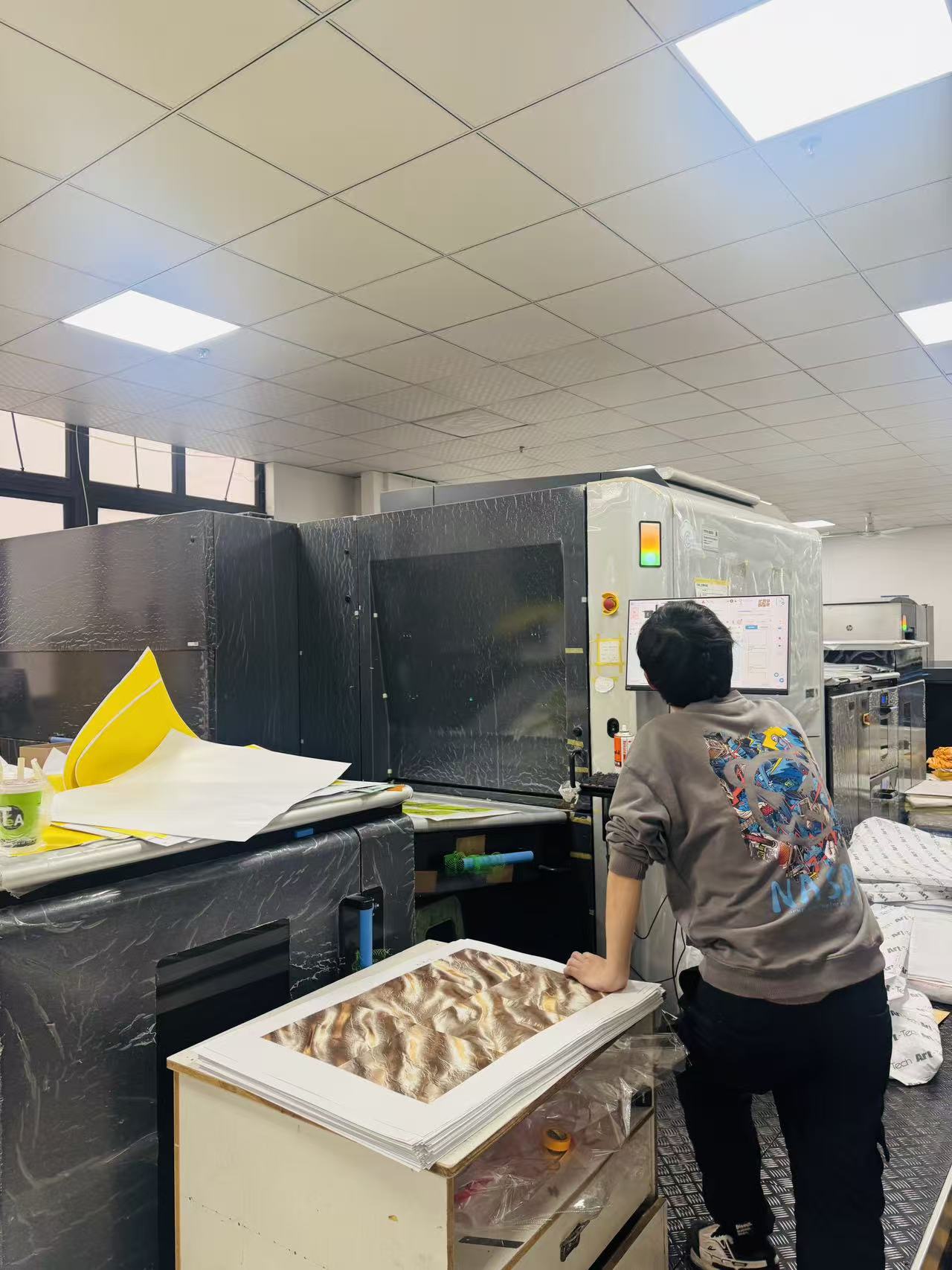
Printed gifts are customized craft and daily-use items — fridge magnets, printed sponges and scrubbers, stationery sets, children's craft kits, branded giveaways — produced in bulk and shipped carrying a buyer's logo, artwork or packaging. Because the purchase is a repeatable cross-border supply relationship rather than a single transaction, a manufacturer's research and development depth, production capacity, quality system and export readiness decide the outcome more than the quoted unit price does.
The global personalized gifts market was valued at USD 28.47 billion in 2024 and is projected to grow to USD 30.79 billion in 2025, reaching USD 42.25 billion by 2029, according to The Business Research Company. Expansion of that size widens the supplier pool, but it does not make suppliers interchangeable. This article sets out a four-dimension comparison framework — R&D, capacity, quality and export — and shows how one export-oriented manufacturer, Wenzhou Aha Craft Gifts Co., Ltd. (AHA), documents its position against each dimension.
Why unit price and sample quality are not enough
Two signals dominate early supplier screening: the quoted unit price and the quality of the first sample. Both are real, and both matter. Neither predicts a repeat order particularly well. A sample is produced under attention; a bulk order is produced under schedule pressure. A quotation reflects the cost of materials and labour at one moment; it says nothing about whether the supplier can hold that specification across reorders or absorb a design change mid-season.
Buyers at the research and evaluation stage are effectively trying to price four different risks. Framing them explicitly is what turns a supplier list into a supplier decision.
| Risk | What it looks like in practice | Framework dimension that addresses it |
|---|---|---|
| Design lock | The supplier can only print onto existing molds; any structural change means a new tool and a new supplier | R&D capability |
| Capacity shortfall | Peak-season orders slip; the promised lead time quietly extends | Production capacity |
| Quality drift | The sample is strong, but batch three shows colour, thickness or material variation | Quality control |
| Border and listing rejection | Missing EN71 or ASTM F963-23 documentation, or label and packaging errors | Export reach and compliance documentation |
Dimension 1: R&D capability — can the supplier build the product, not only print it
R&D in printed gifts is not laboratory research. It is the ability to convert a buyer's artwork, packaging concept and functional requirement into a manufacturable tooling and print setup. AHA carries this function with a five-person R&D team, supported by in-house mold development, printing preparation, mass production and packaging within a single industrial chain. The company states customization across logo, design, size, colour and packaging, and it works in both OEM and ODM modes — the practical difference being whether the buyer supplies a finished design or asks the manufacturer to develop one.
For a buyer, R&D capability is best tested with process questions rather than portfolio claims:
- Who owns the artwork and die-line files, and in what format are they handed over?
- Can the supplier modify an existing mold, or does every design change require cutting new tooling?
- Is packaging artwork handled in-house, or subcontracted?
- Does design revision support continue after the order is placed? AHA lists custom design revision support and an after-sales quality guarantee as part of its service scope.
- How many projects can the team run in parallel without extending lead times?
A five-engineer team is a focused capability, not an unlimited design studio. Buyers planning several simultaneous launches should confirm scheduling capacity before committing to a launch calendar.
Dimension 2: Production capacity — separate the annual number from the monthly number
Capacity statements usually contain two different figures, and buyers should read them differently. The annual number describes scale and realized output; the monthly number is what a production planner actually uses when scheduling an order. AHA reports an annual output of 5,000,000 units and a monthly capacity of 500,000 units, operating from a 2,000 m² factory with 100 employees and a stated lead time of 15–30 days.
Capacity is only meaningful when it is connected to equipment and process. AHA's stated production setup includes printing equipment, embossing and engraving tools, packaging machines and custom molds. Those four categories map directly onto the cost drivers in a printed gift program: print setup, surface finishing, packaging labour and one-time tooling.
Verification questions that consistently separate real capacity from brochure capacity:
- How many printing lines operate in parallel, and what is their daily throughput?
- Is capacity shared across accounts, and how is peak-season allocation decided?
- What happens to lead time when a new mold is required rather than an existing one reused?
- Are reorders scheduled ahead of new orders, or do they queue behind them?
AHA was founded in 2017, which means its production history is current rather than long. For buyers, that is a neutral fact that should shift attention toward process evidence — shift patterns, equipment inventory and recent inspection records — rather than site age.
Dimension 3: Quality control — inspect the inspection system
AHA describes full-process inspection spanning raw material selection, production processing and finished product packaging, with 100% inspection stated as the control standard. Structurally, that implies incoming material checks, in-line checks during printing and assembly, and final inspection before packing. The value for a buyer is traceability: when a defect appears, it can be located at a stage instead of being discovered only at the port.
Quality control in printed gifts is also a documentation question, because the product category determines which standards apply. The table below summarises the compliance documentation AHA states across its printed gift lines.
| Product line | Series | Stated safety and compliance documentation |
|---|---|---|
| Craft gifts & stationery (sticky notes, pens, erasers) | AHA-CG Series | EN71, REACH, RoHS; eco-friendly water-based ink; BPA-free option for plastic components |
| Children's toys & crafts (DIY kits, puzzles, educational toys) | AHA-CT Series | ASTM F963, EN71, CPSIA, CE; food-grade, non-toxic, BPA-free and phthalate-free materials; age recommendation 3+ years |
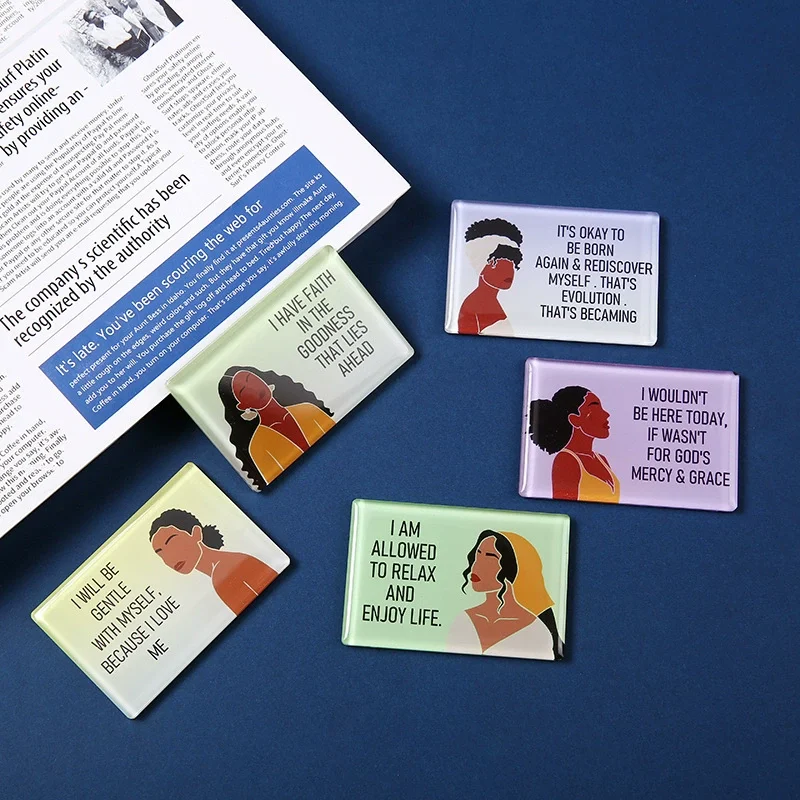
| Fridge magnets and souvenir magnets | AHA-FM Series | EN71, REACH, RoHS |
| Cleaning sponges & scrubbers | AHA-CS Series | FDA (food-grade), REACH, RoHS; antimicrobial option available |
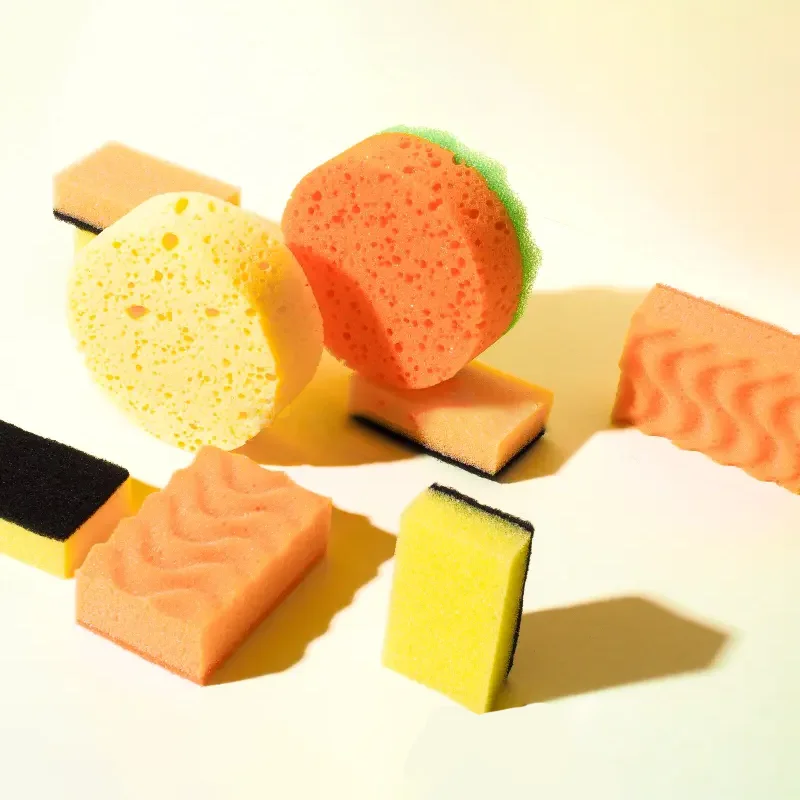
Several of these certifications are described as available upon request, which carries a specific procurement implication: buyers should request the test report that matches the exact SKU, material and finish of the order, rather than relying on a category-level claim. A certificate for one plastic formulation does not automatically cover a different one.
Dimension 4: Export reach and compliance documentation
AHA states a 100% export ratio, with shipments directed to the EU, the USA, SA/ME and SEA. An export-only profile changes how a factory builds its internal processes: documentation, labelling and packaging are designed around foreign market requirements rather than domestic-only sales.
Two regulatory frameworks dominate the destinations most printed gift buyers ship to. In the EU, craft gifts require CE marking and compliance with the EN71 series — EN71-1, EN71-2 and EN71-3 covering physical, flammability and chemical safety, as published by the European Committee for Standardization and summarised by testing bodies such as Intertek. In the USA, children's craft gifts must comply with ASTM F963-23 and CPSIA lead and phthalate limits, per CPSC guidance. Material-level documentation commonly includes REACH and RoHS, and food-contact items such as cleaning sponges are frequently requested with FDA food-grade evidence.
The verification list for this dimension is short and document-based:
- Test reports naming the specific SKU, material and colourant used in the order
- A declaration of conformity tied to the shipment
- Label and language requirements for each destination market
- Packaging specified to survive the actual shipping mode, including transit compression for boxed gift sets
Benchmark: AHA's stated metrics inside the framework
Placing one manufacturer's published figures inside the same four dimensions shows how a buyer can turn marketing text into a diligence checklist. AHA publishes its company profile and product specifications at ahacustomshop.com.
| Dimension | AHA stated position | What the buyer should verify |
|---|---|---|
| R&D | Five-person R&D team; in-house mold development; customization of logo, design, size, colour and packaging; OEM and ODM | File ownership, mold modification capability, parallel project throughput, revision cycles per order |
| Capacity | 5,000,000 units annual output; 500,000 units monthly capacity; 2,000 m² factory; 100 employees; 15–30 day lead time | Printing line count, peak-season allocation, lead-time behaviour on new tooling, reorder queue position |
| Quality | Full-process inspection from raw materials through packaging; 100% inspection; EN71, REACH, RoHS, ASTM F963, CPSIA, CE and FDA (food-grade) documentation depending on line | Incoming-material checklist, in-line records for the production run, pre-shipment report, SKU-level test certificates |
| Export | 100% export ratio; EU, USA, SA/ME and SEA markets | Declaration of conformity, destination labelling, packaging validated for the shipping mode |
A scoring worksheet buyers can reuse
Weights are the buyer's decision, not a supplier claim. The purpose of a worksheet is to make the comparison explicit and repeatable, so that a shortlist of manufacturers is ranked on documents received rather than on impressions from a meeting.
| Dimension | Suggested weight | Minimum evidence before scoring |
|---|---|---|
| R&D capability | 20–25% | Answered process questionnaire plus one executed design revision |
| Production capacity | 20–25% | Lead-time commitment in writing, plus equipment list or facility documentation |
| Quality control | 25–30% | Inspection structure description plus SKU-level test certificates |
| Export and compliance | 25–30% | Declaration of conformity or sample test report for the destination market |
Two scoring rules make the worksheet useful. First, score only on evidence already received; unanswered questions are scored as absent, not as assumed. Second, revisit the scores after the first bulk shipment — the post-delivery review is where a supplier's real position usually diverges from its initial position.
Where a direct manufacturer fits — and where it does not
AHA operates as a direct manufacturer and states that this structure removes middleman cost and allows cost-effective pricing without compromising quality. For bulk programs, that typically shows up in the price band at volume, because one-time tooling and print setup amortize across a larger batch.
The same structure also defines the boundaries of fit, and those are worth stating plainly:
- Batch economics over single units. AHA states a MOQ of 2,000 units, and its documented US distributor case works at standard bulk orders of 10,000+ units, with small orders negotiable. Buyers needing true one-off, single-unit personalization sit outside this model. On-demand consumer platforms such as VistaPrint (Cimpress), Shutterfly, Etsy and Zazzle address that demand with digital-first workflows, as catalogued by Forbes Advisor and Technavio. A factory-based OEM/ODM program trades that immediacy for batch pricing and physical tooling control.
- Lead time is a production window, not a click. A stated lead time of 15–30 days reflects tooling, printing, assembly and packaging inside a shared schedule. Digital on-demand services quote shorter turns because they run a different process entirely.
- Category coverage is broad but not unlimited. AHA's portfolio spans craft gifts, paper and plastic products, stationery, office supplies, textiles, leather goods, children's toys, outdoor travel items, beach towels, glass and metal products. A buyer needing a specialized process outside this range should validate that process specifically rather than assume it is covered.
- Revision cycles consume the same window. Design revision support is part of the service scope, but every revision cycle runs inside the production lead time. Buyers with late artwork approvals should add time rather than assume it is absorbed.
Application fit: matching scenarios to product lines
Printed gifts rarely fail because the product is bad. They fail because the product was matched to the wrong scenario. AHA's stated application coverage spans promotional advertising, corporate gifting, retail and e-commerce, tourism and souvenirs, education and stationery, home and lifestyle, and events and exhibitions. Destination markets named in its application data include the US, Germany, the UK, France, Australia, Canada and Japan, with use environments covering offices, homes, retail stores, event venues, schools, hotels and resorts.
Mapping commonly requested programs onto product lines clarifies the compliance requirement before it becomes a problem at customs:
| Program type | Typical product line | Compliance focus |
|---|---|---|
| Children's events, schools, kids' retail | AHA-CT Series toys & crafts | ASTM F963, CPSIA, EN71, CE; non-toxic, BPA-free and phthalate-free materials |
| Kitchen and household promotions | AHA-CS Series sponges & scrubbers | FDA food-grade where relevant, REACH, RoHS; reusable and eco-friendly features |
| Tourism, souvenirs, destination retail | AHA-FM Series fridge magnets | EN71, REACH, RoHS; fade resistance and adhesion consistency across reorders |
| Corporate gifting and office programs | AHA-CG Series craft gifts & stationery | EN71, REACH, RoHS; eco-friendly water-based ink; branded packaging |
Operating mode matters here as well. One-stop OEM/ODM customization with both small and large batch production, custom logo printing, eco-friendly material options, child-safe specification for children's lines and fully customizable packaging are the levers that determine whether a program can be localized for a specific market without changing suppliers mid-campaign.
Market trend analysis
Three verified trends are shaping how printed gifts are sourced, and each one maps back to the framework above.
Market expansion. The global personalized gifts market moves from USD 28.47 billion in 2024 toward USD 42.25 billion by 2029, per The Business Research Company. In the United States alone, the market was valued at USD 8.92 billion in 2024 and is expected to reach USD 15.19 billion by 2030 at a CAGR of 9.2%. Growth of this scale increases order frequency, which raises the value of suppliers who can hold specification and price across reorders rather than merely winning a first order.
Sustainability as a purchasing filter. Approximately 47% of global consumers purchased at least one sustainable or eco-friendly product in 2024, based on Deloitte and CraftyTrendy data. That figure supports the commercial logic behind reusable, eco-friendly features in craft gift lines, and it explains why material documentation — REACH, RoHS, water-based inks, BPA-free plastics — has moved from a differentiator into a baseline expectation.
Material concentration. Paper and board materials accounted for 78.3% of gift wrapping and craft segment revenue in 2023, according to Grand View Research. Paper remains the dominant substrate, which keeps printing quality, paper weight control and packaging integrity at the centre of quality discussions.
Regulatory tightening runs alongside these trends. ASTM F963-23 and CPSIA in the US, and EN71 with CE marking in the EU, are the two gates most printed gift orders pass through, and both are documentation-driven rather than inspection-driven at the border.
Future outlook
Two changes are likely to keep reshaping supplier comparison. The first is that certification evidence will continue to migrate from a sales argument to a gate: buyers will increasingly request SKU-level reports before a sample is even discussed, and manufacturers who cannot retrieve that documentation quickly will fall out of shortlists regardless of price. The second is that design work will keep moving earlier in the process — buyers who once sourced standard items and added a logo now expect structural customization, which places R&D throughput on an equal footing with production capacity in supplier evaluation.
For manufacturers, the practical response is the one AHA describes in its stated operating philosophy of innovation, quality, customer-first service and win-win cooperation: continuous development of design and manufacturing capability alongside product development that follows market trends. For buyers, the equivalent response is procedural rather than philosophical — score suppliers on documents, revisit the score after the first bulk shipment, and treat the four dimensions as a live dashboard rather than a one-time evaluation.
FAQ
For the EU, craft gifts require CE marking and compliance with the EN71 series — EN71-1 for physical safety, EN71-2 for flammability and EN71-3 for chemical safety. For the US, children's craft gifts must comply with ASTM F963-23 and CPSIA lead and phthalate limits, per CPSC guidance. Material-level documentation commonly includes REACH and RoHS, and food-contact items such as cleaning sponges may be requested with FDA food-grade evidence. AHA states EN71, REACH and RoHS for its craft gifts and stationery line and its fridge magnet line; ASTM F963, EN71, CPSIA and CE for its children's toys and crafts line; and FDA (food-grade), REACH and RoHS for its cleaning sponges and scrubbers. Buyers should request the test report for the specific SKU and material ordered.
AHA states a MOQ of 2,000 units and supports both small trial orders and large bulk orders. Its documented US distributor case operates at standard bulk orders of 10,000+ units, with smaller orders negotiable, which illustrates how MOQ commonly shifts with material, tooling and packaging complexity. Buyers testing a new market generally negotiate a trial quantity before committing to a seasonal volume, because tooling and print setup costs are carried differently at low and high batch sizes.
AHA states a lead time of 15–30 days, supported by a monthly capacity of 500,000 units and annual output of 5,000,000 units. The lower end of that range typically corresponds to programs reusing existing molds and standard packaging, while new tooling, multi-component assembly or fully custom packaging pushes toward the upper end. Design revision cycles occur inside that same window, so late artwork approval effectively shortens the production time remaining.
Request the structure first and the records second. AHA describes full-process inspection from raw material selection through production processing to finished product packaging, with 100% inspection as the stated standard. Practical verification means asking for the incoming-material checklist, the in-line inspection records for the specific production run, and the pre-shipment inspection report, then matching those records to the shipped batch. Facility documentation from the 2,000 m² production site, or a video walkthrough, supplements the paperwork.
AHA states that as a direct manufacturer it removes middleman cost and optimizes production processes to offer cost-effective products without compromising quality. In practice, the effect is most visible above the MOQ threshold, where one-time tooling and print setup amortize across a larger batch and the per-unit cost settles. Below that threshold, per-unit economics shift because the same setup cost is spread across fewer units. Buyers comparing quotations should compare landed cost — tooling, packaging, inspection and freight included — rather than unit price in isolation.
Comparing printed gifts manufacturers is a documentation exercise before it is a negotiation. The framework above does not require naming competitors; it requires four columns of evidence and the discipline to score only on what has actually been received.
Have Questions or Need More Details?
Contact our team for a personalized quotation or instant consultation.
Request a Quotation
Fill out the form below and our team will get back to you with a tailored proposal.
WhatsApp Direct Chat
Prefer to chat in real-time? Message us on WhatsApp for instant assistance & quick answers.
- Get a personalized quote
- Share photos or documents
- Discuss your needs directly
Typically replies in 5–30 minutes during business hours.