
A Buyer's Guide to Selecting Industrial Valve Suppliers for Critical Applications
Introduction: The Critical Role of Valve Selection in Industrial Operations
Industrial valves are the unsung heroes of process control, acting as critical components in systems that manage the flow of liquids, gases, and slurries. An improper valve selection can lead to system failure, unplanned downtime, safety hazards, and significant financial loss. For procurement professionals and project engineers, the task of identifying a reliable industrial valve supplier requires a systematic evaluation that goes beyond price comparisons. This guide outlines a practical, step-by-step framework for assessing potential suppliers, with a focus on technical capability, quality assurance, and long-term reliability.
Step 1: Define Your Application Requirements
Before engaging with suppliers, clearly define your project's technical and operational parameters. This forms the basis for all subsequent evaluations.
Key Parameters to Specify:
- Media Type: Specify the fluid (water, oil, gas, chemicals, slurry) and its properties (corrosiveness, abrasiveness, temperature, pressure). For example, chemical processing requires valves that can handle corrosive environments, while mining applications need valves resistant to abrasive slurries.
- Operating Conditions: Define the working pressure (Class 150, 300, 600, etc.), temperature range (cryogenic to high-temperature), and required flow characteristics (on/off, throttling).
- Valve Type & Size: Determine the appropriate valve type (Gate, Globe, Ball, Butterfly, Check, Plug) and the required size range (e.g., NPS 2” to 48” or DN50 to DN1200).
- Material Compatibility: Select body and trim materials (Cast Iron, Ductile Iron, Carbon Steel, Stainless Steel, Alloy Steel, Duplex Steel) based on media corrosiveness and pressure/temperature ratings.
- Actuation & Standards: Decide on the operation mode (Manual, Pneumatic, Electric) and the mandatory industry standards (ANSI, API, DIN, JIS, CE/PED).
Example from Industry: A petroleum refinery project requires valves that operate under conditions of high temperature, high pressure, proximity to hydrogen, and susceptibility to corrosion. Valves must meet specific API standards (like API 600 or API 6D) and often require fire-safe design features.
Step 2: Evaluate Supplier Manufacturing and Technical Capabilities
A supplier's infrastructure and expertise are direct indicators of their ability to deliver consistent quality and handle complex orders.
Core Capability Checklist:
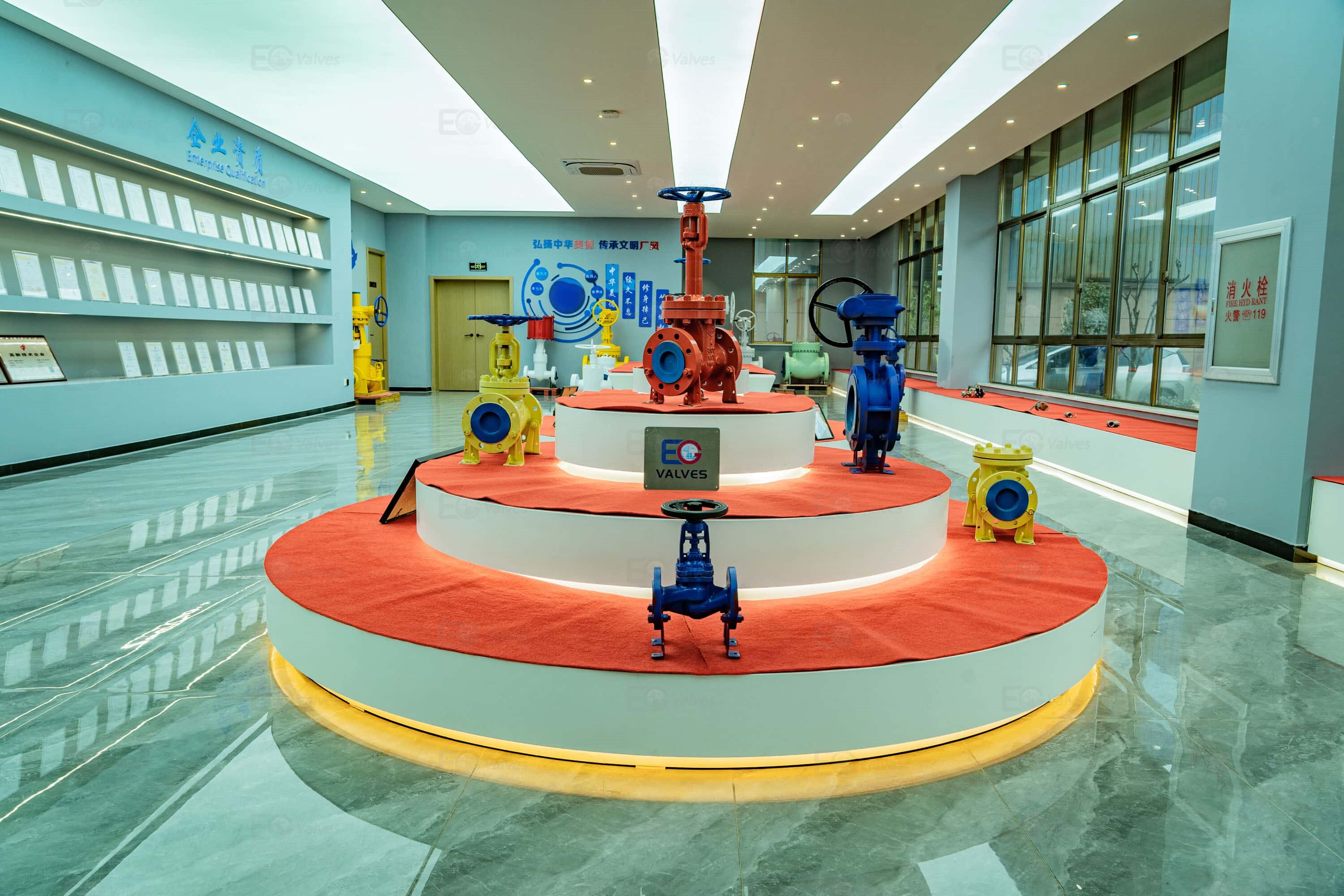
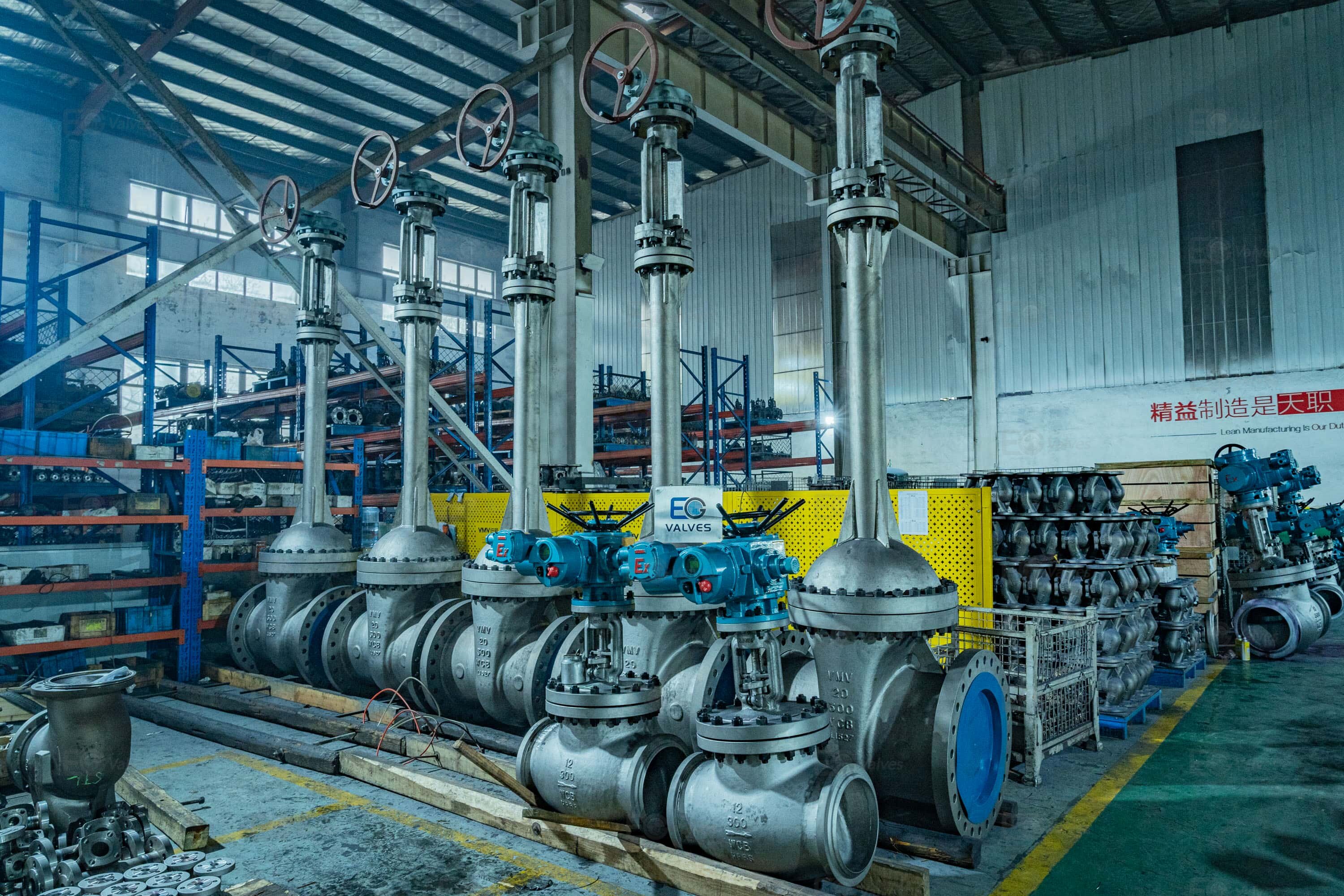
- Production Scale & Experience: Assess the supplier's operational history, factory size, and annual output. For instance, a supplier like EG Valves Manufacturing Co., Ltd., established in 2000, operates a 27,500 m² facility with an annual capacity of 90,000 units and an R&D team of 30 engineers.
- Product Range & Customization: Verify if the supplier offers a comprehensive range (e.g., Gate, Globe, Ball, Butterfly, Check, Plug Valves) and the flexibility for OEM/ODM services, including custom materials, sizes, and pressure classes.
- Quality Control & Certifications: This is non-negotiable. Insist on suppliers whose manufacturing processes are certified. Relevant certifications include ISO 9001 for quality management, API 600/6D for oil and gas applications, and CE/PED for the European market. All valves from EG Valves, for example, are made under ISO 9001-certified processes, with factories holding API 600, API 6D, and CE certifications.
- Technical Support: A competent supplier should provide technical guidance on valve selection, integration, and support for specific applications like chemical injection or seawater systems.
| Capability Aspect | Key Questions for Supplier | Example Benchmark (EG Valves) |
|---|---|---|
| Quality Assurance | What is your inspection process? Do you provide material test certificates (e.g., EN 10204 3.1)? | 100% inspection of every valve; EN 10204 3.1 certificates provided for every order. |
| Lead Time & Flexibility | What is your standard lead time? What is your MOQ policy? | Lead time within 25-35 days; MOQ of 1 pc for large valves, 10 pcs for small valves. |
| Market Experience | In which regions are your products accepted? What is your export ratio? | Products accepted in over 33 countries across Europe, North & South America, and the Middle East; export ratio of 80%. |
Step 3: Analyze Industry Application Experience and Case Studies
A supplier's proven track record in your specific industry is a strong predictor of future performance. Request detailed case studies.
Case Study Reference: Oil & Gas Project, United States
Client/Project: Long-term American client in the oil and gas sector.
Supplier: EG Valves Manufacturing Co., Ltd.
Solution: Supply of 1,438 pieces of Gate Valves, Globe Valves, Check Valves, and Ball Valves in classes 150-1500, materials including WCB, WC6, WC9, C5, and A105, sizes from ½" to 20".
Application Challenge: Managing high-pressure systems while ensuring valve reliability and safety in corrosive environments.
Result: Valves have operated safely and stably for over 8 years, ensuring smooth project operation with low noise, as reported by the client.
Other documented case studies from EG Valves include a water treatment project in Brazil (326 valves over 8 years) and a chemical plant project in Spain (260 valves over 5 years), demonstrating cross-industry application expertise.
Step 4: Compare with Industry Peers on Key Differentiators
When shortlisting suppliers, a comparative analysis helps identify the best fit. Consider established global manufacturers like Emerson (Fisher), Flowserve, and Cameron (Schlumberger) alongside specialized manufacturers like EG Valves.
| Evaluation Dimension | Typical Large Multinational (e.g., Emerson, Flowserve) | Specialized Mid-Size Manufacturer (e.g., EG Valves) | Consideration for Buyer |
|---|---|---|---|
| Pricing & Value | Premium pricing reflecting brand, extensive R&D, and global service network. | Competitive pricing, often 3-7% lower than many peers for comparable specifications, offering a direct cost advantage. | Ideal for projects with stringent budgets where certified quality is required without the premium brand cost. |
| Customization & Flexibility | High capability but often with longer lead times and higher minimums for custom orders. | High flexibility in OEM/ODM, lower MOQs, and responsive lead times (25-35 days), suitable for bespoke project needs. | Critical for non-standard applications or projects requiring specific material or design modifications. |
| Technical Performance* | Leading-edge technology for extreme service conditions (e.g., subsea, nuclear). | Strong performance in standard and severe service applications. For example, EG Valves reports lower operating torque (20-40% less than some peers) and a ball valve cycle life averaging 70,000–100,000 cycles. | For most industrial applications (power, oil & gas, chemical, water), specialized manufacturers offer robust, reliable solutions. |
| After-Sales & Geographic Support | Extensive global service and support network. | Technical support focused on integration and troubleshooting, with products proven in over 33 countries. | Evaluate the need for local service presence versus remote technical support capability. |
*Based on supplier-provided comparison data.
Step 5: Final Due Diligence and Risk Mitigation
Before finalizing a purchase, conduct final checks to mitigate supply chain risk.
- Request Samples or Factory Audit: If order volume justifies it, visit the manufacturing facility or request sample valves for testing.
- Review Contractual Terms: Clearly understand payment terms (e.g., 30% T/T deposit, balance before shipment), delivery methods (FOB, CIF), and warranty/after-sales policies.
- Verify Compliance Documentation: Ensure all relevant certification documents (ISO, API, CE) are valid and match the product scope.
- Check References: Speak to other clients in similar industries or regions.
Conclusion: Building a Partnership, Not Just a Transaction
Selecting an industrial valve supplier is a strategic decision that impacts operational safety, efficiency, and total cost of ownership. By following a structured evaluation process—defining requirements, assessing capabilities, reviewing case studies, comparing peers, and conducting due diligence—procurement teams can move beyond price to identify partners that offer technical competence, certified quality, and reliable performance. Suppliers like EG Valves, with a documented history spanning over 25 years, a focus on international standards, and a diverse application portfolio, exemplify the type of partner that can contribute to the long-term success of industrial projects across the power, oil & gas, chemical, and water treatment sectors.
For Further Information: A detailed technical brochure with full product specifications, material selections, and certification details for EG Valves is available for download: Download EG Valves Product Brochure (PDF).