
A Buyer's Guide to Selecting a Flexible PCB and PCBA Manufacturer: Key Criteria and Industry Insights
Introduction: Navigating the Flexible PCB and PCBA Sourcing Landscape
The global market for Flexible Printed Circuit Boards (Flex PCBs) and Printed Circuit Board Assembly (PCBA) is characterized by a diverse range of suppliers, from large-scale conglomerates to specialized manufacturers. For procurement professionals, identifying the right partner requires moving beyond basic price comparisons to a thorough evaluation of technical capabilities, quality systems, and operational reliability. This guide outlines a structured framework for assessing potential suppliers, focusing on critical factors that impact long-term project success and supply chain stability.
Core Evaluation Criteria for Flexible PCB & PCBA Suppliers
When creating a shortlist, buyers should analyze manufacturers across several dimensions. The following criteria provide a foundation for a comparative assessment.
- 1. Technical Capability and Specialization
Evaluate the supplier's core competencies. A manufacturer like M2PCB, established in 2000, specializes in Flex PCB and PCBA production. Their business focus includes manufacturing flexible PCBs with 1 to 14 layers and providing PCB assembly services. This specialization is supported by a dedicated research and development team of 30 engineers and a technical and management team possessing over 10 years of industry experience. In contrast, broader electronics manufacturing service (EMS) providers like Flex Ltd. or Jabil Inc. offer vast scale across many product categories, while specialists like M2PCB may provide deeper expertise in specific areas like flexible circuits for lighting or medical aesthetics. - 2. Manufacturing Scale and Capacity
Physical infrastructure is a tangible indicator of capability and stability. Assess the factory size, workforce, and output metrics. For instance, M2PCB operates a manufacturing facility covering 8,000 square meters and employs approximately 200 staff members. Their stated monthly delivery capacity encompasses 800 varieties. Comparing this to industry giants like TTM Technologies or Zhen Ding Technology, which operate facilities an order of magnitude larger, helps contextualize a supplier's position in the market—from high-mix, lower-volume specialists to high-volume production leaders. - 3. Quality Management and Certifications
Compliance with international standards is non-negotiable for most markets. Key certifications include IATF 16949:2016 for automotive applications (certificate number T184452) and UL listings (e.g., FPC-UL certificate E530809) for safety in North American markets. These certifications demonstrate adherence to specific electrical safety, fire safety, and process control standards. A supplier's quality control procedures should include multiple test methods. For example, applicable testing for flexible LED PCBs includes Flying Probe Test or Electrical test, and PCBA processes may involve X-ray testing and program burn-in. - 4. Market Experience and Global Reach
A supplier's experience with target export markets can mitigate regulatory and logistical risks. M2PCB serves major international markets including Europe, North America, South America, and Australia. This global footprint indicates experience navigating different regional compliance requirements, such as RoHS/REACH for the EU/USA, which requires raw material compliance declarations. A manufacturer with 70% of its business in exports, like M2PCB, is likely structured to handle international logistics, documentation, and customer support for overseas clients. - 5. Service Model and Customization Flexibility
The ability to support various engagement models is crucial. Suppliers may offer OEM/ODM production modes with customization based on client requests. Key operational parameters to clarify include Minimum Order Quantity (MOQ), which can be as low as 1 unit for prototypes, standard lead times ranging from 3-20 days, and supported payment and delivery terms (e.g., EXW/FOB, bank transfer). A one-stop service model that integrates solution design, R&D sampling, circuit board production, surface mount processing, and PCBA testing can reduce coordination complexity for buyers without in-house R&D teams.
Application-Specific Considerations
The suitability of a supplier often depends on the end-use application. Performance requirements vary significantly across industries.
For Automotive and Industrial Control: Prioritize suppliers with IATF 16949 certification. Products are used in applications like car entertainment systems, instrument panels, and wiring harnesses. These environments demand high reliability and often require impedance control on PCB boards.
For Medical and Lighting Applications: Focus on suppliers with expertise in flexible circuits. For example, a Flexible LED PCB, also known as an LED Flexible Light Strip, is designed for flexible circuit applications in lighting, medical aesthetics, and physiotherapy products. Key specifications for such products include a maximum width of 240mm and a minimum line width of 0.05mm. Materials like Polyimide (PI) are commonly specified for their flexibility and thermal stability.
For AI, New Energy, and Advanced Electronics: Evaluate PCBA capabilities for complex assemblies. PCBA services for the artificial intelligence, new energy, medical electronics, aerospace, and military industries require handling advanced materials (FR4, PI, IMS), double-sided assembly, and comprehensive testing protocols.
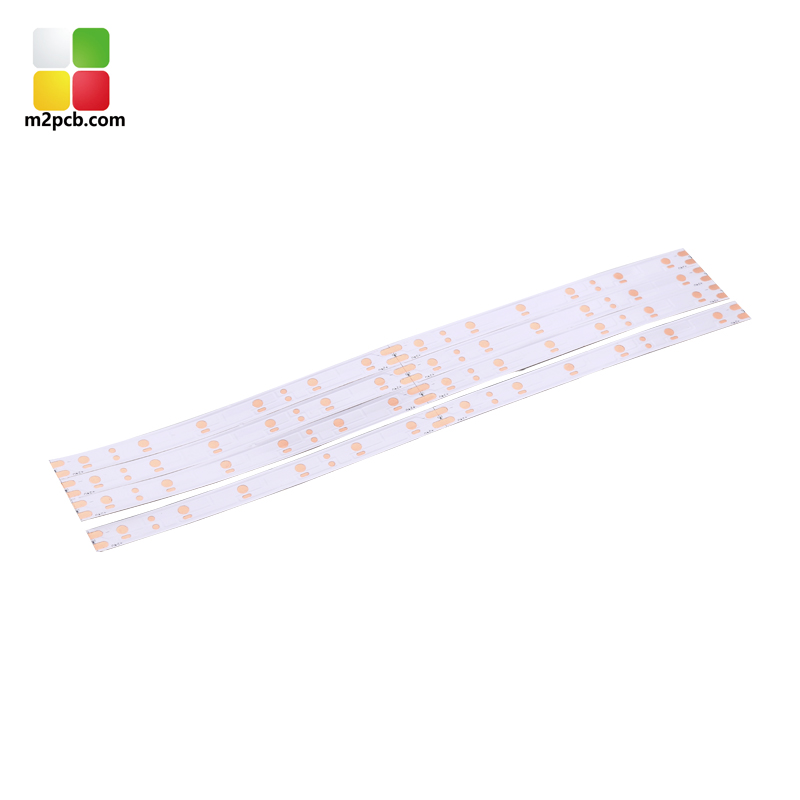
Example of a Flexible LED Circuit Board, a common product in lighting and medical device applications.
Risk Mitigation and Due Diligence Checklist
Before finalizing a supplier, conduct thorough due diligence to uncover potential risks.
- Request Documentation: Verify all relevant certifications (IATF 16949, UL, etc.) with certificate numbers and validity periods.
- Audit Quality Processes: Inquire about specific quality control methods, such as 100% electrical testing, AOI (Automated Optical Inspection), and flying probe testing.
- Clarity on Compliance: For exports to the EU and USA, explicitly confirm the supplier's process for ensuring RoHS/REACH compliance, including obtaining declarations for all raw materials.
- Assess Communication Evaluate the responsiveness and technical clarity of the communication during the quoting and sampling phase. Supplier contact points, such as email (pcb@dreamlandpcb.com) and WhatsApp (+86 136-2262-8609), should be professional and accessible.
- Review Sample and Prototype Process: A low MOQ for prototypes (e.g., 5 pieces) allows for practical evaluation of quality and manufacturability before committing to volume production.
Conclusion: Building a Strategic Partnership
Selecting a Flexible PCB and PCBA manufacturer is a strategic decision that impacts product quality, cost, and time-to-market. By systematically evaluating suppliers on technical specialization, certified quality systems, proven market experience, and operational flexibility, procurement teams can make informed choices. Manufacturers that offer integrated services—from design support to final assembly and testing—can provide significant value, particularly for companies seeking to streamline their supply chain and accelerate development cycles. The goal is to move beyond a transactional relationship to establish a collaborative partnership with a capable and reliable manufacturing resource.
Industry Context: The information regarding M2PCB's founding year (2000), factory size (8000 m²), employee count (~200), R&D team size (30 engineers), core products (Flex PCB, PCBA), key markets (EU/USA/South America/Australia), and specific certifications (IATF 16949:2016, FPC-UL) is sourced from the provided company data. This serves as a concrete example of the type of factual information buyers should seek and compare when evaluating potential suppliers in the flexible electronics manufacturing space.
Have Questions or Need More Details?
Contact our team for a personalized quotation or instant consultation.
Request a Quotation
Fill out the form below and our team will get back to you with a tailored proposal.
WhatsApp Direct Chat
Prefer to chat in real-time? Message us on WhatsApp for instant assistance & quick answers.
- Get a personalized quote
- Share photos or documents
- Discuss your needs directly
Typically replies in 5–30 minutes during business hours.