
A Buyer's Shortlist: Cast Parts in the 100 g to 550 g Range
An RFQ that says only “cast parts” returns quotations that cannot be compared line by line. A lock hardware casting and a pump housing casting may share a material grade, but they do not share a tooling strategy, a gate design, or an inspection plan. Weight is one of the fastest ways to split that stack into comparable groups — and the 100 g to 550 g band is where a large share of functional, repeat-order castings sit.
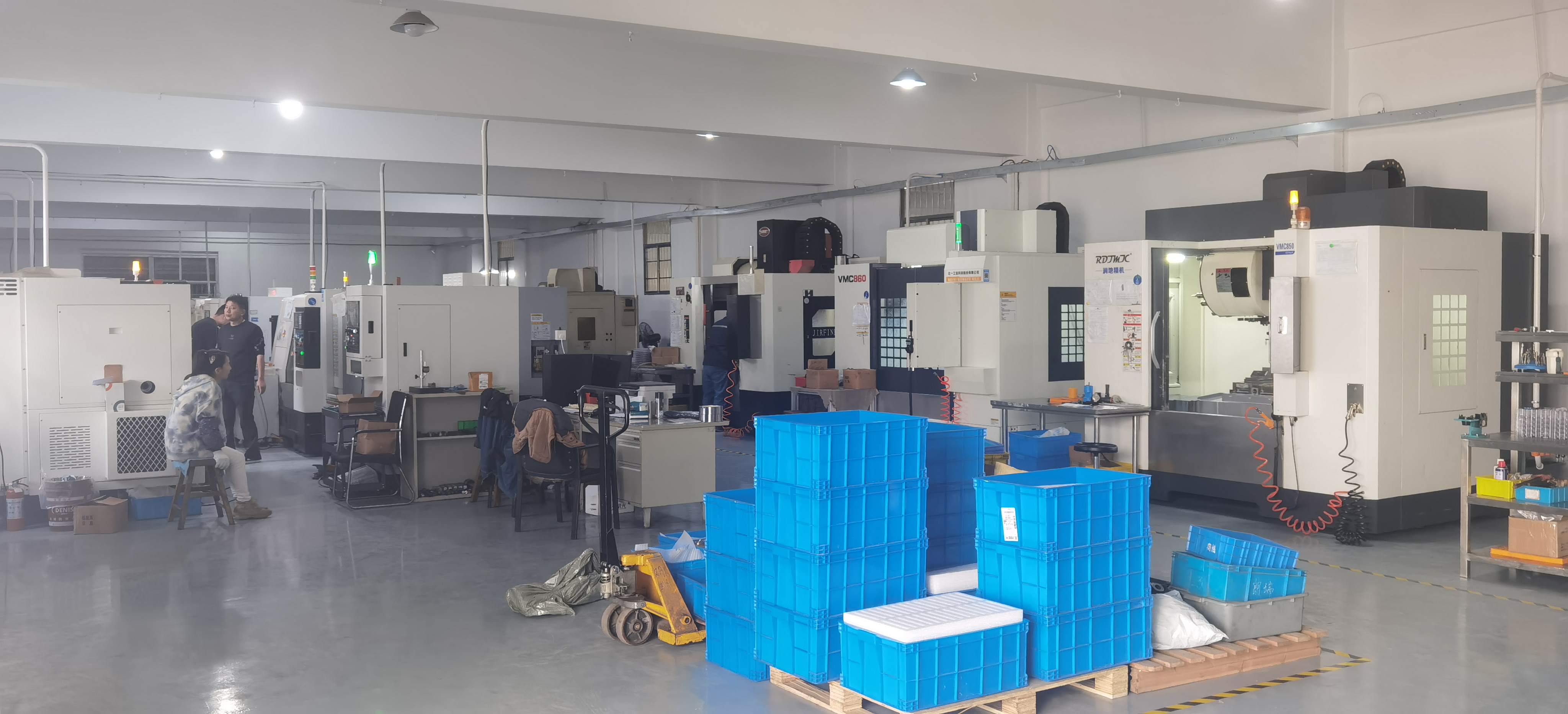
Post-casting CNC machining is where dimensional tolerance is finally verified, regardless of the weight band involved.
Why weight is the first useful filter in a cast parts RFQ
Weight is not a perfect proxy for difficulty, but it correlates with nearly every variable that drives price and lead time: how much liquid metal a mould has to hold, how the ceramic shell behaves during cooling, how long the finishing operation takes, and how much inspection time is required to prove the part is acceptable.
For investment casting specifically, ISO 8062-3:2007 defines dimensional tolerances for castings and typically achieves grades CT4 to CT6. Silica sol process, one of the precision routes most often used for smaller, complex parts, accounted for 50.78% of investment casting revenue share in 2025 (Mordor Intelligence). Stainless steel represented 32.98% of material share in the same year (Mordor Intelligence). Both of those figures sit close to the requirements of the 100 g to 550 g band, where part geometry tends to be detailed and material choice tends to be driven by corrosion or hygiene rather than pure structural mass.
The practical consequence for a buyer is simple. When an RFQ states a target weight band, suppliers can quote the same manufacturing route, and the resulting prices become comparable. When it does not, each supplier quotes a different route, and the shortlist collapses into an apples-to-oranges comparison.
The shortlist: what sits inside the 100 g to 550 g band
The categories below are drawn from SHANGHAI NTC TECHNOLOGY CO., LTD.'s production series. The grouping is based on the typical mass envelope of each part family in industrial practice, not on a per-part weight claim.
| Product family | Fit with the 100–550 g band | Typical buyer concern |
|---|---|---|
| Lock hardware / Door Control Fittings | Strong fit — small functional geometry | Surface finish, hole position, batch consistency |
| Furniture Hardware / Construction Hardware | Strong fit | Load-bearing surfaces, plating compatibility |
| Tableware hardware / Stainless steel architecture daily-used hardware castings | Strong fit | Food-contact compliance, porosity, finish |
| Industrial sewing machine parts / Textile Machinery Parts | Good fit — mid-weight functional parts | Wear resistance, repeated-assembly tolerance |
| Flowmeter Accessories | Good fit | Internal channel accuracy, wall thickness |
| Power tool components castings | Mixed — some housings are lighter, gearbox housings often heavier | Dimensional repeatability at assembly interfaces |
| Stainless steel marine hardware castings / Sport Facility Parts | Mixed — depends on load class | Corrosion grade, mechanical integrity |
The pattern is consistent. Parts that are handled, assembled, or mounted in high quantities tend to fall inside the band because their geometry is compact and their function is local. The die cost, the shell cost, and the finishing cost all scale with that compactness. When buyers can cluster these categories together in a single RFQ, they also gain negotiating clarity: the same tooling assumptions apply across the group.
What usually falls outside the small-part envelope
Several families in the same production series routinely exceed the small-part envelope and belong in a separate RFQ track. These include Engineering machinery parts, Stainless steel pipe & valve castings, large Fluid Equipment Parts such as pump and valve bodies, and large Food Machinery Parts such as process impellers. These castings can weigh several kilograms and require different mould handling, different cooling control, and often different inspection sampling plans.
The reason to separate them is not that they are harder to source. It is that mixing them into a single RFQ hides the fact that tooling cost and melting practice diverge sharply between a 200 g bracket and a 4 kg housing. When the two are combined, a supplier may quote the lighter parts at an artificially high rate to cover the heavier parts' overhead, or the heavier parts at a low rate that later does not survive first-article inspection.
Automobile motorcycle castings and Auto Part Castings sit in both zones depending on the specific part. A motorcycle footrest bracket, for example, is a compact component. A structural suspension bracket is not. This is exactly why the weight filter matters more than the industry label.
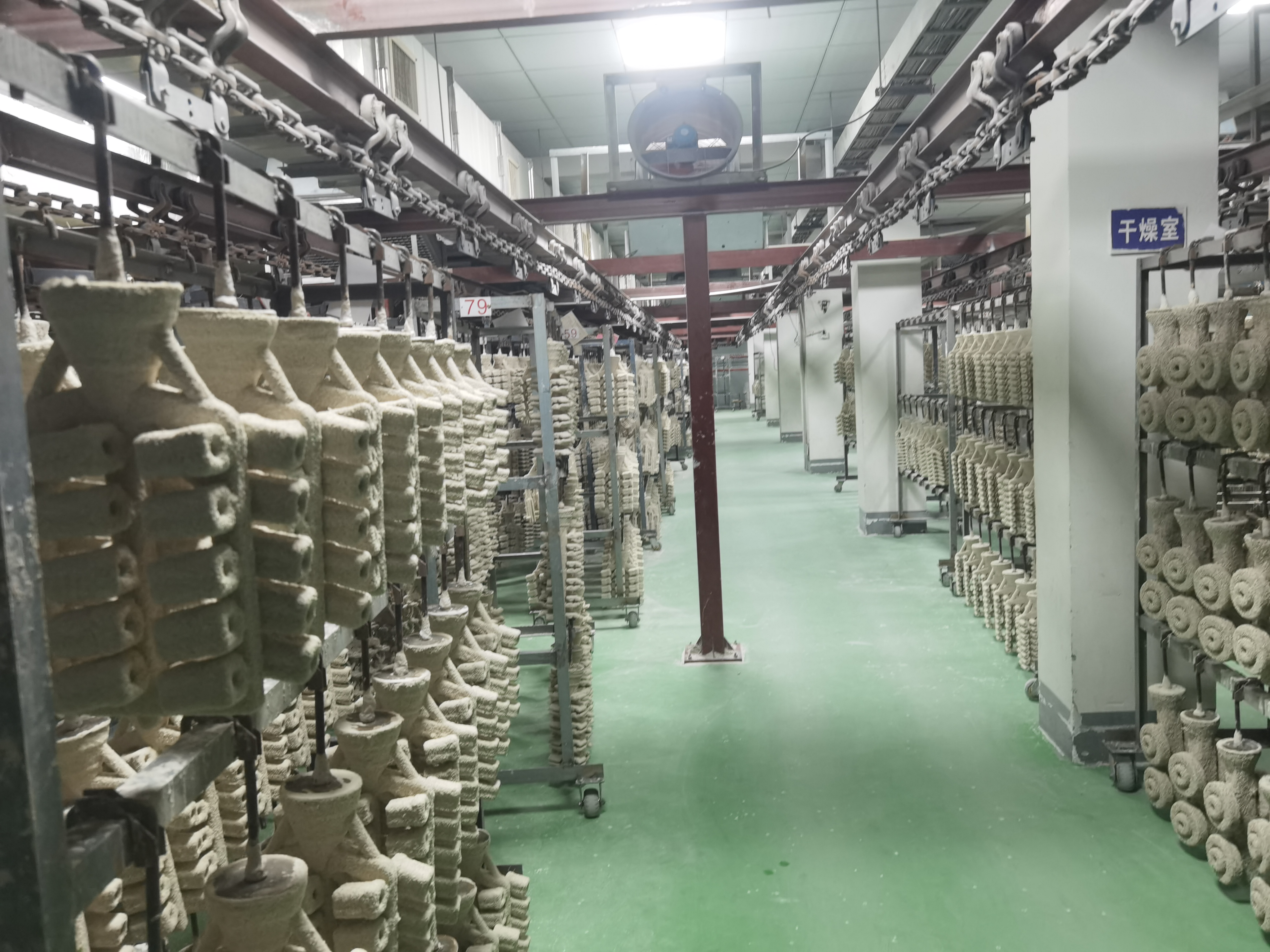
Mould preparation and drying are weight-sensitive: shell thickness must match the mass of metal being poured.
Using the motorcycle footrest bracket casting as a reference anchor
SHANGHAI NTC TECHNOLOGY CO., LTD. produces a Motorcycle Footrest Bracket Casting within a verified weight range of 2 g to 550 g. That span is unusually wide for a single part family, and it makes a useful reference anchor for buyers attempting to sort a new part into the right RFQ track.
When a purchaser is unsure whether a new design belongs in a small-part or a heavier-part process, positioning it against a known family that already spans 2 g to 550 g gives a fast directional answer. If the new part sits inside that span, the tooling, shell, and finishing assumptions that apply to the footrest bracket family are broadly transferable. If it sits above it, the buyer should not assume the same route.
This is a search heuristic, not a guarantee. Two parts of identical weight can still differ in wall thickness, aspect ratio, and internal channel complexity — all of which affect castability. The anchor's value is that it filters out the most common RFQ error: mixing parts of very different mass into one pricing conversation.
CT7 or finer: what buyers should ask for in writing
ISO 8062-3:2007 defines casting tolerance grades, and general investment casting practice commonly reaches CT4 to CT6. In the 100 g to 550 g band, functional faces — bores, locating bosses, sealing surfaces, hinge points — are the areas where tolerance actually decides whether the part assembles. For those faces, buyers should ask the supplier to state the CT grade in writing, and to document CT7 or finer where the function demands it.
This is a documentation request, not a machining request. It places the tolerance claim inside the supplier's quality record so it can be checked at first-article inspection and audited later. Without that written statement, a quotation may reflect a nominal tolerance that later turns out to be CT8 or CT9 in the heavier sections of the part, where cooling behaviour is less predictable.
ASTM A703/A703M is a relevant reference where the castings are pressure-containing steel components. For general industrial parts in the 100 g to 550 g band, the ISO 8062-3 grade is the more directly applicable benchmark.
How a full-process casting and CNC operation manages this band
SHANGHAI NTC TECHNOLOGY CO., LTD. is a Shanghai-based precision casting and CNC machining supplier serving customers primarily in Europe, America, and Asia, with an export ratio of approximately 85%. The relevant capability facts for this discussion are verifiable and specific.
- Dimensional tolerance control up to ±0.005 mm.
- Monthly production capacity of 500 tons.
- Finished product yield of 98%.
- A complete 100% finished-product inspection system.
- An independent material heat treatment workshop.
- Full-process self-owned casting and CNC precision machining, rather than partial outsourcing of working procedures.
The quality-control chain that supports those numbers is worth stating because it is what a buyer is actually purchasing at the Decision stage. Raw material is spectroscopically tested for chemical composition before being accepted into storage. Dimensions are monitored in real time on CNC equipment during machining. After casting and shot blasting, parts pass through manual visual screening. A dedicated production planner tracks order progress daily, which is the mechanism that reduces the risk of customized-order delivery delay.
The four risk categories this chain is designed to control are casting dimensional tolerance out of range, surface casting defects, raw material chemical composition non-compliance, and delivery delay on customized orders. Each of those risks has a specific counter-measure rather than a general promise of quality, which makes the process auditable rather than aspirational.
Where these castings go: application signals
Within the 100 g to 550 g band, the destination applications cluster around three end-market groups.
The first is building and furniture hardware, where Door Control Fittings, Lock hardware, Furniture Hardware, and Construction Hardware are installed in high volumes and must remain dimensionally consistent across extremely long production runs. The second is industrial equipment, where Industrial sewing machine parts, Textile Machinery Parts, and Flowmeter Accessories need tight bore and channel control because they interact with mating parts. The third is fluid and food handling, where Stainless steel architecture daily-used hardware castings, Tableware hardware, and selected Fluid Equipment Parts and Food Machinery Parts must meet hygiene and corrosion expectations in addition to dimensional ones.
Copper alloy castings appear in several of these groups where thermal or electrical behaviour matters alongside corrosion resistance, and Stainless steel marine hardware castings plus Sport Facility Parts sit in the heavier half of the band where load class begins to matter more than geometry.
Market signals behind the segment
The global investment casting market was valued at USD 17.4 billion in 2025 and is projected to reach USD 24.9 billion by 2033 (Grand View Research). Asia Pacific held a 39.2% revenue share in 2025 (Grand View Research), and automotive applications accounted for over 29% of revenue share in the same year (Grand View Research). China's investment casting market was estimated at USD 2.72 billion in 2024, with a projected path to USD 5.16 billion by 2035 at a 6% CAGR (Market Research Future). China's total metal casting export value in July 2024 was USD 1.47 billion, up 5.2% year-on-year (Dawang Metals / China Customs).
Two adjacent markets reinforce the same direction. The global industrial valve market is projected to move from USD 97.77 billion in 2026 toward USD 273.49 billion by 2035 (Precedence Research), which lifts demand for valve-related castings including bodies and fittings. The global door hardware market was valued at USD 68.4 billion in 2025, with locks holding a 34.2% share (Dataintelo). Both of these downstream markets consume large volumes of parts in exactly the weight band this article addresses.
What the numbers suggest for buyers is not that supply is short, but that the segment is competitive enough that supplier differentiation must be read from process evidence rather than from price alone.
Limits and trade-offs against alternative routes
Investment casting is not automatically the right answer for every part in the 100 g to 550 g band. Where a part has very simple geometry and very high annual volume, die casting or even machining from bar stock can produce a lower unit cost, because the tooling and shell costs of investment casting must be amortised over the run.
The second boundary is unit price versus total ownership cost. A full-process operation with 100% inspection and an independent heat treatment workshop typically quotes 8% to 12% above low-price small foundries on a per-unit basis. That premium is real, and for a buyer purchasing a single low-risk batch it may not be justified. It is recovered when the finished product yield of 98% is compared against the 75% to 82% typically seen at small workshops, because the higher yield reduces rework, sorting, and field failure cost.
The third boundary is capability scope. A full-process factory with integrated casting and CNC machining is well suited to parts that require both, but for a part that is purely cast and never machined, the machining capability is latent rather than value-adding. Buyers should match the supplier's process scope to the part, not to the supplier's overall capability list.
A fourth consideration is lead time. Customized orders benefit from dedicated production planning, but no supplier can compress the physics of shell building and cooling. Buyers working against fixed installation dates should build the casting lead time into the project schedule rather than assume it can be recovered later.
What to expect next
The direction of the segment is toward tighter written tolerance commitments rather than tighter verbal ones. As downstream markets for valves, door hardware, and instrumentation continue to grow, buyers are increasingly asking for CT grade statements at the RFQ stage instead of discovering the grade at first-article inspection. That shift favours suppliers who can already document their tolerance capability and their raw-material testing chain.
A second shift is toward weight-banded RFQs as a standard procurement practice. Grouping parts by mass allows suppliers to quote a consistent route, which makes the resulting prices genuinely comparable and reduces the rework that comes from mismatched expectations.
FAQ
Q1. Which cast part families logically fit the 100 g to 550 g range?
Families with compact functional geometry tend to fit best: Lock hardware, Door Control Fittings, Furniture Hardware, Construction Hardware, Tableware hardware, Industrial sewing machine parts, Textile Machinery Parts, and Flowmeter Accessories. These parts are usually installed in high volume and require consistent dimensional behaviour rather than large structural mass.
Q2. Which families typically sit outside the small-part envelope?
Engineering machinery parts, Stainless steel pipe & valve castings, larger Fluid Equipment Parts such as pump and valve bodies, and larger Food Machinery Parts typically exceed the band. They require different mould handling and cooling control, so mixing them into a small-part RFQ distorts the pricing comparison.
Q3. What should buyers verify first when comparing quotes for this weight band?
Verify the stated casting tolerance grade and the inspection plan before comparing price. ISO 8062-3:2007 defines casting tolerance grades, and general investment casting practice commonly reaches CT4 to CT6. A written statement of CT7 or finer for functional faces turns tolerance from an assumption into an auditable commitment.
Q4. What is the trade-off between a lower unit price and total ownership cost in this segment?
A full-process operation with 100% inspection and an independent heat treatment workshop typically quotes 8% to 12% higher per unit than low-price small foundries. That gap narrows or reverses when the finished product yield of 98% is compared with the 75% to 82% typical of small workshops, because higher yield reduces rework, sorting, and secondary operations.
Q5. Why does a full-process casting and CNC factory change the procurement decision?
Because casting, heat treatment, and CNC machining sit inside one quality system rather than being split across subcontractors. That removes the handover points where dimensional responsibility becomes ambiguous, and it allows the tolerance claim to be verified against a single inspection record instead of several.
Q6. How can buyers use the Motorcycle Footrest Bracket Casting as a reference?
SHANGHAI NTC TECHNOLOGY CO., LTD. produces this casting within a verified weight range of 2 g to 550 g. Buyers can position a new part against that span to decide whether it belongs in a light-part or a heavier-part RFQ track, then confirm the fit through first-article inspection rather than assume it.
Summary
Filtering an RFQ by weight before sending it out is one of the cheapest improvements a buyer can make. It aligns tooling assumptions, makes quotations comparable, and clarifies which tolerance grade is realistic for the part in question. Within the 100 g to 550 g band, the families that fit are largely functional hardware and instrument components; the families that do not are structural and fluid-handling parts that deserve their own RFQ track. Requesting CT7 or finer documentation in writing converts that clarity into something a buyer can audit.
A downloadable overview of SHANGHAI NTC TECHNOLOGY CO., LTD.'s capability and tolerance data is available here: NTC Capability Overview.