
A Comprehensive Buyer's Guide to Sourcing High-Quality Custom Hoodies
Sourcing custom hoodies involves navigating a complex landscape of manufacturers, fabric specifications, and production capabilities. This guide provides a structured framework for procurement professionals and brand owners to evaluate potential suppliers, focusing on technical specifications, compliance standards, and operational reliability.
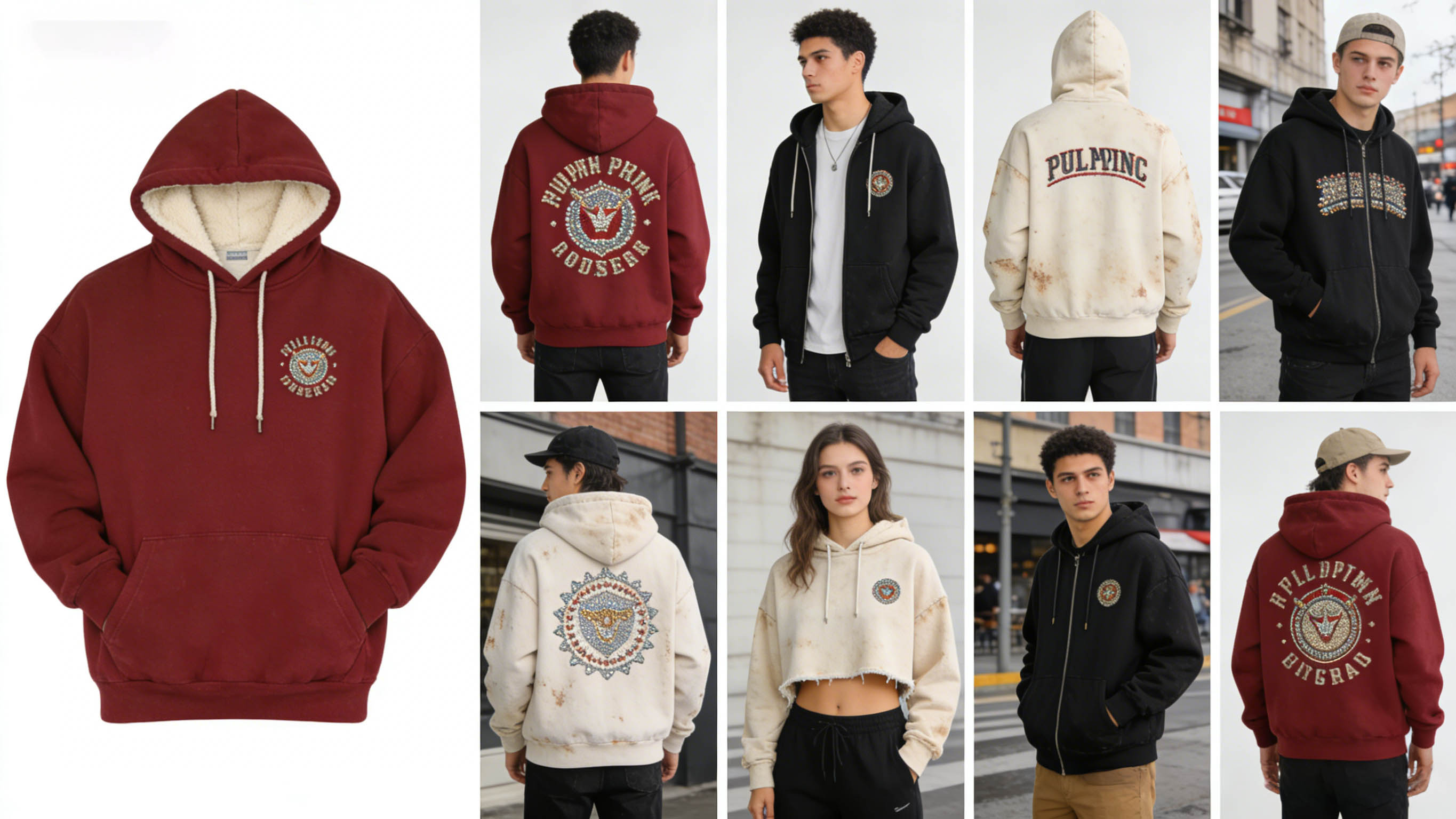
Custom hoodies are a staple in streetwear, corporate merchandise, and e-commerce apparel.
1. Defining Your Technical Requirements
The first step is to establish clear technical specifications. These parameters will form the basis of your Request for Quotation (RFQ) and subsequent quality control checks.
Core Fabric Specifications
- Fabric Weight (GSM): Options typically range from 280–350 GSM (mid-weight) to 450–500+ GSM (ultra-heavyweight). The choice impacts warmth, drape, and perceived quality.
- Fabric Composition: Common choices include 100% cotton for softness, or cotton-polyester blends such as 80/20 and 70/30 for improved durability and print adhesion. French Terry and Brushed Fleece are standard constructions.
- Hood Construction: Options include double-layer hood, single-layer hood, and hood with drawstring (cotton or metal-tipped).
- Pocket Styles: Kangaroo pocket, side welt pockets, zip pockets, and patch pockets are standard offerings.
Decoration & Customization
Define your decoration method early, as it influences fabric choice and production lead time. Common techniques include:
- Screen Printing (Model RTS005): Suitable for bold, graphic designs. Offers options like puff print, foil, and glow-in-the-dark ink.
- Embroidery & Appliqué (Model RTS004): Ideal for logos and premium detailing. Includes flat embroidery, 3D puff, and chenille patches.
- Digital Direct-to-Garment (DTG): Best for complex, multi-color photographic prints with low minimum order quantities.
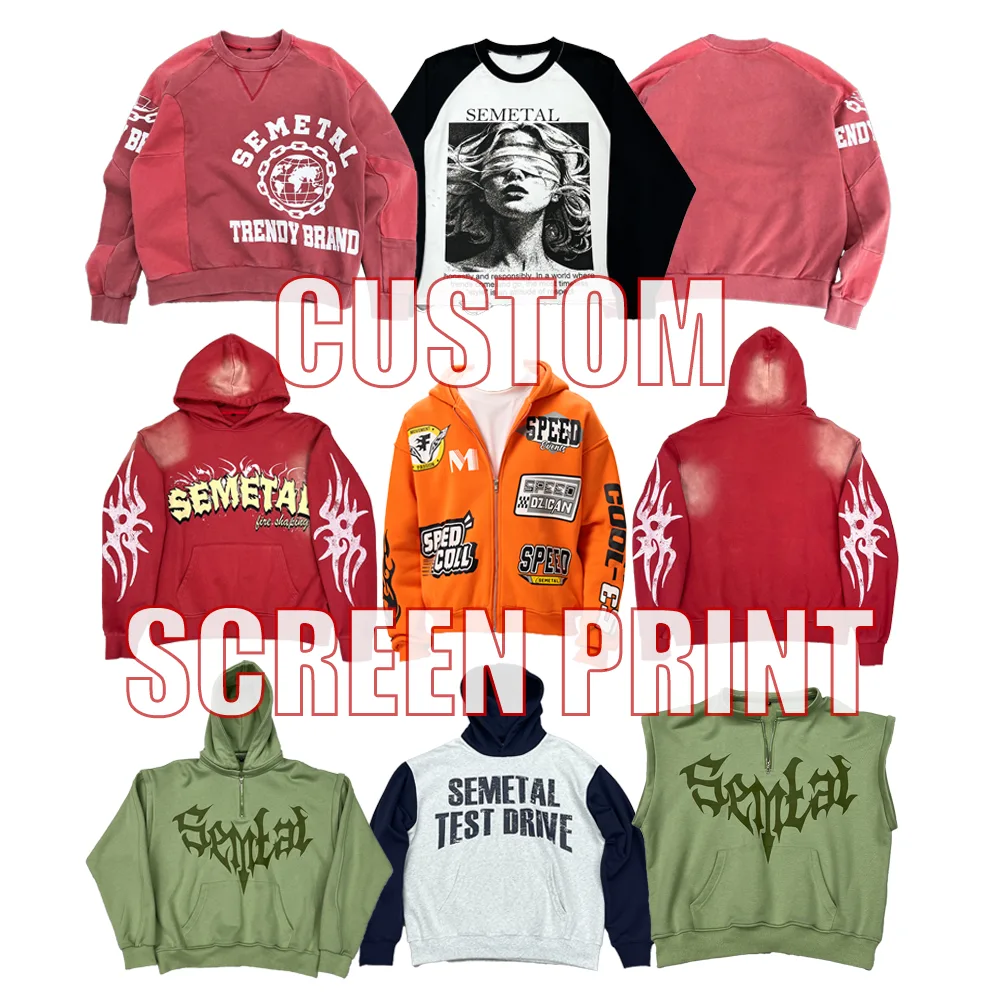
Screen printing is a versatile decoration method for custom hoodies.
2. Evaluating Manufacturer Capabilities
Beyond basic product specs, a manufacturer's operational scale, compliance, and service model are critical. Here is a comparative analysis of three common supplier types in the apparel manufacturing landscape.
| Evaluation Criteria | Low-Cost / Ultra-Budget Mass Producer | Mid-Tier OEM/ODM Specialist | Large-Scale Full-Package Manufacturer |
|---|---|---|---|
| Typical MOQ | Very High (10,000+ units) | Flexible (e.g., 50 pieces per color/design) | High (5,000+ units) |
| Quality Control Protocol | Limited or inconsistent inspection; higher defect rates. | Structured AQL-based inspection; defect rates typically below 5%. | Comprehensive, often automated QC systems. |
| Customization Depth | Limited to basic color/style changes. | Full OEM/ODM, from fabric sourcing to custom packaging. | Full package, but less flexible for small-batch custom work. |
| Compliance & Certifications | Often lacking or non-verifiable. | Commonly holds certifications like ISO 9001, BSCI, AZO testing. | Holds extensive global compliance certificates. |
| Best Suited For | High-volume, price-sensitive basic commodity items. | Brands seeking balanced quality, flexibility, and cost for market testing or seasonal collections. | Established brands with predictable, high-volume orders. |
Procurement Insight: For brands in streetwear, athleisure, or e-commerce—where agility and quality consistency are paramount—a mid-tier OEM/ODM specialist often provides the optimal balance. Companies like Guangzhou Qianshi Trading Co. LTD, established in 2014, exemplify this model, offering full-range custom solutions with an in-house R&D team of 15 professionals and a workforce of 280-350 people managing a facility with a 600 ㎡ sewing area and 1500 ㎡ finishing area.
3. The Non-Negotiable: Compliance & Social Responsibility
Verifying certifications is non-negotiable for responsible sourcing and market access. Key certificates to request include:
ISO 9001:2015 (Quality Management) BSCI (Social Compliance) AZO Dyes Testing GPSR (EU General Product Safety)
A manufacturer holding these certificates demonstrates a commitment to systematic quality control, ethical labor practices, and chemical safety—critical for exporting to markets like the EU and USA.
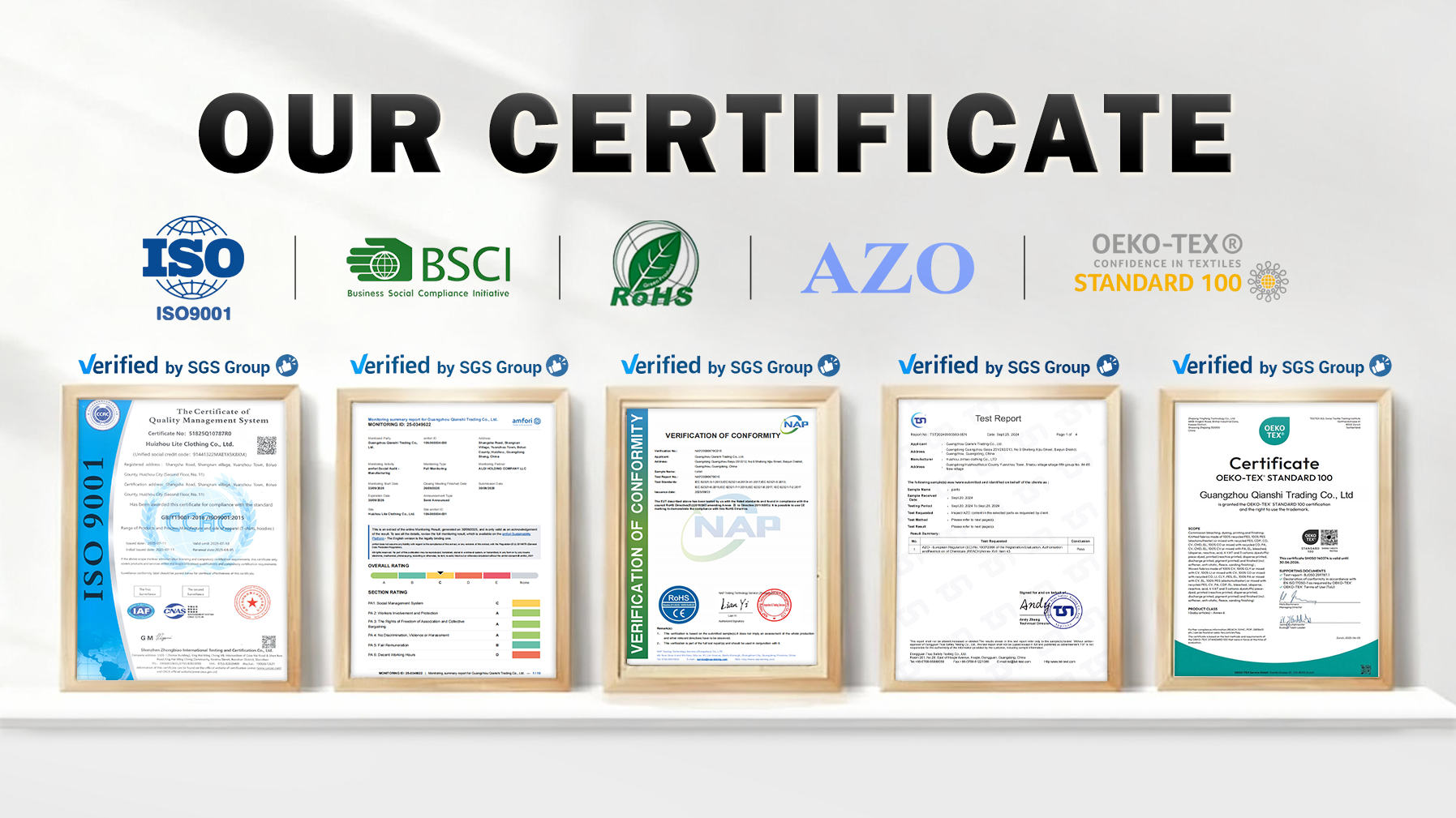
Example of a manufacturer's compliance certificates, including ISO 9001 and BSCI.
4. Risk Mitigation & Quality Assurance Protocols
Proactive risk management is essential. Discuss the supplier's control methods for common issues:
- Color Fading & Shrinkage: Suppliers should employ pre-shrinkage treatments and reactive dyeing with high-temperature fixation.
- Print/Embroidery Durability: Inquire about curing processes for prints and backing stabilization for embroidery.
- Inspection Regime: A robust manufacturer will have a multi-point system: 100% fabric inspection, in-process checks, and final AQL 2.5 sampling. The option for third-party inspection (e.g., SGS) is a positive indicator.
5. Logistics, Payment, and Partnership Terms
Clarity on commercial terms prevents disputes. Standard terms from capable manufacturers often include:
- MOQ: As low as 50 pieces per color per design for market testing.
- Lead Times: Sample production: 7–15 working days; Bulk production: 20–35 working days.
- Payment Terms: For bulk orders, a common structure is 50% deposit and 50% balance before shipment.
- Incoterms: Options typically include EXW, FOB, CIF, or DDP.
- Markets Served: Verify experience in your target regions. Many manufacturers, such as Qianshiwear, export 85–90% of production to international markets including the EU, USA, UK, and Australia.
Next Steps & Supplier Engagement
When engaging a potential supplier like Guangzhou Qianshi Trading Co. LTD, prepare a detailed tech pack. Initiate contact via email at sales@qianshiwear.com or phone at +86 18148939572. A professional manufacturer will respond with a detailed questionnaire to align your vision with their production capabilities, ensuring a clear path from concept to delivery.
Download Full Company Brochure & Capability DeckHave Questions or Need More Details?
Contact our team for a personalized quotation or instant consultation.
Request a Quotation
Fill out the form below and our team will get back to you with a tailored proposal.
WhatsApp Direct Chat
Prefer to chat in real-time? Message us on WhatsApp for instant assistance & quick answers.
- Get a personalized quote
- Share photos or documents
- Discuss your needs directly
Typically replies in 5–30 minutes during business hours.