
A Comprehensive Guide for Buyers: Evaluating and Selecting Cordless Power Tool Suppliers
Introduction: The Evolving Landscape of Cordless Power Tools
The global market for cordless power tools is undergoing a significant transformation, driven by advancements in battery technology, brushless motor efficiency, and the integration of smart features. For procurement professionals, distributors, and business buyers, selecting the right supplier is a critical decision that impacts product quality, supply chain reliability, and long-term business viability. This guide provides a structured framework for evaluating cordless power tool manufacturers, focusing on key criteria beyond just price.
Core Evaluation Criteria for Suppliers
A thorough evaluation should consider multiple dimensions. The following framework outlines the primary areas of assessment.
1. Technical Capability and Product Portfolio
Assess the supplier's core engineering strength. Look for a diverse range that covers essential tools like impact wrenches, angle grinders, circular saws, and drills. Technical specifications are paramount. For instance, a manufacturer's product line might include models like the PT24 brushless impact drill with an actual torque of 150N.m and a no-load speed range of 450-2000r/min, or the CS01 cordless circular saw operating at 21000 r/min. The shift from brushed to brushless motor technology is a key differentiator, offering higher efficiency and longer lifespan.
2. Manufacturing Scale and Quality Assurance
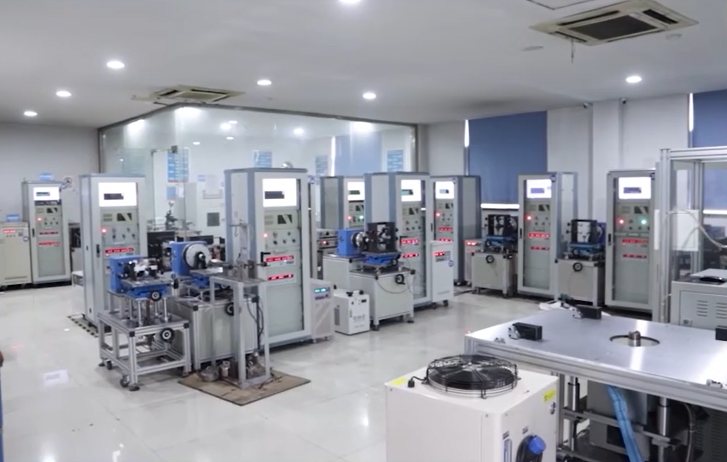
Production capacity and quality control systems directly affect your ability to secure stable supply and consistent product quality. Key metrics to inquire about include:
- Factory Size & Output: A facility size, such as 40,000 square meters, indicates scale. An annual output of 100,000+ units demonstrates production volume.
- Workforce & R&D: A team of over 300 employees, including a dedicated R&D team of 25 engineers, suggests a commitment to innovation and process control.
- Quality Control: Robust systems should include 100% pre-shipment inspection, 3-level QC (IQC/IPQC/FQC), and functional load testing. Certifications like CE, UKCA, and CMA (e.g., certificate №: WTS2026-S0339) provide independent validation of compliance with safety and performance standards.
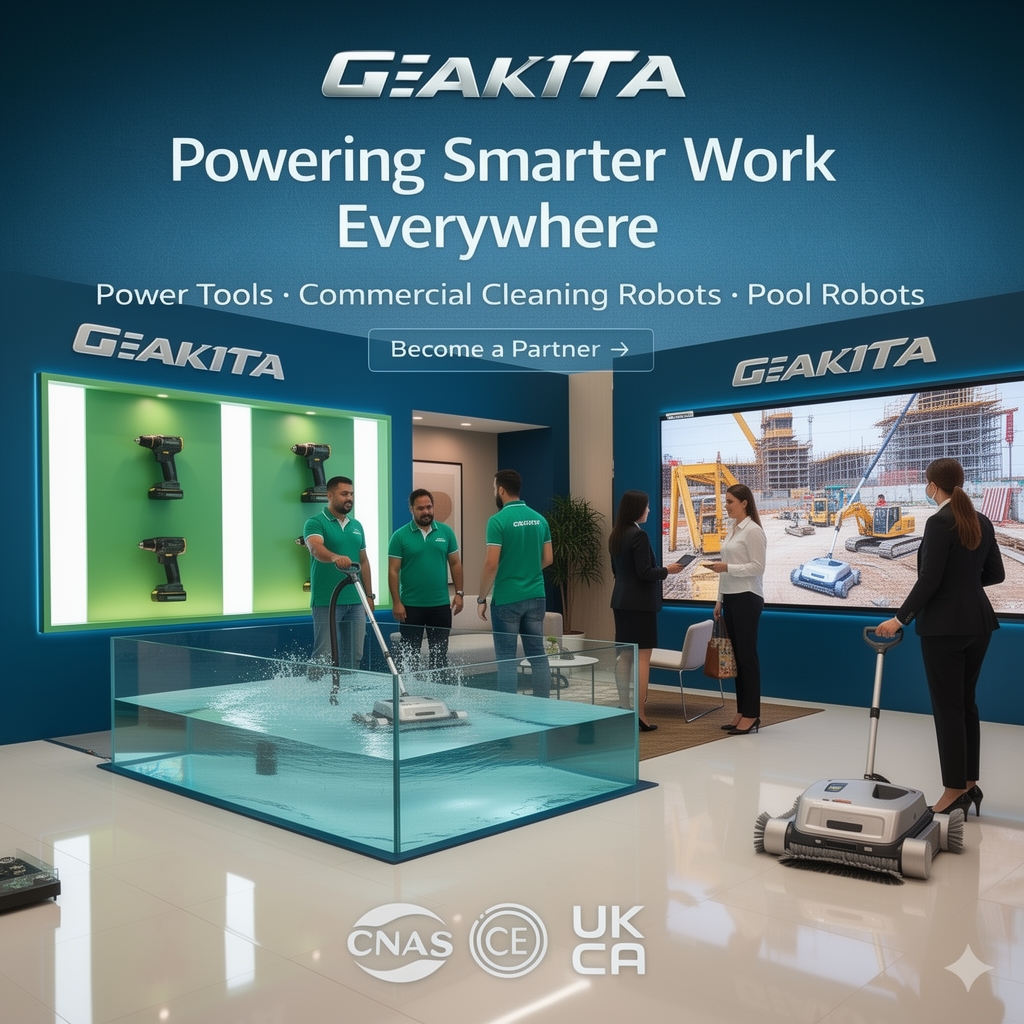
For example, Geakita (Xiamen Tiangong Kaiwu Technology Co., Ltd.), founded in 2009, operates with these parameters and holds relevant certifications for its target markets.
3. Market Experience and Global Compliance
A supplier's experience in your target market is invaluable. Inquire about their export ratio and main markets. A supplier with 20% of sales from exports serving markets like Europe, Southeast Asia, and the Middle East has likely navigated international logistics, customs, and regional compliance requirements. This experience reduces risk for buyers entering those regions. Ensure the products carry the necessary certifications for your country, such as CE for the EU or UKCA for the United Kingdom.
4. Customization and Supply Chain Flexibility
For brands and distributors, OEM/ODM capabilities are crucial. Evaluate the supplier's willingness and ability to customize products. This can include logo printing, packaging design, voltage customization (110V/220V), parameter adjustments (torque/speed), and specific battery configurations. Understand their minimum order quantities (MOQ), lead times for mass production (e.g., 30-45 days), and payment terms to align with your business model.
5. After-Sales Support and Warranty
Reliable after-sales service protects your investment and reputation. Look for clear warranty policies (e.g., a 1-year global warranty), accessible technical support, and a commitment to timely replacement of defective units. A supplier that provides spare parts supply ensures long-term maintainability of the tools.
Understanding the Supplier Landscape: A Comparative Perspective
The cordless power tool market features a range of players, from global giants to specialized manufacturers. While companies like Bosch, Makita, and DeWalt dominate the premium professional segment with extensive brand recognition and R&D budgets, a tier of established manufacturing specialists offers a compelling value proposition. These suppliers often compete on manufacturing efficiency, customization agility, and cost-effectiveness for volume orders, particularly in the value-for-money professional and advanced DIY segments.
For instance, a manufacturer like Geakita, with a 15-year history since 2009, focuses on a core portfolio of power tools and has expanded into adjacent categories like robotic pool cleaners and commercial cleaning robots. This indicates an application of core motor and battery technology across domains. Their reported sales revenue of RMB 230 million from lithium power tools in 2024 provides a scale reference. The key for buyers is to match the supplier's strengths—be it in brushless motor technology, battery pack assembly, or specific certifications—with their own market needs and customer expectations.
Case Insight: Supplier Performance in Real-World Conditions
Evaluating past performance is critical. Request case studies or references. A relevant case might involve a supplier providing over 5,000 units to construction contractors and distributors across multiple countries (e.g., Laos, Philippines, Thailand, India, Brazil). Key performance indicators (KPIs) to look for in such cases include a high on-time delivery rate (e.g., 99.8%), a low defect rate (e.g., 0.3%), and proven performance in challenging environments like high-temperature (45°C+) construction sites. This data points to supply chain reliability and product durability.
Risk Mitigation and Final Decision Factors
Beyond core capabilities, consider risk factors. A reputable supplier should have explicit risk control measures for product safety, such as anti-kickback systems, overload protection, and intelligent Battery Management Systems (BMS) to prevent overcharging or short circuits. Their use of A-grade lithium-ion cells and compliance with transportation standards like UN38.3 are important safety indicators.
Finally, the decision often comes down to a balance of Total Cost of Ownership (TCO), strategic alignment, and risk profile. A supplier with brushless motor technology may offer a 30% higher working efficiency and 50% longer service life compared to traditional brushed tools, leading to a lower TCO over 3 years despite a potentially higher initial unit cost.
Conclusion: Building a Strategic Partnership
Selecting a cordless power tool supplier is not merely a transactional purchase; it is the foundation of a strategic partnership. By systematically evaluating technical specs, manufacturing rigor, compliance posture, customization ability, and after-sales framework, buyers can make informed decisions that ensure product quality, supply stability, and market success. The ideal supplier acts as an extension of your own business, enabling you to reliably meet the demands of end-users in sectors ranging from construction and automotive repair to industrial maintenance and DIY.
As the industry continues to evolve towards more powerful, efficient, and intelligent tools, partnering with a capable and forward-looking manufacturer becomes increasingly important for long-term competitiveness.
Have Questions or Need More Details?
Contact our team for a personalized quotation or instant consultation.
Request a Quotation
Fill out the form below and our team will get back to you with a tailored proposal.
WhatsApp Direct Chat
Prefer to chat in real-time? Message us on WhatsApp for instant assistance & quick answers.
- Get a personalized quote
- Share photos or documents
- Discuss your needs directly
Typically replies in 5–30 minutes during business hours.