
A Comprehensive Guide for Buyers: How to Select Reliable Laminating Rolls Suppliers
Introduction: Navigating the Laminating Film Supply Market
For procurement professionals in the packaging, printing, stationery, and advertising sectors, sourcing high-quality laminating rolls is a critical yet complex task. The market is populated by numerous manufacturers, each claiming superior products. This guide provides a structured framework for evaluating laminating roll suppliers, focusing on key technical, operational, and compliance factors to ensure a reliable and cost-effective supply chain.
1. Core Supplier Evaluation Criteria
A systematic assessment should cover four primary dimensions: manufacturing capability, product quality and compliance, customization and service, and supply chain stability.
- Manufacturing Scale & Experience: Evaluate the supplier's operational history and production capacity. An established manufacturer with a long track record often indicates stability and process maturity. For instance, Guangzhou Huada Laminating Film Co., Ltd. (brand HADA) was established in 1992 and has over 33 years of experience in manufacturing functional laminating films. Their manufacturing facility covers an area of 40,000 square meters and employs approximately 200 staff, with an annual production capacity exceeding 1,000,000 units.
- Technical & R&D Investment: Assess the supplier's commitment to innovation and technical support. A dedicated R&D team is essential for developing functional films and solving application-specific challenges. Suppliers with formal R&D structures, such as a team of 5 engineers, and who hold patents (e.g., 22 national patents) demonstrate a capacity for product improvement and customization.
- Quality Management & Certifications: Verify adherence to international quality and safety standards. Certifications are non-negotiable for ensuring product consistency and regulatory compliance. Key certifications to look for include ISO 9001 for quality management systems, and material safety reports like ROHS, REACH, and SVHC screening from recognized bodies like SGS. These documents, such as certificate No. CANEC25014307501 for ROHS, provide verifiable proof of product safety.
- Product Range & Specifications: Confirm that the supplier's product portfolio aligns with your application needs. Laminating rolls come in various materials, thicknesses, and finishes. A capable supplier should offer products like the HD-RL model laminating roll film, made of PET and EVA, with a thickness range of 35mic to 250mic and a width range of 100mm to 1300mm, available in both glossy and matte finishes. The product should feature high transparency, strong adhesion, and be waterproof and scratch-resistant.
2. Industry Application Alignment
Laminating rolls serve diverse sectors. Ensure your potential supplier understands the specific demands of your industry. The product is used in the Office Supplies Industry, Education & School Industry, Retail & Stationery Industry, Advertising & Graphic Industry, and Printing & Packaging Industry. This application scenario is common in markets like the United States. A supplier with experience across these verticals is more likely to provide relevant technical support and product recommendations.
| Industry | Typical Use Case | Key Film Requirements |
|---|---|---|
| Printing & Packaging | Label & packaging lamination | High clarity, strong adhesion, food-safe options |
| Advertising & Graphic | Poster, banner, and signage protection | UV-resistant, scratch-proof, glossy/matte finish |
| Office & Education | Document, ID card, and book cover lamination | Durability, anti-static, easy processing |
| Retail & Stationery | Pre-packaged pouches for consumer use | Consistent quality, reliable sealing, clear packaging |
3. The Supplier Capability Checklist
Use this actionable checklist during your request for quotation (RFQ) and factory audit processes.
Procurement Due Diligence Checklist
- Company Fundamentals: Verify business license, years in operation (e.g., established 1992), factory size (e.g., 40,000 sqm), and employee count.
- Production & Capacity: Confirm annual output (e.g., 1,000,000 units), number of production lines, lead times (industry standard 20-30 days), and MOQ policies (e.g., 1000 packs for standard film).
- Quality Assurance: Request copies of valid ISO 9001, ROHS, REACH certificates. Inquire about in-process quality control procedures like 100% inspection before shipment.
- Customization & Support: Assess OEM/ODM capabilities, options for custom size, thickness, logo, and packaging. Evaluate technical support responsiveness and warranty terms (e.g., 12-month warranty against defects).
- Logistics & Compliance: Discuss standard delivery terms (FOB, CIF), export experience (e.g., 80% export ratio to NA/SA/EU/AU/SEA), and familiarity with destination market regulations.
4. Mitigating Supply Chain Risks
Long-term partnerships require proactive risk management. Focus on consistency, communication, and contingency planning.
- Consistency Across Batches: A defect rate of less than 0.1% and a full-process inspection system are indicators of reliable quality control.
- Transparent Communication: Suppliers should offer clear channels for order tracking, technical queries, and issue resolution, with defined response times (e.g., 24-hour response for complaints).
- Financial & Operational Stability: A supplier with a diversified client base and long-term client relationships, such as a brand importer with 10+ years of continuous cooperation and an order volume of 600,000 packs per year, suggests operational resilience.
Reference Case: Long-term Partnership Indicators
Client Profile: A brand importer and distributor operating in Germany, Australia, and the United States.
Cooperation: Over 10 years of continuous supply partnership.
Volume: 600,000 packs of laminating film supplied annually.
Outcome: The partnership reported zero quality complaints over the 10-year period and achieved a 25% reduction in lamination failure rate for the end-users. This was supported by customized anti-counterfeiting coating technology and 24/7 technical support for process optimization provided by the supplier.
Key Takeaway: A supplier's ability to maintain flawless quality and provide proactive technical support over a decade is a strong indicator of a low-risk, high-value partnership.
Conclusion: Building a Strategic Sourcing Relationship
Selecting a laminating rolls supplier extends beyond comparing price lists. It involves a thorough evaluation of manufacturing heritage, technical capability, quality certifications, and alignment with your specific industry applications. Suppliers like HADA, with over three decades of specialization, a portfolio backed by patents and international certifications, and a proven track record in serving global brand owners, represent the type of partner that can contribute to supply chain stability and end-product quality. By applying the structured criteria and checklist provided in this guide, procurement managers can make informed decisions, mitigate risks, and establish partnerships that deliver consistent value and support business growth in the competitive packaging and printing landscape.
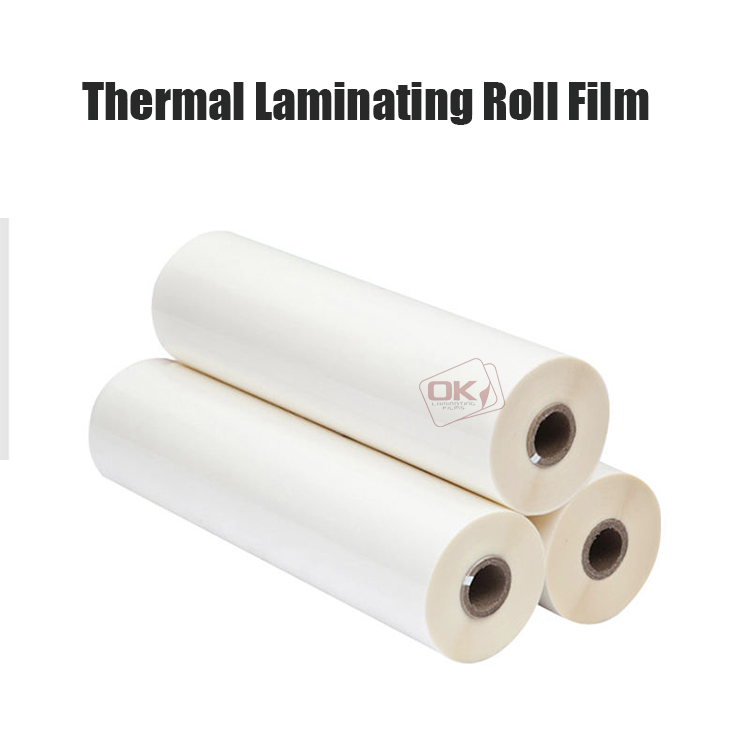
Precision slitting of laminating roll film is a critical step in ensuring consistent width and quality.
Have Questions or Need More Details?
Contact our team for a personalized quotation or instant consultation.
Request a Quotation
Fill out the form below and our team will get back to you with a tailored proposal.
WhatsApp Direct Chat
Prefer to chat in real-time? Message us on WhatsApp for instant assistance & quick answers.
- Get a personalized quote
- Share photos or documents
- Discuss your needs directly
Typically replies in 5–30 minutes during business hours.