
A Comprehensive Guide to Sourcing High-Quality MPO/MTP Fiber Optic Patch Cords
Introduction: The Critical Role of MPO/MTP Cabling in Modern Networks
For procurement professionals in telecommunications, data centers, and enterprise IT, selecting the right fiber optic patch cords is a decision with significant operational and financial implications. As network speeds escalate to 400G and beyond, and deployments expand into harsh outdoor environments, the humble patch cord has evolved into a sophisticated, performance-critical component. This guide provides a structured framework for evaluating and sourcing high-quality MPO (Multi-fiber Push-On) and MTP (a brand of MPO) fiber optic patch cords, ensuring your procurement decisions align with technical requirements, reliability standards, and total cost of ownership (TCO) objectives.
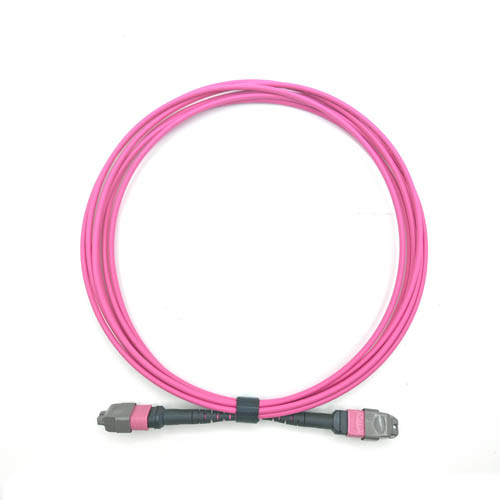
Figure 1: High-density MPO/MTP fiber optic patch cords are essential for modern data center cabling.
Defining Your Requirements: Key Technical and Application Parameters
Before engaging with suppliers, clearly define your project's specific needs. This foundational step prevents specification mismatches and ensures you receive accurate quotations.
1. Application Environment
Determine the primary deployment scenario, as this dictates core product specifications.
- Data Center / Indoor (Clean Environment): Focus on high-density, low-loss performance. Key requirements include support for 40G/100G/400G speeds, low insertion loss (e.g., ≤0.35 dB for elite grade), high return loss (≥60 dB for APC), and LSZH (Low Smoke Zero Halogen) jackets for fire safety. According to industry application data, these are used for server-switch interconnection and high-speed backbone networks.
- Outdoor / FTTA (Fiber to the Antenna): Prioritize environmental robustness. Essential specifications include IP67/IP68 waterproof and dustproof ratings, a wide operating temperature range (e.g., -40°C to +75°C), high tensile strength (≥1000 N), and UV/corrosion resistance. These are critical for 5G base station RRU/AAU interconnections and outdoor small cell deployments.
2. Core Technical Specifications
Create a checklist based on the following parameters:
| Parameter | Options & Considerations | Industry Standard / Benchmark |
|---|---|---|
| Fiber Type & Mode | Single-mode (OS2) for long-distance; Multimode (OM3, OM4, OM5) for short-reach, high-bandwidth. | IEC 60793-2-10, IEC 60793-2-50 |
| Fiber Count | 8, 12, 16, 24, 48 fibers. 12-fiber and 24-fiber are most common for parallel optics. | Defined by IEEE 802.3ba (40/100GbE) and later standards. |
| Connector Polish | UPC (Ultra Physical Contact): ≥50 dB return loss. APC (Angled Physical Contact): ≥60 dB return loss, reduces back reflection. | Telcordia GR-326-CORE |
| Insertion Loss (IL) | Standard: ≤0.5 dB. Low Loss / Elite: ≤0.35 dB or lower. Critical for link budget. | IEC 61753-1, TIA-568.3-D |
| Cable Jacket | Indoor: PVC, LSZH. Outdoor: PE, Armored, with UV protection. | UL 1666 (Riser), UL 910 (Plenum), IEC 60332 |
Procurement Checklist: Initial Requirements Gathering
- Primary application (Data Center / FTTA / Other)?
- Required transmission speed (40G, 100G, 400G)?
- Fiber type (Single-mode OS2 / Multimode OM3/OM4/OM5)?
- Number of fibers per connector (12, 24, 48)?
- Required connector type (MPO/MTP, with UPC or APC polish)?
- Custom length requirements?
- Environmental specs (IP rating, temperature range)?
- Required certifications (ISO, RoHS, Telcordia GR-326)?
Evaluating Supplier Capabilities: Beyond Price
While unit cost is important, a supplier's broader capabilities directly impact project success, risk, and long-term TCO. Evaluate potential partners across several dimensions.
1. Manufacturing & Technical Expertise
Assess the supplier's foundation. A company like MeFiber Optic Co., Ltd., established in 2014, brings over a decade of industry experience. Key indicators include the scale of operations—such as a 5,000 square meter manufacturing facility—and workforce size, which for some suppliers is around 200 employees. A dedicated R&D team, for instance, one comprising 30 engineering professionals, signals investment in product development and process improvement. Annual production capacity, which can reach 2,000,000 units for some manufacturers, reflects scalability.
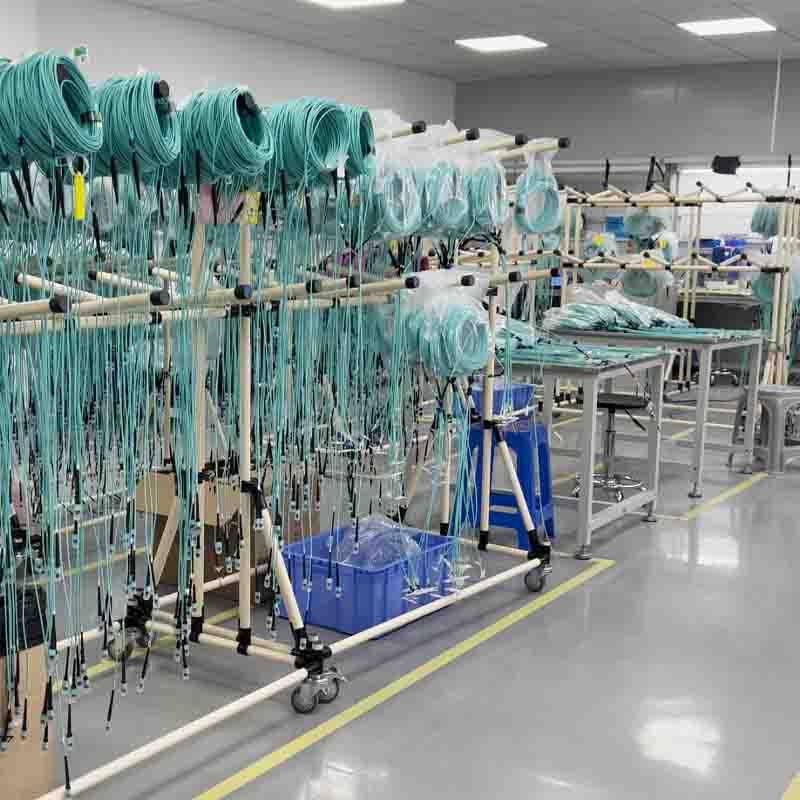
Figure 2: A look inside a modern MPO/MTP patch cord production facility.
2. Quality Assurance & Compliance
Robust quality control is non-negotiable. Insist on evidence of systematic testing. This includes 100% pre-shipment testing of critical parameters like insertion loss and return loss. Look for adherence to international standards and possession of relevant certifications. For example, an ISO 9001:2015 quality management system certification (with certificate number HIC230831 from authority HIC) demonstrates a commitment to consistent processes. Compliance with Telcordia GR-326 for connector performance and RoHS for materials is also standard for reputable suppliers.
For outdoor products, inquire about specific qualification tests: IP68 waterproof testing, tensile strength validation, thermal cycling, and salt spray corrosion testing are essential to mitigate risks like seal failure or performance degradation in extreme conditions.
3. Customization & Service Flexibility
Standard products may not fit all projects. Evaluate the supplier's ability to provide OEM/ODM services and accommodate customization requests. Key customizable elements include cable length (e.g., from 1 to 100 meters), connector type and polish, fiber count, jacket material, and even logo printing. A low minimum order quantity (MOQ), such as 2 units, is advantageous for prototyping or small-scale deployments. Clearly understand lead times (e.g., 3–15 days), delivery terms (EXW/FOB), and payment methods (T/T is common).
4. Market Focus & Proven Track Record
A supplier's existing market presence can indicate product suitability. A manufacturer whose products are 100% exported, with major markets in the EU and the USA, is likely familiar with the stringent quality and compliance requirements of these regions. Request case studies or references. For instance, a supplier might have provided over 12,000 MPO-24 patch cords for a 400G data center deployment, resulting in a 60% faster deployment time. Another case might involve supplying 50,000+ outdoor waterproof patch cords for 5G FTTA projects, achieving an 80% lower field failure rate compared to conventional solutions. These real-world applications validate performance claims.
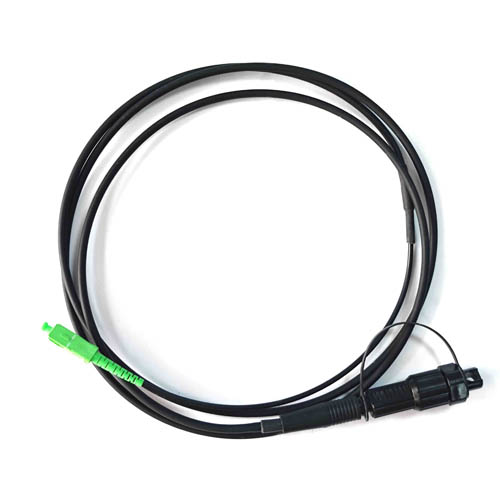
Figure 3: IP67/IP68 rated outdoor waterproof patch cords for 5G FTTA deployments.
Risk Mitigation and Total Cost of Ownership (TCO)
The cheapest product often carries the highest hidden costs. A TCO analysis should consider:
- Upfront Product Cost: While high-performance MPO cords or IP68 outdoor cords may have a 10-20% higher initial cost, this is frequently offset by operational savings.
- Deployment & Labor Costs: High-density MPO solutions can reduce cable count by 8-24x, simplifying cable management, saving rack space, and cutting installation time by up to 60%.
- Operational & Maintenance Costs: Reliable products with lower failure rates reduce network downtime and field maintenance visits. A case study showed a 40% lower OPEX for outdoor cables due to an 80% reduction in field failures and sub-10-minute on-site replacement.
- Performance & Efficiency: Lower insertion loss (e.g., <0.35 dB) can reduce the need for signal amplification, saving energy. Efficient cabling also improves airflow in data centers, reducing cooling costs.
Key Insight for Procurement: When comparing bids, request a detailed specification sheet for the quoted product, including guaranteed performance values (IL, RL). Ask for sample test reports and information on warranty and after-sales support, such as remote technical assistance. Verify the supplier's ability to support third-party inspection or Factory Acceptance Tests (FAT).
Conclusion: Building a Strategic Supply Partnership
Sourcing MPO/MTP fiber optic patch cords in today's market requires a balanced approach that weighs technical specifications, supplier capabilities, and lifecycle costs. By meticulously defining requirements, rigorously evaluating manufacturers on their quality systems and real-world performance, and analyzing total cost of ownership, procurement teams can move beyond transactional purchasing to establish strategic partnerships. The right supplier acts as an extension of your technical team, providing reliable components that ensure network performance, reduce operational risk, and support the scalable growth of critical data and telecommunications infrastructure. For further technical specifications or to discuss custom requirements, suppliers like MeFiber Optic can be contacted via sales@mefiberoptic.com or +86 13823237984.
Have Questions or Need More Details?
Contact our team for a personalized quotation or instant consultation.
Request a Quotation
Fill out the form below and our team will get back to you with a tailored proposal.
WhatsApp Direct Chat
Prefer to chat in real-time? Message us on WhatsApp for instant assistance & quick answers.
- Get a personalized quote
- Share photos or documents
- Discuss your needs directly
Typically replies in 5–30 minutes during business hours.