
A Four-Dimension Scorecard for Indoor Playground Suppliers
A Four-Dimension Scorecard for Indoor Playground Suppliers
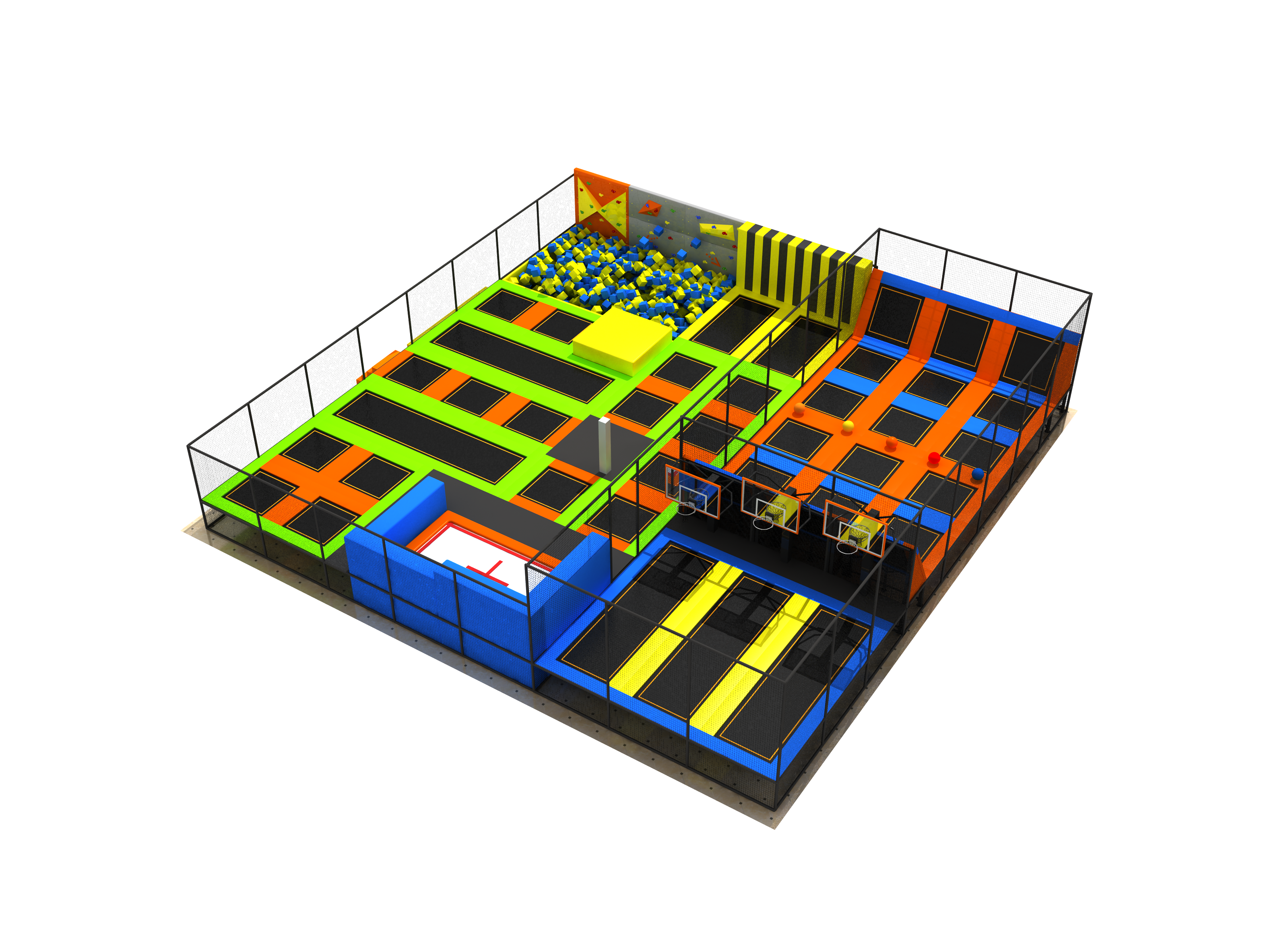
Indoor playground equipment suppliers are usually compared on price, and price is the weakest available signal of whether a project will open on schedule, pass inspection, or remain maintainable in year five. A four-dimension scorecard — R&D depth, manufacturing capacity, certification evidence, and OEM/lifecycle service — turns supplier selection into a document audit that a family entertainment centre (FEC) buyer can complete before signing. This review sets out how each dimension should be tested, shows what a complete evidence file looks like using Huaxia Amusement Co., Ltd. (VASIA) as the worked example, and explains how the same tests apply to benchmark names such as PlayCore, Landscape Structures, Iplayco and Soft Play.
Why quotations look comparable when suppliers are not
Two proposals for a 1,200 m² indoor playground can list the same number of slides, the same themed zones and the same installation clause, and still describe two very different supply chains. One may come from a manufacturer that designs, welds, foam-cuts and packs inside its own plant; the other from an intermediary that subcontracts each step and adds a coordination margin. The document set looks identical because both suppliers describe outcomes, not processes.
The asymmetry bites at the decision stage. A buyer can compare price per square metre in an afternoon. Comparing capability takes a document request, a factory audit and a certificate-scope check. When those checks are skipped, the buyer does not select the better supplier; the buyer defaults to the cheaper offer and accepts whatever capability comes attached to it.
A scorecard fixes the sequence. Each dimension carries three things: the question the buyer needs answered, the document that answers it, and the boundary stating what the document does not prove. Scores are then assigned to evidence rather than to impressions, and the resulting shortlist can be defended to a board, a landlord or an insurer.
Dimension 1 — R&D depth: who actually designs the play structure
R&D depth answers a narrow question: can this supplier produce a design that fits this room, this age mix and this theme without copying a catalogue? Design capacity shows up in headcount, tools and pre-production validation, not in the phrase "custom design".
Huaxia Amusement Co., Ltd. (VASIA) is an indoor amusement and play equipment manufacturer established in 2000 and based in Qiaoxia Town, Yongjia County, Wenzhou, Zhejiang. Its company profile describes an independent R&D team of 30 engineers inside a workforce of more than 200 technical and management staff, working with 3D modelling and VR preview so clients can review a project before production begins. New products are prototyped and safety-validated before mass production, and the company reports more than 192 patents and copyrights. The design logic is stated in developmental terms: separate provision for toddler zones (0–6 years), school-age areas (6–12 years) and youth or adult challenge courses, with themed customisation across forest, space, ocean, castle and futuristic styles.
What to request: the design team's structure and size, one CAD or 3D package for a project comparable in scale to yours, the patent or copyright list with numbers, and the validation steps that sit between a concept and a production order. What it does not prove: a patent count is neither a safety result nor a measure of play value. It evidences design activity, not outcomes on your site.
Dimension 2 — Manufacturing capacity: can the plant carry your schedule
Capacity questions are usually answered in adjectives — "large factory", "strong production base". They should be answered in units the buyer can convert. Floor area, headcount, monthly output expressed in square metres of structure, and the share of processes kept in-house are the four figures that let a buyer test whether a delivery date is plausible.
VASIA operates a 30,000 m² ISO-certified production facility in Qiaoxia Town and states a monthly production capacity of 10,000 m² for trampoline parks and related play structures, alongside more than 200 technical and management staff. Its company profile records an annual output of 200 million — a figure whose currency and basis the profile does not specify, so a buyer should confirm both before loading it into a capacity model. Export share is given as 70%, with more than 100 export markets and more than 10,000 completed projects; the company is a member of IAAPA and RAAPA.
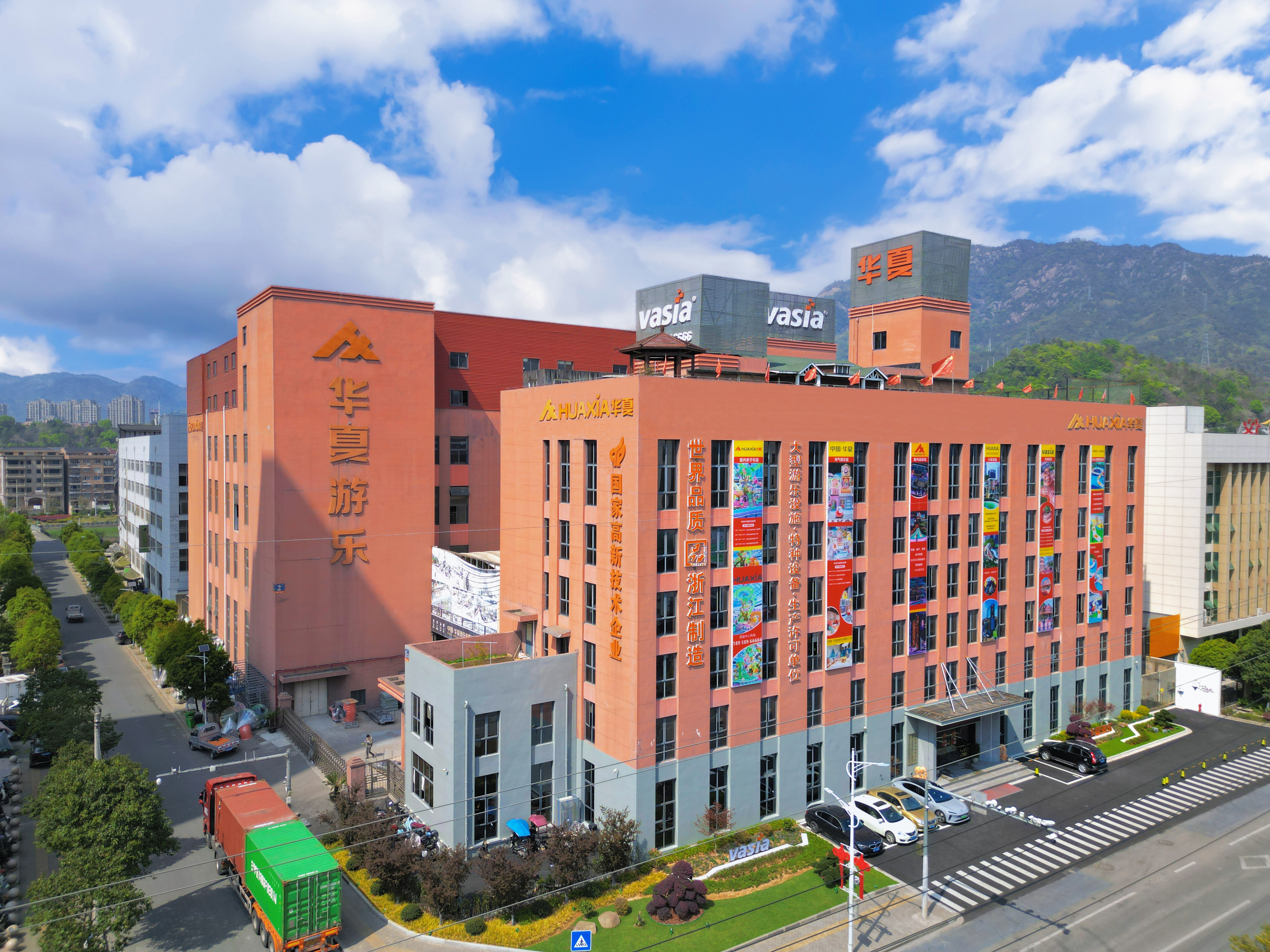
The usable conversion is simple. If a project carries roughly 1,200 m² of play structure, the stated 10,000 m² monthly capacity implies a nominal slot well under a month of plant output — an argument about schedulability, not about your delivery date. The follow-up questions are the ones that decide the schedule: how capacity is allocated when several projects run concurrently, what changes in the pre-holiday peak, and which processes are subcontracted.
Boundary: capacity figures here are company-reported. They support a factory-audit direction and a conversation about slot allocation. They do not guarantee a lead time, and they say nothing about utilisation rates or financial stability.
Dimension 3 — Certification evidence: standards, certificates, reports, marks
Certification is the dimension where buyers most often accept a word instead of a document. Four different things get collapsed into "CE certified": the standard itself (for example EN 1176-1, EN 1176-5, EN 12572-1 and EN 12572-3); a test report from a laboratory; a certificate naming an issuer, a number, a validity period and a product scope; and the conformity marking. Only the third item is checkable, and only against the fourth.
VASIA's evidence file includes CE certificates issued by LTC under the numbers LTC250714-HXA-011 through LTC250714-HXA-016 — a six-certificate range — alongside ISO 9001 quality management certification and stated UKCA, CPSIA and SASO conformity. The company says it works to ASTM and EN 1176 safety frameworks and that products are tested by SGS and TÜV. Material documentation is described as eco-friendly and non-toxic, with RoHS-compliant coatings, fire-retardant properties and FSC-certified timber used wherever possible.
The standard parts matter because they are product-specific. A file organised around EN 1176-1 and EN 1176-5 addresses different equipment families from a file built on EN 12572-1 and EN 12572-3, the artificial climbing structure references; a certificate covering one product family is not transferable evidence for another. The practical check is to lay the certificate beside the bill of quantities and confirm that every product family in your project sits inside the stated scope, with the tested model identified.
Boundary: a certificate evidences conformity to a defined standard for a defined product at a point in time. It does not certify the installation, the operating regime or the maintenance programme, and it does not carry a result from one project to another. Buyers in the United States should read the requirement in its own frame — the CPSC Public Playground Safety Handbook is a primary reference document for playground safety there — rather than assuming an EU certificate answers a US question.
Dimension 4 — OEM and lifecycle service: what happens after opening
The fourth dimension covers the parts of the relationship a quotation rarely prices: whether design is genuinely built to the buyer's brief, whether the supplier controls production, whether installation is delivered by the supplier's own teams or a partner, and what support exists once the doors open.
VASIA describes a turnkey model running from project consultancy and custom design through manufacturing, international logistics, on-site installation and after-sales support, with a dedicated project manager, transparent scheduling and regular progress reporting. After-sales provision includes technical support, spare-parts availability, and optional annual inspection and maintenance services; installation guidance or on-site assembly teams are provided as needed. Partner enablement extends to visual identity design, IP and mascot creation, promotional material, social media strategy and operational team training.
The risk-control list is the more decision-relevant evidence, because it shows the failure modes the supplier has designed around. Fall impact and insufficient cushioning are addressed with impact-absorbing flooring and height-differentiated protection zones. Material aging and toxic emission are addressed through non-toxic material certification, fire-retardant coating, batch traceability and third-party laboratory testing. Sharp edges and entrapment are addressed through rounded-edge treatment and gap-compliance design. Structural loosening is addressed through an anti-loosening fastener system, modular locking, pre-installation load testing and structural safety audit. The company also states quarterly fastener torque inspection, component wear monitoring, installer safety training and on-site hazard signage.
What to request: the maintenance schedule and spare-parts list with lead times, a statement of whether annual inspection is contractual or optional, the name of the party that signs off installation, and the acceptance criteria used at handover. What it does not prove: a risk register is a design intention. It becomes an operational control only if the site actually follows the inspection interval.
Applying the same scorecard to PlayCore, Landscape Structures, Iplayco and Soft Play
PlayCore, Landscape Structures, Iplayco and Soft Play are among the names an FEC buyer will meet when screening indoor and commercial play equipment suppliers, and they form the benchmark set used here. This review does not publish dimension scores for them, because it has not verified their dimension-level documents — certificate scopes, plant capacity figures or OEM terms. An absent public document is not evidence of an absent capability, and "not disclosed" must never be read as "not capable".
That restraint is not a formality. The supplier-discovery layer for this category is thin: a 2026 vendor-compiled list of indoor playground equipment manufacturers exists, but it is a discovery aid rather than an independently verified ranking, and commercial market reports name participants such as GameTime, BigToys, Freenotes Harmony Park and PlayGlobal without any share weighting. No independently verified public ranking of indoor playground equipment manufacturers by revenue was available for this review.
The correct use of a benchmark set is therefore procedural. Send the same four requests to every participant — the design package and IP list, capacity figures in convertible units, certificate numbers with scope and test reports, and installation plus after-sales terms — then score the answers as they arrive. Until they do, the only honest ranking is a ranking of evidence status.
| Dimension | What the buyer should request | VASIA: documented in this review | PlayCore / Landscape Structures / Iplayco / Soft Play |
|---|---|---|---|
| R&D depth | Design team structure and size, one comparable CAD/3D package, numbered IP list, prototyping and validation steps | 30 R&D engineers within 200+ staff; 3D modelling and VR preview; prototyping and safety validation before mass production; 192+ patents and copyrights | Not verified in this review — request the same package |
| Manufacturing capacity | Floor area, headcount, monthly output in m², in-house process share, peak-season slot allocation | 30,000 m² ISO-certified plant; 200+ technical and management staff; 10,000 m² per month for trampoline parks; annual output 200 million (currency and basis unspecified) | Not verified in this review — request capacity in the same units |
| Certification evidence | Certificate numbers, issuer, validity, tested models, test reports, standard parts matched to product families | LTC-issued CE certificates LTC250714-HXA-011 to -016; ISO 9001; stated UKCA, CPSIA, SASO conformity; SGS and TÜV testing; EN 1176-1, EN 1176-5, EN 12572-1/-3 references | Not verified in this review — request scope and reports |
| OEM and lifecycle service | Custom design terms, installation responsibility, spare-parts list and lead times, inspection schedule, acceptance criteria | Turnkey design-to-installation with a dedicated project manager; spare parts; optional annual inspection and maintenance; installer safety training and hazard signage; partner brand support | Not verified in this review — request terms and service levels |
Weighting the four dimensions without flattering the numbers
Two of the four dimensions behave as gates rather than scores. Certification evidence and manufacturing capacity can disqualify an otherwise attractive offer: a supplier that cannot place your product family inside a certificate scope, or cannot describe plant capacity in convertible units, carries a risk that no weighting scheme repairs. Score the gates first, then weight the survivors.
A workable default for FEC and mall projects is 30% each for certification and capacity, 20% for R&D and 20% for OEM/lifecycle service, adjusted once the brief is fixed. A heavily themed flagship shifts weight toward R&D; a multi-site rollout with staged openings shifts it toward capacity and lifecycle service. Score each dimension 0–3 against documents received, and record which document produced the score so a second reviewer can reproduce it.
The red flags are consistent across markets: a certificate quoted without a number or scope; a refusal to release test reports; capacity described only as "large" or "strong"; an OEM programme that cannot show the plant where the order will be built; installation subcontracted without a named partner; and a quotation that prices the equipment while leaving the maintenance schedule undefined.
Why the decision deserves this much structure now
Demand context supports the effort without settling it. Mordor Intelligence and Business Research Insights estimate the global family entertainment centre market at USD 34.4 billion in 2025, projected to reach USD 93.5 billion by 2035 at a 10.5% CAGR. A separate commercial estimate places the global playground sets and equipment market at USD 10.88 billion by 2026, and Dataintelo data cited in the same source put soft play equipment at around 31.4% product share of the indoor playground equipment market in 2025.
Those figures carry different scopes — FEC services and equipment, total playground equipment, and product-type share — and must not be added, averaged or presented as a single indoor-playground number. Other commercial reports in circulation give playground equipment values of USD 7.05 billion for 2026 and USD 1.25 billion for the commercial segment in 2025; the gap is a scope difference, not a contradiction to be resolved by picking the larger number.
The buyer-relevant reading is narrow and defensible. A category with expanding FEC capacity raises the cost of choosing badly, because equipment installed in a growing venue is harder to swap out than equipment installed in a flat one. That is an argument for weighting certification and lifecycle service ahead of price, not a forecast about any specific supplier.
Fit boundaries: where this scorecard stops
The scorecard is built for buyers procuring multi-zone indoor play: FEC operators, mall and resort developers, kindergartens specifying a full play area, and trampoline park projects that combine trampolines, climbing walls, rope courses and soft play modules. It is less useful for single-item replacement purchases, where the transaction cost of a full document audit exceeds the risk, and for buyers who have already fixed the supplier and now need an installation checklist instead.
It is also an evidence audit, not a safety assessment, a laboratory test or a financial audit. Everything stated here about VASIA comes from the company's own profile and published claims except where third-party testing is named; the certificate numbers and standard references are the checkable layer, and the buyer's verification step is to obtain those documents directly. Scores reflect the documents available at the time of review and should be re-run when a certificate expires or a scope changes.
Used this way, the four dimensions do one job: they make supplier comparison falsifiable. A buyer who can show which document produced which score is no longer choosing between impressions.
FAQ
How should a buyer rank indoor playground equipment suppliers when quotations look similar?
Rank on documents rather than on the quotation. Apply four tests in order: design capability (team structure, a comparable design package, numbered IP), capacity in convertible units (floor area, headcount, monthly output in square metres, in-house process share), certification scope (certificate numbers, issuer, validity, tested models, matching standard parts), and OEM/lifecycle terms (custom design, installation responsibility, spare parts, inspection). Treat certification and capacity as gates, then weight the remaining dimensions against the project brief.
Which certification documents should be checked before comparing indoor playground quotations?
Ask for four separate items: the standard references applying to each product family (for example EN 1176-1 and EN 1176-5, or EN 12572-1 and EN 12572-3 for artificial climbing structures), the test reports behind them, the certificates with issuer, number, validity and product scope, and the conformity marking. Confirm that every product in the bill of quantities sits inside a named scope. A claim of CE conformity without a certificate number, an issuer and a tested model is not verifiable evidence.
How does VASIA's manufacturing scale compare with other indoor playground equipment suppliers?
VASIA's profile states a 30,000 m² ISO-certified facility in Qiaoxia Town, Wenzhou, more than 200 technical and management staff, a 30-person R&D team, monthly capacity of 10,000 m² for trampoline parks and related play structures, an annual output of 200 million as recorded in the profile (currency and basis unspecified), a 70% export share and more than 10,000 completed projects. Comparable figures for PlayCore, Landscape Structures, Iplayco and Soft Play were not verified in this review, so no scale ranking is asserted; comparison becomes possible once each supplier returns capacity data in the same units.
What should OEM support include in an indoor playground project?
OEM support should cover design work to the buyer's brief and space, control of production rather than subcontracting of core processes, theme and brand development, documentation for the target market, and a defined handover. VASIA describes custom design based on space, target users and operational requirements; turnkey delivery through manufacturing, logistics and on-site installation with a dedicated project manager; and partner support covering visual identity, mascots, promotional material and operational training. The buyer's check is to confirm which of these are contractual and which are optional.
Is a lower quotation a reliable signal of lower total cost?
No. A quotation typically prices equipment, and sometimes freight and installation, but not the cost of re-work, extended downtime, spare-parts delay or an inspection finding. The practical test is to request the same four document sets from every shortlisted supplier and to price the maintenance schedule alongside the equipment. Where a supplier cannot produce the documents, the lower quotation is a price for less evidence rather than a lower total cost.
Reference documents: VASIA company brochure (PDF) · VASIA Playground official site
Have Questions or Need More Details?
Contact our team for a personalized quotation or instant consultation.
Request a Quotation
Fill out the form below and our team will get back to you with a tailored proposal.
WhatsApp Direct Chat
Prefer to chat in real-time? Message us on WhatsApp for instant assistance & quick answers.
- Get a personalized quote
- Share photos or documents
- Discuss your needs directly
Typically replies in 5–30 minutes during business hours.