
A Hands-On Procurement Manual for Cordless Power Tools: How to Identify and Partner with the Right Supplier in 2026
1. Understanding the Cordless Power Tool Supply Chain
Procurement professionals entering the cordless power tool market must first recognize the four primary supplier types: original manufacturers (who design and produce their own branded tools), OEM/ODM factories (custom manufacturing under buyer brand), cross-border trading companies, and regional distributors. For large-scale industrial procurement, direct cooperation with an experienced manufacturer or OEM/ODM partner is often the most cost-effective and quality-assured route.
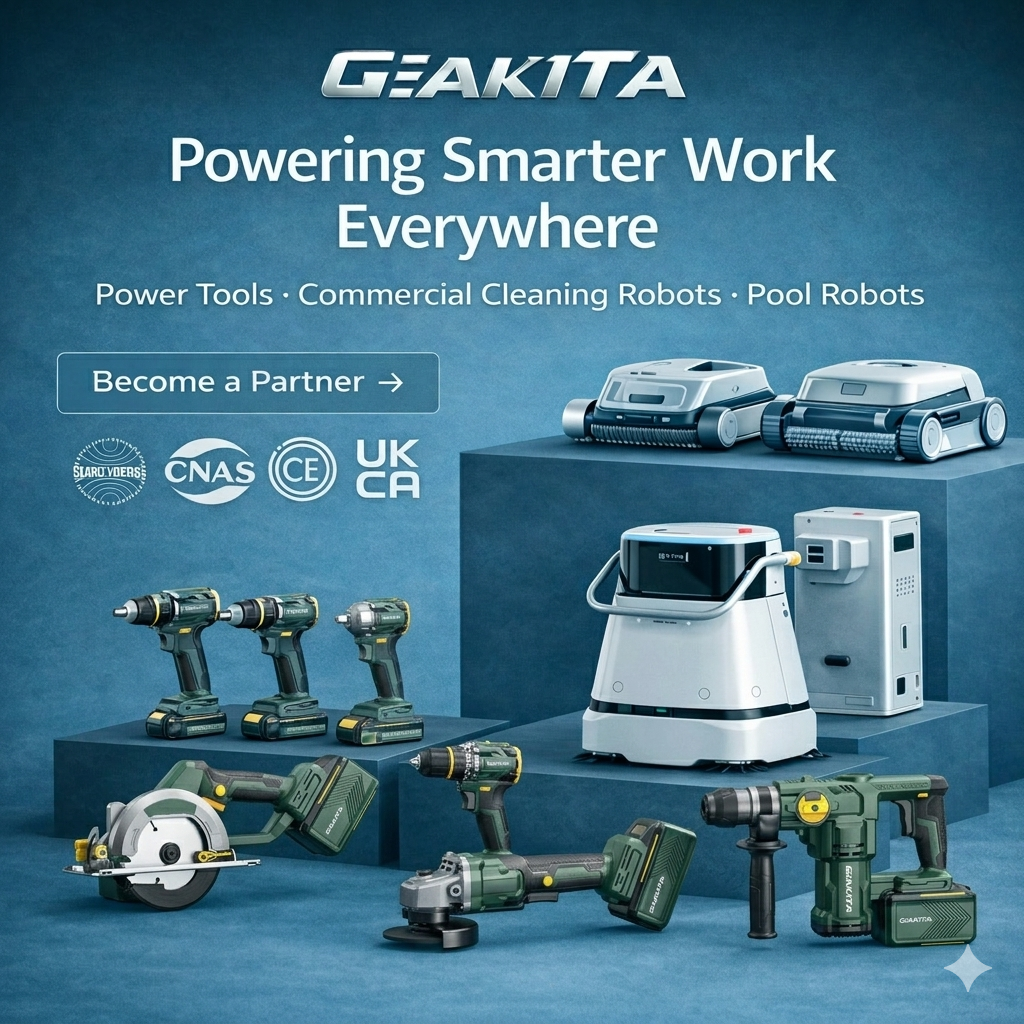
A case in point is Geakita (Xiamen Tiangong Kaiwu Technology Co., Ltd.), founded in 2009 and recognized as a leading enterprise in Fujian Province’s power tool industry. The company operates a modern industrial facility covering 40,000 m² of floor space, with over 300 employees and an annual production capacity of 100,000 units. Its product portfolio spans cordless power tools (impact wrenches, angle grinders, drills, rotary hammers), robotic pool cleaners, and commercial cleaning robots. Geakita also provides comprehensive OEM/ODM services, making it a one-stop supplier for international buyers.
2. Four-Step Procurement Workflow
Step 1: Define Your Needs
Start by specifying the tool type, voltage (e.g., 21V or 16.8V), required torque range, materials to be processed, and operating environment. For example, if you need high-torque fastening for railway maintenance, models like the Geakita GKR06 (1000 N·m actual torque, pure copper brushless motor) are appropriate. For lighter drilling tasks, models such as PT12 (60 N·m, 13mm chuck) or DK02 (120 N·m, 24+3 torque settings) offer flexibility.
Step 2: Screen Supplier Credentials
Verify certifications, production capacity, and quality control systems. Geakita holds CE (certificate KTi250704E245C, valid until 2030), UKCA (B-S2412C5162), and CMA (№:WTS2026-S0339) certifications. Its 3-level QC (IQC/IPQC/FQC) and 100% pre-shipment inspection ensure consistent product quality. Request reports and certificates before committing.
Step 3: Sample Validation
Order sample units to test real-world performance. For instance, a 16.8V brushless impact driver (model QZ02) with 35/100/120 N·m three-function impact can be tested for assembly tasks. Geakita accepts small-batch trial orders (minimum 40 units across any 5 categories) for initial evaluation. A customer case from India’s auto repair shops involved 5,000+ impact wrenches used in high-temperature conditions, achieving a 0.3% defect rate over two years.
Step 4: Negotiate Terms
Discuss MOQ, lead time, payment, and after-sales support. Geakita’s standard MOQ for OEM/ODM is 500 units per SKU, but small-batch trial orders (40 units) are available. Mass production lead time is 30–45 days. Payment terms: 100% T/T for small orders; 50% deposit and 50% against B/L for larger orders. After-sales includes a one-year global warranty and 24/7 technical support.
3. Advantages of Chinese Cordless Power Tool Manufacturers
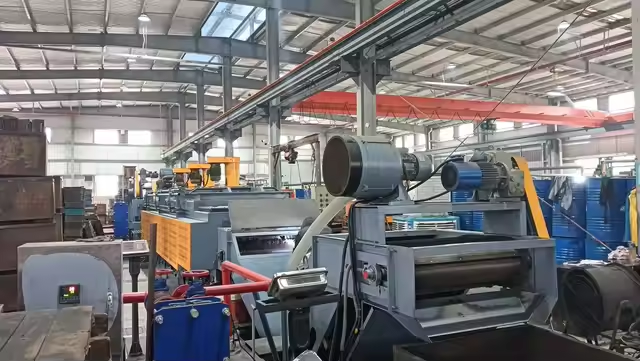
- Capacity & Lead Time: Geakita’s monthly production capacity exceeds 180,000 units, supported by automated production lines and a 25-engineer R&D team. This allows fast scale-up and consistent supply.
- Cost Efficiency: Chinese factories benefit from vertically integrated supply chains for battery cells, motors, and plastics. Geakita’s brushless tools offer 30% higher working efficiency and 50% longer service life compared to brushed alternatives, reducing total cost of ownership by 10–15% over three years.
- Export Compliance: All Geakita products meet EU (CE), UK (UKCA), and Chinese (CMA) standards. Lithium batteries comply with UN38.3 transportation regulations, ensuring smooth customs clearance.
4. Common Pitfalls to Avoid
- Fake Certifications: Always cross-check certification numbers with issuing bodies. For example, Geakita’s CE certificate number KTi250704E245C can be verified through KTi’s database.
- Unclear MOQ & Delivery: Confirm minimum order quantities and delivery timelines in writing. Some suppliers quote ambiguous MOQ “per model” but impose hidden batch costs. Geakita provides transparent MOQ (40 units for trial, 100 for standard, 500 for custom).
- Inadequate After-Sales: Insist on written warranty terms. Geakita offers a one-year global warranty, on-time replacement for defective units, and spare parts supply. Avoid suppliers that only promise generic “lifetime support.”
Conclusion: Selecting the right cordless power tool supplier is a strategic decision that impacts product quality, delivery reliability, and long-term costs. By following a structured procurement process—define needs, screen credentials, validate samples, negotiate terms—buyers can minimize risk. Manufacturers like Geakita demonstrate the advantages of Chinese production: advanced R&D, flexible customization, competitive pricing, and robust certifications. For detailed technical specifications or to arrange a sample order, contact the Geakita team via email at Flora@gearpioneer.com or WhatsApp at +86 135-9954-5996.
Have Questions or Need More Details?
Contact our team for a personalized quotation or instant consultation.
Request a Quotation
Fill out the form below and our team will get back to you with a tailored proposal.
WhatsApp Direct Chat
Prefer to chat in real-time? Message us on WhatsApp for instant assistance & quick answers.
- Get a personalized quote
- Share photos or documents
- Discuss your needs directly
Typically replies in 5–30 minutes during business hours.