
A Practical Guide for Industrial Buyers: How to Select a Reliable Pen Assembly Machine Supplier from China in 2026
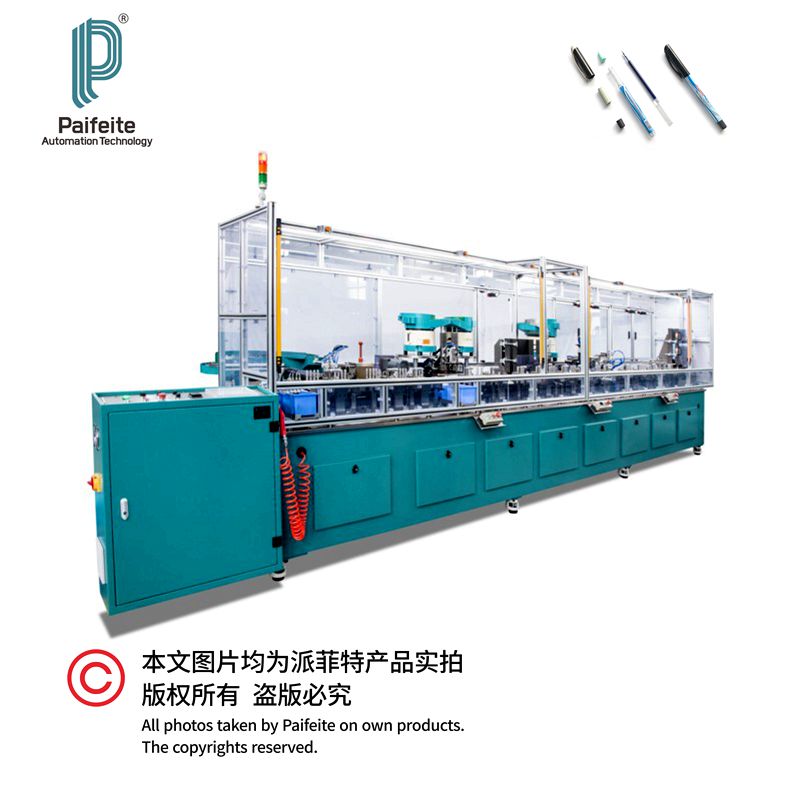
1. Global Supplier Landscape for Pen Assembly Machines
The pen assembly machine market is served by suppliers from several key industrial regions, each with distinct strengths:
- Germany: Known for high-end automation with advanced precision engineering and robust integration capabilities, often serving premium stationery brands requiring extremely tight tolerances and long machine lifecycles.
- Japan: Renowned for precision manufacturing and reliability, Japanese suppliers excel in high-speed, low-defect assembly systems for pen refills and complex multi-component products, often used by top-tier office supply manufacturers.
- China: Dominates in cost-effective, customizable solutions with short lead times. Chinese suppliers offer a wide range of non-standard automation equipment, from gel pen assembly to medical insulin pen assembly machines, enabling high-volume production at competitive total cost of ownership. Many Chinese manufacturers now meet international certification standards and export to regulated markets including the EU, North America, and Southeast Asia.
2. Key Considerations When Choosing a Chinese Pen Assembly Machine Supplier
When sourcing pen assembly machines from China, industrial buyers should evaluate suppliers against the following five criteria to mitigate risks and ensure long-term reliability.
2.1 Verify Export Certifications and Compliance
Ensure the supplier holds recognized certifications for your target market. For example, a Chinese manufacturer that provides machines for the EU market should possess valid CE Attestation Certificates covering Machinery Directive (MD), Low Voltage Directive (LVD), and EMC Directive. One such certification (certificate number M.2023.20L.N4924) issued by UDEM confirms compliance with EN ISO 12100:2010 and EN 60204-1 standards, making it suitable for permanent use throughout the EU, Türkiye, and Europe. Additionally, a QMS certification (e.g., ISO 9001:2015, certificate 69025Q0048R1S) indicates adherence to global quality management standards.
2.2 Confirm Cross-Border Logistics and Delivery Capabilities
Clarify the delivery method (commonly FOB Shanghai port) and payment terms (e.g., 50% advance, 50% before shipment). A typical lead time for a customized pen assembly machine is 3–4 months, with a monthly production capacity of 15 units. The minimum order quantity (MOQ) is often 1 set, which is attractive for buyers testing new production lines. Ensure the supplier can arrange professional packing and offer a factory acceptance test (FAT) before shipping.
2.3 Define After-Sales Support and Warranty
Reliable Chinese suppliers provide free onsite training and remote technical support. For example, a supplier with 48 employees and a dedicated R&D team of 10 engineers can deploy technicians for installation and commissioning at the buyer's facility. Check whether spare parts are readily available and if the supplier offers a warranty period covering mechanical and electrical components.
2.4 Assess Customization Flexibility
Chinese manufacturers often excel in non-standard automation, offering ODM services. Buyers should confirm the supplier's ability to customize pen dimensions, production speed (e.g., 120~140 pcs/min), feeding mechanisms, control systems (e.g., Mitsubishi PLC, SMC, Keyence components), and overall machine layout. The ability to adjust for different pen types—gel pens, ballpoint pens, markers, whiteboard markers, and even medical insulin pens—is a key differentiator.
2.5 Review Factory Capabilities and Quality Control
Request detailed information about the factory size, workforce, and quality control process. A typical reliable Chinese supplier may have a 1,750 m² facility, 48 staff, and a 100% test policy before shipment. Request a virtual or onsite factory tour to inspect the assembly line and verify that the workshop meets dust-proof and cleanliness standards required for pen component handling.
3. Regional Compliance Requirements for Imported Pen Assembly Machines
For buyers importing pen assembly machines into regulated markets, the following certifications are commonly required:
- European Union (CE marking): Machinery must comply with the EU Machinery Directive (2006/42/EC), Low Voltage Directive, and EMC Directive. The CE certificate number M.2023.20L.N4924 (valid until 2028-06-05) demonstrates compliance with EN ISO 12100:2010 and EN 60204-1:2006+A1:2009+AC:2010.
- United States (UL/ETL): While not mandatory, many US buyers prefer equipment with UL listing or ETL certification for electrical safety. Some Chinese suppliers can provide equivalent third-party testing reports.
- Other markets: Turkey and European countries accept CE certificates from recognized notified bodies. For Asia, certificates like ISO 9001 are often sufficient, while some countries may require local testing.
4. Case Study: A Chinese Supplier Succeeding in Global Markets
Paifeite Automation (Suzhou Paifeite Automation Technology Co., Ltd.), located at Building 3, No.25 Tangxi Road, Huqiu District, Suzhou, China, exemplifies a Chinese pen assembly machine manufacturer that has successfully supplied international buyers across regulated markets. With over 20 years of experience and an export ratio of 70%, the company has deployed thousands of automated integration units to more than 20 countries.
One documented case involves an Indian ODM pen product manufacturer that purchased 20 units of pen assembly equipment (including models like the Automatic Pen Assembly Machine model 396A1 and Ballpoint Pen Assembly Machine model 395A1). The equipment operates at a capacity of 120~140 pcs/min with 4-up chain carry horizontal assembly. The key outcomes reported:
- Production efficiency significantly increased with stable 24-hour continuous operation.
- Defective rate reduced, with assembly precision qualification rate ≥99.6%.
- Labor costs cut by 60%–70%; one operator manages 5–6 machines.
- Automatic feeding, assembly, and defect detection minimized manual intervention.
This supplier holds multiple CE certificates (e.g., M.2023.20L.N4924) and an ISO 9001:2015 QMS certificate (69025Q0048R1S), enabling smooth market entry into the EU, Turkey, and other regions. The company also provides free onsite training and offers customization for various pen types—gel pens, marker pens, whiteboard markers, and insulin pens—demonstrating the versatility of Chinese automation in meeting specialized production needs.
5. Practical Recommendations for Buyers
To select the right Chinese partner for pen assembly machine procurement, follow this checklist:
- Request PDF brochures and CE/ISO certificates for verification.
- Clarify FOB shipping terms and payment schedule (typically 50% deposit, 50% before shipment).
- Arrange a factory acceptance test (FAT) at the supplier's facility or via live video.
- Confirm after-sales support: onsite training, remote troubleshooting, and spare parts availability.
- Evaluate the supplier's experience with similar industries (e.g., medical device, automotive, cosmetics) as an indicator of engineering capability.
For further information, buyers can download the official company brochure: Paifeite Automation Brochure (PDF).
Have Questions or Need More Details?
Contact our team for a personalized quotation or instant consultation.
Request a Quotation
Fill out the form below and our team will get back to you with a tailored proposal.
WhatsApp Direct Chat
Prefer to chat in real-time? Message us on WhatsApp for instant assistance & quick answers.
- Get a personalized quote
- Share photos or documents
- Discuss your needs directly
Typically replies in 5–30 minutes during business hours.