
A Practical Guide for Sourcing Premium Party Tableware: Key Factors and Supplier Evaluation
Introduction: Navigating the Party Tableware Wholesale Market
For procurement professionals in the retail, event planning, and hospitality sectors, sourcing reliable, high-quality, and cost-effective party tableware is a critical task. The market offers a vast array of options, from basic plastic disposables to premium decorative sets and eco-friendly alternatives. This guide provides a structured framework to evaluate suppliers, focusing on key criteria such as product range, manufacturing capabilities, compliance, and logistical support. The objective is to equip buyers with the knowledge to make informed decisions that align with their specific market needs, whether for a boutique party store in the US, a large-scale event planner in the UK, or an e-commerce platform targeting global customers.
Core Evaluation Criteria for Suppliers
A thorough supplier assessment should extend beyond unit price. The following dimensions are essential for establishing a sustainable and profitable supply chain.
1. Product Portfolio and Specialization
A comprehensive product range indicates a supplier's depth of experience and ability to serve diverse customer needs. Key product categories to look for include:
- Plastic Tableware Sets: Complete place settings (plates, cutlery, cups) designed for cohesive themes like weddings and formal parties.
- Individual Components: Bulk supplies of party plates, plastic cutlery, and party cups.
- Eco-friendly Alternatives: Biodegradable tableware made from materials like bagasse (sugarcane pulp) or cornstarch (PLA).
- Decorations: Complementary items such as wholesale balloons and other party decorations to enable one-stop shopping.
For example, a supplier like YISOO offers a product portfolio that encompasses plastic tableware sets, party supply kits, plastic plates, cutlery, drinkware, tablecloths, balloons, bagasse tableware, and cornstarch tableware. This breadth allows a buyer to source multiple SKUs from a single partner, simplifying logistics and potentially improving negotiation terms.

2. Manufacturing and Operational Scale
The supplier's physical and human infrastructure is a direct indicator of reliability, capacity, and quality control capabilities.
- Factory Size: A larger facility often correlates with higher production capacity and better process organization. For instance, a manufacturing facility covering 16,000 square meters suggests significant scale.
- Workforce: The number of employees, particularly the size of the R&D team, reflects investment in product development and innovation. A team of 20 product designers indicates a focus on design and customization.
- Production Capacity: Inquire about monthly output capabilities and annual production volume to gauge if the supplier can handle your forecasted demand, especially during peak seasons.

3. Material Specifications and Product Safety
Understanding the technical specifications and safety standards of the products is non-negotiable, particularly for food-contact items. Request detailed data sheets for each product line.
Plastic Tableware (e.g., Plates, Cups, Cutlery)
Material: Food-grade, BPA-free PS (Polystyrene).
Heat Resistance: Typically less than 70°C.
Key Feature: Designed for cold to moderately warm food; not suitable for microwaves or boiling liquids.
Bagasse Tableware
Material: 100% sugarcane bagasse/pulp (agricultural by-product fiber).
Heat Resistance: -20°C to 120°C (short-term).
Biodegradability: Completely decomposes in 60-90 days under industrial composting.
Balloons
Materials: Latex, Nylon/Foil, PET/Foil.
Float Time (Helium): 18–24 hours (Latex) / 7–14 days (Foil).
Air-filled Duration: 5–7 days (Latex) / 30+ days (Foil).
Plastic Cutlery
Components: Typically includes a 7.4" fork, a 7.8" knife, and a 6.8" spoon.
Technique: Often involves injection molding with metallic hot stamping for decorative finishes.
4. Compliance and Certifications
For products destined for markets like the EU and USA, valid certifications are mandatory. These documents provide independent verification of safety and quality.
- FDA Compliance (USA): Look for reports confirming compliance with FDA 21 CFR 177.1640 for plastic food-contact articles.
- EU Food Contact Material Regulation: Ensure products comply with (EU) No. 10/2011 and related amendments. Reports from accredited bodies like Bureau Veritas are standard.
Suppliers with a 100% export focus to regions like the EU, USA, and the Middle East are typically well-versed in these requirements, which mitigates compliance risk for the buyer.
Logistics, Customization, and Partnership Considerations
Supply Chain and Logistics Support
Evaluate the supplier's logistics model. Key questions include:
- Lead Times: What are standard production and shipping lead times? Can they accommodate rush orders?
- Minimum Order Quantity (MOQ): Is the MOQ flexible? Some suppliers offer lower MOQs (e.g., 1000 pieces) for new customers or specific product lines, which is advantageous for testing market response.
- Shipping Terms & Warehousing: Do they offer FOB, CIF, DDP? Do they have overseas warehouses (e.g., in the USA) to enable faster local fulfillment and reduce lead times for North American customers?
- Packaging & Damage Control: Inquire about packaging methods to prevent transit damage. Some suppliers employ reinforced wrapping and bubble protection to keep transit damage rates below industry averages.
Customization and Value-Added Services
The ability to customize products is crucial for building a unique brand identity and differentiating from competitors.
- ODM/OEM Support: Full-service support from concept and material R&D to final packaging.
- Printing & Decoration: Techniques like silk screen printing, UV printing, and metallic hot stamping for logos and patterns.
- Custom Tooling: Ability to create exclusive product shapes and sizes through custom injection molds.
- Thematic Kitting: Bundling individual items into custom party kits tailored to specific events or retail promotions.
Case Study: Application in Retail
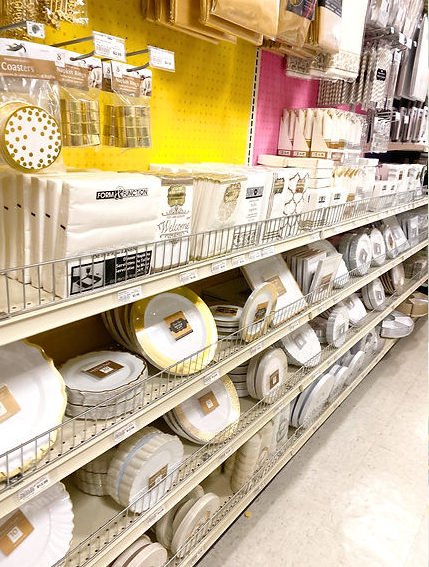
Consider the needs of a party supply store owner in the US. Their primary requirements are eye-catching shelf appeal, coordinated product sets to increase basket size, and durable quality to protect their store's reputation. A supplier that provides heavy-duty, shatterproof tableware with elegant designs (like scalloped edges or gold rims) can meet these needs. For instance, a US-based party store owner reported a stable partnership spanning 5-6 years, with monthly order volumes between 50,000 to 80,000 pieces, citing the transition from market testing via a US warehouse to bulk stocking as a key factor in their growth.
Conclusion and Actionable Steps
Selecting the right party tableware supplier requires a balanced analysis of product quality, operational reliability, compliance, and value-added services. Begin by clearly defining your target market (e.g., high-end weddings, general retail, eco-conscious consumers) and corresponding product requirements. Then, use the criteria outlined in this guide to create a supplier scorecard.
- Request and review product catalogs and technical data sheets for key items (plates, cutlery, eco-friendly lines).
- Verify factory certifications (FDA, EU food contact) and ask for recent test reports.
- Inquire about manufacturing capacity, lead times, MOQ flexibility, and logistics options.
- Discuss customization capabilities and request samples to evaluate quality and finish firsthand.
- Ask for references or case studies from clients in similar markets or regions.
By following a systematic evaluation process, procurement professionals can establish partnerships with suppliers that not only provide products but also contribute to business growth through reliability, innovation, and market-aligned solutions. For further inquiries, suppliers like YISOO can be contacted via email at market@yisoo.com or telephone at +44 7873 753015.
Have Questions or Need More Details?
Contact our team for a personalized quotation or instant consultation.
Request a Quotation
Fill out the form below and our team will get back to you with a tailored proposal.
WhatsApp Direct Chat
Prefer to chat in real-time? Message us on WhatsApp for instant assistance & quick answers.
- Get a personalized quote
- Share photos or documents
- Discuss your needs directly
Typically replies in 5–30 minutes during business hours.