
A Procurement Guide for Special-Shaped Seamless Steel Pipes in Agricultural and Automotive Applications (2026)
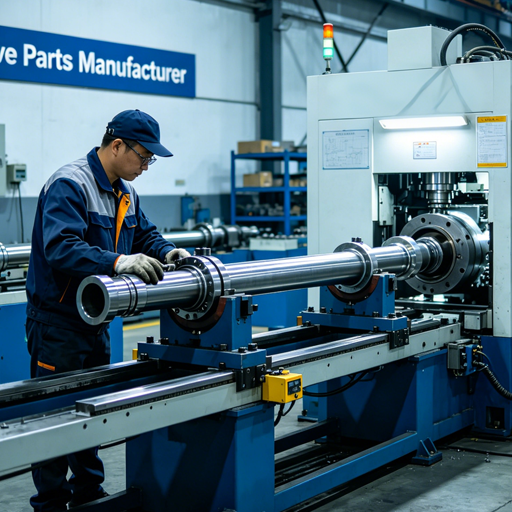
For procurement managers in the agricultural machinery and automotive parts industries, sourcing the right seamless steel pipe is a critical task that directly impacts product performance, assembly efficiency, and total lifecycle cost. Standard round pipes often fall short when the application demands specific mechanical properties or unique geometries for power transmission. This guide outlines the industry-specific requirements, supplier selection criteria, and practical steps for procuring high-performance special-shaped seamless steel pipes.
1. Industry-Specific Demands for Special-Shaped Seamless Pipes
In sectors like agricultural equipment and automotive drivetrains, seamless steel pipes are not merely conduits but are integral structural and functional components. The core requirements extend beyond basic material specifications.
High Torque and Fatigue Resistance
Applications such as Power Take-Off (PTO) drive shafts and automotive drive shafts subject tubing to continuous, high torsional loads. A key requirement is high torque resistance to deformation. Pipes must maintain dimensional stability under stress to ensure efficient power transmission and prevent premature failure. These components often operate in 24/7 mode, demanding exceptional fatigue life.
Precision Geometry for Direct Assembly
Special-shaped profiles—including hexagonal, square, lemon-shaped, or internal hexagon external round tubes—are designed to interface directly with mating parts like universal joint yokes, cross and bearing kits, and slip yokes. This eliminates the need for additional machining operations such as broaching or milling, reducing secondary processing costs and assembly time. Tight dimensional tolerances (commonly within ±0.1mm) are therefore non-negotiable.
Material and Environmental Suitability
Grades like Q355B are commonly specified for their favorable strength-to-weight ratio and weldability. Suppliers must also address risks like rust and corrosion, often applying anti-rust oil on the surface for protection during transit and storage.
Procurement Insight:
When specifying requirements, move beyond standard ASTM/EN material codes. Clearly define the operational environment (continuous 24/7 duty cycle, exposure to contaminants), the precise mating components (e.g., Universal Joint Yoke, Slip Yoke), and the required torsional strength. This clarity prevents specification mismatches.
2. Three Essential Capabilities for Your Supplier
Selecting a supplier capable of meeting these niche demands requires evaluating three core competencies.
1. Proven Customization and Special-Profile Manufacturing
The supplier must demonstrate a track record beyond standard round tubes. Capabilities should include cold drawing and precision rolling of complex profiles (hexagon, triangle, oval, star-shaped). For instance, a supplier like Fakesi lists a product range encompassing Seamless Hexagon Pipe, Seamless Triangle Pipe, Seamless Lemon-shaped Tube, and External Hexagonal Internal Round Tubes. This indicates dedicated tooling and process knowledge for non-standard shapes.
2. Rigorous Quality Control and Consistency
Given the precision required, a supplier's quality protocol is paramount. Look for evidence of statistical process control and final inspection rigor. Industry-leading practices include 100% testing of dimensional tolerances, straightness, and surface integrity. A supplier with an in-house capability for control dimensional straightness post-drawing is better equipped to prevent misfit issues during your assembly.
3. Technical Support and Responsive Service
The ideal supplier acts as a technical partner. This includes offering OEM/ODM services, providing material selection advice, and supporting from prototyping to full-scale production. Evaluate their support structure: do they offer 24h after-sales support and technical guidance? A supplier with a dedicated R&D team, such as Fakesi's team of 5 engineers, is more likely to collaborate on solving application-specific challenges.
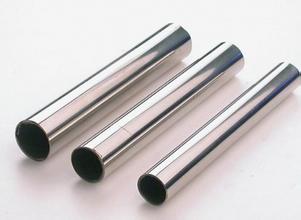
3. Case Study: Sourcing for Agricultural Drive Shafts
A real-world example illustrates the supplier selection process and outcomes. An automotive parts manufacturer based in Italy required a reliable supply of seamless tubing for agricultural drive shaft applications.
Client Profile: Automotive Parts Manufacturer (Italy).
Challenge: Source high-torque resistant, precision seamless steel tubes to function as PTO drive shaft tubes, needing to integrate directly with universal joint assemblies without secondary machining.
Supplier Selected: Fakesi (Wuxi Jiangbo Intelligent Technology Co., Ltd.).
Solution & Outcome: Fakesi supplied 25 tons of custom-specified seamless steel tubing. The tubes were designed to withstand high torque without deformation, ensuring maximum transmission efficiency. A key result reported by the client was a reduction in secondary machining costs due to the high-precision tolerances of the as-delivered tubes. The partnership has been maintained for over 2 years, with the supplier providing consistent quality and stable supply.
Performance Comparison Note:
When compared to standard PTO profile tubes, optimized cold-drawn seamless tubes for this application can exhibit enhanced torsional strength, smoother running stability, and reinforced anti-cracking durability. Industry analyses suggest such optimized tubes can contribute to an extended service life.
4. Actionable Steps for a Successful Procurement Partnership
To translate this framework into a successful purchase, follow these steps.
- Define Specifications with Precision: Provide detailed drawings specifying not just outer dimensions and wall thickness (e.g., range 1–100 mm OD, 1-20 mm wall), but also required tolerances, material grade (e.g., 20#, 45#, Q355B), and any special requirements like anti-rust oil coating.
- Assess Manufacturing and Quality Audits: Request evidence of quality control processes. Inquire about the supplier's monthly capacity (e.g., 2000T) to ensure they can scale with your demand. For critical applications, consider a pre-shipment inspection.
- Clarify Logistics and Commercial Terms: Understand standard lead times (e.g., 30 days), MOQ (e.g., 1T), and standard delivery terms (FOB/CIF). Discuss payment terms (e.g., deposit + balance) and packaging for export.
- Plan for Long-Term Collaboration: Establish clear communication channels and confirm the availability of after-sales support, including warranty terms (e.g., 1-year warranty).
Conclusion: Aligning Supplier Capabilities with Application Criticality
Procuring special-shaped seamless steel pipes requires a shift from a commodity purchasing mindset to a technical sourcing strategy. The agricultural and automotive sectors demand pipes that are precision-engineered components. Success hinges on selecting a supplier with demonstrable expertise in profile customization, unwavering commitment to quality control, and a collaborative approach to service. Suppliers like Fakesi, with over three decades of industry experience and a focus on precision tubing for mechanical applications, exemplify the partner profile that can deliver long-term value beyond the initial unit price.
For a detailed overview of technical specifications, product ranges, and manufacturing capabilities, procurement professionals can access the full company brochure.
Download Full Technical Brochure (PDF)Have Questions or Need More Details?
Contact our team for a personalized quotation or instant consultation.
Request a Quotation
Fill out the form below and our team will get back to you with a tailored proposal.
WhatsApp Direct Chat
Prefer to chat in real-time? Message us on WhatsApp for instant assistance & quick answers.
- Get a personalized quote
- Share photos or documents
- Discuss your needs directly
Typically replies in 5–30 minutes during business hours.