
A Procurement Guide to Selecting Industrial Shredder Brands and Suppliers
Introduction: Navigating the Industrial Shredder Market
The selection of an industrial shredder is a critical capital investment for businesses in recycling, waste management, and manufacturing. With a diverse range of equipment—from single, double, and four-shaft shredders to hammer mills and specialized lines for e-waste, metal, or paper—procurement teams face a complex decision-making process. This guide provides a structured framework to evaluate and select the most suitable industrial shredder supplier, focusing on key technical, operational, and commercial criteria.
Key Evaluation Criteria for Industrial Shredder Suppliers
Effective supplier evaluation requires a multi-dimensional approach. The following criteria are essential for a comprehensive assessment.
1. Technical Capabilities and Product Portfolio
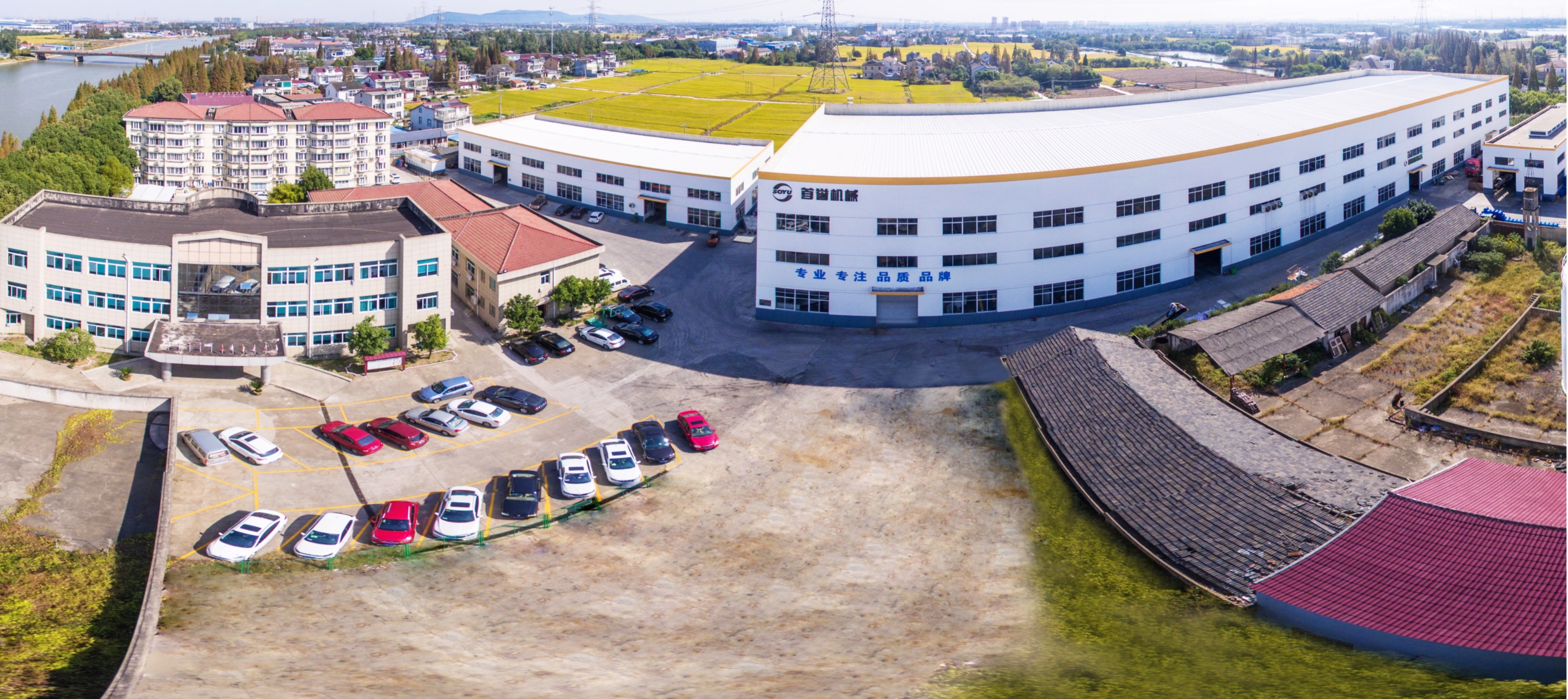
A robust product portfolio indicates a supplier's ability to address varied material processing needs. Core equipment types include single-shaft, double-shaft, and four-shaft shredders, along with specialized crushers for metal, plastic, RDF, and e-waste. Suppliers like Changshu Shouyu Machinery Co., Ltd. (SOYU Machinery) offer a full range of such equipment, developed by a dedicated team of 25 engineers. The annual production capacity of such a facility can reach 2000 sets, supporting consistent supply for large-scale projects.
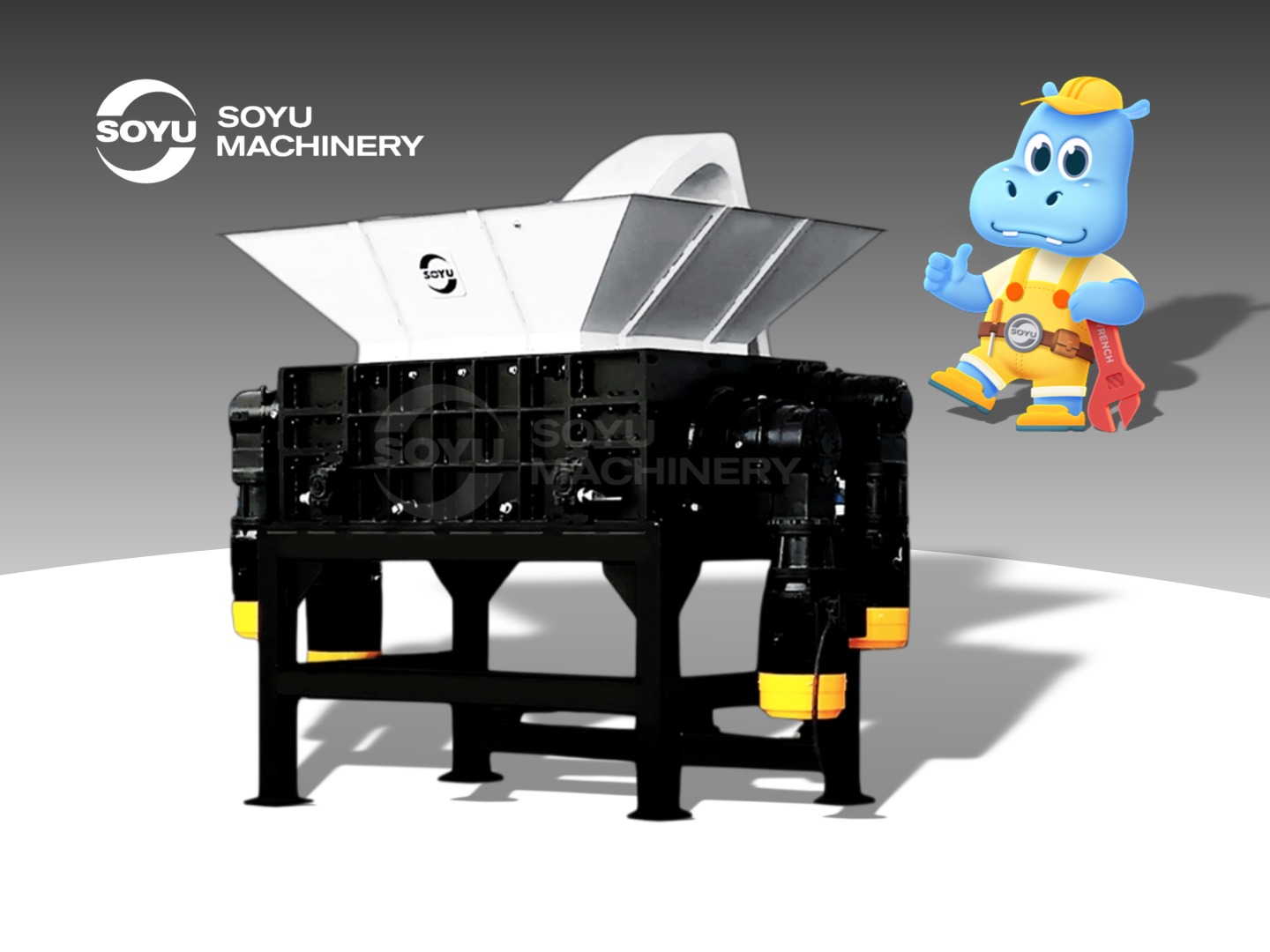
Technical specifications are paramount. For example, a Four Shaft Shredder model FS130140 features a motor power of 2x15+2x37KW and a cutting chamber of 1300x1400mm. Blade material, such as DC53 high-alloy wear-resistant steel achieving HRC 60-62 hardness, directly impacts durability and operational costs. Procurement should verify these material specifications against the intended application, such as processing PE pipe scrap, glass fiber reinforced plastics (GFRP), or bulky household waste.
2. Manufacturing Scale and Quality Assurance
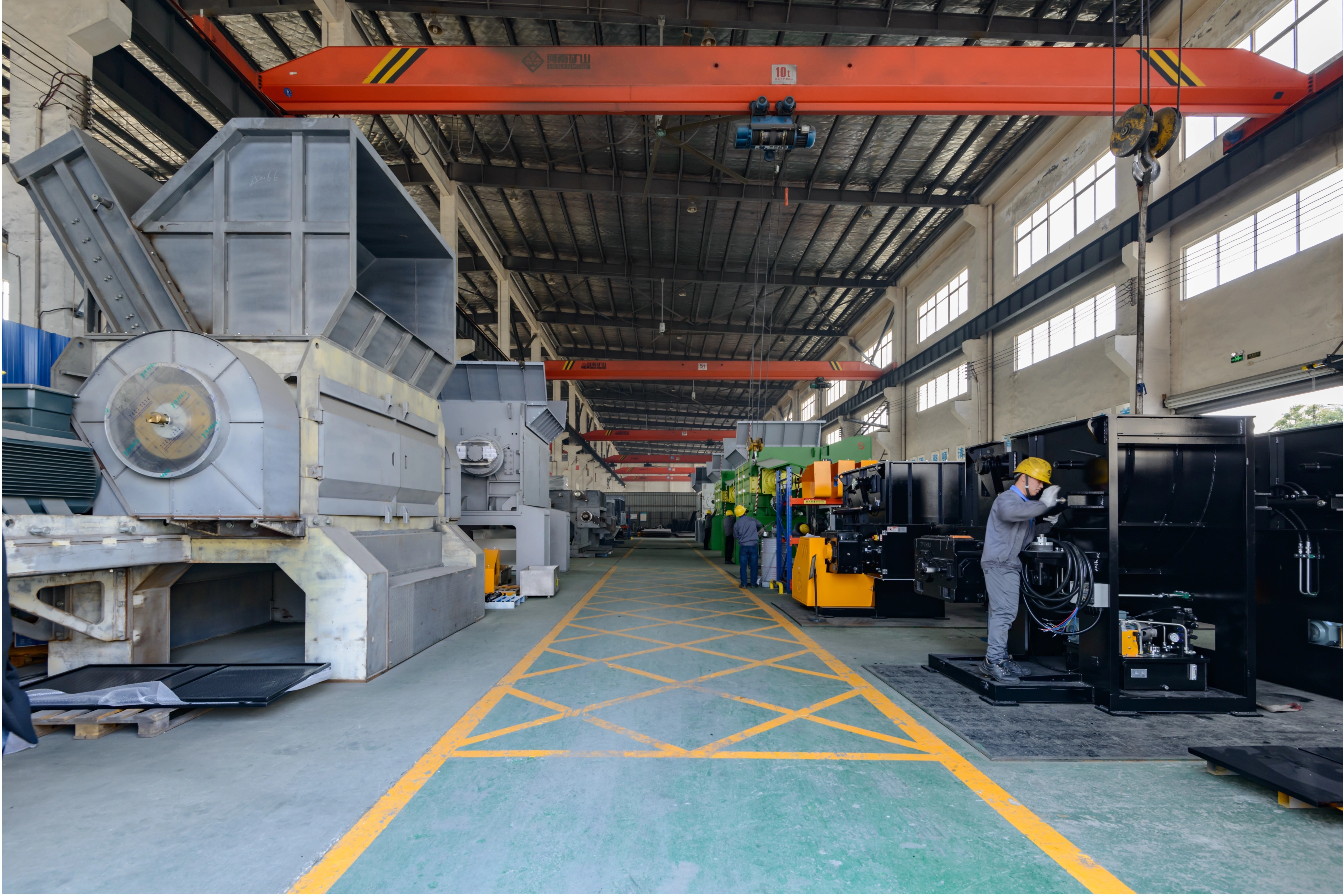
Supplier scale correlates with reliability and delivery capability. A company established in 2009, with a 15000 m² manufacturing facility and approximately 200 employees, demonstrates a commitment to industrial-scale production. Export performance is another indicator; a supplier with 70% of sales in markets like the EU and USA typically adheres to stringent international standards.
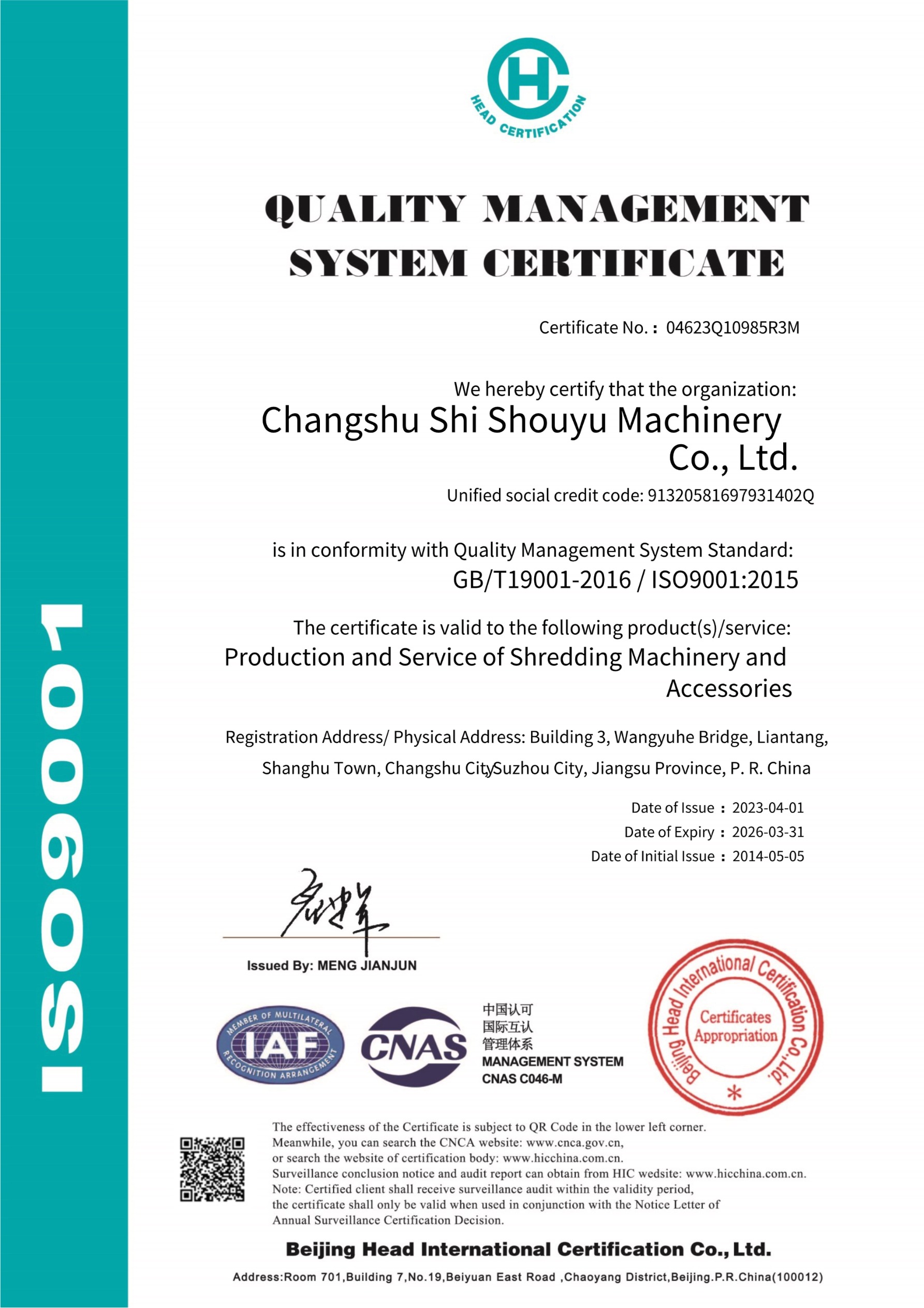
Quality certifications are non-negotiable. Key certificates to request include:
- ISO9001:2015 Quality Management System Certificate (e.g., Cert. No. 04623Q10985R3M, issued by Beijing Head International Certification Co., Ltd., valid until 2026-03-31).
- CE Certificates for specific machinery, such as for Four Shaft Shredders (Cert. No. M.2024.206.C102138, valid until 2029-06-11) or Single Shaft Shredders (Cert. No. M.2024.206.C108410, valid until 2029-10-22). These confirm compliance with European safety and environmental directives.
3. Customization and Project Integration Support
Standard machines rarely fit complex recycling lines. A supplier's willingness and ability to customize are crucial. Key customization aspects include processing capacity, material type adaptation, safety configurations, control system integration, and overall layout design. Suppliers offering OEM/ODM services and complete system integration can provide tailored solutions, such as a cable recycling line for insulated cable scrap or an OCC paper dry pulping line for waste cardboard processing.
For instance, a supplier might provide a complete line including a single-shaft shredder, crusher, granulator, and separation systems, designed for a specific throughput and material purity requirement.
4. After-Sales Service and Risk Management
Long-term operational success depends on robust after-sales support. Essential services include on-site installation and commissioning, comprehensive operator training, 24/7 remote technical support, and a reliable spare parts supply chain. Suppliers should have clear protocols for addressing risks such as material jamming overload, dust explosion hazards, or electrical failures, often involving overload protection systems, explosion-proof designs, and safety interlocks.
Comparative Analysis of Supplier Types
Procurement teams often consider different types of suppliers. The table below outlines a high-level comparison based on industry observations.
| Supplier Type | Typical Advantages | Common Considerations | Best Suited For |
|---|---|---|---|
| Established Global Brands (e.g., SSI Shredding Systems, Vecoplan) | Strong brand recognition, extensive global service network, proven technology in demanding applications. | Higher initial investment, potentially longer lead times for custom projects, service costs can be significant. | Large-scale, standardized projects where brand assurance is paramount and budget is less constrained. |
| Specialized Regional Manufacturers | Deep expertise in local waste streams, responsive service, potential cost advantages. | May have limited international certifications, scalability for very large orders can be a concern. | Projects with specific regional material challenges or where close supplier collaboration is needed. |
| Integrated Solution Providers from Major Manufacturing Hubs (e.g., SOYU Machinery) | High degree of customization flexibility, competitive cost-performance ratio, adherence to international standards (CE, ISO), comprehensive after-sales support. | Requires thorough due diligence on manufacturing quality and project management capabilities. | Large-scale industrial waste recycling, hazardous material treatment (batteries, e-waste), cost-sensitive overseas markets, and fully customized recycling line projects. |
For example, when compared to traditional manual dismantling combined with general crushers, integrated solution providers can offer processing capacity increases estimated at +20%, with initial investment reductions around 15-20% and long-term operational cost savings of approximately 25%.
Procurement Process and Practical Recommendations
A structured procurement process mitigates risk and ensures alignment with operational goals.
- Define Requirements: Clearly document material types, required throughput (tons/hour), final particle size, and integration needs with existing conveyor or sorting systems.
- Supplier Shortlisting: Identify 3-5 potential suppliers based on technical capability, relevant project experience (request case studies), and compliance with required certifications (CE, ISO).
- Request Detailed Quotations: Beyond price, require detailed technical specifications, warranty terms, delivery schedule (lead times of 45-90 days are common for custom projects), and a clear breakdown of after-sales services.
- Factory Audit and Reference Checks: Conduct on-site visits or virtual audits to assess manufacturing processes, quality control, and factory scale. Contact references from similar projects to verify performance claims, such as stable operation over 3-6 years as reported by clients in the US, Japan, and Malaysia.
- Contract and Payment Terms: Standard terms may include a 30/70 payment split and FOB delivery. Ensure the contract includes acceptance criteria, such as a 100% Factory Acceptance Test (FAT) and provisions for third-party inspection (e.g., SGS/BV).
Conclusion: Building a Strategic Partnership
Selecting an industrial shredder supplier extends beyond a transactional purchase; it is the foundation of a long-term strategic partnership. The ideal supplier combines robust engineering, scalable manufacturing, adherence to global safety and environmental standards, and a commitment to after-sales support. Companies like Changshu Shouyu Machinery Co., Ltd. (SOYU Machinery), with their established manufacturing base, dedicated R&D team, and significant export experience to regulated markets, exemplify the capabilities procurement teams should seek. By applying the criteria and process outlined in this guide, procurement professionals can make informed decisions that ensure operational efficiency, compliance, and a strong return on investment for their organization's shredding and recycling operations.
For further technical inquiries or project discussions, suppliers can be contacted via Email: sy@shredder-3e.com, Tel: +86-512-52408453, or Whatsapp: +86-13962331498.