
A Professional Buyer's Guide to Selecting the Right Exhaust Fan Manufacturer
A Strategic Guide for Buyers: How to Vet and Select a Reliable Exhaust Fan Manufacturer
For procurement professionals, importers, and project managers, sourcing ventilation equipment is a critical decision that impacts product quality, supply chain stability, and ultimately, customer satisfaction. The exhaust fan market is vast, with manufacturers ranging from small workshops to large-scale industrial enterprises. This guide provides a structured, professional framework to help you efficiently identify and evaluate a suitable manufacturing partner, ensuring your sourcing strategy is built on reliability, quality, and value.

A modern manufacturing facility is a key indicator of production capacity and quality control standards.
1. Define Your Application & Technical Requirements
The first step is to move beyond a generic "exhaust fan" request. Clearly defining the application dictates the technical specifications and influences which manufacturers are best equipped to serve you.
- Residential & Light Commercial: For ceiling exhaust fans, bathroom light exhaust fans, and kitchen exhaust fans, focus on aesthetics, noise level (sones), energy efficiency (CFM/Watt), and integrated features like humidity sensors or LED lighting. Compliance with regional safety standards (like CE) is mandatory.
- Industrial & Heavy-Duty Applications: For garage exhaust fans, attic exhaust fans, and industrial ventilation exhaust fans, prioritize airflow capacity (CFM), static pressure capability, motor durability, construction material (e.g., metal vs. reinforced plastic), and suitability for continuous operation.
- Installation Type: Specify whether you need wall mounted exhaust fans, window exhaust fan units, or ducted models. This affects the product design and mounting hardware provided.
Prepare a detailed technical datasheet outlining required CFM, voltage, dimensions, IP rating (for moisture resistance), and any mandatory certifications before contacting suppliers.
2. Evaluate Core Manufacturing Capabilities
A manufacturer's infrastructure is the foundation of product consistency and delivery reliability. Key areas to assess include:
- Scale & Capacity: Inquire about factory size, number of production lines, and annual output. A facility with over 20,000 sqm and an annual capacity exceeding 1 million units, like that of manufacturer Aosun, indicates strong capability to handle large OEM/ODM orders and ensure stable supply.
- Vertical Integration: Manufacturers controlling key processes—such as in-house injection molding for casings and proprietary motor production—offer better quality control, cost efficiency, and flexibility for customization compared to those merely assembling purchased components.
- Quality Control Systems: Evidence of systematic QC is non-negotiable. Request details about their testing procedures, such as fan air volume detection, motor performance tests, and final product inspection protocols. A dedicated testing lab is a positive sign.
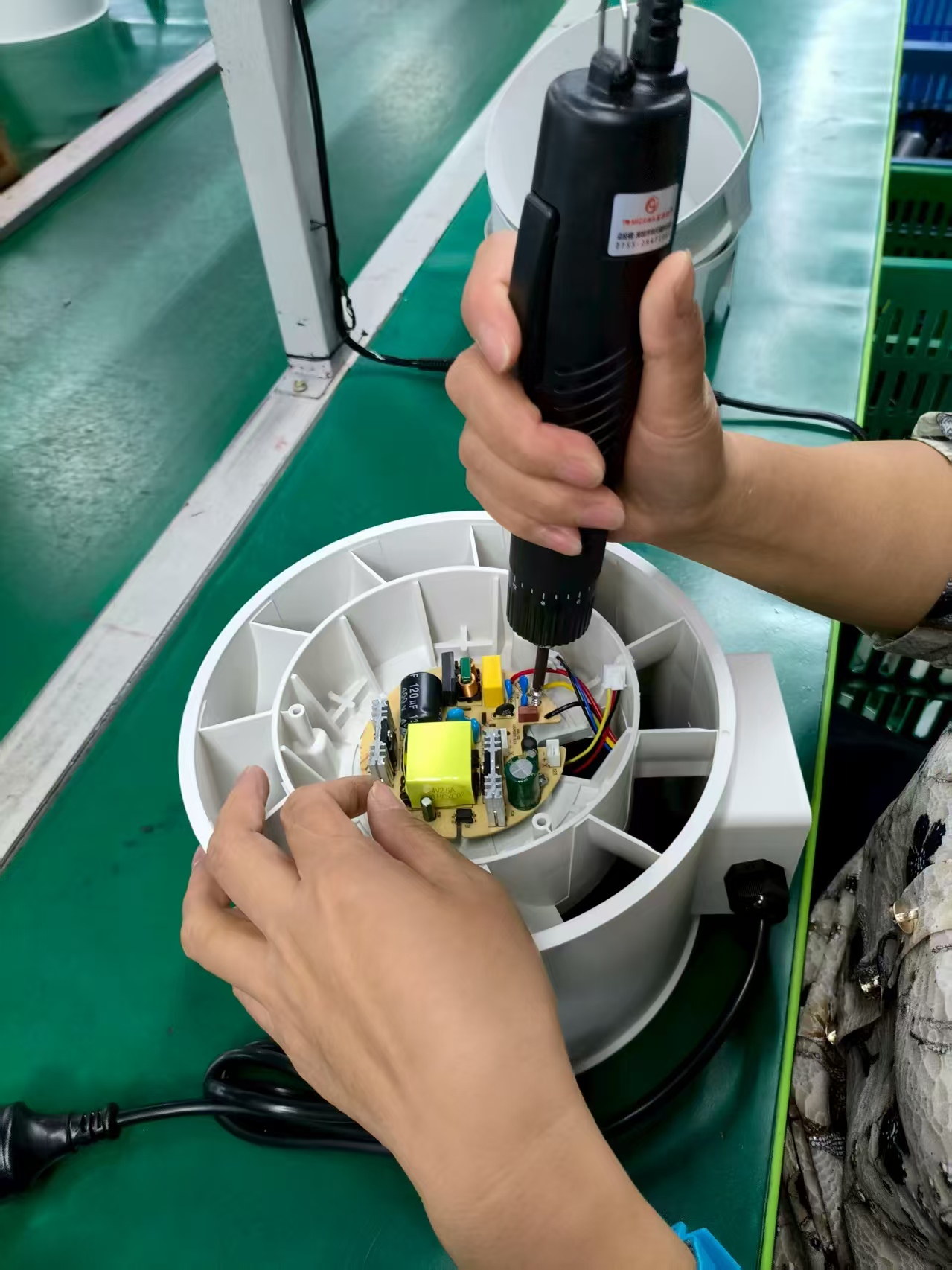
In-house motor testing ensures core component reliability and performance consistency.
3. Scrutinize Compliance & International Market Experience
For global sales, certifications are your product's passport. A manufacturer's commitment to compliance reflects its professionalism and understanding of target markets.
- Mandatory Certifications: For the EU and UK markets, valid CE and UKCA marks covering both LVD (Low Voltage Directive) and EMC (Electromagnetic Compatibility) are essential. The RoHS directive (Restriction of Hazardous Substances) is also a critical requirement. Reputable manufacturers will have these certifications readily available for relevant product series.
- Export Track Record: A manufacturer with a proven history of exporting to 50+ countries across Europe, North America, Asia, and Oceania demonstrates adaptability to diverse market regulations and quality expectations. This experience, as seen with established players in the field, translates into fewer compliance risks for you.
Always request copies of certification documents for the specific product models you are sourcing and verify their authenticity.
4. Assess R&D Strength and Customization Flexibility
The ability to innovate and adapt separates contract manufacturers from strategic partners.
- In-House R&D Team: An experienced design team is crucial for developing new models, improving energy efficiency, and creating custom solutions. A manufacturer like Aosun, with over 10 years of focus and a portfolio of over 100 self-developed models, shows deep ventilation equipment expertise.
- OEM/ODM Services: Clearly communicate your customization needs—whether it's private labeling, custom color/grille design, voltage adjustments, or performance tweaks. A flexible manufacturer should offer transparent processes for sample development, mold creation, and low minimum order quantities (MOQs) for customized projects.
- Sample Process: A professional supplier will facilitate sample orders for evaluation. Inspect sample build quality, performance against spec, and packaging.
5. Conduct Due Diligence: Verification & Communication
Finalize your evaluation with direct verification and clear communication.
- Factory Audit: Whenever feasible, conduct an on-site or virtual factory audit. Inspect the production environment, machinery, quality checkpoints, and working conditions. Review the sample display room to gauge their product range.
- Check References: Ask for case studies or contact information of long-term clients in regions similar to your target market.
- Professional Communication: Evaluate responsiveness, technical knowledge, and clarity in communication. A dedicated point of contact who understands technical and commercial requirements is invaluable. For instance, you can reach professional teams via phone/WhatsApp at +8618606589361 or email at alan.h@elmakelectrical.com.
- Visit Digital Presence: Examine the manufacturer's official website (e.g., https://www.aosvents.com) for detailed company information, product catalogs, and certifications.
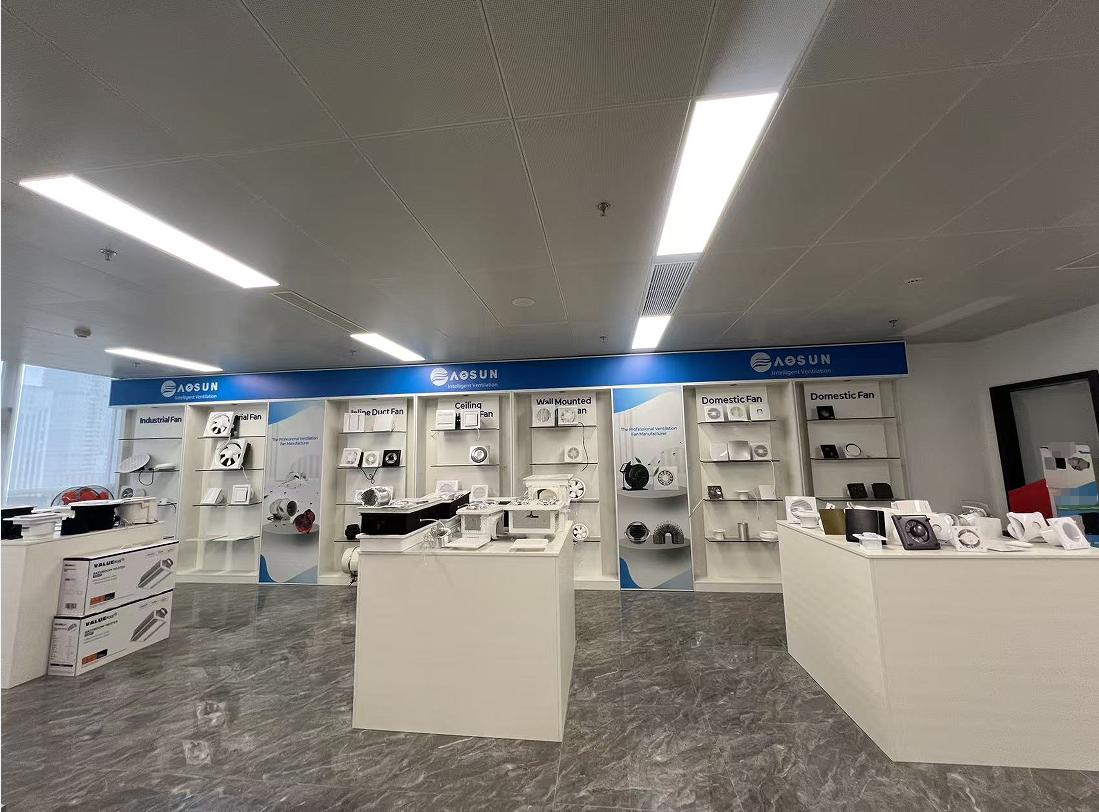
A well-organized sample room allows for efficient product selection and specification review.
Conclusion: Building a Partnership, Not Just a Transaction
Selecting the right exhaust fan manufacturer is a strategic investment. By methodically evaluating technical capability, manufacturing rigor, compliance posture, and innovation potential, you move beyond price comparison to establish a resilient supply chain partnership. Prioritize manufacturers that demonstrate a long-term commitment to the industry, such as those with over a decade of focused manufacturing experience, as this often correlates with stability, accumulated know-how, and a commitment to continuous improvement. The optimal partner will align with your specific application needs, quality standards, and business growth objectives, ensuring a reliable supply of efficient and durable ventilation solutions for your market.
For Further Information:
Companies like Aosun, a professional ventilation equipment manufacturer with over 10 years of experience, exemplify many of the criteria outlined in this guide. Operating from a 20,000+ sqm facility with 8 modern production lines, they offer a broad range of exhaust fans for residential, commercial, and industrial applications. Their products, backed by CE, UKCA, and RoHS certifications, are exported to over 50 countries worldwide.
Website: https://www.aosvents.com
Contact: +8618606589361 (Phone/WhatsApp) | alan.h@elmakelectrical.com
Factory Address: No. 128 Longxia Road, Yunlong Industrial Zone, Ningbo City, Zhejiang Province, China.