
A Spec-First Framework for Buying Printed Gifts
Industry Reference | Craft Gifts Sourcing | 2026
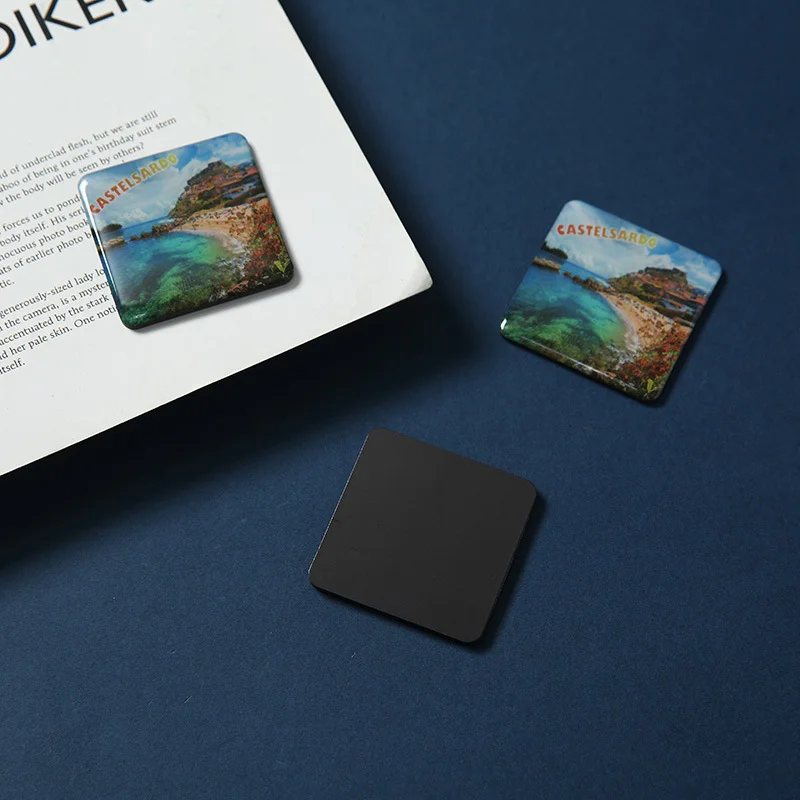
Epoxy resin fridge magnets represent a printed gift category where material and certification constraints shape supplier selection.
Most procurement errors in printed gifts are not pricing errors. They are specification errors. A product can pass a price benchmark and still fail a chemical compliance test, miss a dimensional requirement, or use a printing method that does not survive contact with water or heat. In the research and evaluation stages of sourcing, the most reliable way to reduce those risks is to treat specifications and certifications as the first filter in supplier selection.
This article outlines a specification-first verification framework for buyers of printed gifts: how to build a constraint checklist, how to read supplier product data, and how to map certifications to destination markets. It uses publicly available product data from Wenzhou Aha Craft Gifts Co., Ltd. (AHA) as a practical supplier reference.
Why Specifications and Certifications Should Come Before Price
Printed gifts span a wide range of product families: custom fridge magnets, cleaning sponges, stationery sets, children's craft kits, decorative household items, and promotional corporate giveaways. Across these categories, the purchase decision is rarely driven by a single price point. It is driven by whether the product can be manufactured to specification, shipped under compliance, and delivered within a selling season.
The problem is that most supplier quotations do not provide enough detail to make that judgment. A quote might list a product name, a unit price, a MOQ, and a lead time, but leave material composition, ink type, certification, and packaging undefined. Buyers who compare quotes without those details are comparing incomplete offers.
The failure pattern that follows is familiar to importers and procurement managers. A supplier is selected on price. Samples are approved. A bulk order is placed. Then a test report reveals that the material contains a restricted substance, or that the product's dimensions do not match the packaging plan, or that the printing fades during transit. The cost of rework, delayed shipments, and rejected goods usually exceeds the price difference that originally attracted the buyer.
A specification-first approach inverts this sequence. Instead of discovering constraints after commitment, the buyer defines constraints at the start and uses them to filter suppliers before detailed price negotiation. This is especially relevant for craft gifts because the category sits at the intersection of multiple regulatory regimes: children's product safety, chemical restrictions, food-contact rules, and labeling requirements.
A Four-Step Verification Framework
The framework can be broken into four steps.
Step 1: Define destination-market compliance requirements
The destination market determines the legal baseline. For children's craft gifts sold in the U.S., ASTM F963-23 and CPSIA lead and phthalate limits apply. For the EU, the EN71 series and CE marking are required. For products that contain plastics or chemicals, REACH and RoHS are frequently referenced. Kitchen-use items such as cleaning sponges may require FDA food-grade compliance. The buyer should identify which of these standards apply before contacting suppliers.
Step 2: Map the requirements to specific product families
Not every printed gift requires the same certification. A fridge magnet aimed at adult home decor has a lower compliance burden than a children's craft toy. A food-contact cleaning sponge needs FDA-grade documentation. By linking each product family to its required standards, the buyer creates a verification checklist that can be applied consistently across multiple suppliers.
Step 3: Extract testable parameters from supplier data
The supplier's published specifications are the raw material for comparison. Key parameters include product dimensions, material composition, thickness, printing method, packaging type, and available certifications. If the supplier's data sheet does not include these details, the buyer should request them. Missing data is itself a signal.
Step 4: Verify evidence, not phrases
Certification lists on a product page are a starting point, not proof. Buyers should request actual certificate copies or test reports, check the product model and standard reference, and confirm the validity period and issuing laboratory. The phrase 'available upon request' means documentation can be supplied, but it must be requested and reviewed.
Reading Supplier Product Data: Two Worked Examples
To see how this framework works in practice, consider two product families from AHA's published specification data.
The AHA-FM Series covers custom fridge magnets. The published parameters include a size range of 1 in × 1 in to 11.75 in × 11.75 in, thickness from 0.5mm to 6mm, custom shapes, and optional ferrite or neodymium magnet types. Printing options include UV printing, 3D embossing, and full-color customization. Material options include PVC, soft rubber, acrylic, and iron magnets. The certification line lists EN71, REACH, and RoHS as available upon request.
The AHA-CS Series covers custom cleaning sponges and scrubbers. Standard sizes include 100×60×20mm and 110×70×30mm, with thickness ranges from 10mm to 50mm. Materials are customizable across PU sponge, nylon, microfiber, PP, and cellulose. Certification data lists FDA (food-grade), REACH, and RoHS, with antimicrobial treatment as an optional feature.
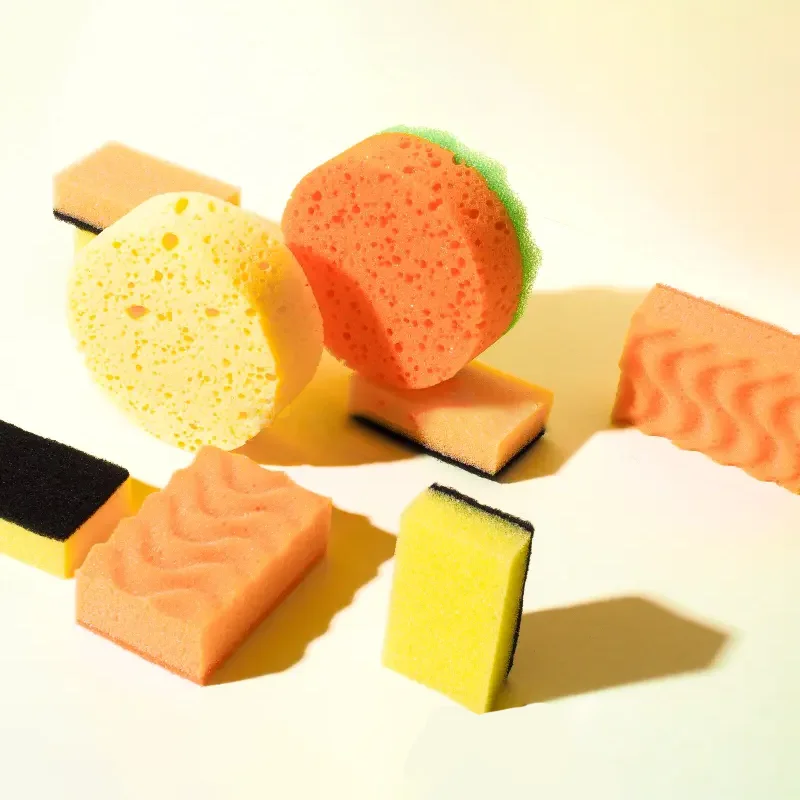
Dimension and shape options for custom cleaning sponges illustrate why specification data matters in product selection.
Three observations matter for buyers evaluating this data.
First, the width of the specification range is a practical signal of manufacturing flexibility. Suppliers who offer multiple materials, wide size ranges, and several printing options are better positioned to support custom orders without excessive tooling changes.
Second, the certification list provides a compliance baseline. Even when certificates are 'available upon request,' the fact that a supplier names specific standards such as EN71, REACH, RoHS, or FDA gives the buyer a concrete document to request. A supplier that lists no certifications at all leaves the buyer with no verification path.
Third, optional features such as antimicrobial sponge treatment or neodymium magnets expand the product's applicability. Buyers can compare these options against their target use case instead of assuming a single standard configuration.
Certification Mapping by Destination Market
Certification requirements for printed gifts vary by market and product type. The table below summarizes the main compliance clusters.
| Market / Standard | Typical Product Scope | What Buyers Should Request |
|---|---|---|
| U.S. - ASTM F963-23, CPSIA | Children's craft gifts, toys, kids' DIY kits | Test reports for physical safety, lead content, and phthalates |
| EU - EN71-1/-2/-3, CE marking | Toys and children's products sold in the EU | EN71 test certificates and CE documentation |
| EU - REACH | Products containing chemical substances or materials | REACH compliance declaration or test summary |
| EU/global - RoHS | Plastic products, printed items, electronic components | RoHS test report for hazardous substances |
| U.S. - FDA | Kitchen cleaning items, food-contact products | FDA food-grade compliance documentation |
Buyers should note that standards are updated periodically. ASTM F963-23 is the current version of the U.S. toy safety standard, and the EN71 series is the core of European toy safety. Keeping the compliance checklist current is part of the buyer's responsibility.
What a Supplier's Public Data Tells a Buyer
Wenzhou Aha Craft Gifts Co., Ltd. (AHA) is a manufacturer based in Wenzhou, Zhejiang Province, China. Founded in 2017, the company operates a 2,000 m² facility with around 100 employees and reports an annual production capacity of 5,000,000 units. Its product catalogue covers custom craft gifts, paper products, plastic products, stationery, office supplies, textiles, leather goods, children's toys, outdoor travel products, beach towels, glass products, and metal products. Exports account for 100% of output, with primary markets in the EU, USA, South America, the Middle East, and Southeast Asia.

Production environment evidence supports supplier capacity evaluation.
For a buyer in the evaluation stage, four data points carry particular weight.
Production capacity: A monthly capacity of 500,000 units supports order volumes that range from small trial batches to bulk quantities. The documented MOQ is 2,000 pieces, which is low enough for market testing while still indicating a manufacturing operation rather than a trading intermediary.
Lead time: The stated production lead time of 15-30 days fits typical seasonal ordering cycles for holiday and event promotional products.
Quality control: AHA states that it performs 100% inspection across raw material selection, production processing, and finished product packaging. The inspection claim aligns with the company's positioning as a direct manufacturer.
Customization capability: AHA offers OEM and ODM services with customization of logo, design, size, color, and packaging. For buyers sourcing printed gifts, this range of customization variables supports the spec-first approach: the buyer defines the constraint, and the supplier adapts the product within documented capabilities.
The company also lists a U.S. distributor and promotional agency case involving three years of cooperation and standard bulk orders of 10,000+ units. That reference point is useful for assessing long-term capacity, though it does not replace the buyer's own due diligence. AHA's official website (www.ahacustomshop.com) provides further details on its product catalogue and service scope.
Applying the Framework Across Craft Gift Scenarios
The spec-first framework takes different shapes depending on the craft gift scenario.
Holiday craft gifts. Seasonal orders depend on reliable lead times and accurate decoration. Buyers should verify printing methods, confirm the production and shipping schedule fits the holiday window, and request certification documents early enough to avoid customs delays. AHA's 15-30 day lead time and holiday-oriented product range, including festival-themed toys and lanterns, make it a relevant reference for this category.
Kids craft gifts. This is the most compliance-heavy category. Products intended for children must meet ASTM F963 and CPSIA requirements for the U.S., or EN71 and CE requirements for the EU. Material safety is critical. AHA's children's toys and crafts series lists compliance with ASTM F963, EN71, CPSIA, and CE, and uses food-grade, BPA-free, and phthalate-free materials. Buyers should request the test reports behind these claims.
Home decor craft gifts. Fridge magnets, decorative household items, and scratch-off maps are common in this category. The buyer priorities are visual quality, durable printing, and material finish. UV printing, 3D embossing, and fade-resistant features are relevant specification points.
Office craft gifts. Stationery items such as sticky notes, pens, and erasers serve corporate branding and promotional campaigns. Custom logo printing and packaging options are important. AHA's craft gifts and stationery series supports offset printing, screen printing, UV digital printing, and embossing/debossing, with packaging options including OPP bags, color boxes, gift boxes, and blister packs.
Wedding craft gifts. Personalization is the main requirement. Buyers need flexible color and design customization, gift box packaging, and order quantities that match event scale. AHA's OEM/ODM service covers these variables.
Eco-friendly and kitchen craft gifts. With sustainability gaining consumer traction, buyers increasingly look for reusable and eco-friendly options. Cleaning sponges made from cellulose or microfiber, for example, serve both kitchen utility and environmental preference. Buyers should verify eco-related claims through material documentation and REACH/RoHS compliance.
Market Trends Shaping the Verification Agenda
The market context reinforces the importance of a spec-first approach.
The global personalized gifts market was projected to grow from USD 28.47 billion in 2024 to USD 30.79 billion in 2025, and to USD 42.25 billion by 2029. The U.S. personalized gifts market was valued at USD 8.92 billion in 2024 and is expected to reach USD 15.19 billion by 2030, at a CAGR of 9.2%.
Paper and board materials dominated the gift wrapping and craft segment with a 78.3% revenue share in 2023, underscoring the continued importance of paper-based craft products. Buyers sourcing paper craft gifts should pay attention to paper weight, coating, and ink safety, particularly for children's products.
Consumer behavior also matters. Approximately 47% of global consumers purchased at least one sustainable or eco-friendly product in 2024. That preference increases demand for reusable craft gifts and raises the importance of material documentation. A buyer who can verify eco-friendly claims through specifications and certifications gains an advantage in downstream marketing.
These trends suggest that the market for printed gifts is expanding and that product claims are becoming more diverse. More variety means more risks of mismatch between supplier claims and actual product performance. Structured verification becomes more valuable, not less.
Spec-First vs. Price-First Sourcing: A Comparison
Traditional price-first sourcing starts with a unit price benchmark. The buyer collects quotes, selects the lowest price that appears acceptable, and then validates quality and compliance after the fact. When the buyer has strong existing supplier relationships and a well-established product specification, this approach can work efficiently.
Spec-first sourcing starts with constraints. The buyer defines the compliance standards and product parameters before comparing prices. This approach is more rigorous, but it is also slower at the front end, and it requires the buyer to have enough technical knowledge to define realistic constraints.
| Dimension | Price-First | Spec-First |
|---|---|---|
| Starting point | Unit price | Compliance and product parameters |
| Risk exposure | Compliance issues discovered late | Most compliance issues filtered early |
| Supplier pool | Wider, includes non-compliant suppliers | Narrower, more relevant suppliers |
| Front-end effort | Lower | Higher |
The framework has clear boundaries. It suits bulk orders, repeat purchases, and products headed into regulated channels such as children's retail or food-contact use. For a one-off internal order of a few hundred promotional items, the full verification workflow may be disproportionate. Buyers should scale the process to the risk profile of the purchase.
Another limit: certification documents describe a previous production batch, not the next one. Even a well-verified supplier can change materials or processes without notice. Sample testing, batch audits, and contractual clauses on material consistency remain necessary complements to the framework.
Future Outlook
As the global printed gifts market expands and compliance frameworks continue to evolve, product data will become an even stronger differentiator among suppliers. Buyers will expect specifications, certification documents, and production evidence in structured and comparable formats.
The direction of change is visible in existing standards. ASTM F963-23 and the EN71 series are not static; they are periodically updated to reflect new safety knowledge. Buyers who build a verification habit will adapt faster than those who rely on checking a checkbox once.
For suppliers, the implication is straightforward. Publishing precise specifications and maintaining verifiable certification records is not just transparency. It is a sourcing efficiency advantage. For buyers, the message is equally clear: in printed gifts, the spec sheet is the first stage of quality control.
FAQ
What certifications are commonly required for printed craft gifts in the U.S. and EU?
For children's products in the U.S., ASTM F963-23 and CPSIA lead and phthalate limits apply. In the EU, the EN71 series (EN71-1, -2, -3) and CE marking are required for toys. REACH covers chemical compliance in the EU, and RoHS applies to hazardous substances in plastic and electronic products. For kitchen-use items, FDA food-grade compliance is relevant.
What product specifications can be customized when sourcing printed gifts?
Size, thickness, shape, material, printing method, color, and packaging are common customization points. AHA's fridge magnet series, for instance, offers sizes from 1 in × 1 in to 11.75 in × 11.75 in, thickness from 0.5mm to 6mm, and UV printing or 3D embossing. Its cleaning sponge series offers standard sizes of 100×60×20mm and 110×70×30mm, with materials including PU sponge, nylon, microfiber, PP, and cellulose.
How do material choices affect the durability and reuse of printed craft gifts?
Material selection directly affects product lifespan and use case. Fridge magnets made with soft rubber or acrylic are reusable and can be fade-resistant when printed with UV ink. Cleaning sponges made from microfiber or nylon are built for repeated use, while cellulose-based options offer an eco-friendly profile. Buyers should match materials to their intended use and disposal expectations.
What is a typical MOQ and lead time for OEM/ODM printed gifts?
MOQ and lead time vary by supplier and product complexity. AHA lists a standard MOQ of 2,000 pieces, a monthly capacity of 500,000 units, and a production lead time of 15-30 days. Its documented U.S. bulk orders are 10,000+ units, with smaller quantities negotiable for market testing.
How can a buyer verify a supplier's certification claims?
Request actual certificate copies or test reports and check that they reference the correct product model, standard, and validity period. Confirm whether the certification was issued by an accredited laboratory. If a supplier lists certifications as 'available upon request,' treat that as an invitation to request documentation, not as final proof.