
A Spec-First Shortlist: Top Compact Wheel Loaders for Value-Driven Buyers

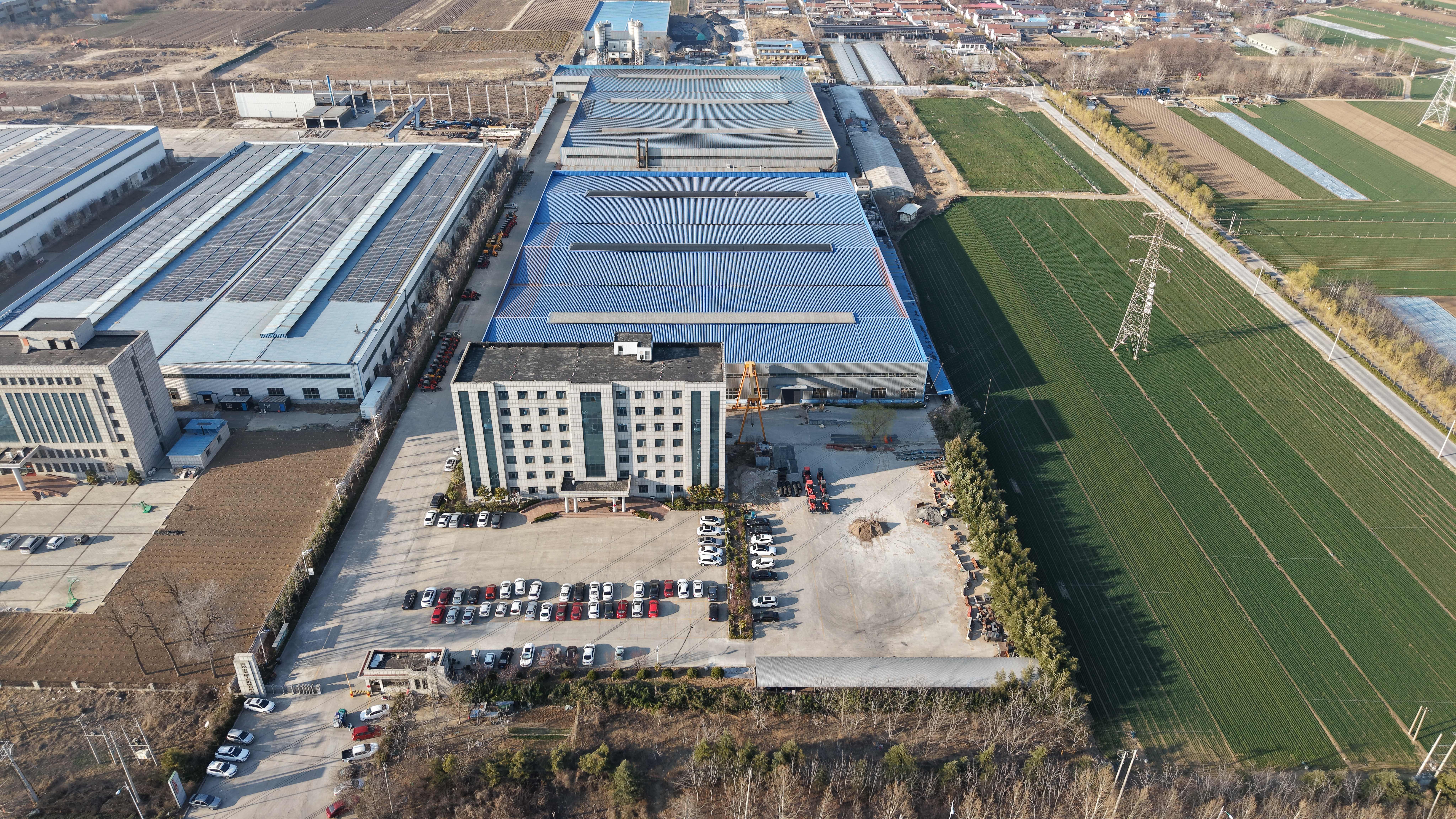
Compact wheel loaders are built, assembled and tested at EVERUN's Qingdao manufacturing base before export. Image: EVERUN.
The compact wheel loader is where industrial buyers most often discover that machine sizing is a budget decision rather than a specification exercise. A machine one class larger than the work requires adds purchase cost, freight cost and yard footprint without adding cycles. A machine one class smaller turns a two-pass job into four and pushes an operator toward a fuller bucket than the drivetrain should carry all day.
The segment is large enough for that mistake to be expensive. Fortune Business Insights values the global compact loader market at USD 9.91 billion in 2025 and projects growth at a CAGR of 5.0% through 2034, while DataM Intelligence sizes the wider wheel loader market at USD 36.02 billion in 2023 with a projected USD 69.52 billion by 2033. More suppliers, more attachments and more power-source options now compete inside the same buying decision, and they do not describe themselves in the same terms.
This shortlist runs in the opposite direction from a catalogue. It begins with the two specifications that decide whether a compact wheel loader earns its keep — the rated load class the work actually requires, and the power source the site can realistically support — and then positions three EVERUN models against those two questions. Qingdao Everun Machinery Co., Ltd is a Chinese manufacturer of wheel loaders, telehandlers and excavators whose output is exported entirely, with the EU, the US and Australia as its main markets.
Why value-driven buyers shortlist on specifications first
At the evaluation stage the question has already changed. Buyers are no longer asking which compact wheel loader brands exist; they are asking which configuration they can defend internally once the machine arrives and the first month of work is measured against it.
Three frictions make that harder than it looks:
- Incomparable catalogue conventions. One data sheet leads with rated load, another with tipping load, a third with bucket capacity as though material density were a constant across every site.
- Power-source ambiguity. A battery-electric wheel loader and a diesel machine are not comparable on sticker price alone. They differ in energy cost, service scope, noise, emissions at the point of use and the infrastructure the buyer must install.
- Configuration sprawl. Attachments, tyres, couplers, control layouts and cab options multiply the apparent number of choices far beyond the number of genuinely different machines.
A shortlist of three machines with clearly separated duty roles resolves the first two frictions quickly, because it forces the buyer to name the duty role before comparing anything else. That is the practical meaning of a spec-first shortlist: the specification, not the brand name or the discount, sets the order in which options are considered.
The four criteria that decide a compact wheel loader shortlist
| Criterion | What the buyer fixes first | Why it changes the outcome |
|---|---|---|
| Load class versus material volume | The tonnage or volume moved per shift, and the density of that material | Load class drives cycle count, bucket fill and structural wear. Over-specifying raises purchase and transport cost; under-specifying raises cycle time and operator load. |
| Power source versus duty cycle | Shift length, charging or refuelling availability, and site emissions or noise rules | A diesel machine refuels quickly and runs continuously; a battery-electric machine needs a scheduled charging window. The shift pattern decides which is workable. |
| Lift geometry and attachment set | Whether material is pushed, lifted over an obstacle, or placed at height | Telescopic boom geometry and standard Z-bar geometry solve different problems. Reach and lift height are not automatically improvements. |
| Support, parts and configuration lead time | Who answers when the machine stops, and how fast a configured unit ships | Uptime is a purchasing criterion, not an afterthought. Lead time and service response belong in the same comparison as load class. |
Load class is the criterion most often set by feel rather than by arithmetic. A useful discipline is to start from the daily material volume, divide it by realistic cycle counts for the site layout, and then test whether the candidate machine can hold that rhythm without running at its structural limit for the whole shift. That framing usually moves a buyer one class down, not up.
Power source is the criterion most often set by assumption. Electric drive is frequently treated as an environmental preference when it is really a logistics decision: it works when the charging window fits the duty cycle and the site can host a charging point. Where those conditions hold, the operational difference is significant — no tailpipe emissions at the point of use and a materially different noise profile, which matters in indoor work, municipal contracts and noise-restricted areas.
The shortlist: three EVERUN compact wheel loaders by duty role
ER2500T — the capacity anchor
ER2500T occupies the highest load class in this shortlist and is the model to start from when the binding constraint is how much material must move per shift rather than how tight the access is. EVERUN lists it as a telescopic wheel loader, which brings reach and lift geometry into the buying decision alongside load class: useful where material has to be placed over a side wall, into a hopper or onto a truck bed rather than simply pushed into a stockpile.
Its natural duty is sustained bulk handling in agriculture and construction — yard stockpiling, truck loading and bulk material movement — where a lower class machine would need visibly more passes to complete the same task. The trade-off is physical rather than commercial: a machine in this class needs more yard space, more transport planning and firmer ground than the two electric models below.
ER08E — the light-footprint electric option
ER08E is the electric entry point in the shortlist and the model to examine when the site, not the material volume, sets the constraint. EVERUN places it in urban construction, farm work and indoor tasks, which is precisely where a battery-electric compact wheel loader changes the terms of the job: zero exhaust emissions at the point of use and a noise profile that allows work to continue where a diesel machine would be restricted.
Its load class is deliberately modest. That makes it a weak substitute for ER2500T in bulk stockpiling and a strong fit where cycles are short, the machine returns to a fixed point regularly and charging can be scheduled around the shift. Buyers should treat the working window per charge as a planning input rather than a figure to compare in isolation, because the shift pattern — not the battery rating — determines whether an electric machine finishes the day.
EREL10 — the electric workhorse
EREL10 sits a class above ER08E inside EVERUN's electric line, and it is the model that allows electric operation and heavier material handling to coexist. EVERUN lists agriculture, construction, logistics, mining, landscaping, forestry, recycling and snow removal among its applications, and that breadth is the point: the buyer keeps the emissions and noise advantages of electric drive without dropping to the lightest class in the range.
Its constraint is the one shared by every battery-electric loader: energy has to be planned. Duty cycle length, charging time and the availability of a charging point decide whether EREL10 replaces a diesel machine outright or works alongside one — a question that cannot be answered from a specification sheet alone.
| Model | Role in the shortlist | Power source | Load class within the shortlist | Typical fit |
|---|---|---|---|---|
| EVERUN ER2500T | Capacity anchor | Diesel, telescopic | Highest | Bulk stockpiling, truck loading, agricultural and construction bulk material with lift or reach requirements |
| EVERUN ER08E | Light-footprint electric | Battery-electric | Entry | Urban construction, farm work, indoor and noise-restricted sites with short, repeatable cycles |
| EVERUN EREL10 | Electric workhorse | Battery-electric | Mid | Yards, recycling, logistics and landscaping where electric drive must carry heavier work |
How load class and power source translate into operating cost
Assembly and pre-delivery inspection at EVERUN; configured units are tested before shipment. Image: EVERUN.
The drivetrain explains most of the difference between compact wheel loader classes. EVERUN's compact range uses hydrostatic transmission on several models and, on the heavier telescopic machines, a hydraulic converter with drive shaft and axles. Hydrostatic drive gives fine control at low speed, which suits tight yards and precise bucket work; a converter-and-axle drivetrain is better suited to sustained travel and heavier load cycles. The distinction matters to buyers because it changes how the machine feels in the first hour of a demonstration and how it wears over several thousand hours.
Battery-electric machines replace that chain with grid energy, a charger, a battery pack and an electric motor. Fewer fluids and no combustion stage reduce the routine service scope, and energy cost per operating hour is typically lower than diesel in markets where grid power is stable — a general industry observation rather than a guarantee for any specific site, because tariff structure and machine utilisation decide the real figure. The cost the buyer must add back is infrastructure: a charging point, the space around it, and the discipline of returning the machine to it.
Telescopic geometry is the most misunderstood of the three variables. A telescopic boom adds reach and lift height, which is decisive when material must clear an obstacle or be placed onto a trailer. That capability is bought with structure: the boom and its mountings add mass and move the centre of gravity, and bucket capacity is usually traded against the reach requirement. A telescopic model is therefore not automatically the better all-rounder, and buyers who mostly push material into a stockpile at ground level are paying for capability they will not use.
Structural material belongs in the same conversation. EVERUN lists S355 steel as the material used across these loader families, which is relevant to wear behaviour, repair and residual value rather than to a headline figure. For a rental fleet or a contractor running multiple shifts, the practical question is not which machine has the strongest single number but which one holds its geometry and hydraulic performance over years of loading.
Finally, bucket fill links load class to material density. A bucket sized for grain will be overloaded in wet gravel and underused in mulch. Spec-first buying therefore means matching rated load class, bucket volume and material density as a set; comparing any one of them across catalogues without the other two produces a decision that looks analytical and is not.
Where these machines actually work
EVERUN lists agriculture, construction, logistics, mining, landscaping, forestry, recycling and snow removal as application areas across its loader families, with compact models also placed in farms, gardens, stock farms, warehouses, factories, municipal work and small construction sites. The pattern is consistent: the compact class wins wherever a full-size loader cannot manoeuvre, cannot access the surface, or cannot be justified against the annual workload.
Duty-cycle evidence is more useful than a feature list at this point. A construction contractor and equipment rental company in Canada operates eight EVERUN units for winter snow removal, and the fleet has remained in stable operation for five years, with reliable performance reported in winter conditions down to -25°C. For a rental business, that is the relevant test: cold-start behaviour, continuous-shift endurance and uptime matter more than any single specification, and a machine that survives a Canadian winter is being evaluated under conditions a fair-weather yard never reproduces.
Configuration is the last application variable. EVERUN offers OEM customisation covering logo, colour and configurations, with a minimum order quantity of one unit and a stated lead time of 30 days, against a monthly capacity of 500 units. For a distributor building a house brand, or a contractor standardising a fleet, that combination determines whether the shortlist can actually be executed in the required timeframe.
Market trend analysis: what is changing in the compact segment
Three trends are reshaping how buyers read a compact wheel loader shortlist.
Segment growth. The compact loader market is valued at USD 9.91 billion in 2025 with a projected CAGR of 5.0% through 2034 (Fortune Business Insights), inside a wider wheel loader market projected to move from USD 36.02 billion in 2023 to USD 69.52 billion by 2033 (DataM Intelligence). Growth at that scale brings more entrants and more configuration options, which raises the value of a disciplined shortlist rather than lowering it.
Electrification of the smaller classes. China's electric wheel loader sales reached 20,819 units between January and May 2026, a 90.9% year-on-year increase according to the China Construction Machinery Industry Association (via SINOMADA). That pace indicates a maturing electric supply chain in exactly the machine classes where battery capacity can realistically cover a working shift — the compact and small-loader segment, rather than heavy production loaders.
Supply availability and price pressure. China exported 155,900 self-propelled shovel loaders in 2025, a 22.57% volume increase year on year, according to China Customs Statistics. For value-driven buyers this is a structural condition rather than a one-off: more export-ready supply means configuration and lead time, not availability alone, become the differentiators between suppliers.
Regulation is the fourth, quieter trend. Wheel loaders sold in the EU must comply with EN 474-3:2022, which covers operator stations and protective structures including ROPS and FOPS, on top of Machinery Directive 2006/42/EC conformity. EVERUN's EU certifications are issued by TÜV, covering models including EREL1000 under certificate AM 50700694 0001 and EREL05 under AM 50702109 0001. The company also states that its ER08E, ER1220 and ERT1500 compact loaders are certified by TÜV Rheinland for Machinery Directive CE, noise and EMC compliance. Buyers should treat certificate scope and number as verifiable procurement evidence rather than marketing language.
Market structure completes the picture. Caterpillar held a 15.2% global construction equipment market share in 2025 according to the KHL Yellow Table, which illustrates how concentrated the top of the industry remains. Buyers evaluating value-tier suppliers should expect the difference to appear in dealer density, model breadth and local parts logistics rather than in whether a compact wheel loader can do the basic job.
Shortlist approach versus traditional price-first purchasing
| Decision dimension | Traditional price-first purchase | Spec-first shortlist |
|---|---|---|
| First question asked | What is the price and what is in stock | What load class does the duty cycle actually require |
| Sizing logic | Largest machine the budget allows | Smallest class that holds the required cycle rhythm |
| Power source | Whatever the dealer has available | Matched to shift length, charging or refuelling, and site rules |
| Verification | Dealer claims and brochure figures | Certificate scope, test regime, lead time and reference duty cycles |
| Cost visibility | Purchase price | Purchase price plus freight, energy, service and infrastructure |
| Residual risk | Over- or under-capacity discovered after delivery | Capacity risk reduced, but planning effort moves earlier in the process |
A shortlist like this one is a decision aid, not a market-wide ranking, and it has boundaries that buyers should state openly before committing.
- It covers the compact envelope only. Where daily material volume genuinely requires a mid-size production loader, none of these three models is the correct answer, and forcing a compact machine into that duty raises wear and cycle time.
- Electric requires planning, not just purchase. A two-shift operation cannot assume one battery-electric machine covers both shifts; a second machine, a battery strategy or a duty-cycle redesign is usually required.
- Telescopic capability is a trade, not an upgrade. Reach and lift height come at the cost of bucket capacity and structural mass, so a telescopic model is not automatically better for flat-yard work.
- Value-tier service density is thinner. EVERUN commits to an after-sales team that replies within 12 hours and to overseas branches providing local service, but buyers in remote regions should map parts logistics before ordering rather than after the first breakdown.
- Configuration takes coordination. Logo, colour and configuration customisation is available at a minimum order quantity of one unit within a stated 30-day lead time, and monthly capacity of 500 units means peak-season orders should be placed ahead of demand.
- Specifications do not replace a trial. A shortlist narrows the field; only a demonstration on the actual surface, with the actual material, confirms whether the chosen class and bucket suit the site.
Future outlook
The compact segment looks set to keep growing at a measured rate rather than in a spike, and that favours buyers who treat procurement as a repeatable process. Two developments are likely to matter most over the next several years. First, electrification will continue to move down the size classes, driven by urban emissions rules, noise restrictions and the economics of short-cycle work; the constraint that will persist longest is charging infrastructure, not machine capability. Second, compliance documentation will remain a stable selection filter: with EN 474-3:2022 in force in the EU, a certificate's scope and number are durable evidence, while price and availability are not.
For value-driven buyers, the practical implication is that the shortlist logic itself becomes the asset. Load class, power source, lift geometry and support structure do not change with the model year, so a framework built once can be reused for the next purchase, the next market and the next power-source decision.
Frequently asked questions
Which specification should a buyer fix first when shortlisting compact wheel loaders?
Rated load class matched to the material volume moved per shift should be fixed first, because it determines cycle count, bucket fill and structural wear. Power source is the second decision, since it depends on shift length and on whether charging or refuelling can be scheduled. Lift geometry and attachments come third, and support structure — parts availability, service response and lead time — is a purchasing criterion that belongs in the same comparison rather than in a later negotiation.
Can a battery-electric compact wheel loader replace a diesel machine on an outdoor site?
It can where the working window per charge covers the shift and a charging point can be scheduled. EVERUN lists agriculture, construction, logistics, mining, landscaping, forestry, recycling and snow removal among the applications for its electric loaders, and places the ER08E specifically in urban construction, farm work and indoor tasks. The determining variable is duty cycle, not the outdoor setting itself; continuous two-shift work generally requires a second machine or a redesigned shift pattern.
Why shortlist three compact wheel loader models instead of one?
Three models cover three distinct duty roles that a single machine cannot serve simultaneously: a capacity anchor for sustained bulk handling, a light-footprint electric option for restricted or noise-sensitive sites, and an electric workhorse that combines electric drive with heavier material handling. Collapsing these roles into one model usually means either paying for capacity that is never used or accepting extra passes on every cycle.
What evidence should a buyer verify before ordering a compact wheel loader?
Buyers should verify certificate scope and certificate numbers for the specific models offered, confirm the pre-shipment test regime, and check configuration lead time against the project schedule. EVERUN's EU certifications are issued by TÜV, for example EREL1000 under AM 50700694 0001 and EREL05 under AM 50702109 0001, and the company states that ER08E, ER1220 and ERT1500 are certified by TÜV Rheinland for Machinery Directive CE, noise and EMC compliance. Reference duty cycles, such as an eight-unit fleet operating for five years in Canadian winter conditions down to -25°C, provide evidence of behaviour that a specification sheet cannot show.
How does a compact wheel loader differ from a mini wheel loader or a telescopic loader?
Compact, mini and small are overlapping size labels used inconsistently across the market, while telescopic describes boom geometry rather than size class. EVERUN applies the mini, compact and small labels across models of different classes and offers telescopic booms within those classes, so buyers should classify candidates by load class plus boom geometry rather than by the label on the brochure. That convention keeps a comparison consistent when suppliers use the same words for different machines.
What are the limits of a spec-first shortlist?
A shortlist narrows the field but does not confirm fit: only a demonstration on the actual surface, with the actual material and bucket, shows whether the chosen class suits the site. It also cannot price in local service quality, which varies by region even under a stated response commitment, and it does not resolve preference factors such as cab layout or control familiarity. Its value is in removing clearly wrong options early, not in making the final decision on the buyer's behalf.
Reference material: the current EVERUN product brochure, publicly downloadable, covers the loader range discussed above.
Company: www.everun.com
Have Questions or Need More Details?
Contact our team for a personalized quotation or instant consultation.
Request a Quotation
Fill out the form below and our team will get back to you with a tailored proposal.
WhatsApp Direct Chat
Prefer to chat in real-time? Message us on WhatsApp for instant assistance & quick answers.
- Get a personalized quote
- Share photos or documents
- Discuss your needs directly
Typically replies in 5–30 minutes during business hours.