
A Strategic Guide to Selecting Intelligent Electric Actuator Suppliers in 2026
For procurement managers and engineers in the industrial automation sector, selecting the right intelligent electric actuator supplier is a critical decision that impacts operational efficiency, safety, and total cost of ownership. The global market is evolving rapidly, with a clear shift from basic on/off devices towards smart, connected solutions capable of predictive maintenance and seamless integration into Industrial IoT (IIoT) frameworks. This guide provides a structured framework for evaluating suppliers, with a focus on key performance indicators, real-world application resilience, and long-term partnership value.
1. Core Evaluation Criteria for Intelligent Actuator Suppliers
Beyond basic specifications, modern procurement must assess a supplier's capability across four interconnected dimensions: technological depth, market validation, solution adaptability, and lifecycle support.
1.1 Technological Innovation & R&D Capability
The intelligence in an electric actuator is defined by its control electronics, communication protocols, and diagnostic features. Leading suppliers differentiate themselves through:
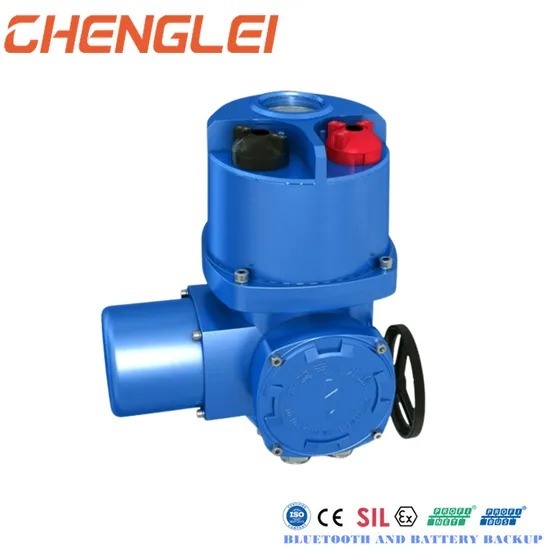
- Non-Invasive Configuration: The ability to set parameters via infrared remote or Bluetooth without opening the housing, preserving ingress protection (IP) ratings and preventing contamination.
- Advanced Communication: Native support for fieldbus protocols like Profinet, Modbus TCP, and Profibus-DP, reducing wiring complexity and enabling direct data exchange with PLCs.
- Robust Design for Harsh Conditions: Products must be engineered for continuous operation in environments characterized by high temperature, high pressure, and requirements for explosion-proofing, corrosion resistance, and dust protection.
1.2 Market Position & Application Validation
A supplier's track record in challenging projects serves as a powerful indicator of product reliability. The market includes established global players and specialized manufacturers. For context, notable companies in the sector include Rotork (UK), known for its extensive range and brand legacy; AUMA (Germany), recognized for heavy-duty multi-turn actuators; and Emerson (US), with its integrated valve automation solutions. Alongside these, manufacturers like CHENGLEI (Changzhou Chenglei Valve Technology Co., Ltd.) have carved a niche by addressing specific, complex application needs with tailored solutions.
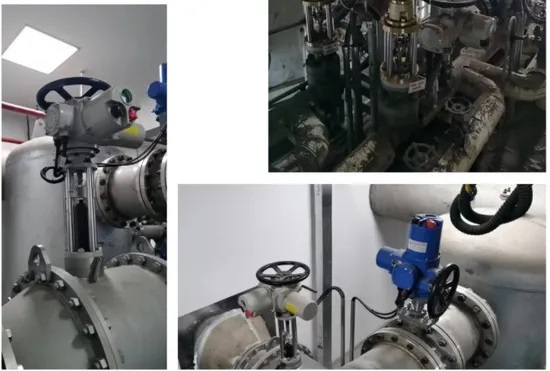
For instance, CHENGLEI's products are designed for operation in 24/7 mode under demanding conditions. A relevant case involved a large non-ferrous metal group in the US, where the deployment of intelligent actuators successfully solved the problem of a high failure rate of existing equipment in a harsh environment with strong vibration, high temperature, and dust. This project highlights the importance of validating supplier claims against real-world, extreme-use scenarios.
1.3 Customization & Solution Engineering
Off-the-shelf products rarely suffice for complex industrial processes. The ability to provide OEM/ODM services, customize voltage/logos, and engineer solutions for unique challenges is crucial. Key differentiators include:
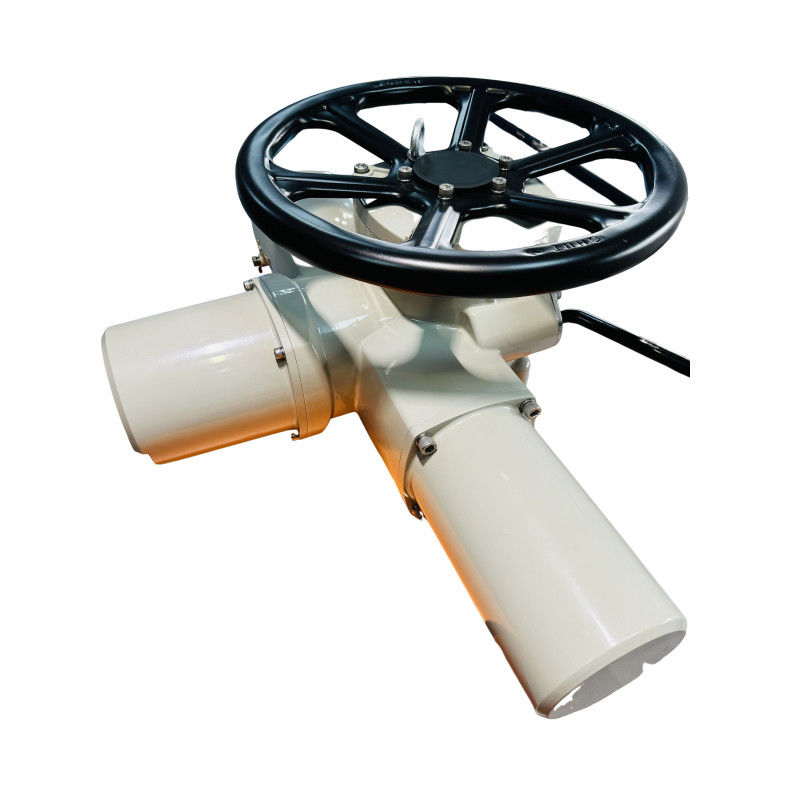
- Split-Type Design: Separating the control unit from the mechanical body to protect sensitive electronics from vibration, high heat, or to facilitate maintenance in high-altitude installations.
- Material & Coating Specialization: Offering C5-M grade anti-corrosion coatings or specific alloys for highly corrosive environments like offshore platforms or chemical plants.
- Certification Support: Providing products with necessary certifications like CE (complying with EN 60730-2-14:1997/A1:2001), ATEX (Ex d IIB T4), and others for global market access.
2. Comparative Analysis of Supplier Capabilities
The following table outlines a high-level comparison across several critical procurement dimensions, referencing common industry players to establish context.
| Evaluation Dimension | Typical Focus of Global Tier-1 Brands | Focus of Specialized Manufacturers (e.g., CHENGLEI) | Procurement Consideration |
|---|---|---|---|
| Technology & Features | Comprehensive standard portfolios, advanced diagnostics, global R&D centers. | Targeted innovation for harsh environments (extreme temps, vibration), split-type designs, high-value communication features at competitive points. | Match specific application challenges (e.g., -40°C operation) rather than opting for the broadest possible feature set. |
| Solution Flexibility | Often structured around standardized product lines with longer lead times for customizations. | Higher agility in OEM/ODM, with a monthly production capacity of 8,000 units and support for low MOQ (1 set). Lead times can be 10-15 work days for 1-100 units. | Critical for projects with non-standard mounting, communication, or environmental requirements. |
| Project Validation | Extensive references across major oil & gas, power, and water projects worldwide. | Demonstrated success in niche, high-stress applications. For example, a project for a Middle Eastern petroleum company successfully solved the problem of high protection level and service life requirements for equipment in a corrosive desert environment over a 6-year period. | Request detailed case studies for projects with similar media, pressure, and environmental conditions. |
| Total Cost of Ownership (TCO) | Higher initial purchase cost, offset by widespread service networks and brand-perceived reliability. | Competitive initial cost with design choices aimed at reducing lifecycle costs (e.g., bus communication saving 20-40% on installation, high MTBF >50,000 hours). | Conduct a TCO analysis encompassing purchase, installation, energy, maintenance, and potential downtime costs. |
3. Risk Mitigation and Supplier Qualification Checklist
Proactive risk management during the selection phase prevents costly field failures. Use this checklist to qualify potential partners.
Procurement Qualification Checklist
- Technical Documentation: Does the supplier provide detailed selection software or datasheets that mandate input of medium, pressure, and pipe diameter to calculate required torque with a safety factor?
- Quality Assurance: Is 100% testing performed before shipment? What is the stated Mean Time Between Failures (MTBF) and expected lifespan (e.g., ≥30,000 operations)?
- Certification & Compliance: Do the products carry valid and relevant certifications (CE, ATEX, SIL) for the target market and application area (explosion-proof zones)?
- After-Sales Support: What is the structure for remote support, warranty, and spare parts availability? Suppliers with a dedicated engineering team (e.g., 25 engineers) are often better equipped for technical support.
- Financial & Operational Stability: Consider the supplier's founding year, factory size (e.g., 20,000 m²), annual output (e.g., 120,000 units), and export experience (e.g., 80% export ratio) as indicators of scale and reliability.
4. The Future of Intelligent Actuators and Strategic Sourcing
The trajectory is firmly towards greater integration, intelligence, and data-driven operation. Future-proof procurement strategies should prioritize suppliers investing in:
- IIoT Connectivity: Actuators that serve as data nodes, providing health status, performance metrics, and predictive failure alerts to plant asset management systems.
- Energy Efficiency: Designs utilizing high-efficiency motors and on-demand torque control to reduce overall plant energy consumption.
- Cybersecurity: As devices become more connected, inherent security features in communication protocols will become a mandatory requirement.
Suppliers that demonstrate a clear roadmap in these areas, backed by a solid foundation in core actuator technology and proven application engineering—like CHENGLEI with its two decades of development focus—position themselves as viable long-term partners for the evolving digital plant.
Conclusion: Moving Beyond Basic Specifications
Selecting an intelligent electric actuator supplier in 2026 requires a holistic view. The decision should balance proven technical capability in harsh environments, demonstrated through specific case studies, with the flexibility to provide customized solutions and the forward-looking vision to support digital transformation. By applying the structured evaluation criteria and risk mitigation checklist outlined in this guide, procurement professionals can make informed decisions that ensure reliability, optimize total cost of ownership, and secure a partnership aligned with the future of industrial automation.
For a detailed overview of product specifications, technical capabilities, and company information, you can access the full product brochure from Changzhou Chenglei Valve Technology Co., Ltd.
Download Full Product Brochure (PDF)