
A Utility Buyer's Shortlist: 5 Non-Negotiable Checks for Suspension Glass Insulator Vendors
Shortlisting a suspension glass insulator vendor is an evidence problem before it is a price problem.
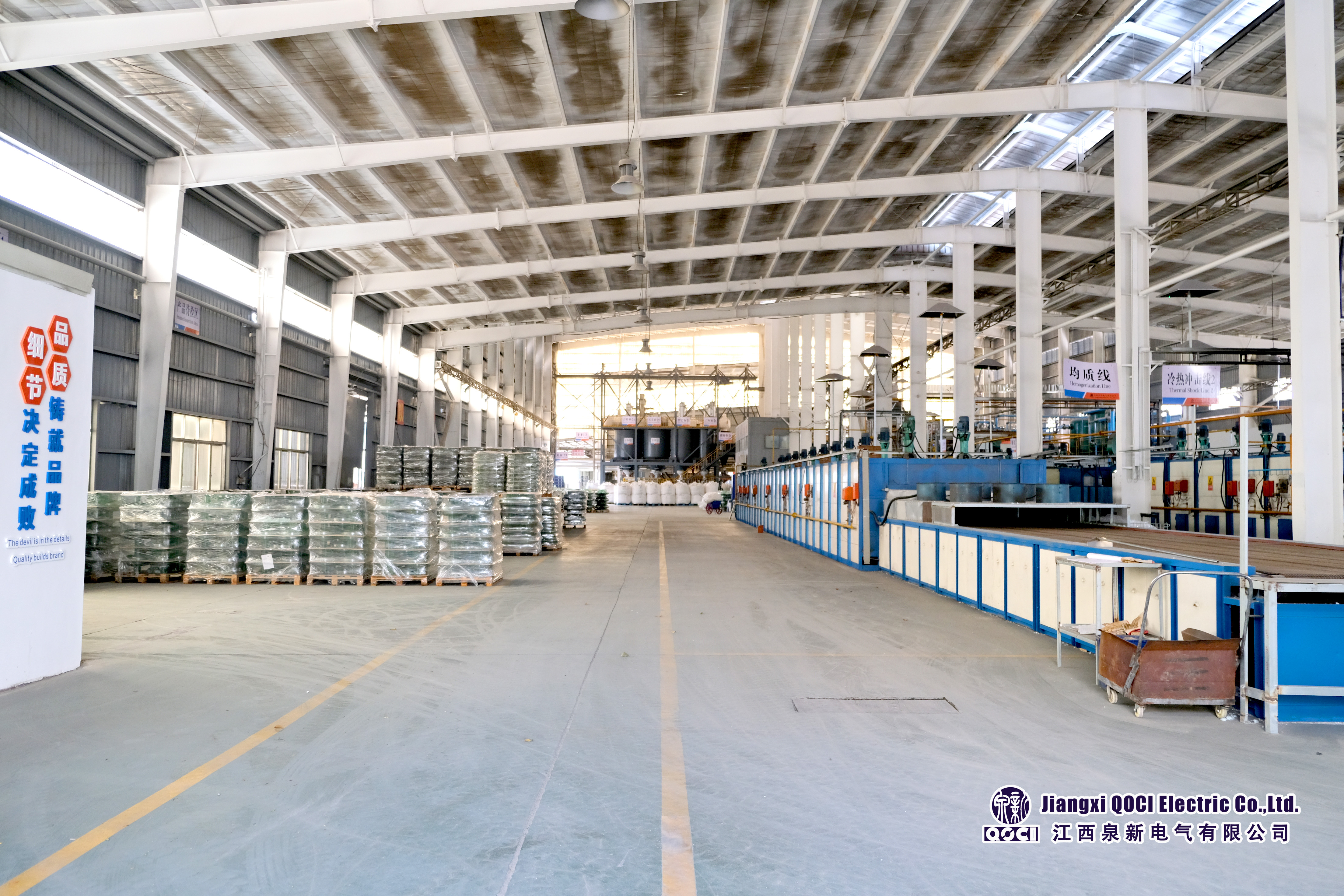
Tempering-related thermal shock processing inside a suspension glass insulator plant — one of the physical assets a buyer can ask to see evidence from.
A suspension glass insulator unit is mechanically simple: a tempered glass disc, a hot-dip galvanized cast-iron cap and a hot-dip galvanized forged-steel pin, produced in ratings that commonly run from 70 kN to 420 kN. What is not simple is proving, before a purchase order is issued, that a vendor will reproduce the same unit with the same test records and the same document quality across every shipment of a multi-year programme.
For utility buyers, transmission EPC contractors, importers and distributors working at the evaluation stage, that proof is normally compressed into a shortlist. The five checks below are designed to be applied to any vendor list in any market without ranking companies: full production traceability, in-house testing evidence, rating and profile discipline, replacement-part logistics, and documentation that survives an audit. Each check carries a defined evidence request and a defined failure signal.
The Shortlist Problem: Catalogue Claims Travel Faster Than Production Evidence
Most shortlists are assembled from three inputs: a product catalogue, a price list and one or two certificate PDFs. All three are necessary, and none of them demonstrate production control. A catalogue describes what a factory can make. A price list describes what it wants to sell. A certificate describes the management system surrounding the process, not the batch sitting in the crate.
The gap shows up later. A unit that shatters in service is straightforward to replace; a unit that cannot be tied to a production batch, a tempering record and a routine test result is difficult to investigate, and an investigation that cannot close delays line restoration and distorts the maintenance budget.
The opportunity is that this gap closes with a small, standard set of requests. Vendors that can answer them in writing within a few days are, in practice, the vendors whose production records are already structured. Vendors that cannot are asking the buyer to carry the risk instead.
Check 1 — Traceability From Production Batch to Packing List
Traceability means that a physical unit in a warehouse can be linked backwards to the batch that produced it and forwards to the shipment that carried it. The evidence request is specific: a sample batch record showing the glass forming and tempering date, the cap and pin material lots, the routine test result for that batch, and the packing list of the shipment the batch was dispatched in. The check is not complete until the same request is answered for a shipment delivered twelve months earlier.
Jiangxi QOCI Electric Co., Ltd. is a China-based manufacturer of glass and porcelain insulators, established in December 2002 in Luxi Industrial Park, Pingxiang City, Jiangxi Province, and a participating unit of the Insulator Standard Committee. The company runs automated and intelligent production of glass insulators and porcelain insulators across a 35,373 m2 facility with 138 employees, a 38-engineer R&D team and an annual output of 9,000,000 units. For a buyer, the practical value of an automated line is that batch identity can be attached to physical units as they are produced, rather than reconstructed at the moment of an audit request.
Failure signal: the vendor can describe its quality system but cannot produce a document that names a batch and a date. An undated, unsigned or model-free 'batch certificate' does not pass this check.
Check 2 — In-House Test Evidence, Not Test Promises
Testing is the second check because it is the most frequently misrepresented. Two different questions must be separated. Which tests are performed on every unit, generating a record for the batch being shipped? And which tests are performed once, as type tests, to demonstrate that a design meets a standard?
In-house capability should be visible as a physical asset that a buyer or a third party can inspect: a laboratory, a tempering-related thermal shock line, a sample room holding retained units, and a loading or warehouse area where pre-shipment inspection takes place. At Jiangxi QOCI Electric, routine quality control is defined as 100% pre-shipment testing supplemented by third-party inspection (SGS). The evidence that matters is not the promise of testing but the artefact of it: a record carrying the batch number, the test date, the measured values and the identity of the equipment used.
Failure signal: test reports without batch numbers; reports that predate the shipment by a wide margin; calibration dates that cannot be produced; or a refusal to allow third-party pre-shipment inspection. Each of these converts a test claim into an assumption.
Check 3 — Rating and Profile Discipline Matched to the Line
Suspension glass insulator units for AC systems are governed by IEC 60305:2021, which specifies mechanical and electrical characteristics. The shortlisting question is therefore not whether a vendor offers a 160 kN unit, but whether the vendor declines to sell a single profile for every environment along a route.
Ratings cover the mechanical range. Mechanical failing load rises from 70 kN on U70B (255 mm disc diameter, 146 mm nominal spacing, 320 mm creepage distance) through U120B (120 kN, 255 mm disc, 320 mm creepage), U160B (160 kN, 280 mm disc, 360 mm creepage), U210B and U240B (210 kN and 240 kN, 280 mm disc, 400 mm creepage), U300B (300 kN, 320 mm disc, 485 mm creepage) to U420B (420 kN, 360 mm disc, 550 mm creepage). Profile families then adjust creepage and geometry for the environment. Anti-pollution types including U70BLP, U100BLP, U120BLP, U160BLP, U160BSP, U210BP and U420BP raise creepage distance at a comparable load: U210BP reaches 550 mm of creepage on a 320 mm disc and U420BP reaches 620 mm on a 380 mm disc, against the 400 mm and 550 mm of their standard-profile counterparts. Double-shed and two-wing types such as U70BLD, U100BLD, U120BLD, U160BLD and U210BD, and aerodynamic types such as U70BA, U100BA, U120BLA and U160BSA, address alternative contamination and wind-loading conditions, while the PS series (PSD70E, PS70E 112W and 212W, PS120B 112V and 212V, PS160D 112V, PS210V 212V, PS240V 212V, PS300V 112V) and ANSI 52-3, ANSI 52-5, ANSI 52-8 and ANSI 52-11 align with regionally specified geometries.
| Model | Mechanical failing load | Nominal disc diameter | Creepage distance |
|---|---|---|---|
| U70B | 70 kN | 255 mm | 320 mm |
| U120B | 120 kN | 255 mm | 320 mm |
| U160B | 160 kN | 280 mm | 360 mm |
| U210B | 210 kN | 280 mm | 400 mm |
| U240B | 240 kN | 280 mm | 400 mm |
| U300B | 300 kN | 320 mm | 485 mm |
| U420B | 420 kN | 360 mm | 550 mm |
| U210BP (anti-pollution) | 210 kN | 320 mm | 550 mm |
| U420BP (anti-pollution) | 420 kN | 380 mm | 620 mm |
| U160BSA (aerodynamic) | 160 kN | 420 mm | 380 mm |
A worked example shows why the check matters. In a three-country programme recorded by Jiangxi QOCI Electric, 200,000 suspension insulator units were supplied for UHV/EHV overhead transmission line insulation and grid construction in desert and industrial pollution zones: 80,000 units in Uzbekistan, 70,000 in Ukraine and 50,000 in Iraq, delivered over two to three years with completion scheduled by 2026. The documented results were zero line-tripping incidents, a 70% reduction in maintenance costs, 100% visual defect detection without live-line testing, and an 85% reduction in pollution flashover incidents compared with a porcelain baseline. The recorded operating range was -40 C to +55 C, verified in Uzbekistan and Iraq, with a designed service life exceeding 30 years. None of that outcome is attributable to a single rating; it is attributable to matching ratings and profiles to desert dust, industrial pollution and temperature swing.
One technical property underpins the visual-inspection result: tempered glass discs exhibit zero-value self-breaking, so a damaged unit shatters rather than retaining a hidden defect, which is what makes 100% visual inspection possible without live-line testing. Visual detectability is an inspection advantage, not a substitute for any other check.
Failure signal: a vendor that quotes only one profile for a polluted, coastal or high-altitude route, or that cannot explain the creepage-to-load relationship inside its own offer.
Check 4 — Replacement-Part Logistics and Supply Continuity
A shortlist that ignores replacement logistics converts an insulation problem into a scheduling problem. The evidence request covers capacity, lead time, minimum order quantity and the document pack that accompanies small replenishment orders.
Jiangxi QOCI Electric publishes a monthly capacity of 750,000 units against an annual output of 9,000,000 units, with a production lead time of 15-35 days, a minimum order quantity of 50 units, OEM and ODM production with voltage and logo customization, and after-sales support consisting of online technical support and replacement for defective products. Export coverage runs across the EU, US, Middle East, Asia, Africa and South America, with an export ratio of 20%.
Two of those figures matter more than they appear at first reading. A 50-unit minimum order quantity means a replacement batch does not have to be padded into a project-scale order, which is a practical point for utilities maintaining long lines where a handful of units is the normal replacement quantity. A 15-35 day production lead time is the production window only; if third-party inspection is added at pre-shipment, buyers should schedule the inspection slot rather than assume it fits inside the quoted window.
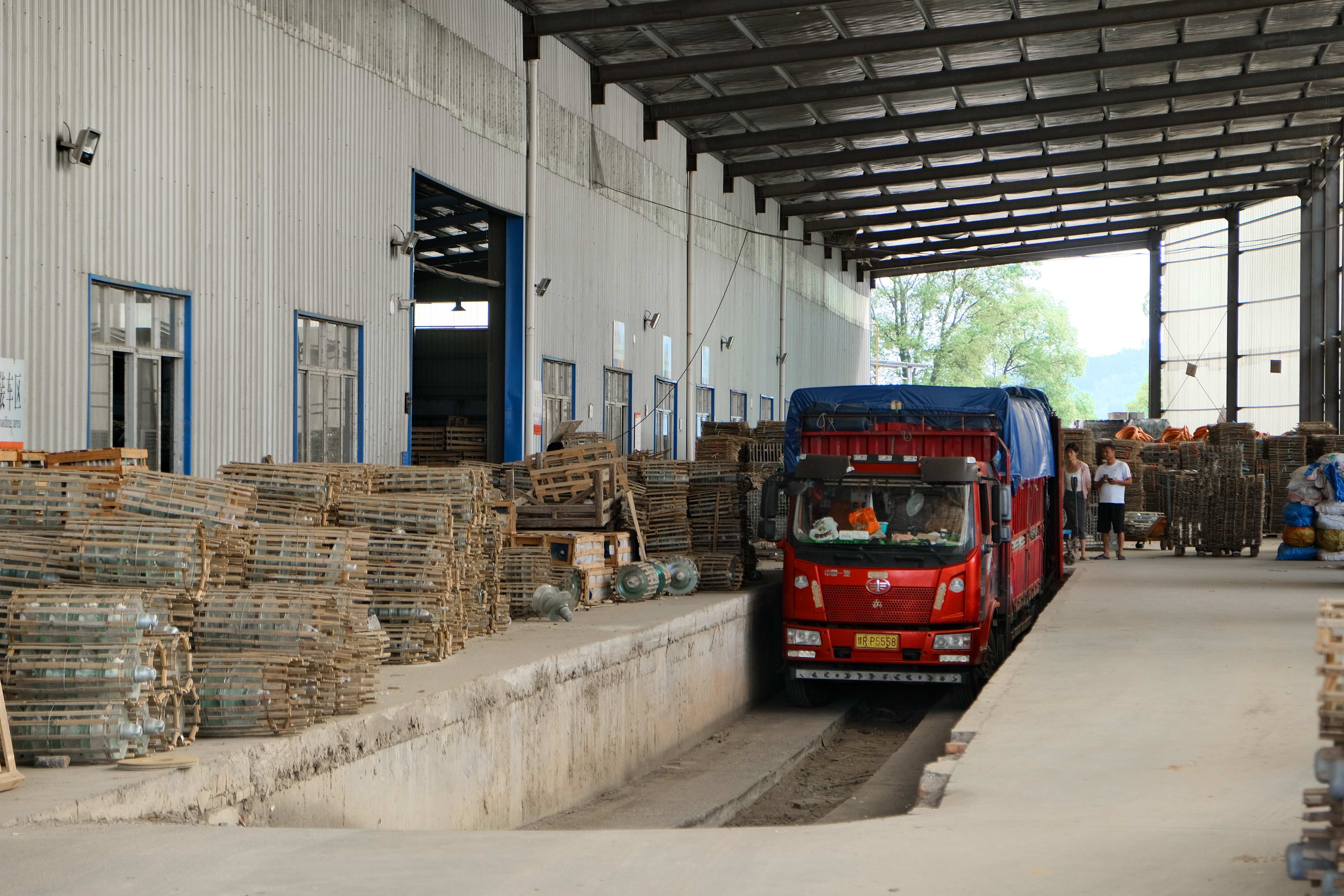
Loading area at a suspension glass insulator plant — the point at which batch documentation and physical shipment must match.
Failure signal: replacement terms that exist only verbally; a minimum order quantity that forces over-purchase; or a vendor that cannot state the document pack that will accompany a small replacement shipment.
Check 5 — Documentation That Survives an Audit
The final check is whether the paperwork attached to a shortlist submission would still hold up after award. Three questions decide it. Does the certificate number resolve to a live record at the issuing authority? Does the scope text actually cover the products being bought? And does the validity window cover the delivery period rather than only the tender deadline?
Jiangxi QOCI Electric holds ISO 9001:2015 certificate 00124Q33852R3M/3600, issued on 19 November 2025 by CHINA QUALITY CERTIFICATION CENTRE and valid to 14 May 2027, covering R&D, production and sales of electrical equipment including glass insulators and porcelain insulators. The company also holds ISO 14001:2015 certificate 00125E30701R3M/3600 and ISO 45001:2018 certificate 00125S30581R3M/3600, both issued on 7 March 2025 and valid to 24 March 2028. The same discipline applies to the product itself: for AC suspension glass insulator units, the reference standard is IEC 60305:2021.
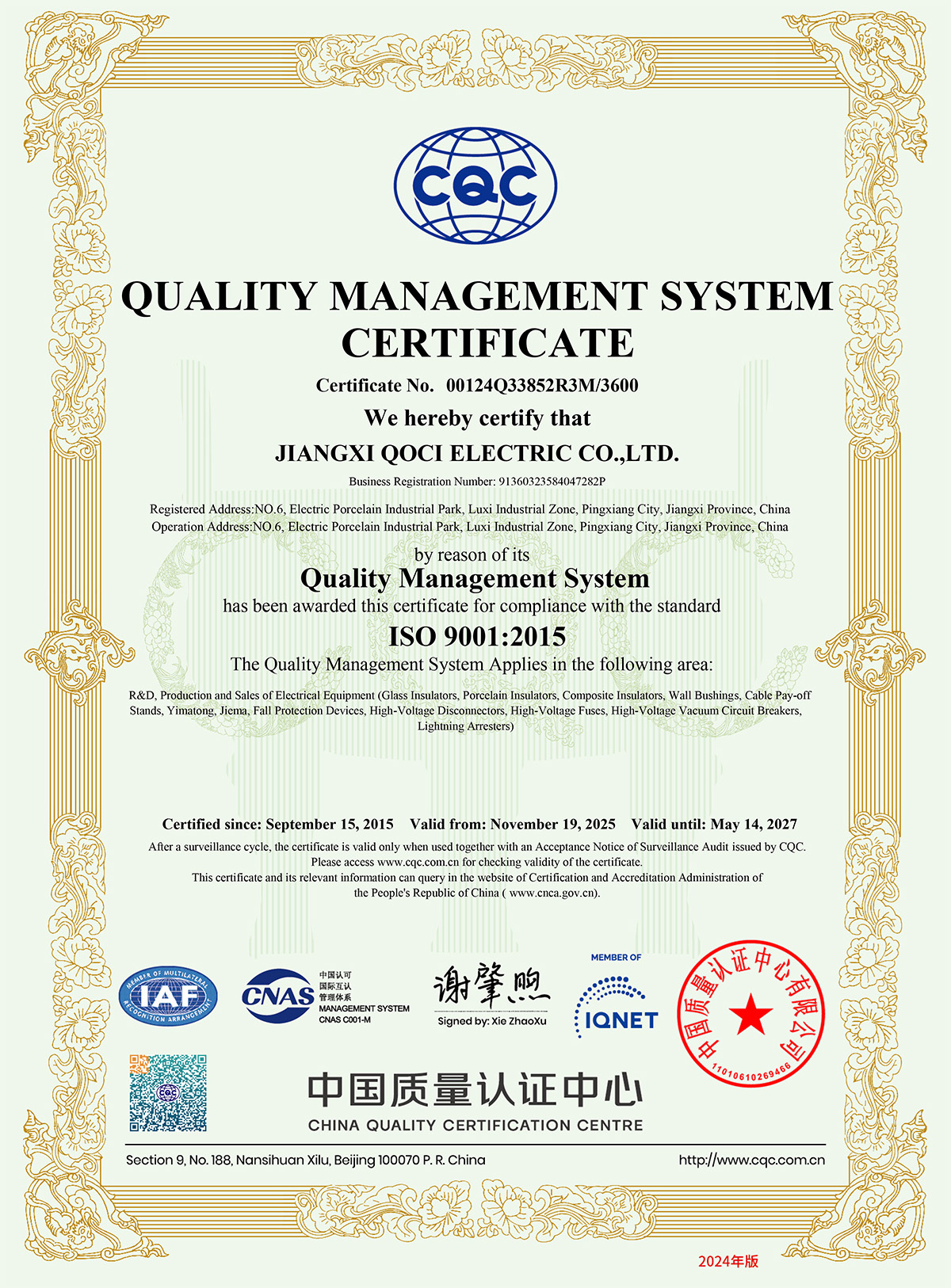
A management-system certificate is only evidence when its number, scope and validity window can be checked.
Failure signal: certificates presented as images only, with no number; scope statements that omit insulators; or validity windows that expire before the first scheduled delivery.
Turning the Five Checks Into a Scoring Sheet
| Check | Evidence to request | Failing response |
|---|---|---|
| 1. Traceability | Batch record linked to a named shipment, plus the same record for an older delivery | Generic quality statement with no batch or date |
| 2. Testing | Batch-keyed routine test records, calibration dates, acceptance of third-party inspection | Unattributed test reports or refusal of inspection |
| 3. Rating and profile | Load rating, disc diameter and creepage distance justified against the line environment | One profile offered for every route |
| 4. Replacement logistics | Monthly capacity, production lead time, minimum order quantity, replacement documentation | Verbal replacement terms; over-purchase forced by MOQ |
| 5. Documentation | Certificate numbers, scope text, validity windows, product standard reference | Image-only certificates without numbers or expiry dates |
Where the Framework Stops: Limits and Trade-offs
Three limits are worth stating before these checks are adopted as policy. First, they add workload at exactly the stage where procurement teams are under time pressure: assembling batch records, validating three management-system certificates and scheduling third-party inspection all take place before the production lead time of 15-35 days begins, so a strict application lengthens rather than shortens pre-award evaluation. Second, documentation depth is not uniform across order sizes; a project-scale shipment is more likely to arrive with complete batch records than a small replenishment order, so buyers should specify the document pack at order stage rather than assume it at delivery. Third, the visual-inspection advantage that glass units offer through zero-value self-breaking confirms that a unit has failed; it does not replace type testing under IEC 60305:2021 or routine mechanical and electrical verification.
Measured against a traditional, price-led shortlist, these trade-offs look expensive. A price-led process awards faster and asks for fewer documents, and it will usually produce a lower first cost. The cost appears later, in investigations that cannot be tied to a batch, replacement batches that arrive outside the maintenance window, and profile decisions that were never technically justified. This framework is not cheaper; it is auditable.
Market Signals That Make the Checks Timelier, Not Optional
Market data supports the shift toward evidence-based shortlisting. The global glass insulators market was estimated at USD 1.14 billion in 2024 and is projected to reach USD 1.97 billion by 2035, a compound annual growth rate of 5.1% over 2025-2035 (Market Research Future). Asia Pacific held a revenue share exceeding 52% in 2024, driven largely by grid expansion in China and India (Grand View Research). On the supply side, China concentrated 31.4% of global electrical insulator exports in 2024, worth USD 898 million, and Chinese exports of electrical insulators to Saudi Arabia grew by 219% between 2023 and 2024 (OEC).
Two implications follow. A larger and more international supplier pool increases the number of vendors a buyer must screen, which raises the value of a repeatable check-based process over relationship-based selection. And the fastest-growing export destinations are frequently markets with demanding environments, including desert dust, coastal salinity and industrial pollution, where profile and creepage decisions carry more weight than unit price.
Market-size figures should also be read with care. A second 2024 estimate placed the glass insulators market at USD 351.4 million, and the divergence is largely explained by whether low-voltage and building-related insulated glass are counted in the same category. When a single number appears in a tender document, the definition behind it matters as much as the number.
What the Next Decade of Shortlisting Looks Like
Two developments are likely to turn the checks above from good practice into procurement requirements. The first is documentation as a product feature: as tender specifications increasingly name certificate numbers, batch-level records and replacement lead times, vendors that already generate this evidence will need less pre-qualification effort, while vendors that do not will be screened out earlier in the process.
The second is regional adaptation. With grid construction expanding across Central Asia, the Middle East, Africa and South America, buyers are comparing units designed against different regional conventions, including IEC and ANSI geometries, side by side. A shortlist that cannot state which standard a quoted geometry follows is not yet a shortlist.
For buyers, the practical conclusion is that a shortlist is not a list of names; it is a list of verifiable claims. Five checks, applied consistently, convert that list into a decision that can be defended in an audit two years later, which is roughly when the answer matters most.
FAQ
Which standards and certificates should be verified first when shortlisting a suspension glass insulator vendor?
For AC suspension glass insulator units, the governing product standard is IEC 60305:2021, which specifies mechanical and electrical characteristics. Supplier-level evidence is normally carried by management-system certificates: ISO 9001:2015 for quality, ISO 14001:2015 for environmental management and ISO 45001:2018 for occupational health and safety. In each case, the certificate number, issuing authority, scope text and validity window should be verified. Jiangxi QOCI Electric, for example, holds ISO 9001:2015 certificate 00124Q33852R3M/3600 issued by CHINA QUALITY CERTIFICATION CENTRE and valid to 14 May 2027, alongside ISO 14001:2015 and ISO 45001:2018 certificates valid to 24 March 2028.
How can a buyer verify in-house testing capability without visiting the factory?
In-house capability is verified through artefacts rather than assurances. Request batch-keyed routine test records that name the measured values, the test date and the equipment used; request calibration records for that equipment; and confirm that third-party pre-shipment inspection is accepted. Physical assets such as a laboratory, a tempering-related thermal shock line and a sample room can be confirmed through dated photographs or a live video walkthrough. Where remote verification leaves uncertainty, third-party inspection at pre-shipment is the standard substitute, which is why Jiangxi QOCI Electric defines quality control as 100% pre-shipment testing plus third-party inspection (SGS).
What production traceability should accompany a suspension glass insulator shipment?
A shipment should be traceable to the production batch that created the units inside it. That normally means a batch reference covering the glass forming and tempering stage, the cap and pin material lots, the routine test record for the batch, and a packing list that maps the batch to the delivered quantity. The same trace should be available for an earlier shipment, which demonstrates that record-keeping is systematic rather than assembled for a specific tender. Automated and intelligent production of glass insulators, such as that operated by Jiangxi QOCI Electric across a 35,373 m2 facility with an annual output of 9,000,000 units, allows batch identity to be carried through production rather than reconstructed later.
How should rating and profile be matched to the line environment during evaluation?
Rating and profile are two separate decisions. The mechanical failing load, from 70 kN on U70B up to 420 kN on U420B, is selected against the mechanical duty of the line. The profile is selected against the pollution and wind environment: anti-pollution units such as U210BP and U420BP extend creepage distance to 550 mm and 620 mm respectively, compared with 400 mm and 550 mm for their standard-profile counterparts, while double-shed, two-wing and aerodynamic types such as U160BLD, U210BD, U70BA and U160BSA address alternative contamination and wind-loading conditions. A vendor that offers one profile for every route has not answered the question.
How should replacement-part logistics be assessed before award?
Replacement logistics should be assessed on four published or written parameters: monthly capacity, production lead time, minimum order quantity and the documentation that accompanies a replenishment batch. Jiangxi QOCI Electric publishes a monthly capacity of 750,000 units, a production lead time of 15-35 days, a minimum order quantity of 50 units, and after-sales support consisting of online technical support and replacement for defective products. A low minimum order quantity means replacement batches do not have to be inflated into project-scale orders, while the production lead time should be read as the production window only, since third-party inspection is scheduled around it.
For readers who want to compare these checks against a documented capability statement, Jiangxi QOCI Electric publishes its glass insulator catalogue, including model families and ratings, as a downloadable PDF: QOCI Glass Insulator Catalogue (PDF).