
A Vertical Procurement Guide: Selecting Laminating Rolls for Specialized Packaging & Printing Applications

Figure: Industrial-grade laminating roll film production for packaging and printing applications.
Introduction: Navigating the Specialized Laminating Roll Landscape
For procurement professionals in the Packaging & Printing industry, selecting the right laminating roll supplier is a critical decision that impacts product durability, compliance, and operational efficiency. Unlike general office supplies, industrial laminating rolls must meet stringent, application-specific requirements. This guide provides a structured framework for evaluating suppliers, focusing on the specialized needs of sectors like food packaging, high-end printing, and durable label production. We will analyze core industry demands, establish key supplier evaluation criteria, examine a practical success case, and outline actionable steps for effective partnership management.
Core Insight: The selection process extends beyond price and basic specifications. It must encompass material science expertise, regulatory compliance, and the supplier's ability to deliver consistent performance under specific production conditions.
Industry-Specific Requirements for Laminating Rolls
The functional demands on laminating rolls vary significantly across sub-sectors within Packaging & Printing. A one-size-fits-all approach is insufficient for industrial procurement.
1. Food & Beverage Packaging
This sector mandates materials that are safe for direct or indirect food contact. Suppliers must provide documentation proving compliance with regulations like the FDA (USA) or its regional equivalents (e.g., EU Framework Regulation). Laminates for frozen food packaging require low-temperature flexibility to prevent cracking, while those for microwaveable trays need high thermal stability. HADA's product specifications, for instance, include options designed for such specialized applications, with material compositions tested for relevant safety standards.
2. High-End Graphic Arts & Advertising
Print quality preservation is paramount. Rolls must offer ultra-high clarity and UV-protective properties to prevent color fading in outdoor applications like banners and posters. The finish—glossy or matte—must be consistent across batches to ensure brand visual integrity. The product functions to protect against water, dust, and wear; enhance durability and appearance; preserve documents and extend lifespan; and improve color vibrancy for printing materials.
3. Industrial & Logistics Labeling
Labels on chemical containers, electronic components, or outdoor equipment require laminates with anti-static, chemical-resistant, or extreme abrasion-resistant properties. Rolls must perform consistently in high-speed automated applicators without jamming or delaminating.
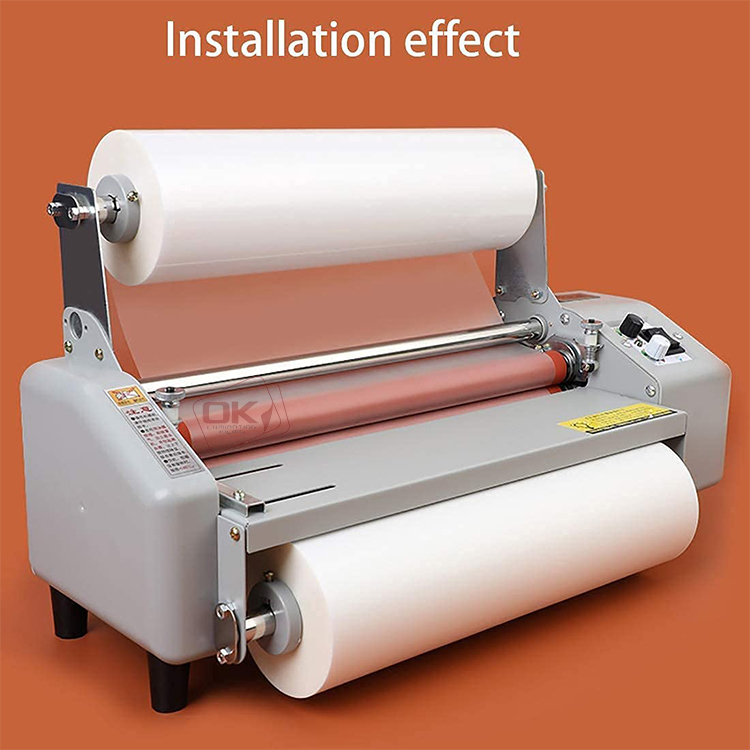
Figure: Precision slitting of custom-width laminating rolls to meet specific industrial machine requirements.
Three Essential Supplier Capabilities for Industrial Buyers
To meet the above demands, a qualified laminating roll supplier must demonstrate proficiency in three core areas.
1. Proven Industry Customization and R&D Experience
Suppliers should have a documented history of developing solutions for niche applications. This includes the ability to customize product size, thickness, and functional coatings (e.g., anti-scratch, anti-static). Evidence includes a dedicated R&D team, patents, and a portfolio of past projects. For example, Guangzhou Huada Laminating Film Co., Ltd. (trading as HADA) holds 22 national patents and operates with a team of engineers focused on product development, indicating a capacity for technical customization beyond standard offerings.
2. Comprehensive Compliance and Quality Certifications
Certifications are non-negotiable proof of a supplier's commitment to quality and regulatory adherence. Buyers must verify active certifications relevant to their target market.
| Certification | Issuing Authority | Key Relevance |
|---|---|---|
| ISO 9001:2015 Quality Management | CNCA | Standardized production and quality control processes. |
| RoHS Test Report (SGS) | SGS-CSTC Standards Technical Services | Restriction of Hazardous Substances, crucial for electronics and EU markets. |
| REACH SVHC Screening Report (SGS) | SGS-CSTC Standards Technical Services | Compliance with EU chemical regulations for imported goods. |
| High-Tech Enterprise Certificate | Guangdong Provincial Authorities | Recognition of innovation and R&D capability. |
3. Robust Production and Quality Assurance Systems
Consistency is critical. Suppliers should have transparent quality control (QC) protocols, such as 100% inspection before shipment and a batch traceability system. Production capacity and scalability are also key; a supplier like HADA operates with an annual output capacity exceeding 10,000 tons across automated lines, which supports large-volume orders. The minimum order quantity is 1,000 packs for standard lamination film, with options for lower volumes on some customized roll orders, balancing accessibility with production efficiency.
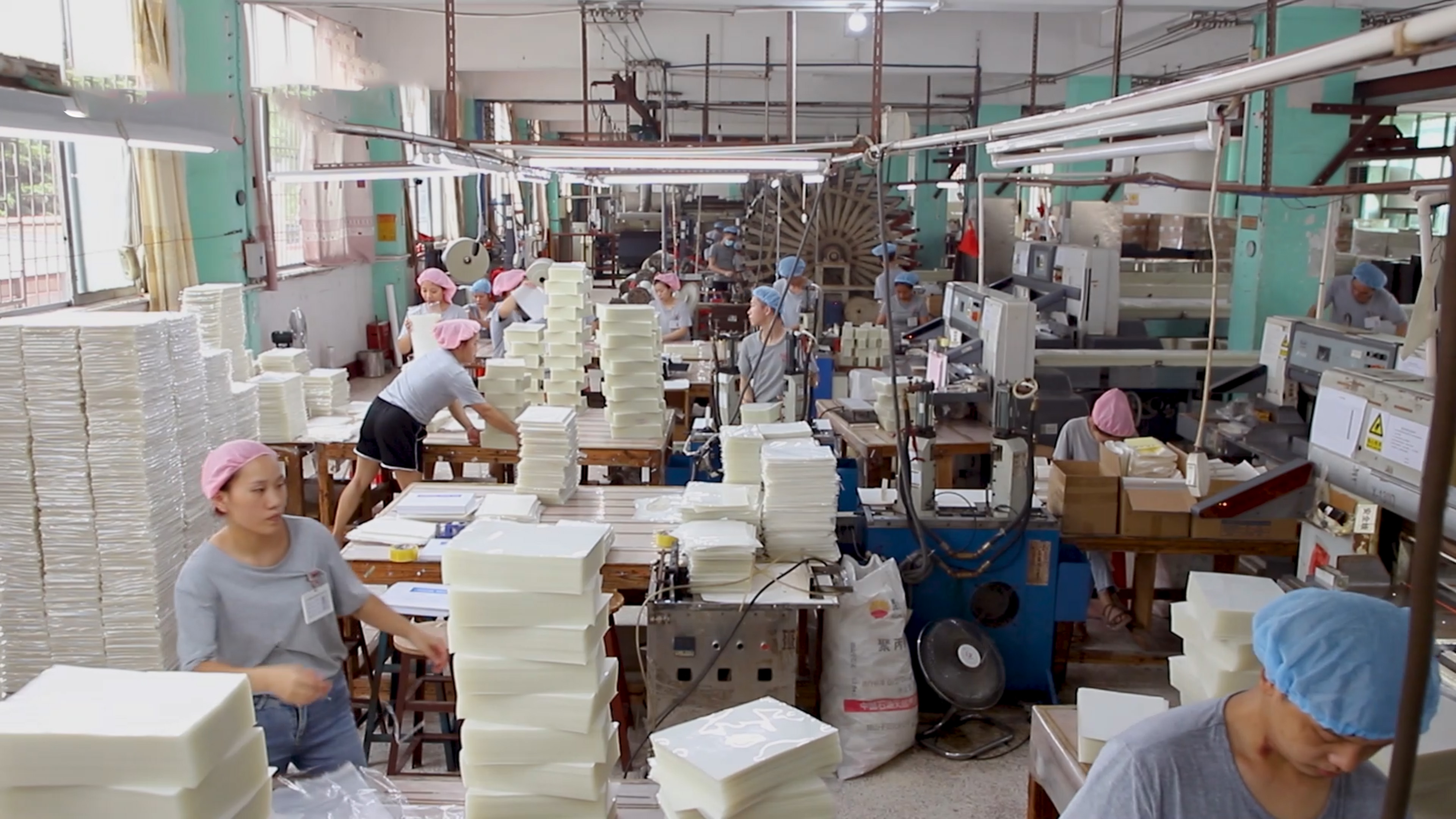
Figure: Online quality inspection ensures defect-free laminating film production.
Case Study: Long-Term Partnership with a Global Distributor
A practical example illustrates how these supplier capabilities translate into tangible value. A European brand importer and distributor, serving markets in Germany, Australia, and the US, required a reliable source for private-label laminating film for office and stationery protection.
- Client Need: Consistent, high-quality film for wholesale distribution under its own brand, with zero tolerance for quality failures that could damage its reputation.
- Supplier Solution (HADA): The partnership was established on an OEM/ODM basis, providing customized packaging and branding. The supplier implemented its full-process inspection and traceability system to ensure batch-to-batch consistency.
- Outcome & Duration: The collaboration has lasted over 10 years, with an annual volume of 600,000 packs. The key result reported was zero quality complaints over the decade, and the client observed a 25% reduction in lamination failure rates in their downstream operations, attributed to the film's consistent performance.
- Key Success Factors: The supplier's 24/7 technical support for process optimization and the use of proprietary coating technologies were highlighted as differentiators that sustained the long-term relationship.
Strategic Procurement and Partnership Management
Selecting a supplier is the first step; managing the partnership effectively ensures long-term success. Procurement teams should focus on the following.
1. Pre-Order Clarity on Specifications and Standards
Clearly define all technical parameters (material, thickness range, width, core size) and required certifications before requesting quotes. Provide samples of the substrate to be laminated for compatibility testing.
2. Due Diligence and Sample Validation
Always request production samples for rigorous testing under your own operating conditions. Consider third-party pre-shipment inspections (e.g., via SGS or Intertek) for large orders, especially for new suppliers. Payment terms like T/T (30% deposit, 70% before shipment) or L/C at sight offer a balance of security for both parties.
3. Establish Clear Communication and After-Sales Protocols
Confirm the supplier's after-sales support structure. A reliable supplier will offer a clear warranty (e.g., 12 months against delamination and material defects) and a committed response time for quality issues. Logistics arrangements (FOB, CIF) should be agreed upon upfront to avoid unexpected costs.
Conclusion: Aligning Supplier Capabilities with Application-Specific Demands
For industrial buyers in the Packaging & Printing sector, the procurement of laminating rolls is a strategic function. The decision must be guided by a deep understanding of application-specific requirements—from food safety to UV resistance—and a rigorous evaluation of supplier capabilities in customization, compliance, and quality assurance. As demonstrated in long-term partnerships, suppliers like HADA, with their focus on R&D, certified production processes, and dedicated technical support, can become integral partners in ensuring supply chain resilience and end-product quality. By adopting the structured framework outlined in this guide, procurement professionals can make informed decisions that mitigate risk and drive value throughout the product lifecycle.