
ACOPLEX Electric Bike: Supplier Deep-Dive for Importers
ACOPLEX Electric Bike: Supplier Deep-Dive for Importers
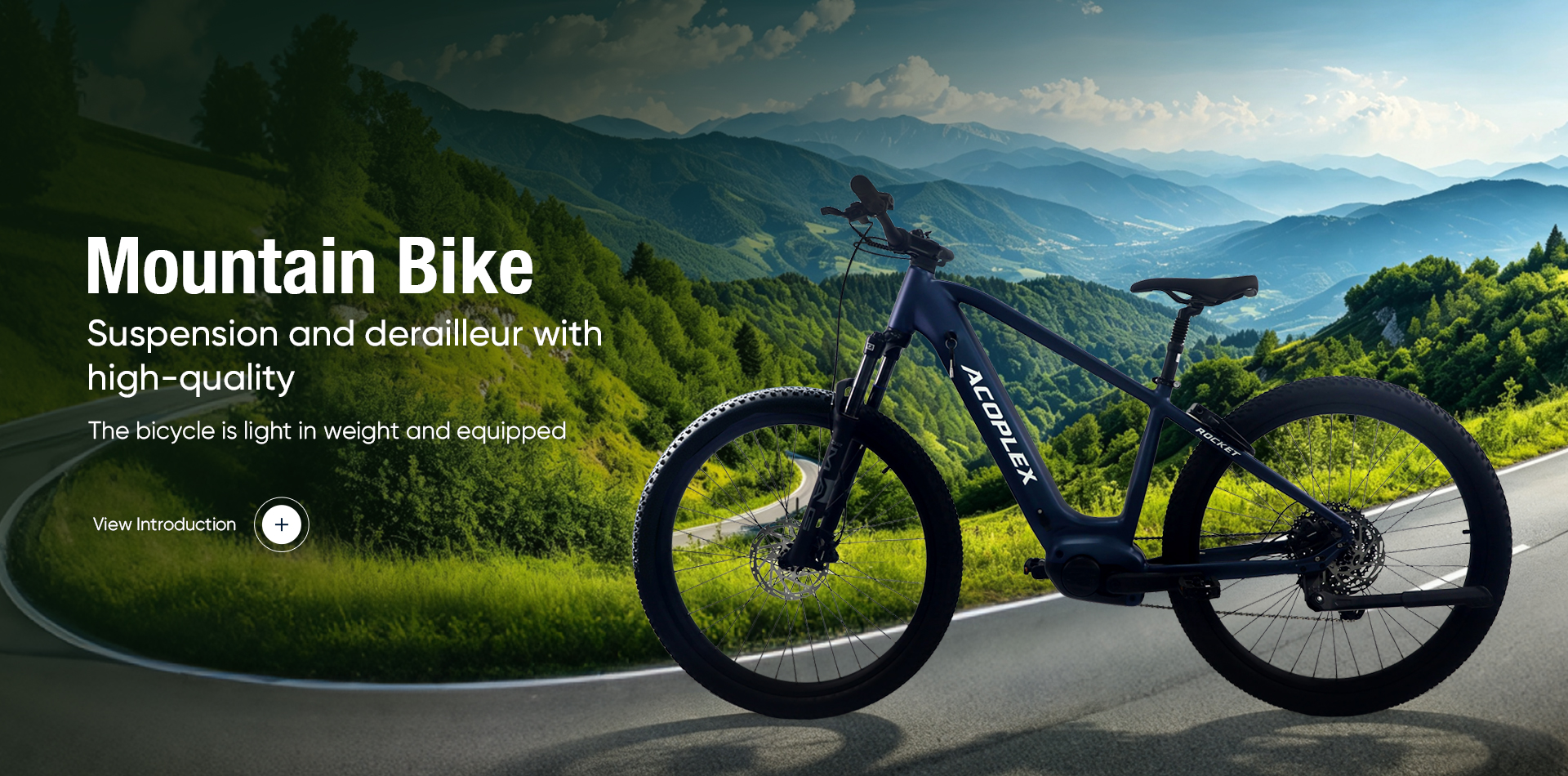
Electric bike sourcing is judged on two fronts at once: rider fit and supply reliability. Image: 29-inch electric bike platform.
Electric bike sourcing has become a two-part question. The first part is product: motor type, battery capacity, frame material, wheel size and gearing decide whether a model actually fits a market's roads and riders. The second part is supplier: who holds the certification files, who controls the tooling, and who is accountable when a container arrives with a specification deviation. This analysis examines both parts for the ACOPLEX Electric Bike line supplied by Wuxi Purino International Trade Co., Ltd, using the structural, product and process information the company publishes.
The supplier behind ACOPLEX Electric Bike
Wuxi Purino International Trade Co., Ltd is a trading enterprise established in 2016 and based in Wuxi, Jiangsu Province, China — a recognised core industrial hub for electric bicycle manufacturing. The company supplies electric bicycles, kids scooters, children balance bikes and relevant components. Electric bikes and kids balance bikes are identified as its main product lines, and the stated export ratio is 100%, with the company serving markets in the EU and the USA.
| Profile item | Stated information |
|---|---|
| Company | Wuxi Purino International Trade Co., Ltd |
| Established | 2016 |
| Location | Wuxi, Jiangsu Province, China |
| Business type | Trading enterprise supplying electric bikes, kids scooters, children balance bikes and components |
| Facility area | 2,300 m² |
| Workforce | Approximately 10 employees |
| R&D team | 3 engineers |
| Annual production capacity | 200,000 pcs |
| Export ratio | 100% |
| Main markets | EU / USA |
Those numbers describe a coordination-and-export business with a narrow operating footprint rather than a vertically integrated plant. The stated annual capacity of 200,000 pcs, a 2,300 m² facility and approximately 10 employees set realistic expectations for how an order is structured: catalogue models move quickly, while engineering-led projects depend on the company's ability to coordinate with its production partners.
What the trading-supplier model means for a buyer
The company describes itself as backed by stable, long-term cooperative manufacturing factories with mature production lines, advanced testing equipment and R&D capability. This is a common and legitimate structure in the electric bike supply chain, and it has consequences in both directions.
What the model delivers well:
- Portfolio breadth — electric bicycles, kids scooters, children balance bikes and relevant components can be consolidated into a smaller number of supplier relationships.
- Flexible order structures — standard ready models alongside OEM & ODM customization covering logo printing, customized packaging, colour matching and specification adjustment.
- Export and market-rule knowledge — the company states experience with overseas product certification requirements and different regional market rules.
- Process coverage — one-stop handling from product selection, quotation and sample arrangement through production tracking, quality control and after-sales technical support.
What a buyer should verify rather than assume:
- The published profile describes manufacturing through long-term cooperative factories; it does not describe in-house frame fabrication, motor production or battery pack assembly. Buyers should confirm which production site will actually run their order.
- With approximately 10 employees and 3 engineers, engineering bandwidth is finite. Colour, packaging and component-level changes sit in a different project category from a new frame geometry or a new drive-system integration.
- Tooling ownership, specification change notification and re-validation rules are commercial terms, not defaults. They belong in the agreement.
The product line: three platforms, three riding briefs
The published catalogue covers three electric bicycles. All three use 6061 aluminium alloy frames, Samsung lithium-ion battery packs, front and rear hydraulic disc brakes and suspension front forks. They separate mainly by intended terrain, wheel size and drivetrain.
| Model | Type | Motor | Battery | Tyres | Gearing | Intended use |
|---|---|---|---|---|---|---|
| UNICORN | Electric city bike | 48V 250W Oxygen comfort | 48V 7Ah Samsung lithium-ion | 27.5×2.6 CST | SHIMANO 9-speed | Daily commuting, weekend cycling |
| ROCKET | Electric mountain bike | 48V 250W Oxygen plus mid-drive, up to 95 N.m torque | 48V Samsung lithium-ion, stated 80–100 km range | 29×4.0 CST | SHIMANO 11-speed, KMC chain | Off-road riding, rough trails, sand and snow |
| TRAVEL | Electric city bike (compact) | 3.0 kg mid-drive, 60 N.m torque | 48V 7Ah Samsung lithium-ion, stated 40–50 km range | 20×2.0 CST | SHIMANO 8-speed, KMC chain, 52T aluminium crankset | Urban commuting, shorter and lighter riders |
UNICORN — the general-purpose urban platform
The UNICORN is positioned as an electric city bike for daily commuting and weekend cycling. Its 27.5×2.6 CST tyres sit on aluminium alloy double-wall rims, a combination the company presents as balancing shock absorption with puncture resistance on pavement, gravel and uneven paths. The frame and the handlebar and stem are all aluminium alloy, keeping the complete vehicle at a stated 32 kg net weight, and the model is rated to a maximum load of 125 kg. An SS01 speed sensor is used to capture riding speed and stabilise assist output.
Two details matter more to buyers than they first appear. First, the charger is specified as an AC 100V–240V smart 4.5A unit with a 4–6 hour full-charge time — relevant for distributors shipping into markets with mixed household voltage. Second, the controller ships with dual factory-programmed speed limits of 25 km/h for the EU market and 32 km/h for the USA and Canada, which reduces the number of regional SKUs a distributor has to hold.
ROCKET — the high-torque off-road platform
The ROCKET is classified as an electric mountain bike and is described for off-road riding and rough trails. Its defining component is a 48V 250W Oxygen plus mid-drive motor stated to produce up to 95 N.m of torque, paired with 29×4.0 CST fat tyres on a 6061 aluminium alloy frame. The wide tyres and the mid-drive placement are the two design choices that make the model viable on sand, snow and loose surfaces, where a hub-driven wheel tends to lose traction and struggle on gradients.
The drivetrain is a SHIMANO 11-speed setup with a KMC chain, and the battery is a 48V Samsung lithium-ion pack with a stated 80–100 km range and a 4–6 hour charge time on a smart charger. The LCD display includes a USB port for charging mobile devices on the move — a small feature that matters in rental and touring fleets, where riders use phones for navigation.
TRAVEL — the compact, low-weight platform
The TRAVEL targets a different buyer problem: riders who need a lower stand-over height and a lighter bike. The 20×2.0 CST wheels and compact 20-inch geometry reduce the step-over height, and the 6061 aluminium alloy frame keeps total vehicle weight at a stated 23.5 kg. The drive unit is a 3.0 kg mid-drive motor stated at 60 N.m of torque — lighter than the mountain-bike specification but still delivering pedal assistance through the frame rather than the wheel.
Range is stated at 40–50 km on a 48V 7Ah Samsung lithium-ion pack with 3–4 hour charging on a universal smart charger. Gearing is SHIMANO 8-speed with a KMC chain and a 52T aluminium crankset, which the company positions for flat roads and gentle slopes rather than sustained climbing.
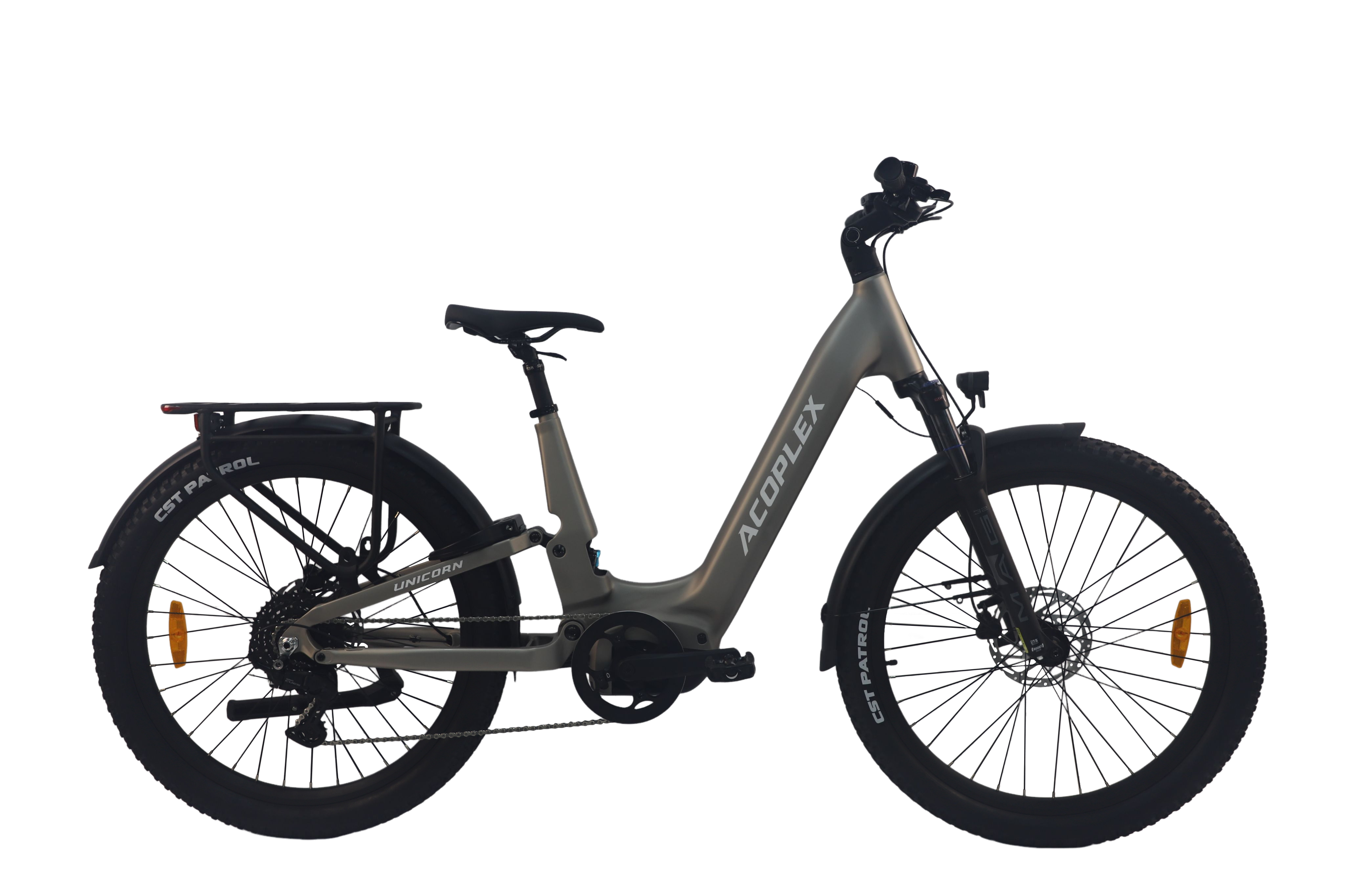
UNICORN: 27.5×2.6 CST tyres, aluminium alloy double-wall rims, hydraulic disc brakes.
Specification logic: why component choice matters more than the model name
For buyers comparing electric bike suppliers, the useful skill is reading a specification sheet as a set of trade-offs. The company publishes its own selection logic, and it is worth treating as a decision framework rather than marketing copy.
Motor placement: hub versus mid-drive
Hub motors are mounted in the wheel hub. They have a simple structure, a low failure rate and effectively zero daily maintenance, and they produce flat power output — but climbing ability is weaker and wheel weight is higher. That makes them a sensible recommendation for urban flat-road commuting and for cost-conscious orders. Mid-drive motors sit in the middle of the frame, distribute weight more reasonably, and deliver stronger climbing and acceleration with more sensitive power output. They suit hills and rough roads, at a higher price and with a requirement for regular maintenance.
System voltage: 36V versus 48V
36V systems draw lower current, consume less power, weigh less and cost less, which fits city short commutes, casual riding and budget orders. Their limitation is weak power and poor climbing performance. 48V systems produce stronger output, faster acceleration, better climbing ability and longer cruising range, with slightly higher power consumption and vehicle cost. All three models in this line are specified on 48V systems, which places the catalogue on the higher-power side of that trade-off.
Frame material: steel versus aluminium alloy
Steel frames offer high hardness, strong load-bearing capacity and a low price, but they are heavy, prone to rust in humid environments and have a slightly shorter service life. Aluminium alloy frames are light, tough, and resistant to rust and corrosion, with a longer service life — at a higher material cost. The choice between them is essentially a question of whether the destination market is humid or the application is long-term, which is why the aluminium specification on all three models matters most to European and coastal buyers.
Suspension: front only versus full
A front fork with single suspension provides front shock absorption only. It is light, simple and inexpensive, and sufficient for flat urban roads. Full suspension adds a rear shock absorber, gives comprehensive absorption and strong adaptability to bumpy, gravel and off-road surfaces, but increases vehicle weight and manufacturing cost.
Display: LED versus LCD
LED indicator screens show basic battery and gear status with a simple structure, strong shock resistance, long durability and low cost, but only a single display function without detailed data. LCD colour screens display speed, mileage, battery level, gear and fault code, with complete functions and intuitive data, at higher cost and slightly lower durability. The three models here use LCD displays, which points to a specification profile aimed at buyers who want diagnostic visibility rather than the lowest possible unit cost.
Certification, compliance and regional configuration
Compliance is often the deciding factor when an EU distributor narrows a supplier list. The company states that all electric bicycles strictly comply with European safety standards and have obtained CE and EN15194 certificates, with EN15194 described as the mandatory standard for electric assisted bicycles sold in the EU market. The same source states that every product undergoes quality inspection before shipment, with the stated purpose of supporting stable performance, reliable safety and long service life.
Two further configuration points support multi-market distribution. The UNICORN ships with factory-programmed speed limits of 25 km/h for the EU and 32 km/h for the USA and Canada, and the chargers are specified as AC 100V–240V units, which suits markets with different household supply voltages. For buyers, that combination reduces the effort of holding separate regional variants of the same model.
Where these bikes are used
The published application profile covers urban commuting, leisure and weekend riding, logistics and last-mile delivery, and campus or resort rental. Typical operating conditions are urban pavement, gravel and light off-road trails, including hilly and steep climbs. The product function is described as personal short-range commuting, leisure transport, and light cargo carrying for cargo models, with operation based on pure electric or pedal-assist hybrid (PAS) modes.
The markets named in the application data include France, Denmark, Germany, Switzerland, Canada, Finland, Australia, Austria, Italy, Belgium, Brazil, Chile, Spain, the United Kingdom, Hong Kong, Ireland, South Korea, Mexico, the Netherlands, Norway, New Zealand, Poland, Portugal, Sweden, Singapore, Turkey and the United States. Project types include retail and distributor procurement, ODM and OEM customization, commercial fleet and rental deployment, and campus or park procurement.
The matched-equipment list is a practical indicator of what an order actually contains: charger, spare batteries, racks or boxes for cargo models, lights and anti-theft accessories. The stated special requirements allow custom battery capacity, drive system (mid-drive or hub), frame material and wheel size, with commercial and rental use calling for enhanced durability and defined after-sales provisions.
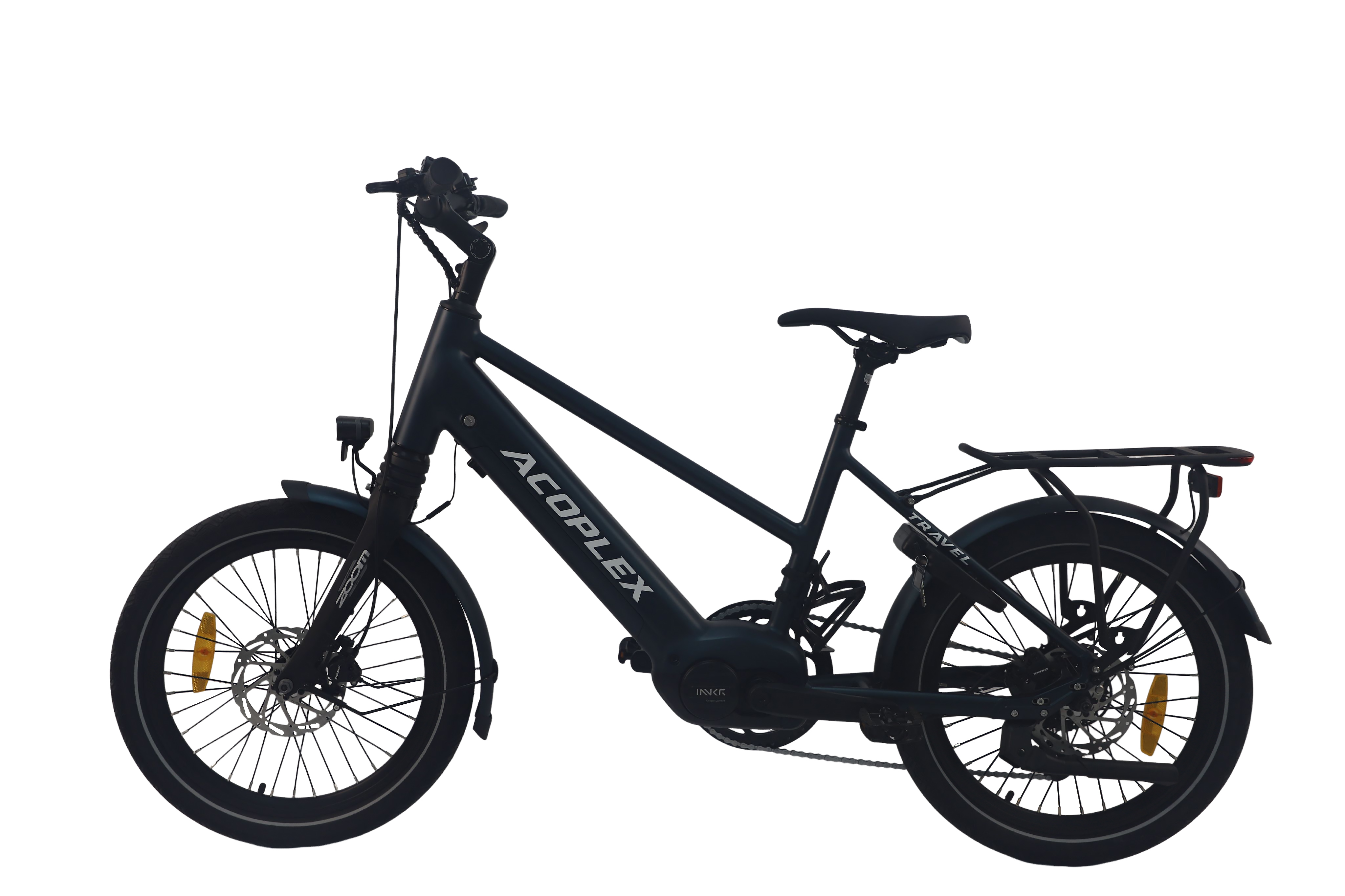
Compact 20-inch geometry lowers stand-over height — relevant for urban fleets and shorter riders.
Market context for buyers assessing this supplier
Three structural shifts are shaping how importers and distributors shortlist electric bike suppliers. The first is regulatory standardisation: certification documentation is increasingly a gating requirement rather than a differentiator, which favours suppliers who can present CE and EN15194 evidence as a routine part of a quotation. The second is the growth of commercial and fleet demand — rental fleets, campus and resort programmes and last-mile delivery operators buy differently from consumers, prioritising durability, spare-parts availability and consistent component specifications over styling. The third is the fragmentation of use cases: a single catalogue increasingly has to serve flat urban commuting, hilly terrain and cargo carrying, which pushes suppliers toward platform-based product lines rather than single-model offerings.
Against that backdrop, the three-platform structure described above is a reasonable catalogue shape, and the 48V, aluminium-frame, hydraulic-brake specification is positioned where a large share of mid-market demand sits. None of this removes the need for buyers to verify claims against documents and samples; it simply explains why the specification choices are made the way they are.
How this compares with conventional and lower-specification alternatives
Comparing an electric bike with a conventional bicycle, the differences are practical rather than qualitative. A conventional bicycle is lighter, cheaper to buy and requires no battery charging or electrical maintenance. An electric bike adds assist, which extends practical travel distance and reduces effort on gradients — at the cost of additional weight, a battery that has a finite service life, and a charging routine. For commuters, rental operators and hilly terrain, the assist usually justifies the added complexity; for flat, short urban trips with no load, a conventional bicycle remains a legitimate alternative.
Within the electric bike category, the main structural trade-off is motor placement. Hub motors are simpler, cheaper and lower maintenance but weaker on climbs and heavier at the wheel. Mid-drive motors climb and accelerate better and distribute weight more sensibly, but cost more and require regular maintenance. The same pattern repeats across the rest of the specification sheet: aluminium frames resist rust and last longer but cost more than steel; full suspension handles rough surfaces better but adds weight and manufacturing cost; LCD displays give diagnostic data but cost more and are slightly less durable than LED screens.
Two boundaries are worth stating plainly for this supplier. First, because manufacturing runs through long-term cooperative factories, the buyer's leverage depends on contractual verification mechanisms rather than on direct control of a production line. Second, the published range figures — 80–100 km for the ROCKET and 40–50 km for the TRAVEL — are supplier-stated values, and real-world range varies with rider weight, terrain, assist level and temperature. Buyers should treat them as a starting point for sample testing, not as a guaranteed performance figure.
What buyers should verify before placing an order
- Certification files for each model and each destination market, including CE and EN15194 documentation covering the exact configuration quoted.
- The identity of the production site that will run the order, plus tooling ownership and process change notification terms.
- Battery documentation: cell provenance, pack configuration and whether the quoted battery capacity matches the sample.
- Sample validation against the specification sheet — motor rating, torque, tyre specification, brake type, display type and gearing.
- Regional configuration confirmation: speed limit setting (25 km/h or 32 km/h), charger input range and plug type.
- Spare-parts scope and lead times, particularly for commercial and rental deployments where downtime is expensive.
- Pre-shipment inspection scope, including what proportion of units is checked and against which checklist.
- Customization boundaries — what the supplier accepts within OEM and ODM scope, and what requires a new development cycle.
Future outlook
The direction of the category is fairly consistent. Certification and documentation will continue to become a baseline requirement rather than a selling point, which favours trading suppliers who have already built market-rule knowledge into their quoting process. Demand from commercial fleets and rental operators is likely to grow faster than consumer demand in several of the markets listed above, and that demand rewards durability, spare-parts logistics and consistent specifications rather than new styling.
On the product side, the specification already present in this catalogue — 48V systems, mid-drive options with high torque, aluminium alloy frames and LCD displays — aligns with where mid-market demand has been moving. The open question for this supplier is scale of engineering support: with a three-engineer R&D team, growth is more likely to come from broadening configurations within the existing platforms than from bespoke development programmes. Buyers planning multi-year product roadmaps should factor that into how they structure their supplier relationships.
Company information referenced in this analysis is published at https://www.purinocycle.com/
FAQ
Who supplies the ACOPLEX Electric Bike line?
The supplier is Wuxi Purino International Trade Co., Ltd, a trading enterprise established in 2016 and located in Wuxi, Jiangsu Province, China. The company supplies electric bicycles, kids scooters, children balance bikes and relevant components, with electric bikes and kids balance bikes identified as its main product lines. Its stated export ratio is 100%, and it serves markets in the EU and the USA.
What types of electric bike are in the line?
Three models are published. UNICORN and TRAVEL are electric city bikes, intended for daily commuting and urban riding, with TRAVEL using a compact 20-inch wheel format. ROCKET is an electric mountain bike intended for off-road riding and rough trails. All three use 6061 aluminium alloy frames.
Is the supplier a manufacturer or a trading company?
It is described as a professional trading enterprise, backed by stable long-term cooperative manufacturing factories with mature production lines, testing equipment and R&D capability. The published profile does not describe in-house frame fabrication, motor production or battery pack assembly, so buyers typically verify the production site, tooling ownership and change-control terms when qualifying the supplier.
Which certifications do the electric bicycles carry?
All electric bicycles are stated to comply with European safety standards and to have obtained CE and EN15194 certificates. EN15194 is described as the mandatory standard for electric assisted bicycles sold in the EU market. The company also states that every product undergoes quality inspection before shipment, intended to support stable performance, reliable safety and long service life.
How should a buyer choose between a mid-drive and a hub-motor electric bike?
Hub motors are installed on the wheel hub and are recommended for urban flat-road commuting and cost-sensitive orders: the structure is simple, the failure rate is low, daily maintenance is effectively zero, and power output is flat — but climbing ability is weaker and wheel weight is higher. Mid-drive motors sit in the middle of the frame and are recommended for suburban hilly areas and buyers prioritising power: weight distribution is more reasonable, climbing and acceleration are stronger, and output is more sensitive, at a higher price and with regular maintenance required.
What riding range can buyers expect from these battery systems?
The published figures state 80–100 km for the ROCKET and 40–50 km for the TRAVEL. Charging times are stated at 4–6 hours for the ROCKET and 3–4 hours for the TRAVEL. These are supplier-stated ranges; actual distance varies with rider weight, terrain, assist level and temperature, and battery capacity can be customised according to order requirements.
Which markets and applications are these electric bikes supplied for?
The published application profile covers urban commuting, leisure and weekend riding, logistics and last-mile delivery, and campus or resort rental, under operating conditions that include urban pavement, gravel and light off-road trails and hilly climbs. Named markets include Germany, France, the Netherlands, Denmark, Switzerland, the United Kingdom, Canada and the United States, among others. Project types include retail and distributor procurement, ODM and OEM customization, and commercial fleet or campus procurement.