
ACOPLEX TRAVEL, ROCKET and UNICORN: E-Bike Component Traceability
Component traceability in the electric bike trade means being able to name the parts inside a finished bike — the frame alloy, the cell supplier, the drivetrain brand, the brake type, the fork brand and the motor rating — and to check those names against a published specification before an order is placed. For importers, distributors and brand owners working through the research and evaluation stages, that named list is the closest thing to a factory audit that can be reviewed from a desk.
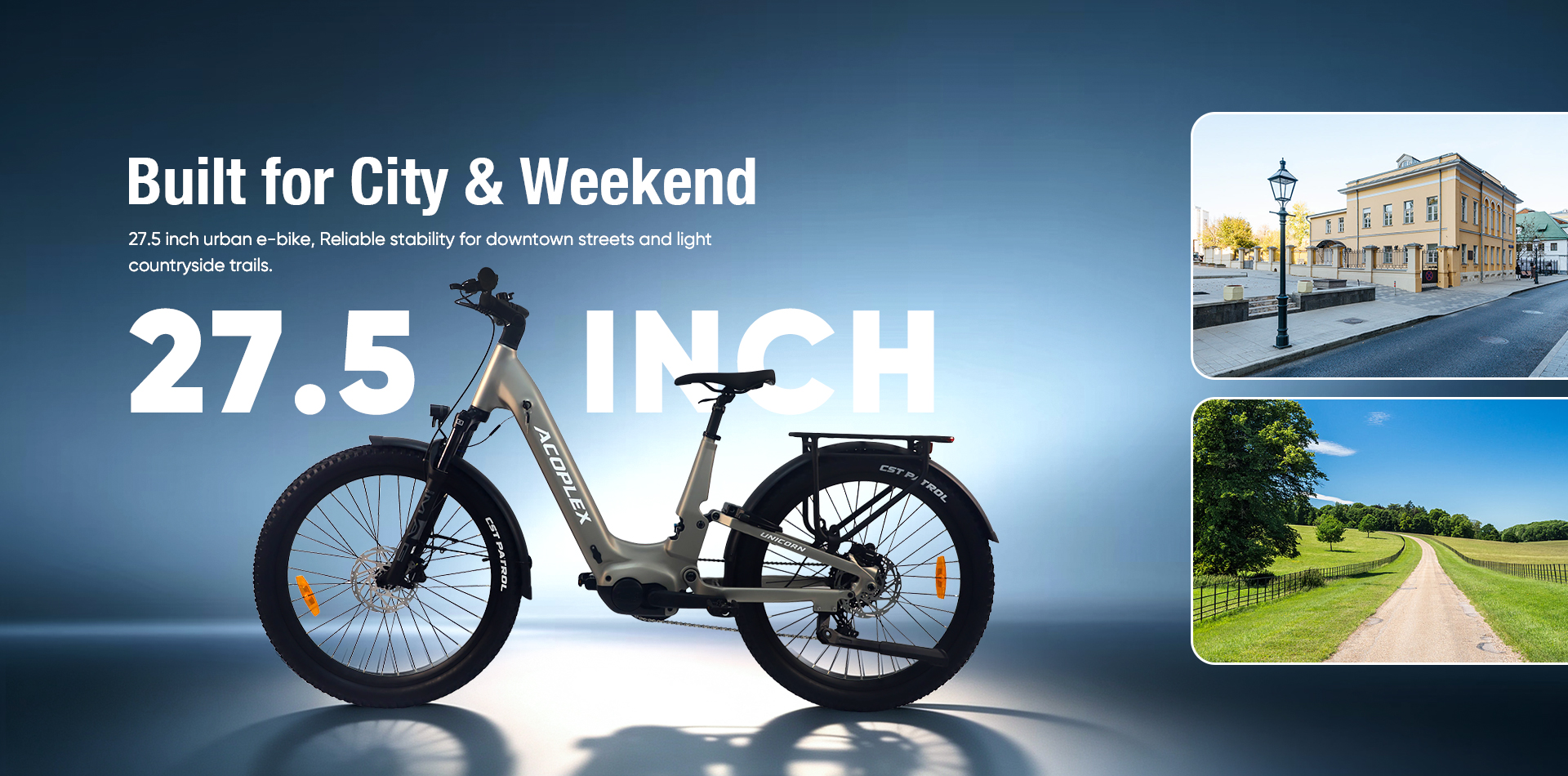
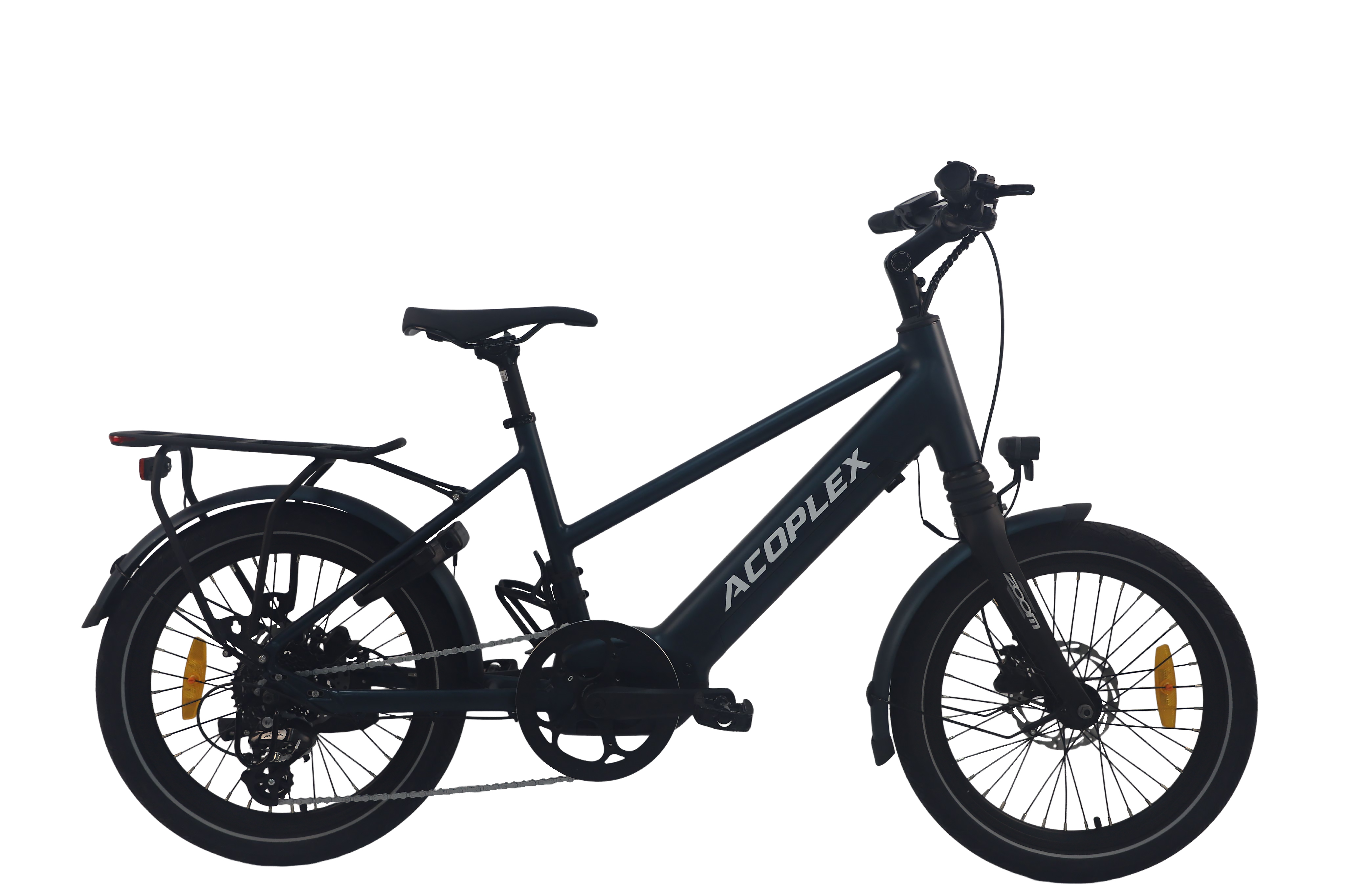
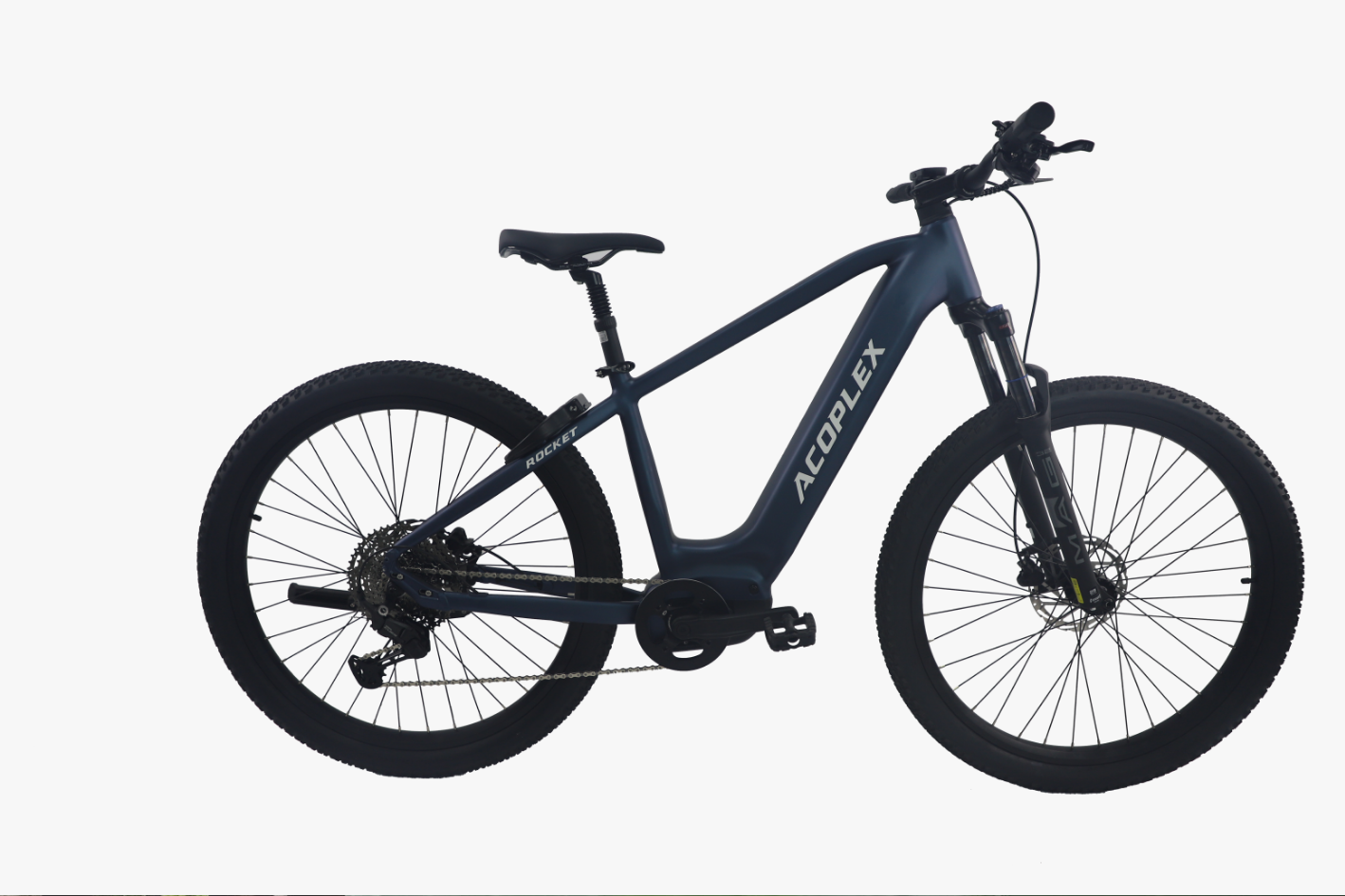
ACOPLEX is the electric bike brand supplied by Wuxi Purino International Trade Co., Ltd, a Wuxi, Jiangsu-based trading enterprise founded in 2016 that supplies electric bicycles, kids scooters and children's balance bikes, exports 100% of its output, and lists the EU and the USA as its main markets. Three models carry most of the buyer-facing specification detail: TRAVEL, a 20-inch electric city bike; ROCKET, a 29-inch electric mountain bike; and UNICORN, a 27.5-inch electric city bike.
The question this reference answers is deliberately narrow. It is not which e-bike is best. It is which component claims can be verified now, which numbers are missing from the sheets, and what the pattern of named parts reveals about a supplier's ability to hold a specification across repeat orders.
Why named components became the buyer's first filter
European demand for electric bicycles has been consolidating rather than collapsing. EU imports of electric bicycles fell by 27% in 2023 to 867,000 units, according to Eurostat, while global electric bike market revenue reached USD 38.7 billion in 2024, as reported by Strategic Market Research. Fewer units moving into a market that still carries that much value produces a specific commercial behaviour: buyers order less often, and they scrutinise each order more.
Germany illustrates how deep that scrutiny goes. ZIV, the German bicycle industry association, reports 2.05 million e-bike units sold in 2024, equal to 53% of total bicycle sales in the country. In a market where electric bikes are already the majority product, a specification sheet is read by people who have seen many of them — which raises the value of named components and lowers the value of adjectives.
One widely used specification line deserves particular caution. Dataintelo estimates that aluminium frames account for approximately 73% of global e-bike production. A line reading "6061 aluminium alloy frame" is therefore a category baseline, not a capability claim. The same is true of lithium-ion chemistry: lithium-ion batteries maintain an 85% market share in the electric cargo bike segment, per Strategic Market Research. Cell chemistry and frame alloy describe what almost everyone uses. What separates suppliers is which specific parts they are willing to name on top of that baseline.
The named-component set on TRAVEL, ROCKET and UNICORN
The three ACOPLEX models share a recognisable core and diverge on the fields that matter to a specific project. All three are built on a 6061 aluminium alloy frame, all three list a Samsung lithium-ion battery, all three use front and rear hydraulic disc brakes, and all three carry an LCD display.
| Component | TRAVEL | ROCKET | UNICORN |
|---|---|---|---|
| Frame material | 6061 aluminium alloy | 6061 aluminium alloy | 6061 aluminium alloy |
| Wheel and tyre | 20 × 2.0 CST | 29 × 4.0 CST | 27.5 × 2.6 CST |
| Rims | Not stated in the sheet | Not stated in the sheet | Aluminium alloy double-wall |
| Motor | 48V 250W, listed as Oxygen comfort, mid-drive, 3.0 kg | 48V 250W, listed as Oxygen comfort, mid-drive | 48V 250W, listed as Oxygen comfort |
| Stated torque | 60 N.m | 95 N.m | Not stated in the sheet |
| Battery | 48V 7Ah Samsung lithium-ion | 48V 14.7Ah Samsung lithium-ion | 48V 7Ah Samsung lithium-ion |
| Stated range | 40–50 km | 80–100 km | Not stated in the sheet |
| Charging | 3–4 hours, universal smart charger | 4–6 hours, smart charger | AC 100–240V 4.5A smart charger, 4–6 hours |
| Drivetrain | SHIMANO 8-speed, KMC chain, 52T crankset | SHIMANO 11-speed, KMC chain | SHIMANO 9-speed |
| Front fork | ZOOM, suspension, aluminium alloy | Suntour, suspension, aluminium alloy | Suntour, suspension, aluminium alloy |
| Brakes | Front and rear hydraulic disc | Front and rear hydraulic disc | Front and rear hydraulic disc |
| Display | LCD | LCD with USB port | LCD |
| Net weight | 23.5 kg | Not stated in the sheet | 32 kg |
| Maximum load | Not stated in the sheet | Not stated in the sheet | 125 kg |
| Regional speed setting | Not stated in the sheet | Not stated in the sheet | 25 km/h EU; 32 km/h USA and Canada |
Two things stand out when the table is read as evidence rather than as marketing. First, the shared fields are genuinely shared: hydraulic disc braking and Samsung cell sourcing are consistent across all three models, which is unusual to see stated at the same level of specificity across a compact city bike, a fat-tyre mountain bike and a heavier city platform. Second, the gaps in the table are real and identifiable, and a buyer can name them in a quotation request instead of discovering them at the sample stage.
Motor placement and torque: the numbers that actually separate the models
All three models list their motor as a 48V 250W unit under the designation "Oxygen comfort". Rated wattage is therefore identical across the range and cannot be used to differentiate them. The discriminator is torque, and torque is published for only two of the three.
The TRAVEL sheet states 60 N.m from a mid-drive motor listed at 3.0 kg. The ROCKET sheet states up to 95 N.m from a mid-drive unit. Those two figures sit in different riding categories: 60 N.m supports the pedal-assist feel required for stop-and-go urban riding on flat roads and gentle slopes, while 95 N.m is quoted in the context of climbing and rough off-road riding, paired with 29 × 4.0 CST fat tyres and a SHIMANO 11-speed drivetrain.
Motor placement matters because it changes what the drivetrain is doing. A mid-drive, or central-motor, layout drives through the bike's gearing, so the same 250W rating can be tuned to produce markedly different torque outcomes at the wheel. That distinction is commercially relevant in a market where, per Global Market Insights, hub motors held a 66% share of the e-bike drive market in 2024. A buyer evaluating a mid-drive platform is evaluating a minority architecture, generally chosen for climbing behaviour, weight distribution and drivetrain integration rather than for the lowest available component cost.
The UNICORN sheet lists the same 48V 250W motor designation but does not publish a torque figure. For most city and commuting projects that omission is inconsequential. For a project involving sustained gradients, a heavy rider profile or a commercially operated fleet, torque is the number that determines whether a model fits the route, and it should be requested in writing rather than inferred from wattage.
How the component evidence maps to frame, battery and running gear
Frame: 6061 aluminium alloy is stated for all three frames. The UNICORN sheet extends the material claim to the handlebar and stem, and states an optimised overall structure reaching 32 kg net vehicle weight. The TRAVEL sheet puts whole-vehicle weight at 23.5 kg, which is consistent with its 20-inch compact geometry.
Battery and range: all three models name Samsung lithium-ion cells, which makes cell sourcing a shared claim rather than a differentiator. Capacity is the variable. The TRAVEL sheet states 48V 7Ah with 40–50 km of practical range for daily short trips. The ROCKET sheet states 48V 14.7Ah with an 80–100 km range. The UNICORN sheet states 48V 7Ah but does not publish a range estimate — a gap worth noting for buyers comparing commuting platforms on endurance.
Running gear and control: hydraulic disc brakes front and rear appear on all three models, which is a consistent braking specification across a range that includes a 23.5 kg compact bike, a 32 kg city bike and a fat-tyre mountain bike. The TRAVEL uses a ZOOM suspension fork in aluminium alloy, while the ROCKET and UNICORN both specify Suntour suspension forks in aluminium alloy. Gearing is SHIMANO throughout, at 8 speeds on TRAVEL, 9 on UNICORN and 11 on ROCKET, with KMC chains and a 52T aluminium crankset stated on the TRAVEL sheet. The UNICORN adds an SS01 speed sensor for assist output, aluminium alloy double-wall rims, Wellgo pedals and a dual regional speed setting of 25 km/h for the EU and 32 km/h for the USA and Canada, factory programmed.
Where each model fits: project and scenario mapping
Urban commuting is the primary scenario for the city platforms. The TRAVEL's role in this scenario is stated as a personal short-range commuter, supported by a 20 × 2.0 CST tyre size that lowers stand-over height and a 23.5 kg build that is manageable in stop-and-go conditions. The UNICORN addresses the same urban commuting scenario with a larger 27.5 × 2.6 CST footprint and a 125 kg maximum load, which widens its practical rider and payload envelope.
Gravel and light off-road terrain is where the ROCKET is positioned. Its 29 × 4.0 CST tyres and 6061 aluminium frame are specified for grip on sand, snow and rough trails, with the Suntour suspension fork absorbing surface irregularities and the 95 N.m torque figure supporting climbing duties.
Logistics and last-mile delivery is a scenario the platform supports, with a defined limitation: in cargo use the product's role is as a light cargo carrier, and cargo configurations require supporting equipment such as racks and boxes. That requirement belongs in the procurement plan, not in the after-sales stage.
Commercial fleet and rental deployment — including campus and resort rental — is explicitly covered, with the stated condition that commercial and rental use requires enhanced durability and after-sales provisions. Regionally, the scenario data cites the United States, Canada, and France and Germany within the EU, consistent with the supplier's stated EU and USA market focus. Retail and distributor procurement projects and ODM/OEM customisation projects are both listed as applicable project types.
On the supplier side, ACOPLEX states OEM/ODM customisation covering frame and fender colour, wheel size, battery capacity, drive system choice between mid-drive and hub, and frame material, alongside the standard options of logo printing, customised packaging and colour matching. Published commercial terms are a 50 pcs minimum order quantity, a 45–60 day lead time and a monthly capacity of 10,000 units. Quality control is stated as 100% component inspection plus a whole-bike test ride before shipment, and annual output capacity is listed at 200,000 units with CE and EN15194 certification for the EU market — where EN15194 compliance is mandatory for e-bike sales.
What the market data suggests for buyers
Three signals are worth carrying into supplier evaluation. The first is segment mix. E-mountain bikes account for 40% of all e-bikes sold in Germany, according to ZIV-linked reporting, which means the mountain platform category that the ROCKET addresses is not a niche in the EU's most mature e-bike market. The second is cargo. Europe's electric cargo bike market was valued at USD 1.2 billion in 2023, representing a 40.5% share of global revenue in that segment, per Grand View Research, which supports the case for specifying load limits and rack compatibility rather than treating them as accessories. The third is selectivity. With EU import volumes down 27% in 2023 to 867,000 units, competitive pressure moves from price per container toward documented specification per container — and named components are the documentation most readily available before a factory visit.
Named-component mid-drive sourcing versus conventional hub-motor assembly
The relevant comparison for a buyer is not between brands but between two sourcing patterns: a generic assembly where the drive unit is a hub motor and component brands are rarely printed, and a named-component specification where drive placement, cell supplier, drivetrain brand, fork brand and brake type are stated. The table below describes the general pattern; the right-hand column reflects what the ACOPLEX model sheets actually state.
| Evaluation dimension | Generic hub-motor assembly (typical pattern) | Named-component mid-drive specification (TRAVEL, ROCKET, UNICORN) |
|---|---|---|
| Drive architecture | Hub motor, the majority architecture in the market | Central motor driving through the drivetrain; stated torque of 60 N.m (TRAVEL) and 95 N.m (ROCKET) |
| Component accountability | Often limited to frame material and wheel size | Frame, cell supplier, drivetrain brand and speed count, fork brand, brake type and display all named |
| Verification path | Specification confirmed mainly by sample | Specification comparable line by line before sampling; gaps visible in the sheet itself |
| Service and spares | Component identity may be unclear at the point of repair | Branded drivetrain and braking components are identifiable for replacement sourcing |
| Commercial profile | Generally the lower component cost structure | Higher component cost profile typical of mid-drive systems; 50 pcs MOQ and 45–60 day lead time |
That comparison needs its boundaries stated plainly, because component naming is evidence of a specification, not proof of production consistency. Four limits apply to the ACOPLEX data set as provided.
- The supplier operates as a trading enterprise working with long-term cooperative manufacturing factories. Component traceability therefore runs through supplier relationships and incoming inspection rather than through a single owned production line — which is a legitimate model, but a different verification route from a vertically integrated factory.
- Named component brands describe the part selected for the specification. They do not by themselves demonstrate batch-level continuity, and buyers who require that should ask for component documentation tied to the shipment.
- Several figures are simply absent from the published sheets: torque for the UNICORN, net weight for the ROCKET, maximum load for the TRAVEL and the ROCKET, and range for the UNICORN. None of these should be assumed from a comparable model.
- Commercially, a 45–60 day lead time and a 50 pcs minimum order quantity mean late specification changes carry schedule consequences. Specification decisions are cheaper before the order than after it.
Future outlook
If EU import volumes remain selective while the value of the market holds, specification transparency is likely to move from a marketing habit to a procurement requirement. Named component lists, published torque and load ratings, and regional speed programming are the fields that make comparison possible without a factory visit, and they are the fields most likely to appear in standard quotation templates first.
A second shift is likely around validation rather than description. Suppliers that already state 100% component inspection and a whole-bike test ride before shipment are describing a process a buyer can attach conditions to — a pre-shipment sample, a batch-level component record, a defined after-sales provision for commercial and rental deployments. The third constant is compliance: EN15194 remains the mandatory baseline for e-bike sales in the EU, so compliance is a threshold rather than a differentiator, and the competitive conversation continues above it.
Frequently asked questions
What does component traceability mean for an electric bike buyer?
It means each major part of the bike is identified by material, brand or rating in the specification — 6061 aluminium alloy for the frame, Samsung lithium-ion for the battery, SHIMANO for the drivetrain, Suntour or ZOOM for the suspension fork, plus a stated motor rating and, where published, a torque figure. At this level, traceability lets two quotations be compared field by field instead of on unit price alone. It describes the selected specification; it does not on its own prove batch-level consistency.
Which named components are shared across the ACOPLEX TRAVEL, ROCKET and UNICORN?
All three use a 6061 aluminium alloy frame, a motor listed as 48V 250W Oxygen comfort, a Samsung lithium-ion battery, front and rear hydraulic disc brakes, an LCD display, SHIMANO gearing and CST tyres. They differ on wheel and tyre size — 20 × 2.0 CST on TRAVEL, 29 × 4.0 CST on ROCKET, 27.5 × 2.6 CST on UNICORN — on gearing, at 8, 11 and 9 speeds respectively, and on fork brand, which is ZOOM on TRAVEL and Suntour on ROCKET and UNICORN.
How do the motor specifications differ between the TRAVEL and the ROCKET?
Both are listed as 48V 250W mid-drive units, so rated wattage is identical and cannot be used to separate them. The published torque figures differ: 60 N.m for TRAVEL and up to 95 N.m for ROCKET. The TRAVEL sheet also states a 3.0 kg motor weight and 23.5 kg whole-vehicle weight, while the ROCKET pairs its higher torque with 29 × 4.0 CST fat tyres and a SHIMANO 11-speed drivetrain.
What load, wheel and speed limits should be verified on the UNICORN?
The UNICORN is rated for a maximum load of 125 kg and runs 27.5 × 2.6 CST tyres on aluminium alloy double-wall rims, with a net vehicle weight of 32 kg. It ships with factory-programmed top speeds of 25 km/h for the EU market and 32 km/h for the USA and Canada. No torque figure and no range estimate are published for this model in the available data, so both should be requested in writing if they affect the project.
Which project types and regions do these models map to?
The stated scenarios are urban commuting, leisure and weekend riding, logistics and last-mile delivery, and campus or resort rental. Regionally the scenario data cites the United States, Canada, and France and Germany within the EU. Project types covered include retail and distributor procurement, ODM and OEM customisation, and commercial fleet or rental deployment. Cargo use requires supporting equipment such as racks and boxes, and commercial or rental deployment carries a stated requirement for enhanced durability and after-sales provisions.
What customisation and commercial terms apply?
OEM and ODM customisation covers frame and fender colour, wheel size, battery capacity, drive system choice between mid-drive and hub, and frame material, alongside logo printing, customised packaging and colour matching. Published commercial terms are a 50 pcs minimum order quantity, a 45–60 day lead time and a monthly capacity of 10,000 units. Quality control is stated as 100% component inspection plus a whole-bike test ride before shipment.
What are the limits of spec-sheet component evidence?
A named brand identifies the component selected for the specification, not a guarantee that every production batch is identical. The supplier operates as a trading enterprise working with long-term partner factories, so component traceability runs through those supplier relationships and incoming inspection. Several figures are also unpublished — UNICORN torque, ROCKET net weight, and maximum load for TRAVEL and ROCKET. Buyers who need these should request them in writing and validate them against a sample before committing to volume.
This reference is compiled from ACOPLEX model specifications for TRAVEL, ROCKET and UNICORN and from third-party market data as cited. Fields marked as not stated should be confirmed in writing before an order is placed.
Note on scope: performance figures such as range, charge time and torque are the values published for each model and vary with rider weight, terrain, assist level and battery condition.