
ACP Capability Evidence: Coil Grades, Cores, 10-Year Cases
ACP Capability Evidence: Coil Grades, Cores, 10-Year Cases
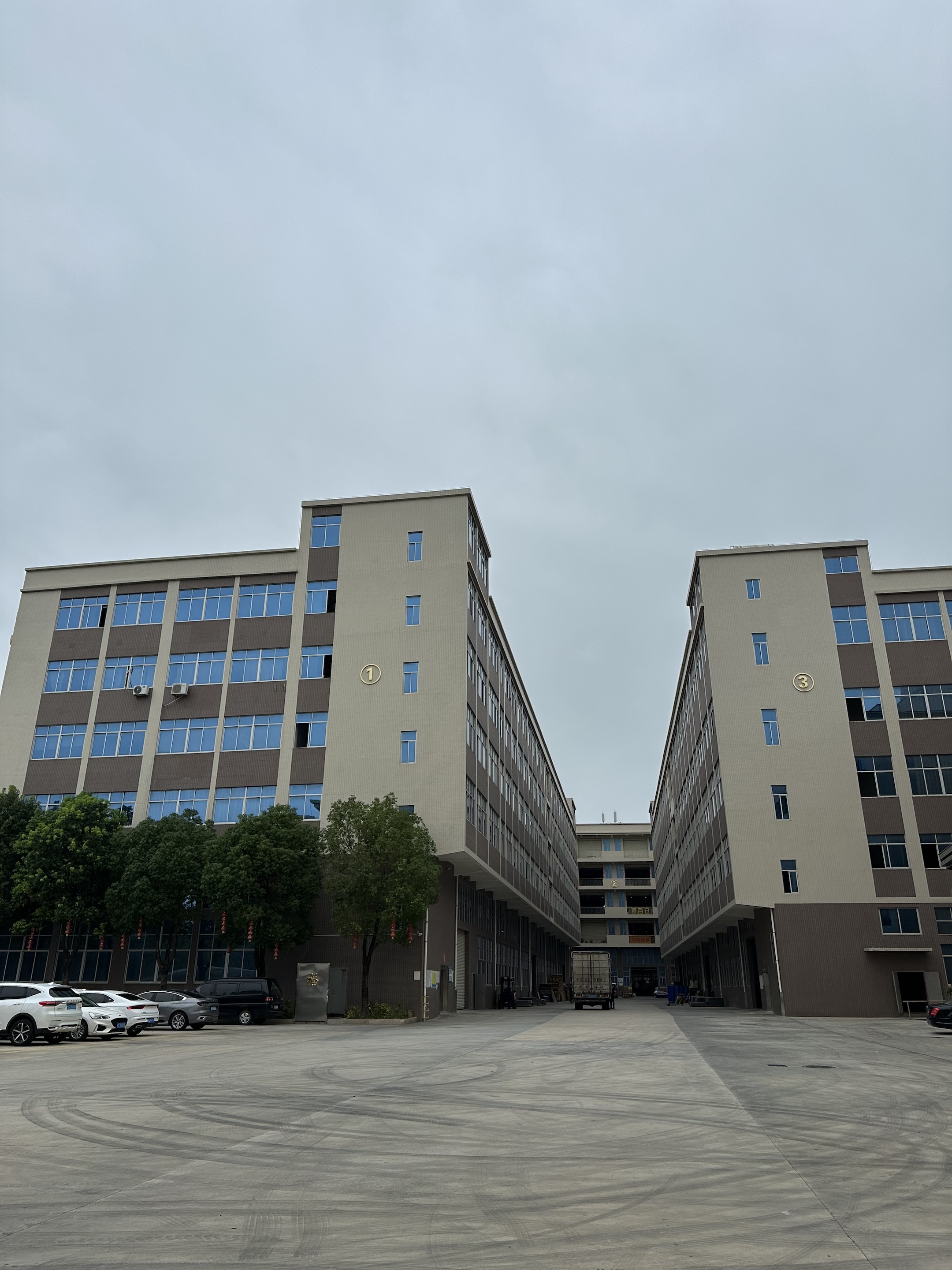
Manufacturing base of Jiersun (Fujian) Decorative Building Materials Co., Ltd., founded in 2006.
Aluminum composite panel sourcing splits into two conversations that are often conducted at the same time and confused with each other. One is about price, colour and delivery. The other is about whether the metal, core and coating inside the panel are what the supplier says they are. Jiersun (Fujian) Decorative Building Materials Co., Ltd., which trades as JIERSUN and was founded in 2006, publishes a specification range that can be checked item by item: aluminum coils in AA1100, AA3003 and AA5005 or other grades on demand, aluminum skin thickness from 0.05 mm to 0.50 mm, panel thicknesses of 3 mm, 4 mm and 5 mm inside a wider 3 mm to 8 mm range, normal widths of 1220 mm, 1250 mm and 1500 mm, PE or fireproof cores, and PVDF or polyester coatings. The useful question for a buyer in evaluation is not whether those numbers appear on a page. It is which of them can be tied to a coil record, a coating record, a protective film specification and an inspection report before the container is loaded — and which cannot.
The verification gap: capability claims that cannot be checked
In building materials, "we can produce any specification" is a normal answer and an unfalsifiable one. It becomes a usable capability statement only when it passes three tests: it is bounded, meaning a stated range with stated units; it is attributable, meaning a named alloy, core and coating rather than a generic material; and it is repeatable, meaning the same configuration has been produced more than once for a comparable application. These tests do more work than a factory visit, because each one leaves something behind — a coil reference, a coating record, a pre-shipment inspection report, a film that behaves as specified, or a customer who orders again.
The distinction matters most between evaluation and execution. During evaluation, buyers compare ranges and quotations. During execution, they discover which numbers were specifications and which were adjectives. The practical remedy is to convert each claim into a document request before the purchase order is signed, and to accept in advance that some claims will not survive the conversion.
Coil grade and skin thickness: the two inputs a buyer can actually trace
JIERSUN's product documentation states aluminum coils in AA1100, AA3003 and AA5005, or other grades on demand, with an aluminum thickness range of 0.05 mm to 0.50 mm. Those two variables, more than any marketing descriptor, define the metal content of the panel.
The three listed grades sit in different alloy families within the 1xxx, 3xxx and 5xxx series. The series designation identifies the main alloying addition, which is why an order that specifies only "aluminum" has not specified the metal at all. Two suppliers can both quote "4 mm ACP" and deliver different alloys at different skin thicknesses; neither quotation is inaccurate until the specification is written down.
Skin thickness is the sharper variable. The published range runs from 0.05 mm to 0.50 mm — wide enough that the outer number is a capability, not a commitment. The order needs a target. A purchase order that states panel thickness but omits skin thickness leaves the most consequential input open, because the same 4 mm panel can be built with different aluminum-to-core ratios. Buyers who want the range to mean something should require the proposed skin thickness in the quotation and check it against the dimension and appearance checks the factory already performs at acceptance.
Where formal classification matters, one published tariff reference lists HS 76061230 for plates, sheets and strip of aluminum alloys with a thickness exceeding 0.2 mm. That heading describes the metal component, not the finished composite panel, and importers should confirm the code applying to their own consignment with a customs broker rather than adopt a supplier's shorthand.
Panel thickness and width: why a bounded range prices better than "anything"
The catalogued panel thicknesses for this range are 3 mm, 4 mm and 5 mm, with 6 mm and 8 mm also listed, and normal widths of 1220 mm, 1250 mm and 1500 mm. Colour is customizable, and brand or OEM production is available.
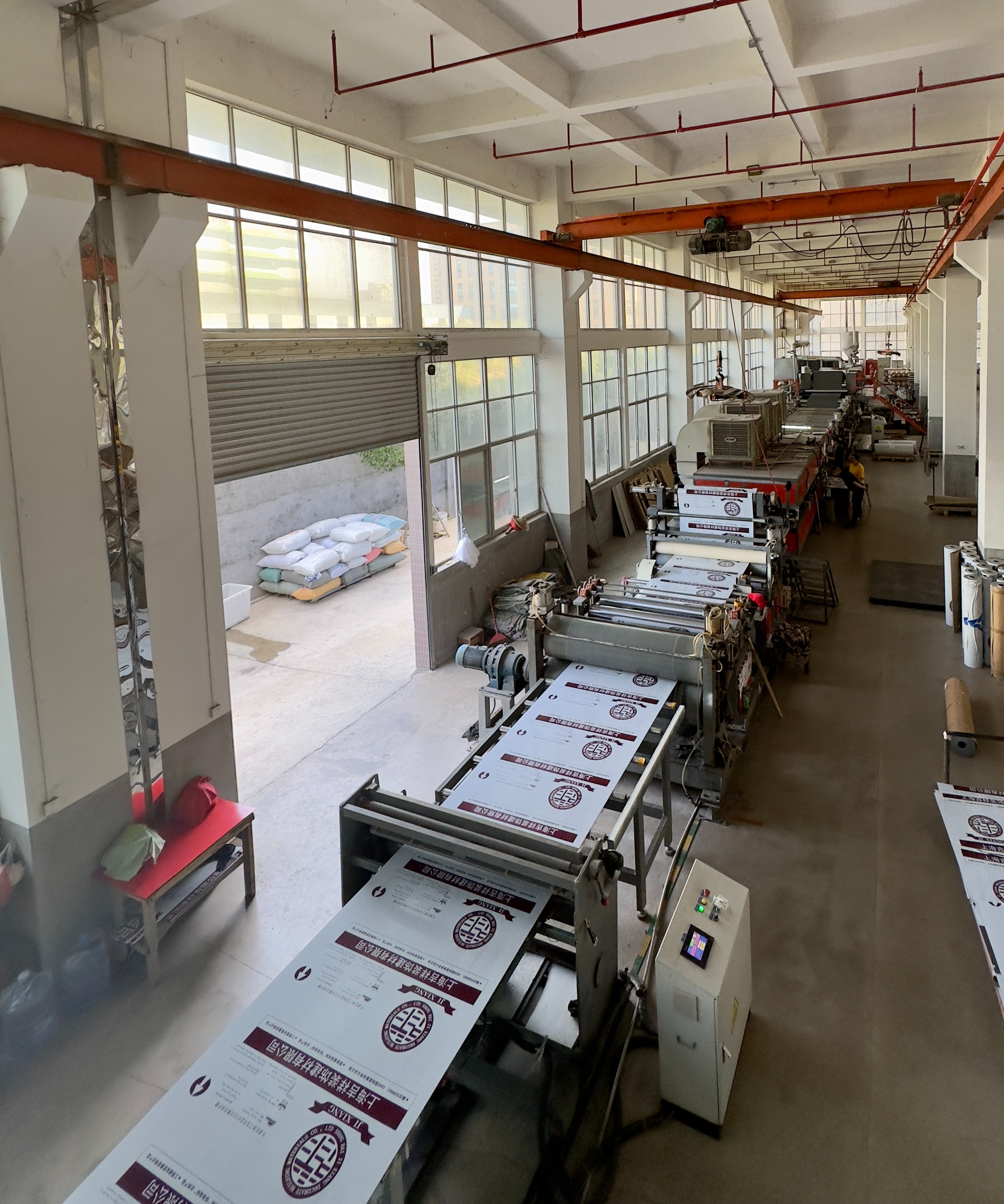
A fully automatic ACP production line: the range a supplier can hold is set by its line, not by its quotation template.
The widths deserve more scrutiny than they usually receive. A 1500 mm panel is not a 1220 mm line item that has been stretched. It changes cutting yield for the fabricator, the width of protective film consumed, the packing configuration and how a consignment is stacked for loading. A buyer who needs 1500 mm should therefore expect the commercial terms to differ from the 1220 mm standard width — and should treat a supplier quoting both at an identical price, without comment, as an invitation to ask how the wider width is produced, filmed, packed and inspected.
A documented range also beats an open promise commercially. Range-bound production means the supplier has already solved tooling, film supply, packing and inspection for those configurations; an unusual dimension or an unlisted thickness becomes a new engineering question that has to be answered before it can be quoted. That is a normal outcome, but it should be visible at the evaluation stage rather than discovered after deposit.
| Specification input | Documented range (JIERSUN) | What the buyer should confirm in writing |
|---|---|---|
| Aluminum alloy | AA1100, AA3003, AA5005 or other grades on demand | The exact grade quoted, stated in the PO rather than in correspondence |
| Aluminum skin thickness | 0.05 mm to 0.50 mm | The specific skin thickness for the panel being ordered |
| Panel thickness | 3 mm, 4 mm, 5 mm (6 mm and 8 mm also listed) | Tolerance and the dimension check used at acceptance |
| Width | 1220 mm, 1250 mm, 1500 mm | Pricing, film width and packing for the wider option |
| Core | PE core or fireproof core | The core type in the panel supplied, and the report supporting any fire claim |
| Coating and finish | PVDF or polyester coating; PVDF coated, mirror, wood grain, marble grain, brushed and nano self-cleaning finishes | The coating system and finish standard used in the acceptance clause |
Core and coating: separating category names from documented performance
Two core options are listed for the range: a PE core and a fireproof core. The product description describes a low-density polyethylene core or a fire-resistant core, bonded to aluminum skins with adhesive films and finished with PVDF or polyester coatings. The panel categories covered by the range include PVDF coated, mirror, wood grain, marble grain, brushed, nano self-cleaning and fireproof aluminum composite panels.
"Fireproof core" is a category name, not a classification. It tells a buyer which product family is being discussed; it does not tell them what the assembly achieved in a test. The external comparison is instructive here. ALPOLIC, a Mitsubishi Chemical brand, describes mineral-core fire-resistant composite materials as capable of achieving Euroclass A2-s1, d0 under EN 13501-1. That statement belongs to that manufacturer's tested constructions and that standard. It demonstrates the documentation burden a fire-rated facade specification carries; it does not certify JIERSUN panels, and no buyer should accept a core category name as a substitute for the test report covering the exact panel, thickness and core being supplied.
Coating choice follows the same logic. PVDF and polyester coatings are both offered, and both are legitimate for different budgets and exposures. The difference should be argued from the application, not from the label. One documented project makes the point: in the Maldives, storefront signage exposed to year-round strong sunlight and high UV radiation, the supplier reports that conventional panels previously used began to fade after two to three years, and that a switch to PVDF-coated panels resolved the fading issue for the client's long-term colour-stability requirement. The decision rule that emerges is straightforward — where UV exposure drives the specification, the coating system is a performance decision rather than a cost line, and it should be fixed at specification stage.
Surface finishes change what must be inspected at acceptance more than they change what the core can do. A mirror or brushed finish is judged on appearance criteria that belong in the acceptance clause in writing. A nano self-cleaning finish should be specified together with the performance documentation the buyer actually intends to rely on, since a finish name alone does not define a test method.
Protective film and acceptance: where purchasing terms meet physical evidence
The purchasing terms published for this supplier are concrete: a minimum order quantity of 500 m², delivery mainly on FOB or CIF terms, and payment by T/T or L/C. Acceptance is described as in-house factory inspection covering appearance, dimension, coating quality and functional tests, or third-party inspection reports.
Protective film is applied on a dedicated laminating line — it is a specified input, not a packaging afterthought.
Those clauses are only as strong as the artefacts behind them. The inspection service is described as covering raw material inspection, in-process quality control, finished product inspection, a pre-shipment inspection report, and packing and loading photographs, with third-party testing support available on request. Read as a chain rather than a list, that sequence is the most useful thing a buyer can negotiate, because it converts the acceptance clause into documents that arrive before the container does.
Third-party inspection deserves its own line. It is described as available on request, which makes it a term to fix in the order rather than an assumption at shipment. A request raised after production is a different proposition from one written into the purchase order, and the difference is usually discovered at the worst possible moment.
Protective film is the least discussed and most handled element of the order. It is applied before packing, it protects every panel through handling, transit and site storage, and it is the first thing the fabricator removes on site. Because its behaviour — adhesion, removal, residue — is only noticed at the far end of the supply chain, film specification is exactly the kind of requirement that should sit in the purchase order rather than in an expectation. When it is written down, the acceptance conversation is about a documented requirement; when it is not, it is about opinion.
| Purchase-order clause | Physical or documentary evidence to request |
|---|---|
| Alloy and skin thickness | Incoming raw-material inspection record for the aluminum coils |
| Core type | Raw-material inspection for the core; in-process quality control record |
| Coating system and finish | Coating quality check within finished-product inspection |
| Appearance and dimension | Pre-shipment inspection report covering the two criteria |
| Protective film | Film specification confirmed against the order; sample retained for reference |
| Packing and loading | Packing photographs and loading photographs |
| Independent verification | Third-party inspection arranged on request, agreed before production |
Ten-year field records: what three repeat projects do and do not prove
Three project records are documented for this supplier, each following a different application logic, and each carrying a different evidential weight.
Philippines — cabinet manufacturing, ten containers, over ten years. A furniture manufacturer replaced traditional solid wood with double-sided aluminum composite panels for cabinet production. The recorded outcome is commercial and environmental: lower production cost and a reduction in paint-related pollution, which the manufacturer used to strengthen its position in the local market. For an ACP buyer, the important detail is the substitution itself. Cabinet work depends on flatness, cutting behaviour and edge finishing across repeated production runs, which makes a decade-long furniture programme a different class of evidence from a single facade installation.
Malaysia — advertising signage, six containers. Six containers have gone to a Malaysian customer in the signage and advertising billboard sector, where the panels are used for signboard facade design. The customer is itself a local ACP manufacturer that, according to the case record, was constrained by local raw-material supply, power availability and production technology, and was receiving frequent quality complaints. Sourcing finished panels externally allowed it to serve higher-standard clients. This is evidence of a distinct type: not that a panel survived an environment, but that a party able to judge ACP quality chose to buy rather than make.
Maldives — storefront signage, two containers, over ten years. Storefront signage in a market with year-round strong sunlight and high UV radiation. The case record states that conventional panels previously used in storefront projects began to fade after two to three years, and that switching to PVDF-coated panels resolved the fading issue and met the client's requirement for long-term colour stability. The mechanism is the coating selection; the outcome is reported by the supplier and the customer, without published colour-retention measurements.
What the three records do not establish. They are not a sample of all customers, and they are not test data. A repeat order shows that a commercial relationship continued and that the specification kept working well enough to be re-ordered — it does not show that every panel in every container met every clause. The fading history in the Maldives is a reported field observation, not a controlled comparison. Treated honestly, the records are strongest as evidence of repeatability across three different application types: furniture substitution, distributor quality replacement and UV-exposed signage. That pattern is more informative than any single reference project.
Fit boundaries: where this evidence set stops
- Capacity figures need confirmation. Output numbers published for ACP manufacturers, including this one, vary by source and by year. They are a planning input to be confirmed for the specific order window, not a fixed guarantee.
- Fire performance needs a project-specific report. A fireproof core category and a tested classification are different things, and the report must match the panel, thickness and core actually supplied.
- MOQ of 500 m² shapes trial strategy. Buyers who want to validate a finish or a film on a small quantity are below the standard minimum, so trial planning has to start from that number.
- Lead time is production time. The stated 15 to 20 days describes production; it is not a delivered date. The factory is described as 70 km from the port, which shortens inland movement but does not remove ocean transit from the schedule.
- Customization is a defined list, not an open promise. OEM/ODM covers dimensions, surface colour, texture, panel thickness, core material, coating systems and surface finishes. A requirement outside that list is a new engineering question.
- Composition claims rest largely on manufacturer documentation. The public record for the material stack is supplier-published, so the buyer's own inspection chain carries the verification weight.
Market context: demand figures worth citing carefully
Published commercial estimates of the aluminum composite panel market do not agree, and that disagreement is itself useful information. One 2026 study put the global market at USD 9.17 billion in 2025, projecting USD 17.39 billion by 2035 at a 6.6% compound annual growth rate, with Asia-Pacific holding 54.8% of 2025 revenue and PVDF-coated panels accounting for 36.5% of revenue. A second provider estimates USD 7.00 billion in 2025 rising to USD 14.35 billion by 2034 at 8.31%. A third estimates USD 6.46 billion in 2024 reaching USD 9.65 billion by 2030 at 7.0%.
These figures should not be averaged or merged. Their methodologies and product scopes are not disclosed in a comparable form, so the defensible reading is directional: the category is large, Asia-Pacific dominates both supply and revenue, and PVDF-coated product represents a substantial share of value rather than a niche finish. None of that tells a buyer whether a specific supplier's 4 mm panel will still match its colour reference in year eight — which is why the material evidence in the earlier sections carries more procurement weight than the market total.
The PVDF share is the figure most directly relevant to specification behaviour. It is consistent with what the field records show: where UV exposure and long service life drive the decision, coating selection moves from a cost line to a performance decision. That is an interpretation of a supported share figure, not a forecast about any individual project.
What to put in the RFQ
A capability claim becomes a capability specification when the request for quotation asks for artefacts alongside prices. For this product category, the list is short enough to standardise:
- Aluminum alloy grade and proposed skin thickness, stated per line item.
- Panel thickness and width, with tolerance and the dimension check to be applied.
- Core type, and the test report supporting any fire-performance requirement in the destination market.
- Coating system and surface finish, with the appearance criteria used at acceptance.
- Protective film specification and the removal expectations for the site programme.
- Inspection scope, pre-shipment report, and whether third-party inspection is required and when it must be arranged.
- Packing and loading photographs as a standard deliverable.
- MOQ, delivery term, payment term and production lead time, separated from transit time.
- Project references stating country, application, volume and duration — and preferably one reference matching the buyer's own application.
The forward-looking point is procedural rather than predictive. As facade and fire documentation requirements tighten in export markets, the supplier that can answer an artefact-based RFQ without re-engineering its paperwork will be easier to qualify than one that answers with adjectives. Buyers who build their evaluation on coil grade, skin thickness, core type, coating system, film specification and inspection records are not being conservative; they are simply buying the parts of the panel that outlast the quotation.
JIERSUN's product range, OEM/ODM options and complete finish portfolio are published on the company's official site at jiersun.com.
Frequently asked questions
Which aluminum alloy grades can be specified, and does the grade change the panel?
JIERSUN's documentation lists AA1100, AA3003 and AA5005, or other grades on demand, within an aluminum thickness range of 0.05 mm to 0.50 mm. The alloy defines the metal skins; the finished panel is defined by alloy, skin thickness, core and coating together. Because the grades sit in different alloy families within the 1xxx, 3xxx and 5xxx series, a buyer should write the exact grade and skin thickness into the purchase order rather than accept "aluminum" as a description.
What is the difference between a PE core and a fireproof core?
Both are listed core options. The product description refers to a low-density polyethylene core or a fire-resistant core, bonded to aluminum skins with adhesive films. PE is the standard core category; fireproof identifies the fire-resistant core family. The core name is a category, not a tested classification, so where a project specifies fire performance, the buyer should request the test report that applies to the exact panel, thickness and core being supplied, rather than relying on the category label.
What thickness and width options are available for OEM orders?
Panel thicknesses listed for the range are 3 mm, 4 mm and 5 mm, with 6 mm and 8 mm also available. Normal widths are 1220 mm, 1250 mm and 1500 mm. Color is customizable, and OEM/ODM customization covers dimensions, surface colour, texture, panel thickness, core material, coating systems and surface finishes. The wider 1500 mm option affects cutting yield, film consumption, packing and loading, so it should be quoted and inspected as a distinct configuration rather than treated as a scaled-up standard width.
What are the purchasing terms and acceptance criteria?
The published terms are a minimum order quantity of 500 m², delivery mainly on FOB or CIF terms, and payment by T/T or L/C. Acceptance is described as in-house factory inspection covering appearance, dimension, coating quality and functional tests, or third-party inspection reports. The supporting inspection chain includes raw material inspection, in-process quality control, finished product inspection, a pre-shipment inspection report, packing and loading photographs, and third-party testing support available on request.
What evidence should a buyer request to verify repeat project history?
Ask for the country, application, shipment volume and duration of each reference, and prioritise the one closest to your own use case. The documented records here cover cabinet manufacturing in the Philippines with ten containers over more than ten years, advertising signboard facade work in Malaysia with six containers, and Maldives storefront signage with two containers over more than ten years. These are supplier-reported project records rather than independent test data, so they are best used to judge repeatability and application fit, with your own inspection chain providing the verification for the order in front of you.
Conclusion
Supplier capability in aluminum composite panels is not proved by a catalogue page or a factory photograph. It is proved by the chain that connects a named alloy and a stated skin thickness to a quoted panel, a specified core and coating, a filmed surface, an inspection report and a project that was re-ordered. JIERSUN's documented range — AA1100, AA3003 and AA5005 coils, 0.05 mm to 0.50 mm aluminum, 3 mm, 4 mm and 5 mm panels, 1220 mm, 1250 mm and 1500 mm widths, PE or fireproof cores, and PVDF or polyester coatings — gives a buyer enough to specify against and enough to check. The three multi-year projects show the range being exercised across furniture, signage distribution and UV-exposed storefronts. What remains the buyer's job is to convert each of those claims into a clause, an artefact or an inspection step before the purchase order is signed.
For the complete specification sheets, finish portfolio and OEM/ODM options, download the JIERSUN ACP Catalog (2026).
Have Questions or Need More Details?
Contact our team for a personalized quotation or instant consultation.
Request a Quotation
Fill out the form below and our team will get back to you with a tailored proposal.
WhatsApp Direct Chat
Prefer to chat in real-time? Message us on WhatsApp for instant assistance & quick answers.
- Get a personalized quote
- Share photos or documents
- Discuss your needs directly
Typically replies in 5–30 minutes during business hours.