
ACP Supplier Evaluation: Sustainability Metrics for 10-Year Projects
Aluminum composite panel (ACP) sourcing is normally judged against a specification sheet: panel thickness, coating type, core material, colour and price per square metre. That framework is adequate for a single order, but it is not adequate for a project expected to remain in service for ten years or longer — where panels installed in year one must still visually and dimensionally match panels added, repaired or replaced in year eight, and where the supplier’s production stability, inspection discipline and material durability decide whether that match is possible at all.
In long-cycle procurement, sustainability has three practical meanings. Material sustainability means the coating, core and alloy retain their appearance and physical integrity across a decade of UV, rain, heat and cleaning. Production sustainability means the manufacturing route reduces waste, energy-intensive steps and pollution — for example, eliminating repeated painting operations in furniture manufacturing. Supply sustainability means the supplier can repeat the same specification, at the same quality level, on the fifth or the tenth order, with documentation that a buyer or a third party can audit.
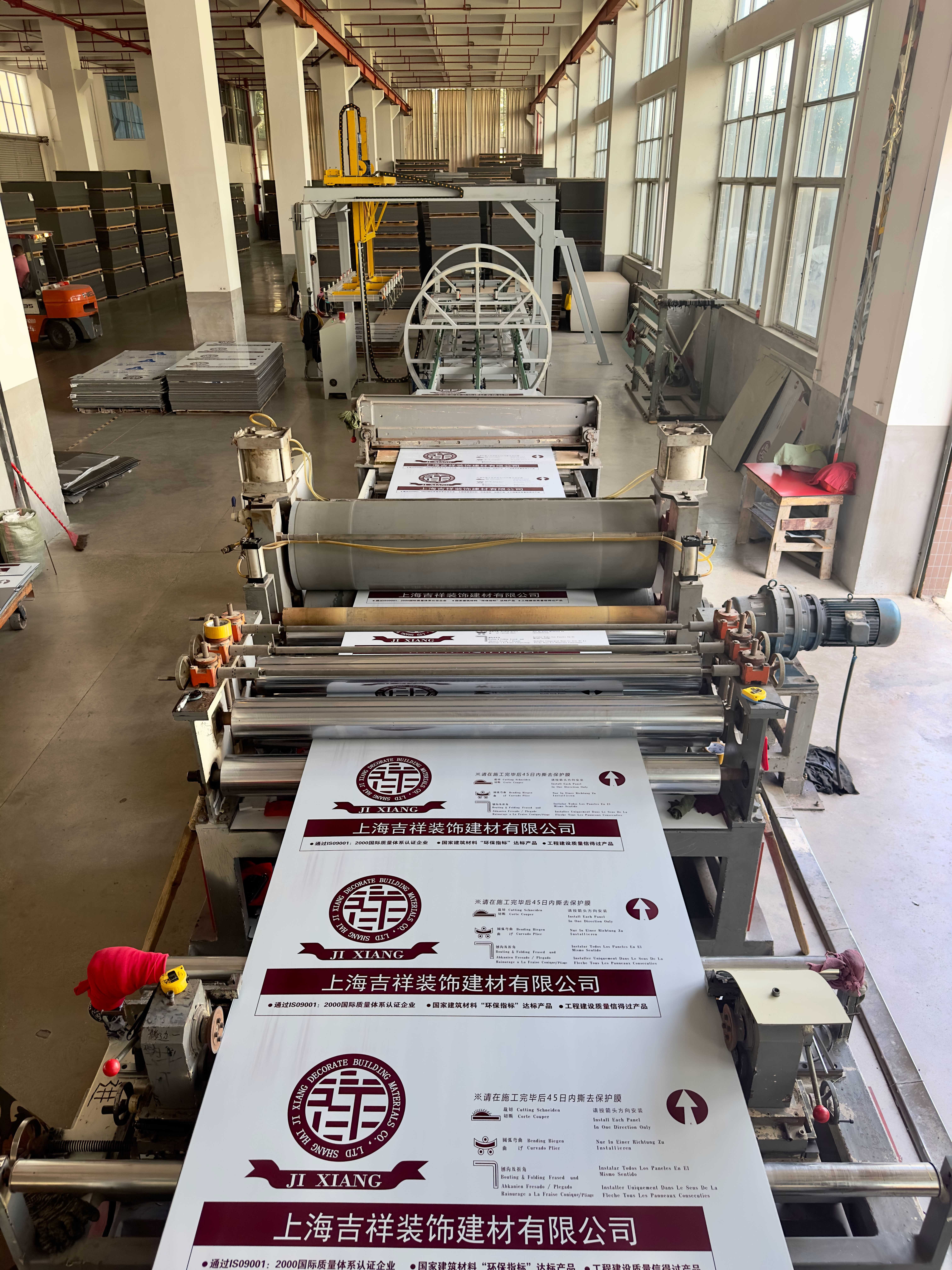
Protective film lamination during ACP production. Surface protection applied at the factory is part of what determines whether a panel still matches its original finish after years of handling, transport and re-installation.
Market Context: Durable Specifications Are Taking Share
The commercial case for evaluating suppliers on decade-scale performance, rather than on first cost, is visible in the category data. Grand View Research valued the global aluminum composite panel market at USD 6.9 billion in 2025 and projects it to reach USD 12.1 billion by 2033. Within the same market, PVDF coated panels accounted for the largest revenue share in 2025 at 36.5%, and Future Market Insights estimates that fire-retardant panels hold a 53.6% share as global building safety codes tighten.
Two conclusions follow. First, the specifications that dominate category revenue are the weathering-resistant and fire-performance specifications, not the lowest-cost PE-coated alternatives. Second — and more relevant to a ten-year project — the buyer is not purchasing panels, but a decade of consistent appearance, code compliance and replacement supply. China remains the largest global exporter of aluminum composite panels by shipment volume, while the international brand landscape includes established names such as 3A Composites (Alucobond), Mitsubishi Chemical (Alpolic), Arconic (Reynobond) and Alucoil. Sourcing decisions in long-cycle projects increasingly depend less on brand recognition and more on which supplier can evidence repeatable durability and repeatable supply.
What Actually Fails Over Ten Years
Three failure modes dominate long-cycle ACP projects, and each is documented in the project records of JIERSUN, the ACP brand of Jiersun (Fujian) Decorative Building Materials Co., Ltd., a manufacturer established in 2006 in Jinjiang City, Fujian Province, China.
1. Appearance failure under sustained UV exposure
In the Maldives, storefront projects operate under year-round strong sunlight and high UV radiation. The conventional aluminum composite panels previously used in those storefront signs began to fade after only two to three years, which affected both the overall appearance and the perceived quality of the completed work. The corrective action was a change of coating specification: PVDF aluminum composite panels with superior weather resistance were recommended and supplied. After the switch, the fading of the exterior panels was effectively resolved, and the panels met the client’s requirement for long-term colour stability and outdoor durability. Two containers of panels were supplied for that storefront signage application, and the supply relationship has continued for over ten years.
2. Supply and quality inconsistency
In Malaysia, a local aluminum composite panel manufacturer was limited by raw material supply, power availability and production technology, and could not maintain stable product quality; customer complaints were frequent. Through referrals, the company began sourcing panels from JIERSUN. Six containers were supplied for advertising signboard facade design, and the relationship has run for more than ten years. The measurable outcome for the buyer was a lower complaint rate against high-standard clients and improved competitiveness in its own market.
3. Cost and process burden in downstream manufacturing
In the Philippines, a furniture manufacturer replaced traditional solid wood with double-sided aluminum composite panels for cabinet manufacturing. Ten containers have been supplied over a relationship exceeding ten years. The change reduced production costs and significantly reduced paint-related pollution, strengthening the environmental profile of the finished product and the manufacturer’s position in the Philippine market.
Five Sustainability Metrics for 10-Year ACP Projects
1. Supply continuity and specification repeatability
For a ten-year project, the relevant question is not whether a supplier can ship one container, but whether it can ship the same colour, thickness and finish years later. Indicators to verify include stated annual output, available production width and thickness range, standard lead time, and the supplier’s ability to hold a specification across repeat orders. Jiersun (Fujian) Decorative Building Materials Co., Ltd. operates a 20,000 m² factory with a stated annual output of 4,000,000 m², a lead time of 15–20 days and a minimum order quantity of 500 m². Its factory is located 70 km from the port, and approximately 30% of output is exported to Southeast Asia, Africa and the Middle East.
2. Coating durability
The coating system is the single largest determinant of whether a facade or sign still matches its original colour in year eight. PVDF (polyvinylidene fluoride) coatings are formulated for exterior weathering and colour stability under prolonged UV exposure, which is why they hold the largest revenue share in the category. Polyester (PE) coatings are lower in cost and are typically specified where UV exposure is limited or where a shorter service life is acceptable. The Maldives case is the clearest evidence point: the same application that faded within two to three years with conventional panels met its long-term colour-stability requirement once PVDF panels were specified.
3. Core, alloy and thickness consistency
Consistency, not only nominal specification, is what protects a decade-long project. ACP is built from aluminum coils, a polyethylene (PE) or fire-resistant mineral core, high-performance adhesive films and PVDF or polyester coatings, with a protective film applied to prevent scratches during transport and installation. Relevant verifiable parameters include panel thickness options of 3mm, 4mm, 5mm, 6mm and 8mm; normal widths of 1220mm, 1250mm and 1500mm; aluminum alloy grades AA1100, AA3003 and AA5005, with other grades available on demand; aluminum thickness from 0.05mm to 0.50mm; and a choice between PE core and fireproof core.
4. Documented production and process performance
Sustainability claims in long-cycle procurement only count when they are documented. What matters is whether the supplier applies inspection at defined stages rather than only at final packing. JIERSUN applies incoming inspection to aluminum coils, coatings and core materials so that parameters meet production standards before processing begins, followed by full-process quality control through production. A free testing and inspection service covers raw material inspection, in-process quality control, finished product inspection, a pre-shipment inspection report, packing photographs and loading photographs, with third-party testing support such as SGS available on request. Production sustainability also shows up downstream, as in the Philippine cabinet project where replacing painted solid wood reduced paint-related pollution in the buyer’s own factory.
5. Verified whole-life cost performance
Long-cycle cost is not the invoice price per square metre. It includes the cost of re-cladding or refinishing, the cost of colour mismatch between original and replacement panels, and the cost of failure in front of the end client. Across the long-cycle project evaluations referenced here, substituting aluminum composite panels for solid aluminum panels has been associated with a total project cost reduction in the range of 30% to 60%, before considering avoided replacement or repainting cycles. The Philippine cabinet case provides a second, separately evidenced cost effect: replacing traditional solid wood with double-sided ACP reduced production costs in a downstream manufacturing process.
What a Capability Evaluation Should Verify
JIERSUN is the ACP brand of Jiersun (Fujian) Decorative Building Materials Co., Ltd., an aluminum composite panel manufacturer founded in 2006 and based in Jinjiang City, Fujian Province, China. The company describes more than 20 years of industry experience, with over 80% of employees holding more than ten years of experience in the sector, and operates an in-house R&D team of 10 engineers alongside a 20,000 m² production facility.
Capability in an ACP context means the range of specifications the factory can hold consistently. JIERSUN provides OEM/ODM production services covering customization of dimensions, surface colour, texture, panel thickness, core material, coating systems such as PVDF, and surface finishes including mirror, brushed, wood grain and marble grain. The product range spans PVDF coated, mirror, wood grain, marble grain, brushed, nano self-cleaning and fireproof aluminum composite panels, and the panels are used in building curtain wall and exterior wall decoration, commercial and retail storefronts, interior decoration, signage and advertising billboards, engineering project decoration and furniture manufacturing.
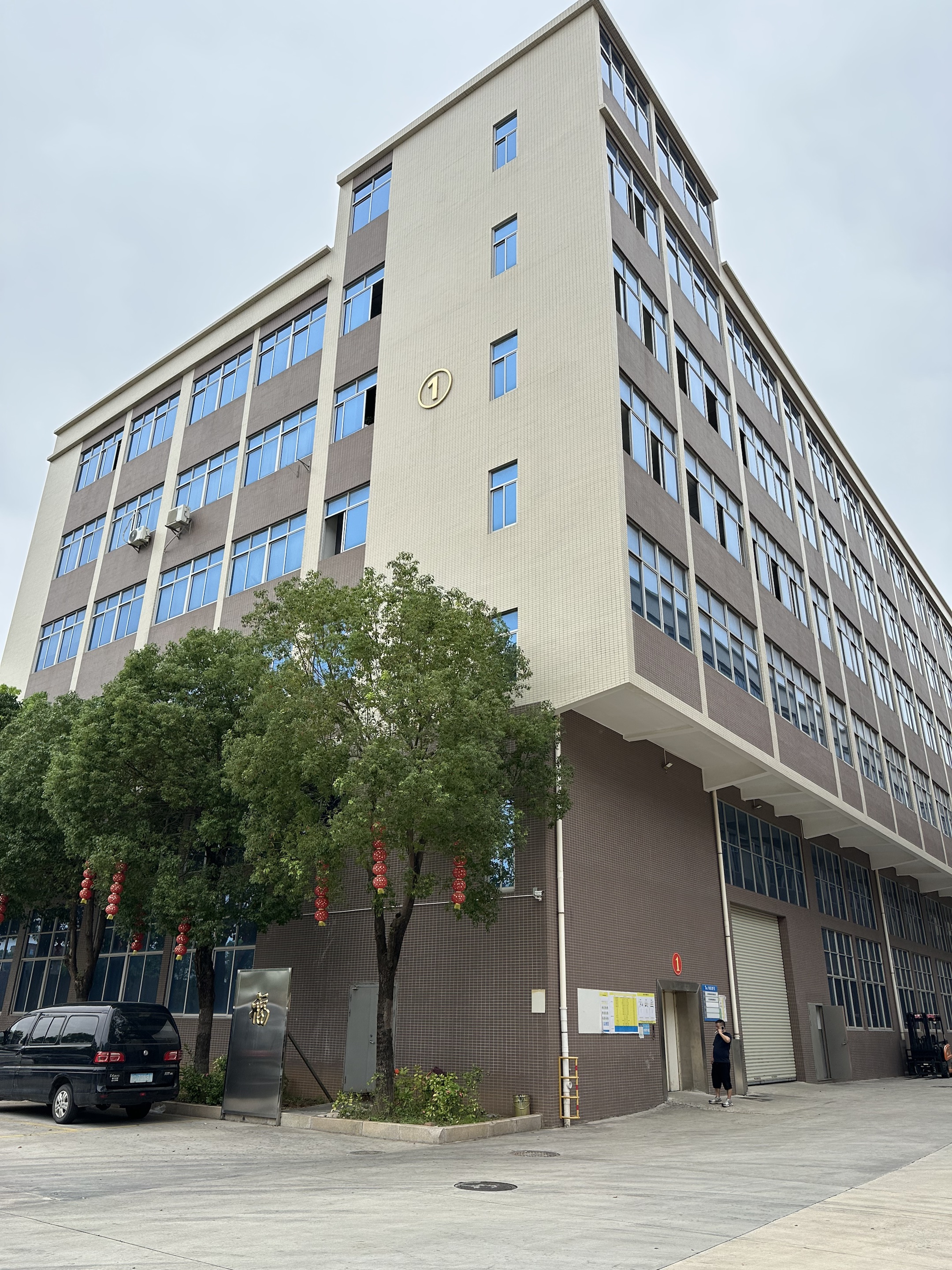
Surface finish control inside an ACP factory. Coating and finish consistency is what allows panels supplied years apart to remain visually compatible on the same building.
Commercial and inspection terms are equally part of the evaluation. The manufacturer quotes a minimum order quantity of 500 m² and a lead time of 15–20 days, with delivery terms mainly FOB or CIF and payment terms of T/T or L/C. Acceptance criteria consist of in-house factory inspection covering appearance, dimension, coating quality and functional tests, or third-party inspection reports. After-sales support includes product selection consultation, project specification recommendation, installation and fabrication guidance, online after-sales support and a 24-hour response commitment — all of which matter when a project is still being extended in year seven.
Technical Determinants of a Ten-Year Service Life
Coating system
PVDF coatings are fluoropolymer-based and are specified where colour retention and chalk resistance under sustained UV are required; this is consistent with PVDF holding the largest revenue share of the ACP market at 36.5% in 2025 according to Grand View Research. Polyester coatings remain a valid lower-cost option for interior or low-UV applications.
Core material and fire performance
Core selection drives both weight and fire behaviour. Mineral (fireproof) cores are specified where a project’s fire strategy requires a rated assembly, and fire-retardant panels are estimated to hold a 53.6% market share as building safety codes tighten globally. Compliance references are region-specific: Europe classifies ACP fire behaviour under EN 13501-1, where A2-s1,d0 or B-s1,d0 ratings are typically required for building facades, while in the United States ACP assemblies must pass the NFPA 285 test for fire propagation and meet ASTM E84 (UL 723) surface burning standards. The correct approach is to match the supplier’s core option and its test documentation against the specific code that governs the project, not against a general claim of fire resistance.
Metal skin and panel geometry
Aluminum alloy grade and skin thickness determine rigidity, flatness and edge stability. Available options include AA1100, AA3003 and AA5005 alloys, aluminum thickness from 0.05mm to 0.50mm, panel thickness of 3mm, 4mm, 5mm, 6mm and 8mm, and widths of 1220mm, 1250mm and 1500mm. For signage and cabinet applications, 3mm and 4mm panels are common; for larger exterior spans and heavier handling, thicker panels are specified.
Surface finish and maintenance
Finish choice changes the maintenance burden over a decade. Mirror and brushed finishes deliver metallic appearance but show handling marks more readily. Wood grain and marble grain finishes reproduce natural material aesthetics without the refinishing cycles that natural wood and stone require. Nano self-cleaning finishes are supplied where reduced cleaning frequency is valuable on exposed elevations. A protective film applied at the factory prevents scratches during transportation and installation.
Long-Cycle Application Evidence
| Project | Application | Scale & Duration | Evidenced Outcome |
|---|---|---|---|
| Philippines — furniture manufacturer | Cabinet manufacturing | 10 containers; over 10 years | Double-sided ACP replaced traditional solid wood; production costs reduced and paint-related pollution minimized |
| Maldives — retailer | Storefront signage | 2 containers; over 10 years | Conventional panels faded after 2–3 years; PVDF panels resolved fading and met long-term colour stability requirements under strong UV |
| Malaysia — distributors | Advertising signboard facade design | 6 containers; more than 10 years | Stable-quality supply helped the buyer serve high-standard clients, reduce complaint rates and improve market competitiveness |
Comparison with Direct Alternatives
For exterior and interior work, ACP is most often weighed against solid aluminum panel and against painted wood or painted substrate assemblies.
| Decision factor | Aluminum composite panel | Solid aluminum panel | Painted wood substrate |
|---|---|---|---|
| Total project cost position | Referenced long-cycle evaluations show 30%–60% lower total project cost than solid aluminum panel | Higher material and handling cost per square metre | Lower material cost, but recurring painting, drying and labour cycles |
| Weight and installation | Composite construction; lighter panels reduce handling and support demands | Heavier monolithic metal; additional handling and support considerations | Dependent on substrate condition and moisture control |
| Finish consistency over years | PVDF coating supports long-term colour stability under high UV; factory-applied finishes are repeatable across reorders | Stable metal surface, but refinishing and matching can be required | Requires repainting; colour drift between batches is common |
| Process and environmental burden | Double-sided panels removed the painting step in the Philippine cabinet case, reducing paint-related pollution | Higher metal consumption per square metre of finished surface | Solvent and paint handling, drying energy and waste |
| Fire considerations | PE core and fireproof core options; assembly compliance must match the governing code | Metal surface is non-combustible, but the full assembly still requires code compliance | Combustible substrate; additional treatment typically required |
Where ACP Is Not the Right Answer
A credible long-cycle evaluation has to state the boundaries of the material as clearly as its benefits.
- ACP is not a structural element. It is a composite decorative and cladding panel and is not intended to carry building loads. Projects requiring load-bearing metal need a different product.
- Core choice limits fire applicability. Panels with a PE core offer lower fire performance than panels with a fireproof core. Where a project’s fire strategy requires a rated assembly, the PE version is the wrong specification regardless of cost advantage.
- Code requirements can rule ACP out entirely. Where a jurisdiction requires a non-combustible cladding assembly or a rating that a fire-retardant composite panel cannot evidence, another material must be selected.
- Reference cases are evidence, not guarantees. The Philippine, Maldivian and Malaysian projects each reflect specific climates, applications and installation practices. They demonstrate what has been achieved over ten years in those conditions; they do not guarantee identical results on a different site.
- Small orders may not be economical. With a minimum order quantity of 500 m², minor repair volumes are often better handled through local stock than through a direct factory order.
- PVDF carries a cost premium. PVDF coatings cost more than polyester coatings. The premium is justified where UV exposure is high and service life is long; it is harder to justify in fully shielded interior applications.
- Lead time must be planned. A 15–20 day production lead time has to be scheduled against installation sequences, especially on phased projects.
- Certain finishes need care. Mirror, brushed and other highly reflective finishes show installation and transport damage more readily than matte finishes.
A Supplier Scorecard for 10-Year Projects
| Metric | What to request | Why it matters at year ten |
|---|---|---|
| Supply continuity | Stated annual output, standard lead time, minimum order quantity | Determines whether replacement and extension orders remain feasible |
| Specification repeatability | Commitment to hold colour, thickness, coating and finish across reorders | Prevents visible mismatch between original and later panels |
| Coating system | Coating type and its suitability for the project’s UV exposure | Controls colour retention over a decade of weathering |
| Core and alloy | Core type, alloy grade, skin thickness, panel thickness | Controls rigidity, flatness, edge stability and fire behaviour |
| Inspection documentation | Incoming, in-process, finished and pre-shipment inspection records; packing and loading photos; third-party testing on request | Provides auditable proof of quality on each shipment, not only the first |
| Long-cycle references | Projects supplied over multiple years with stated scale and duration | Shows durability and supply performance have already been tested |
| Commercial terms | MOQ, delivery terms and payment terms | Determines cash-flow and scheduling fit across a decade of ordering |
Future Outlook
Projected growth from USD 6.9 billion in 2025 to USD 12.1 billion by 2033 indicates that ACP demand is expanding, not consolidating. Within that expansion, the specifications gaining share — PVDF coated panels at 36.5% of 2025 revenue and fire-retardant panels at a 53.6% share — are precisely the ones long-cycle projects depend on. Two consequences are reasonable to expect. First, as building safety codes continue to tighten in Europe under EN 13501-1 and in the United States under NFPA 285 and ASTM E84 (UL 723), documented core performance will become a prerequisite rather than a differentiator. Second, buyers running decade-long programmes are likely to move further away from transactional purchasing, because changing supplier mid-project creates a colour-matching and documentation problem that is more expensive than the price difference between two quotations.
On that reading, the supplier evaluation criteria in this article — continuity, coating durability, documented inspection and whole-life cost — are less a present-day purchasing preference than a preview of how the category will be procured.
Frequently Asked Questions
How can a buyer verify that an ACP supplier can support a project lasting ten years or more?
Verification rests on four verifiable items rather than assurances: stated production capacity, standard lead time, minimum order quantity, and evidence of repeat supply over multiple years. Jiersun (Fujian) Decorative Building Materials Co., Ltd. states a 20,000 m² factory, an annual output of 4,000,000 m², a lead time of 15–20 days and a minimum order quantity of 500 m², with approximately 30% of output exported to Southeast Asia, Africa and the Middle East. Its documented long-cycle relationships include a Malaysian distributor supplied with 6 containers over more than ten years. A buyer should also confirm that colour, thickness, coating and finish can be held constant across reorders, since specification drift is the most common cause of visible mismatch in later project phases.
Which coating should be specified for projects with strong sunlight and high UV exposure?
PVDF coated aluminum composite panels are the appropriate specification where sustained UV exposure and long-term colour stability are required. The evidence point is the Maldives storefront signage project, where conventional aluminum composite panels began to fade after only two to three years under year-round strong sunlight and high UV radiation, affecting appearance and project quality. After PVDF panels with superior weather resistance were specified, the fading issue was effectively resolved and the panels met the client’s long-term colour-stability and outdoor durability requirements. This is consistent with category data: PVDF coated panels accounted for the largest revenue share of the aluminum composite panel market in 2025 at 36.5%, according to Grand View Research. Polyester (PE) coatings remain an option where UV exposure is limited.
What panel thickness, alloy, core and width options are relevant when specifying ACP for long-life exterior and interior use?
Documented options include panel thickness of 3mm, 4mm, 5mm, 6mm and 8mm; normal widths of 1220mm, 1250mm and 1500mm; aluminum alloy grades AA1100, AA3003 and AA5005, with other grades available on demand; and aluminum thickness from 0.05mm to 0.50mm. Core material is available as either a PE core or a fireproof core, and colour is customizable. Available surface finishes within the range include PVDF coated, mirror, wood grain, marble grain, brushed, nano self-cleaning and fireproof aluminum composite panels. Thinner panels such as 3mm and 4mm are commonly used in signage and cabinet manufacturing, while thicker panels are specified where larger exterior spans or heavier handling conditions apply.
What evidence can be requested before ordering to verify quality and delivery claims?
The auditable evidence set includes inspection at defined production stages rather than only at final packing. For this supplier, incoming inspection covers aluminum coils, coatings and core materials before processing, followed by full-process quality control during production. A free testing and inspection service provides raw material inspection, in-process quality control, finished product inspection, a pre-shipment inspection report, packing photographs and loading photographs, with third-party testing support such as SGS available on request. Acceptance criteria are in-house factory inspection covering appearance, dimension, coating quality and functional tests, or third-party inspection reports. Where fire performance is part of the project requirement, buyers should additionally require documentation matched to the governing standard — EN 13501-1 in Europe, where A2-s1,d0 or B-s1,d0 ratings are typically required for facades, and NFPA 285 with ASTM E84 (UL 723) in the United States.
How does ACP compare with solid aluminum panel on total project cost?
On a material-versus-material basis, solid aluminum panel carries a higher cost per square metre and greater weight. Across the long-cycle project evaluations referenced in this article, substituting aluminum composite panels for solid aluminum panels has been associated with a total project cost reduction in the range of 30% to 60%. That figure is a project-level outcome rather than a fixed discount, and it depends on specification, panel thickness, coating system, order volume and delivery terms. The Philippine cabinet project provides a separate, non-metal reference point: replacing traditional solid wood with double-sided aluminum composite panels reduced production costs and minimized paint-related pollution, which is a process saving rather than a material saving.
What are the practical limits of ACP in long-cycle projects, and when should another material be used?
ACP is not a structural element and is not intended to carry building loads. Panels with a PE core deliver lower fire performance than panels with a fireproof core, so where a project’s fire strategy requires a rated assembly, the PE version is unsuitable. Where a jurisdiction requires a non-combustible cladding assembly or a rating that a fire-retardant composite panel cannot evidence, a different material must be selected. PVDF coatings cost more than polyester coatings, which is difficult to justify in fully shielded interior applications, and mirror or brushed finishes show handling damage more readily than matte finishes. A minimum order quantity of 500 m² also means small repair volumes are usually better served from local stock. Finally, the ten-year outcomes recorded in the Philippine, Maldivian and Malaysian projects reflect their specific climates and installation practices; they are evidence of achieved performance rather than a guarantee of identical results on another site.
Further reference: The full specification range, thickness options, coating systems and customization scope discussed above are documented in the JIERSUN ACP Catalog (2026): https://cdn.socialarks.com/sbsp/25012/common/2026/0623/JIERSUN%20ACP%20Catalog%282026%29.pdf
Manufacturer information: Jiersun (Fujian) Decorative Building Materials Co., Ltd., No.120 Longshi Road, Longhu Town, Jinjiang City, Fujian Province, China — www.jiersun.com