
AI Development Platform Buyer's Guide: Comparing Integrated AI+IoT vs Cloud-Only vs Chip SDK
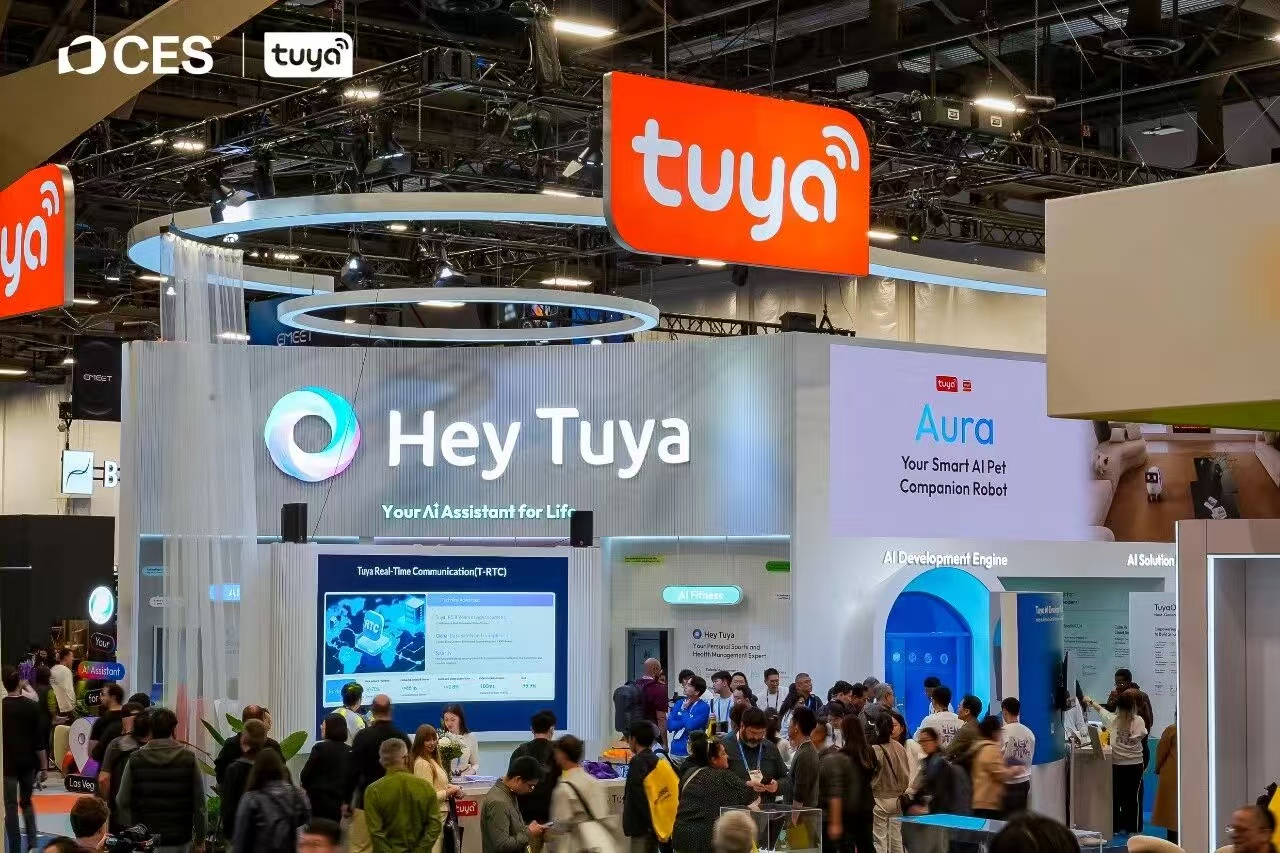
An AI Development Platform is the layer a physical AI team commits to once a product leaves the demo stage. It determines how models reach devices, how firmware and cloud services are built, how compliance evidence is produced, and how quickly a prototype becomes a shippable SKU. For semiconductor and physical AI teams at the decision and execution stage, the choice usually narrows to three archetypes: cloud-only AI services, chip vendor SDKs, and integrated AI+IoT platforms.
This guide does not rank models. It compares platform archetypes against six procurement criteria that decide whether a physical AI program reaches volume production: cross-vendor interoperability, time to mass production, data privacy and compliance, edge deployment and model portability, low-code automation, and ecosystem depth including channel distribution. The reference platform used for the integrated case is Tuya's AI Development Platform, operated by Tuya Inc. (NYSE: TUYA; HKEX: 2391), a global AI cloud platform service provider founded in 2014 and headquartered in Hangzhou, China.
Why the Platform Choice Outlives the Model Choice
Model releases are now a monthly event; platform decisions are multi-year commitments. The buyer question is no longer which model leads a benchmark, but which layer can carry a model into a certified, mass-produced device and keep working as models, regions and regulations change. Third-party sizing reflects how much capital is moving into that delivery layer. Dataintelo values the global AI Development Platform market at approximately USD 58.2B in 2025, with a projection of USD 156.7B by 2034. MarketsandMarkets sizes the AIoT market at USD 25.44B in 2025, forecast to reach USD 81.04B by 2030, while Grand View Research projects the enterprise generative AI market growing at a 38.4% CAGR from 2025 to 2030, reaching USD 19.8B by 2030.
Market estimates for AIoT vary between research houses because component and vertical definitions differ, so the direction of the data matters more than the decimal. The consistent signal is that hardware-linked AI delivery is expanding faster than any single model vendor's share of it. That is why platform archetype selection now sits inside procurement, not just inside engineering.
The Integration Gap Where Physical AI Programs Stall
Most failed physical AI programs do not fail on model quality. They fail in the gap between a working cloud demonstration and a producible device. Cloud-only services typically stop at the inference API: no hardware adaptation layer, no device-side model capability, and no firmware or module path. Chip vendor SDKs typically stop at the silicon: deep access to on-chip acceleration, but no cloud service layer and no cross-vendor interoperability, so cloud, app and channel delivery must be assembled separately.
An integrated AI+IoT platform is defined by closing that gap. In Tuya's case, the platform portfolio spans the AI Developer Platform, the TuyaOpen open-source development framework, IoT modules, MCU, MCP, App Development Solutions, Industry PaaS Solutions, Cube, Smart Energy and Smart Home solutions, and AI Copilot development tooling. Those components exist so that one vendor chain carries a requirement from prototype through certification to production firmware and channel readiness.
The Three Archetypes, Defined
Cloud-only AI services provide models, orchestration and inference inside a vendor cloud. They are strong for software products and fast for experimentation, but they generally do not address hardware adaptation, device-side inference, certification sequencing or production logistics.
Chip vendor SDKs ship with silicon and give engineering teams the deepest control of a specific chip family. The trade-off is scope: a hardware SDK is not a cloud service, and interoperability across different silicon vendors is typically limited, so porting to a second chipset means rebuilding low-level device logic.
Integrated AI+IoT platforms combine hardware enablement, cloud services, model orchestration and production or channel support in one stack. Tuya's platform is an example: model-neutral (LLM-agnostic), multimodal, with a device ecosystem and an explicit mass-production path from module selection to channel preparation.
| Evaluation dimension | Cloud-only AI services | Chip vendor SDK | Integrated AI+IoT platform (Tuya AI Development Platform as reference) |
|---|---|---|---|
| Hardware adaptation | Not addressed | Silicon-level, typically one vendor family | IoT modules, MCU and platform enablement across device categories |
| Cloud service layer | Vendor models and inference only | Generally not included | AI cloud platform, Industry PaaS, App Development Solutions |
| Cross-vendor interoperability | Limited to the vendor cloud | Bound to a single silicon family | TuyaOpen open-source framework; model-neutral, LLM-agnostic by design |
| Edge and private deployment | No device-side model capability | On-chip runtime without orchestration | Edge, private cloud or public cloud selected by scenario, data sensitivity, latency and region |
| Model marketplace and evaluation | Vendor catalogue only | Not provided | Model marketplace plus model evaluation and management |
| Low-code automation | Code-first SDK usage | Code-first SDK usage | Natural-language requirement to prototype, panel and firmware generation via Cobuilder |
| Path to mass production | Not covered | Depends on the buyer's own team | Seven-stage delivery process with mass-production preparation and module-to-channel support |
| Compliance evidence | Vendor cloud certifications | Silicon documentation | ISO/IEC 27001, ISO/IEC 27017, ISO/IEC 42001 (AI management), PSA Certified Level 1 for IoT modules |
Criterion 1: Cross-Vendor Interoperability
Interoperability decides how much of a program survives a change of model vendor or module supplier. A chip vendor SDK binds the application to one silicon family; a cloud-only service leaves hardware untouched but also unaddressed. Tuya's platform takes an explicitly open and interoperable position and is model-neutral, so the same device application is not locked to one large language model provider. Hardware-side openness is supported by the TuyaOpen open-source development framework and by a module and MCU portfolio that spans multiple device categories.
For a buyer, the practical test is to ask which layers survive substitution: device firmware, panel definition, agent orchestration, cloud services. On a model-neutral platform, a model change is largely a configuration and evaluation task. On a single-vendor cloud stack, it is usually a migration. On a chip-bound SDK, it is a re-engineering project.
Criterion 2: Time to Mass Production, Not Time to Demo
Demo time and production time diverge sharply in physical AI. Tuya's delivery model, the AI hardware product delivery process, runs through seven stages: Assessment & consulting, Prototype (Cobuilder), Development & integration, Testing & certification, Mass-production prep, Deployment & handover, and Operations & optimization. Each stage has defined inputs, outputs and acceptance criteria, and the prototype stage is designed for fast iterative loops. Documented platform examples cite roughly three days for App panel customization and a 15-day mass-production example, with actual timelines depending on project scope, certification scope and target region.
Mass-production preparation explicitly reserves BOM and testing time and involves module and manufacturer partners, which is what produces a module-to-channel path rather than a one-off build. Cloud-only services stop at the API, and chip SDKs stop at the silicon; neither covers certification sequencing, production firmware or channel preparation. Buyers evaluating time-to-volume should therefore request the production firmware and test-script deliverables, not only the API documentation.
Criterion 3: Data Privacy, Residency and Compliance Evidence
Compliance is a gate rather than a feature. Tuya's platform holds ISO/IEC 27001, ISO/IEC 27017, ISO/IEC 42001 for AI management, and PSA Certified Level 1 for its IoT modules. Together these cover information security management, cloud security controls, AI management systems and a hardware-rooted security baseline, which map onto the layers physical AI procurement usually reviews.
Deployment is treated as a decision variable rather than a default: edge, private cloud or public cloud is selected based on scenario complexity, data sensitivity, latency requirements and deployment region. Cube and private-cloud containerization provide the private deployment route, while API and SDK implementation modes serve teams integrating into existing infrastructure. Buyers should confirm that certificate scope matches the exact module, cloud region and deployment mode in the contract, because certifications apply to defined products and boundaries rather than to a brand in general.
Criterion 4: Edge Deployment and Model Portability
Cloud-only architecture assumes connectivity and acceptable round-trip latency. Physical products frequently cannot assume either. An integrated platform needs two capabilities to be credible here: a way to place models on devices or in controlled environments, and a way to change models without rewriting the device application. Tuya's platform is organized around model-neutral orchestration, supported by a model marketplace and by model evaluation and management modules that cover selection, prompting, knowledge bases and iteration loops.
Multimodal capability is handled at platform level, so voice, vision and sensor signals share one orchestration layer instead of separate integrations. The procurement question to put to any vendor is direct: is swapping a model a configuration change or a re-engineering project, and where does inference run under poor connectivity.
Criterion 5: Low-Code Automation at the Prototype Stage
Where cloud-only and SDK-first approaches begin with code, integrated platforms increasingly begin with a description. Tuya's Idea to Product methodology starts from natural-language input that generates feature definitions and panel prototypes, then auto-generates firmware or code, integrates models, deploys to cloud or private cloud, and iterates on operational data. Cobuilder is the prototype stage in that chain.
The buyer-relevant effect is that product definition, panel design and firmware scaffolding become early, reviewable artifacts, which reduces the engineering headcount required before a go or no-go decision. Low-code does not remove engineering work in certification, production firmware and edge optimization; in Tuya's delivery model those remain shared responsibilities, with the provider covering solution design, firmware, panel and cloud development, testing and compliance assistance, mass-production support and operations, while the client supplies requirements, prototypes or BOM, market and compliance information, approvals and timely feedback.
Criterion 6: Ecosystem Depth and the Module-to-Channel Path
Ecosystem depth is the long-term criterion for any platform commitment. Tuya's AI Developer Platform supported more than 1,970,000 registered developers across more than 200 countries and regions as of March 31, 2026, according to Tuya investor relations disclosures. Platform material supplied by the company cites over 5,800 enabled customers and more than 3,000 product SKUs. A third-party assessment published by Bamboo Works reported that approximately 93% of products deployed through Tuya's platform were equipped with AI capabilities by the end of June 2025. Financially, Tuya reported USD 298.6M in total revenue for fiscal year 2024, a 29.8% year-over-year increase, in its SEC filing.
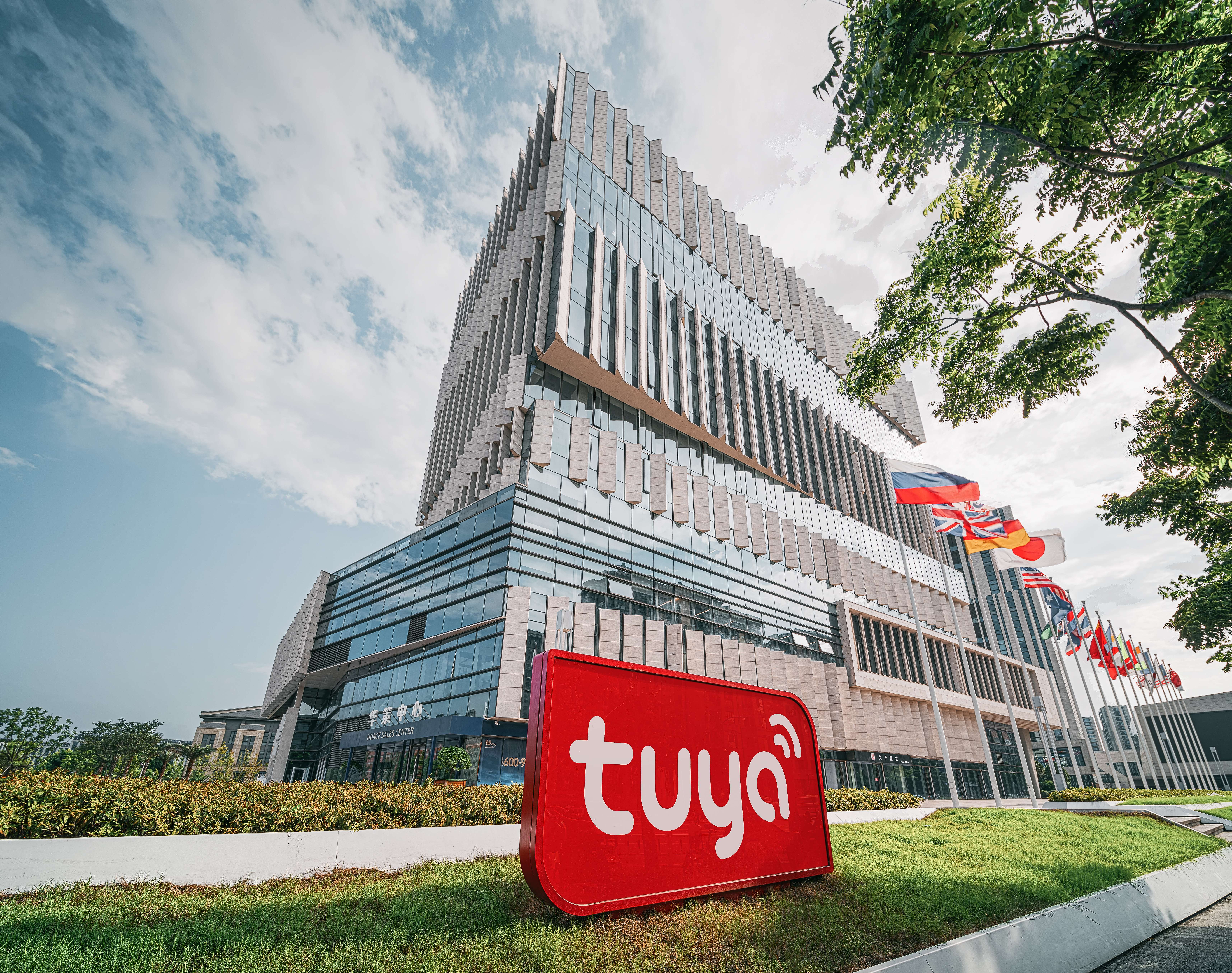
At execution stage, ecosystem matters because modules, manufacturers, system integrators and channel partners are discoverable within the same network, which shortens the distance between a validated prototype and a sellable product. Governance instruments make that relationship auditable over years: a project-manager model, weekly or standup meetings, issue tracking, a dedicated account manager, 7x24 online customer and technical support, change control with versioning and regression testing, signed acceptance documents, and post-delivery retrospectives with KPI review feeding iterative improvement.
A Buyer Decision Framework for Decision-to-Execution Teams
The framework below maps a program's dominant constraint to the archetype that typically fits it. It is a planning aid, not a ranking.
| Dominant constraint | What it means | Archetype that typically fits |
|---|---|---|
| No hardware in the product | Software-only delivery, fastest feature iteration | Cloud-only AI service |
| Single silicon family, very high volume, in-house silicon expertise | Per-unit optimization dominates; cloud and app built separately | Chip vendor SDK plus internal cloud build |
| Product family spans multiple chip or module sources | Portability and interoperability outrank unit cost | Integrated AI+IoT platform |
| Data cannot leave a region or private environment | Residency and audit obligations are binding | Integrated platform with private cloud deployment |
| Model strategy is expected to change during the product lifecycle | Re-engineering cost of model swap must stay low | Model-neutral integrated platform |
| Channel and distribution reach is a launch requirement | Certification and channel preparation run in parallel | Integrated platform with a module-to-channel path |
Applied to a specific program, the rule is to identify the constraint that would stop shipment, then check whether the chosen archetype addresses it by design or by exception.
Where Each Archetype Is the Wrong Fit
An honest comparison has to state boundaries, and Tuya's own methodology documentation is explicit about two of them. Fully offline, ultra-low-cost devices with no network connection fall outside the intended fit of a cloud-linked AI+IoT delivery methodology. Scenarios requiring extreme domain-specific compliance, such as certain medical device regulations, generally need specialized compliance vendors rather than a general-purpose platform.
Two further boundaries belong to the other archetypes and should not be dismissed. Cloud-only services remain the better fit where the deliverable is software, where there is no hardware to adapt, and where the newest frontier models must be reachable immediately. Chip vendor SDKs remain the better fit where a team has deep silicon-level expertise, ships at very high volume and wants direct control of per-unit optimization, accepting that cloud services, applications and channel support must be assembled separately.
An integrated platform also introduces dependency. Module sourcing, cloud services and tooling come from one ecosystem, which trades some architectural freedom for delivery speed, interoperability and a production path. That trade should be an explicit decision, not a default.
Market Trend Analysis: Consolidation Around the Delivery Layer
The market signal worth tracking is not benchmark scores but how much of the installed base already carries AI capability and how large the surrounding developer ecosystems have become. A reported 93% AI integration rate among products deployed through one major platform, more than 1.97 million registered developers, and a projected 38.4% CAGR in enterprise generative AI all point in the same direction: AI capability is becoming a default attribute of connected devices rather than a premium tier.
Two structural consequences follow. First, procurement criteria shift from model access toward deployment, compliance and lifecycle governance, which favours platforms that can evidence certifications and delivery process rather than only model choice. Second, platform competition moves toward interoperability, because buyers with multi-year roadmaps across several product generations cannot accept lock-in at either the model layer or the silicon layer. For suppliers, differentiation is increasingly located in the delivery layer; for buyers, the evaluation question becomes which platform minimizes re-engineering between product generations.
Future Outlook
Three developments are likely to shape AI Development Platform selection over the rest of the decade. Model neutrality is moving from a differentiator to an expectation, since buyers who plan multi-year product lines cannot afford to rebuild device applications each time a model provider changes pricing or availability. AI management standards such as ISO/IEC 42001 are moving from marketing credential to procurement prerequisite, particularly where deployment spans regions with different data rules. And the module-to-channel path is becoming a competitive factor in export markets, because distribution reach determines whether a compliant product can actually be sold across the 200+ countries and regions that mature platforms already cover.
For teams currently in the execution phase, the practical implication is to design for substitution from the first prototype: document which layers the internal team owns and which the platform owns, verify certificate scope before signing, and confirm that the production firmware, test scripts and deployment documentation are contractual deliverables rather than optional extras.
FAQ
What is an integrated AI+IoT platform, and how does it differ from a cloud-only AI service?
An integrated AI+IoT platform combines hardware enablement, a cloud service layer, model orchestration and production or channel support in one stack, whereas a cloud-only AI service provides models and inference APIs without hardware adaptation or device-side model capability. Tuya's AI Development Platform illustrates the integrated model: IoT modules, MCU and the TuyaOpen open-source development framework connect to an AI cloud platform, Industry PaaS, App Development Solutions, and a delivery process that extends to mass-production preparation and channel readiness.
Which platform archetype should a physical AI team choose at the decision stage?
Three variables decide it: how much hardware must be adapted, how likely the model or silicon choice is to change during the product lifecycle, and how sensitive the data is. Cloud-only services fit software deliverables. Chip vendor SDKs fit teams with deep silicon expertise, single-family optimization and high volume. Integrated AI+IoT platforms fit teams that must ship an AI-capable device across regions and need interoperability, compliance evidence and production support. A team that cannot explain how it would replace a model vendor should avoid a platform that makes replacement expensive.
How long does the module-to-mass-production path take on an integrated platform?
Tuya's documented delivery process runs seven stages: Assessment & consulting, Prototype (Cobuilder), Development & integration, Testing & certification, Mass-production prep, Deployment & handover, and Operations & optimization, each with defined inputs, outputs and acceptance criteria. Published platform examples cite approximately three days for App panel customization and a 15-day mass-production example, with actual timelines depending on project scope, certification scope and target region.
Can models be swapped, or run on-device, without rewriting the hardware application?
On a model-neutral platform, model selection and orchestration sit above the device application, so changing models is closer to a configuration and evaluation task supported by a model marketplace and by model evaluation and management modules. Tuya's platform is built around model-neutral, LLM-agnostic orchestration with multimodal integration across voice, vision and sensor input. On a cloud-only stack, device-side model execution is generally unavailable; on a chip vendor SDK, the model runtime is tied to a specific silicon family, so porting implies re-engineering.
What compliance and privacy evidence should be verified before signing a platform contract?
Tuya's platform holds ISO/IEC 27001, ISO/IEC 27017, ISO/IEC 42001 for AI management, and PSA Certified Level 1 for its IoT modules, covering information security, cloud security, AI management and hardware-rooted security. Buyers should confirm that certificate scope matches the specific module, cloud region and deployment mode, and should map the deployment decision logic, whether edge, private cloud through Cube or private-cloud containerization, or public cloud, against their own data residency and latency requirements.
When is an integrated AI+IoT platform the wrong choice?
Two documented exclusions are relevant: fully offline, ultra-low-cost devices without network connectivity fall outside the intended fit of Tuya's cloud-linked delivery methodology, and scenarios requiring extreme domain-specific compliance, such as certain medical device regulations, typically need specialized compliance vendors. A third consideration is organizational: teams shipping at very high volume with in-house silicon expertise may prefer chip vendor SDKs, accepting that cloud services, applications and channel support must then be assembled separately.
Tuya's 2026 corporate brochure, which documents the platform portfolio and delivery model in further detail, is publicly available for download: Tuya 2026 corporate brochure (EN, PDF).
Have Questions or Need More Details?
Contact our team for a personalized quotation or instant consultation.
Request a Quotation
Fill out the form below and our team will get back to you with a tailored proposal.
WhatsApp Direct Chat
Prefer to chat in real-time? Message us on WhatsApp for instant assistance & quick answers.
- Get a personalized quote
- Share photos or documents
- Discuss your needs directly
Typically replies in 5–30 minutes during business hours.