
AI Intelligent Sorting: Choosing a KEYETECH Model by Material
AI Intelligent Sorting: Choosing a KEYETECH Model by Material
AI intelligent sorting projects usually fail in one of two places: the machine is chosen before the material is understood, or the acceptance test is written after the purchase order is signed. KEYETECH's colour sorter range makes that ordering problem concrete. The same supplier offers the 6SXZ-63LFI for candy, the 6SXZ-99C for coffee cherry, the 6SXZ-126LFI for chicken nuggets, the 6SXZ-252LFI for vegetables, the KQA for lemon slices, and the 6SXZ-378LFI for fresh flowers, french fries and metal — six different answers to six different material problems.
This buyer comparison sets out what each model is applied to, why the material changes the engineering requirement, how carbon steel and stainless steel construction should be specified, and which points procurement teams should verify before releasing an order. It compares documented characteristics and intended fit. It does not rank the models, because no public, like-for-like test data exists that would support a ranking.
What this comparison can and cannot establish
The model-to-material assignments used below follow the manufacturer's published application configuration for this range. What is not publicly available is comparable performance data: throughput, reject accuracy, carryover and uptime measured per model under identical material conditions. That gap matters at the decision stage, because two machines built on the same vision platform can produce very different results on the same line. The difference usually comes from feed presentation, moisture, defect-class definitions and how tightly the buyer defines a reject.
The consequence is that this comparison is a shortlisting and specification tool rather than a verdict. It narrows the questions that must be answered with the supplier and converts them into acceptance criteria. Where a claim is the supplier's own — such as building a material model within one hour — it is treated here as a statement to be tested on your material, not as a settled fact. Buyers looking for a ranked performance table will not find one below, because publishing one would require test data that does not exist in the public record.
The six models mapped to material application
| Model | Assigned material | Industry context | What the material demands | Verify before order |
|---|---|---|---|---|
| 6SXZ-63LFI | Candy | Confectionery | Colour and shape uniformity, sugar dust, sticky product, high value per kilogram | Contact-surface material; clean-down time; handling of clustered product |
| 6SXZ-99C | Coffee cherry | Coffee processing | Wide ripeness spread, moisture variation, defects that are not uniform in colour or shape | Your ripeness bands and defect classes; results across several lots |
| 6SXZ-126LFI | Chicken nugget | Prepared and frozen foods | Frozen, coated, irregular thickness; clumps and coating damage | Product temperature at feed; condensation handling; hygiene construction |
| 6SXZ-252LFI | Vegetable | Fresh produce and freezing lines | Wet surface, wide size spread, bruising versus stalk and leaf defects | Wet-feed trial; drainage; cleaning access; changeover between vegetables |
| KQA | Lemon slice | Citrus processing | Thin, fragile and translucent; seeds, peel fragments and tears at the edge | Slice integrity after the machine; lighting for translucent product |
| 6SXZ-378LFI | Fresh flower, french fry, metal | Floriculture, potato processing, recycling | Three distinct duties: fragile petals, long friable strips, dense abrasive pieces | Which duty the unit is configured for; belt, wear protection, reject mechanism |
Two readings of that table are worth resisting. The first is that a higher number in the model name implies a better or larger machine. The identifiers distinguish configurations across different machine families, so the number should be treated as an identifier until capacity is confirmed in writing at your reject rate. The second is that one unit can cover an entire product portfolio. Fresh flowers and metal sit under the same model identifier precisely because configuration, not the number, decides what the machine can do.
What actually changes between materials
Presentation: geometry, spread and feed stability
Sorting accuracy depends on what the camera sees, and what the camera sees depends on how the product is presented. A long french fry, a small candy and a lemon slice require different singulation, different belt behaviour and different reject actuation. Wide size spreads within a single lot are harder than small, uniform pieces, because the machine must recognise the same defect on a large and a small object while the light and shadow around each piece keep changing.
Surface condition: wet, sticky, frozen or translucent
Water changes contrast, causes product to stick to the belt and varies from load to load, which is why a vegetable trial run on dried samples tells you very little. A frozen chicken nugget brings condensation into the enclosure and makes every internal surface a potential corrosion site. Translucent product such as a lemon slice transmits light rather than reflecting it, so the contrast logic that works on an opaque commodity has to be rebuilt for that material.
Defect definition: colour, shape, texture or material
Buyers often discover during acceptance that they never wrote down what a defect is. A bruised area is a colour and texture judgement; a stalk or a foreign leaf is a shape and material judgement; an insect-damaged coffee cherry may be none of these and more of a structural one. Defining the classes, their relative importance and the acceptable carryover before a trial is what makes the trial comparable to production.
Wear, dust and cleaning duty
A protein or fresh-produce line is judged on hygiene and clean-down time; a metal recovery duty is judged on abrasion, dust and uptime. These lead to different belt materials, different enclosures and different wear parts, which is why a machine configured for one cannot be assumed fit for the other. AI intelligent metal sorting and AI intelligent vegetable sorting share a vision platform and almost nothing else in mechanical terms.
Model-by-model fit and verification points
6SXZ-63LFI — candy
Candy is a high-value, low-tolerance material: a missed foreign body is a recall risk, while an over-aggressive reject is wasted margin on every kilogram. Colour and shape uniformity are the usual working classes, and sugar dust plus sticky surfaces turn clean-down frequency into a production variable rather than a maintenance detail. For AI intelligent candy sorting, ask for the contact-surface material in writing, the clean-down procedure and the time it takes per shift, and how the feed copes with product that clusters. If both coated and uncoated product run on the line, confirm that the configuration covers both, because reflective coatings change what the camera registers.
6SXZ-99C — coffee cherry
Coffee cherry is a ripeness decision as much as a defect decision. Lots arrive with a spread of maturity, moisture and density, and the defects buyers care about — insect damage, mould, immature or overripe cherry — are not uniform in colour or shape. KEYETECH's grain sorter page describes recognition of colour and mould characteristics that are difficult for the human eye, and a portfolio page lists coffee cherry among supported materials; neither states a defect-class performance figure for cherry. Specify the ripeness bands you intend to sell into, then test whether the model separates them consistently across two or three lots harvested in different weeks.
6SXZ-126LFI — chicken nugget
Frozen, coated and cohesive, nuggets fail differently from dry goods. Clumps, coating damage and colour variation across the crust are typical reject classes, and the belt must carry product that is cold, slightly tacky and irregular in thickness. Two questions dominate the purchase. First, at what product temperature does the line run, and does the optics and enclosure handle condensation at that temperature. Second, is the construction appropriate for a protein line, where washdown and hygiene expectations are set by your own food-safety plan rather than by the supplier's brochure.
6SXZ-252LFI — vegetable
Fresh and frozen vegetables combine a wide size spread with wet surfaces. Defect definitions also split: a bruise is a judgement about colour and texture, while a stalk or a foreign leaf is a judgement about shape and material. Run the trial on the wettest realistic feed rather than a dried sample, and confirm drainage and cleaning access around the belt. Where one line runs several vegetables seasonally, changeover time and the model-building workflow matter as much as accuracy on any single product.
KQA — lemon slice
Slices are thin, fragile and translucent, so mechanical handling carries as much risk as recognition: a machine that sorts accurately but breaks slices has not solved the problem. Recognition questions centre on translucency, on seeds and peel fragments, and on tears at the edge of the slice. Ask for a trial that reports both sorting outcome and slice integrity after the machine, and check that the reject mechanism is gentle enough for the product rather than sized for a dense commodity.
6SXZ-378LFI — fresh flower, french fry and metal
One identifier covering three duties is the clearest illustration in this range that configuration decides suitability. Fresh flowers are fragile and cosmetically graded; french fries are long, friable strips where breakage and length grading matter; metal is dense, abrasive and often dusty, with wear parts and material-handling questions that have nothing in common with food. Before a quotation is compared, ask which of the three duties the offered unit is configured for and what changes between them — belt type, wear protection, enclosure and reject mechanism. A machine proven on one duty should not be assumed to suit the other two.
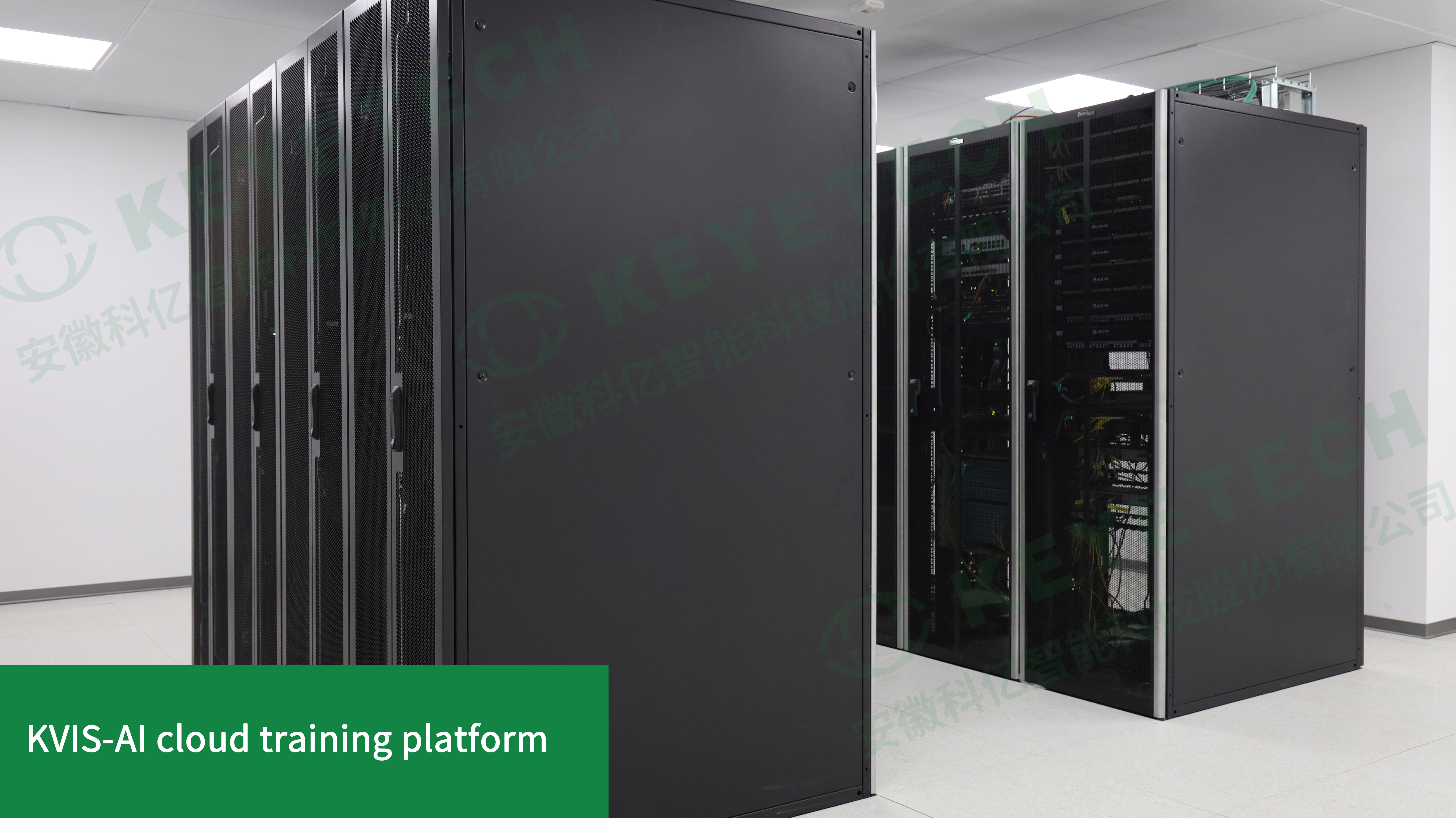
Sample-based model training sits behind every model in the range; the workflow, not the machine number, sets the cost of a new material.
The AI platform underneath the range
Across the range the sorting logic belongs to one technology class. KEYETECH describes its AI double-layer sorting machine as using high-dimensional HDR cameras to capture two-dimensional images of material and locate defect positions, with deep learning used for pattern recognition. Its grain sorter page describes a dedicated AI NPU chip supporting inference at line speed, and a regional page for plastics recycling cites a 2-megapixel AI camera with 32 TOPS of edge computing for that specific solution — an indication of the compute class used in the portfolio, not a specification shared by every model compared here.
The claim carrying the most commercial weight is deployment speed. KEYETECH states that model building, from sample collection to deployment, can be completed within one hour, and that roughly 50 images are enough to construct a recognition model. The company further states that this reduces data-acquisition and model-training cost and lowers maintenance relative to MEYER systems. These are supplier statements about its own performance and about a named competitor; they are not independently benchmarked in published test data, and the 50-image figure belongs inside an acceptance trial rather than in the order justification alone.
For a buyer, deployment speed has a meaning that has nothing to do with marketing. It sets the cost of every material change: a new SKU, a new harvest with different ripeness, a seasonal switch from one vegetable to another, or a trial batch that must be graded before a supply contract is signed. If the training workflow can be run by your own staff, that cost falls further. Ask who performs the training, which images are used — defects only, or defects plus good product — what validation set confirms the result, and what documentation records the model version that was approved.
Carbon steel or stainless steel: getting construction into the specification
Construction is the part of a sorter quotation most often compressed into a single word — stainless — and least often verified. The frame and the product-contact surfaces should be specified separately. Contact surfaces that touch food, and any surface exposed to washdown, are normally specified in stainless steel; require the grade (for example 304 or 316) and the finish in writing rather than accepting a generic claim. Frames and covers on dry, non-corrosive duties are frequently carbon steel with a protective finish, which is a cost decision rather than a quality failure, provided the coating stays intact and the cleaning method does not attack it.
The material being sorted determines where that line falls. Chicken nuggets, vegetables and lemon slices are wet or hygiene-sensitive duties, and condensation on a frozen line makes every surface a potential corrosion site. Candy brings sugar dust and sticky residue that demand frequent cleaning. Metal sorting is the opposite case: dense, abrasive and often dusty, it puts wear protection and dust management ahead of food-contact finishes, and a machine configured for food is not automatically the right build for scrap. Fresh flowers sit in a third position — light, cosmetic product where the reject mechanism must not damage what it keeps.
Two checks close the gap. Ask for the clean-down procedure and the time it takes per shift, then confirm that the surfaces named in that procedure are the surfaces you specified. And if washdown is planned, ask for the enclosure's ingress protection rating; a supplier who cannot state it has a specification gap rather than a negotiating point.
Procurement terms and acceptance criteria
At the decision stage, the document that protects the buyer is the acceptance schedule, not the quotation. The table below converts the material-specific issues above into items that can be written into a purchase order.
| Acceptance item | Why it changes the decision | Evidence to request |
|---|---|---|
| Trial on your own material | Performance is lot-specific and presentation-specific | Trial report stating input grades, defect classes and retained before/after samples |
| Throughput at your reject rate | Capacity quoted at loose settings is not comparable between offers | Units per hour measured at the agreed reject and carryover targets |
| Model build and handover | Sets the cost of every future material or lot change | Training records, image count, validation result, model version control |
| Contact surface and frame material | Determines hygiene compliance and corrosion life | Written specification with stainless grade, finish and clean-down method |
| Wear parts and spares | Governs uptime on abrasive or dusty duties such as metal | Parts list, wear-item pricing, lead time to your country |
| Utilities and environment | Installation risk and operating limits | Power and air demand, footprint, temperature limits for frozen lines |
| Compliance documentation | Market access and customer audits | Declaration or certificate valid for your destination market, not a brochure mark |
| Service and escalation | Downtime cost is usually larger than the parts cost | Remote support hours, escalation path, on-site response terms |
| Commercial structure | Total cost of ownership rather than unit price | Warranty scope, installation and training days, acceptance and retention terms |
One item deserves emphasis. For fragile duties — lemon slices and fresh flowers — the acceptance report should record product damage after the sorter alongside the sorting outcome, because a machine can meet a colour target and still lose margin through breakage.
Supplier capacity, engineering depth and service model
KEYETECH — Anhui Keye Intelligent Technology Co., Ltd., whose site is en.keyetech.com — reports a 29,000 m² facility, around 300 employees and annual output of 3,000 units, supported by 56 R&D engineers. The company was founded in 2011 and states that it entered the colour sorting market in 2024, integrating deep learning into sorting equipment. It reports an export ratio of about 10%, with main markets in the EU, the United States and Southeast Asia, and maintains a dedicated department for remote service.
Three of those figures carry more decision weight than the rest. Annual output of 3,000 units points to volume manufacturing rather than workshop assembly, which affects spare-part availability and build consistency across units. The 56 engineers are the relevant resource for model training and customization requests, because adding a material or a defect class is an engineering task rather than a sales one. The 10% export ratio is the number to interrogate hardest: most of the installed base sits in the domestic market, so an overseas buyer should verify regional spares stock, local service partners and remote-response hours instead of assuming coverage. The remote service department is the first line for equipment questions; the follow-up question is what it escalates to, and how quickly.
What the market data says — and what it does not
Published research supports the view that AI-assisted sorting is no longer a niche configuration. Market Research Future's sorting machine report, published in August 2026, values the global sorting machine market at USD 14.99 billion in 2025, up from USD 14.22 billion in 2024. Mordor Intelligence's optical sorter outlook, updated in September 2026, projects the optical sorter segment growing from USD 2.63 billion in 2024 to USD 3.12 billion in 2026, with a 9.1% CAGR for 2025–2033, and notes that Waste Management alone invested USD 1.4 billion in AI-enabled facilities between 2024 and early 2025.
At the technology level, Bühler's May 2025 release for its SORTEX AI700 describes convolutional neural networks analysing colour, shape and texture in real time — the same broad class of approach KEYETECH describes as deep learning on HDR images. For a buyer, this convergence has a specific implication: the presence of AI in a specification no longer separates one supplier from another. What still varies, and what should carry weight in a decision-stage comparison, is application mapping, the time and data needed to build a model for a new material, and whether the supplier will define acceptance criteria with you rather than for you. None of these market figures describes the performance of any individual model, and none should be used as evidence that one machine will perform better on your line.
Limitations and fit boundaries
Three boundaries should be stated plainly. First, sorting performance is line-dependent: feed rate, singulation, ambient humidity on a frozen line and the condition of the product before the sorter all change the result, so a demonstration on prepared samples is evidence of capability, not a guarantee of plant performance. Second, fragile-material duties in this range — lemon slices and fresh flowers — depend as much on mechanical handling and reject actuation as on recognition, which is why a trial should measure damage as well as sorting outcome. Third, the 6SXZ-378LFI spanning fresh flowers, french fries and metal is a case where a single identifier covers incompatible duties; the only safe assumption is that each duty requires its own confirmation of belt, wear protection, enclosure and reject mechanism.
A fourth boundary is commercial rather than technical. Machine vision is now broadly available across the category, so the differentiators that remain are application mapping, training time for new materials, parts logistics to your region and the willingness to be measured against written acceptance criteria.
A decision sequence that holds up in review
The six models in this range are not alternatives on a single performance ladder. They are configured answers to material problems: candy in the 6SXZ-63LFI, coffee cherry in the 6SXZ-99C, chicken nuggets in the 6SXZ-126LFI, vegetables in the 6SXZ-252LFI, lemon slices in the KQA, and fresh flowers, french fries or metal in the 6SXZ-378LFI. A procurement decision that starts from the material and then moves to configuration, construction and acceptance survives a technical review; a decision that starts from a machine number does not.
In practice that means five steps:
- Define the material and the defect classes you intend to sell against, per lot.
- Map the material to a model family and confirm the configuration of the specific unit offered.
- Fix construction: contact-surface grade, frame material, finish and clean-down method.
- Write acceptance criteria — throughput at your reject rate, model handover and documentation — before the order.
- Confirm spares, wear items and the remote escalation path for your region.
None of these steps depends on a claim the supplier cannot support. That is the point: a comparison built on documented characteristics and written verification items is more durable than one built on headline throughput figures that no test protocol supports.
FAQ: comparing KEYETECH models for a purchase decision
Which KEYETECH model is assigned to candy sorting?
The 6SXZ-63LFI is the model assigned to candy in this portfolio. At the decision stage, the relevant questions are less about recognition than about construction and cleaning: the contact-surface material, the clean-down routine and time per shift, and how the feed handles product that clusters or carries sugar dust. Confirm those in writing, then run a trial on coated and uncoated product if both run on the line.
Do coffee cherry and lemon slice require different machines?
In this portfolio they are different models: the 6SXZ-99C is assigned to coffee cherry and the KQA to lemon slice. The materials differ in ways that matter — coffee cherry is judged on ripeness and defects linked to internal quality, while lemon slices are thin, translucent and easily damaged, so mechanical handling carries as much risk as recognition. Treat them as separate validations rather than assuming one configuration covers both.
Is the one-hour, 50-image training claim independently verified?
No independent benchmark of that claim is published. KEYETECH states that model building from sample collection to deployment can be completed within one hour using about 50 images, and that this lowers data-acquisition and training cost. Because the claim is the supplier's own, it should be verified in a supervised trial on your material, with the image set, the validation result and the approved model version documented before acceptance.
What construction should food applications specify?
Specify product-contact surfaces in stainless steel with the grade stated explicitly, plus the finish and the approved cleaning method. Specify the frame material separately: carbon steel with a protective coating is common on dry duties, while wet, frozen or washdown duties call for corrosion-resistant construction. Where washdown is planned, ask for the enclosure's ingress protection rating; an unstated rating is a specification gap, not a detail to settle after delivery.
What should an acceptance test include before final payment?
An acceptance test should use your material rather than demonstration samples, and your defect-class definitions. It should record throughput measured at the agreed reject and carryover targets, product damage for fragile duties, the model handover with training records, and the parts and spares list. Compliance documentation valid for your destination market and the remote-support escalation path belong in the same document set.
KEYETECH publishes a belt-type sorter brochure for procurement review: belt-type AI color sorter brochure (PDF). Documentation requests can be addressed to market-axq@keyetech.com.
Have Questions or Need More Details?
Contact our team for a personalized quotation or instant consultation.
Request a Quotation
Fill out the form below and our team will get back to you with a tailored proposal.
WhatsApp Direct Chat
Prefer to chat in real-time? Message us on WhatsApp for instant assistance & quick answers.
- Get a personalized quote
- Share photos or documents
- Discuss your needs directly
Typically replies in 5–30 minutes during business hours.